Bangladesh’s women footballers
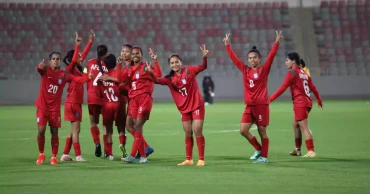
Women footballers continue to bring Bangladesh sporting glory
As Bangladesh’s women footballers continue to capture hearts at home and abroad, experts and players alike are calling for a stronger professional pipeline to ensure their success turns into a lasting legacy.
Despite limited resources, their growing success proves that women's football is no longer an afterthought—it's a national movement taking center stage.
From humble beginnings in the early 2000s, women’s football in Bangladesh has grown into a dynamic force. Tournaments, leagues, and school-level programs have opened doors for thousands of young girls, many from remote and rural areas, to dream beyond social norms and shine on the international stage.
The movement gained traction with the Inter-district Women’s Football Tournament (2006–2007)-the first of its kind in Bangladesh. Eight district teams made history, setting a foundation for what would become a broader sporting revolution.
Momentum continued with the National Women’s Championship (2009–2016), which welcomed teams from districts and government institutions. The championship’s inaugural sponsor, Citycell, signaled a crucial shift—corporate Bangladesh had begun to notice.
Crucial grassroots initiatives soon followed. The Dhaka Metropolis Women’s School Football Championship (2008–2010) introduced structured competition among schoolgirls. Another game-changing moment came with the launch of the Bangamata Primary School Gold Cup in 2011. Initiated by the Ministry of Primary and Mass Education, the tournament saw over one million female students from more than 60,000 schools participate in its first edition.
“When I first saw my daughter play in the Bangamata Gold Cup, I realized football could change her life. She’s more confident now,” said Arifur Rahman, a proud parent.
Sagorika's hat-trick powers Bangladesh to retain SAFF U-20 Women’s crown
At the club level, the Bangladesh Women’s Football League (2011–present) remains the country’s only domestic competition for women. Though interrupted by funding gaps and management challenges, the league still acts as the primary pathway for women to move from grassroots to the national team.
Despite progress, significant hurdles remain—poor infrastructure, limited investment, and persistent social stigma. Yet, the will to overcome is undeniable.
“We didn’t have a girls’ team in our school before 2010. Now, we practice regularly and even won a local tournament. Football gave us a new identity,” said Shahana Begum, a parent from Rajshahi.
“People used to laugh at the idea of girls playing football. But now they cheer for us in the stands. Times are changing,”* added Ruma Akter, a school player from Dhaka.
“There is no shortage of talent in rural Bangladesh. What we need is consistent support, training, and visibility,” emphasized Munira Sultana, a grassroots coach in Khulna.
“These girls are not just playing football—they’re breaking stereotypes,” said Tahmid Hossain, a local sports journalist.
Recent years have seen a golden era for Bangladesh’s women footballers showing their strength on the international platforms.
Ritu Porna Chakma, a standout from the Hill Tracts, became a national sensation after scoring the winning goal in the 2024 SAFF Women’s Championship final and earning MVP honors. She followed that up by netting both goals in a historic 2–1 victory over Myanmar during the 2025 AFC qualifiers, securing Bangladesh’s first-ever spot in the AFC Women’s Asian Cup.
Following the win, celebrations erupted in Yangon and Dhaka’s Hatirjheel, with fans dubbing her “Bangladesh’s own Messi.”
SAFF U-20 Women's: Holders Bangladesh to face Nepal on Monday in hopes of retaining title
The entire SAFF Championship-winning squad including stars like Sanjida Akhter and the dynamic Shamsunnahar Sr. & Jr., were awarded the Ekushey Padak 2025—the country’s second-highest civilian honor. This was an unprecedented moment for a sports team in Bangladesh.
Afeida Khandaker, the newly appointed national captain, has been praised for her leadership in guiding the team to Asian Cup qualification, while Sabina Khatun, the country’s all-time top scorer (38 international and 333 club goals), continues to inspire as a living legend of Bangladeshi football.
“Our women’s team is our pride. They’ve shown that with dedication and the right support, Bangladesh can shine globally,” said Ahmed Rahman, a fan from Chattogram.
“My experience as a player helps me shape others. As I train to become a coach, I want to combine skill with experience to build the next generation,” said national star Sanjida Akhter who has begun formal coaching training.
At a recent celebration at Hatirjheel Amphitheater, BFF President Tabith Awal pledged full institutional support for the women’s team.
“You have accomplished two things: you are making history, and you are taking us forward in changing our society’s mindset,” he said.
Public rallies, packed stadiums, and vibrant social media campaigns have propelled women’s football into the spotlight. Groups like the Bangladesh Mahila Parishad have also rallied behind the team, calling their journey a triumph of both sport and gender justice.
SAFF U-20 Champs:Shanti Mardi's hattrick helps Bangladesh to maintain all-win run beating Bhutan 4-1
With continued investment, institutional backing, and grassroots nurturing, Bangladesh’s women footballers are not just changing the game—they're rewriting the future.
1 year ago