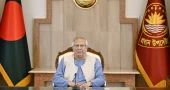
July National Charter
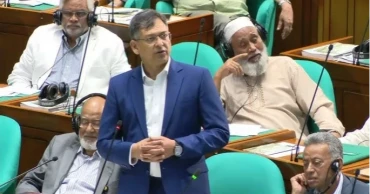
July Charter Implementation Order 'a document of infinite deception': Salahuddin
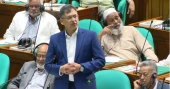
Home Minister Salahuddin Ahmed on Tuesday characterized the July National Charter (Constitution Reform) Implementation Order as an invalid legal document, labeling it a manifestation of "infinite deception" by the interim government.
“This order is a document of infinite deception by the interim government. I reiterate this again today,” he said, joining the two-hour discussion on a motion placed by the opposition leader in Parliament for summoning the session of the Constitution Reform Council.
Bangladesh Jamaat-e-Islami Ameer Dr Shafiqur Rahman placed adjournment motion in the House under the Section 62 of the Rules of Procedure, seeking the adjournment of the business of the House for the discussing summon of the session of the Constitution Reform Council as per the July National Charter (Constitution Reform) Implementation Order, 2025.
Speaker Hafiz Uddin Ahmad, Bir Bikram, moved the motion for two-hour discussion as the last agenda for Tuesday’s business in the House.
The Home Minister argued that the order holds no legal standing as it is categorized as neither a law nor an ordinance.
He, however, said they (the government) hold on to every single word of the July National Charter which was signed by the political parties as a historic document.
Salahuddin Ahmed pointed out the President had the jurisdiction to issue such orders only between March 1971 and April 1973, and that authority ceased following the formation of the first parliament in 1973.
He said 133 ordinances issued during the interim government have been introduced in parliament but the July Charter Implementation Order was not among them as it lacks legislative legitimacy.
He further questioned the President's authority to convene a session of the constitution reform council, citing the absence of constitutional provisions for such a body or its accompanying oath of office.
The Minister dismissed claims that the BNP opposes reform or the July Charter itself, asserting that the party upholds the spirit of the historic document.
“All the issues that were agreed upon in July National Charter 2025 with notes of dissent…. But where are the notes of dissent here (in the Order)?” he said.
"No order of the President can reduce the sovereignty of the parliament," Ahmed stated, citing Article 93 of the Constitution, which prohibits the President from issuing ordinances that change constitutional provisions.
Reaffirming the BNP's commitment to the July Charter, the Home Minister emphasized that the party intends to pursue democratic constitutional amendments through inclusive dialogue.
On behalf of the Leader of the House, he proposed the formation of a special parliamentary committee—including all represented parties and independent lawmakers—to draft a constitutional amendment bill based on broad consensus.
Later, Leader of the Opposition Dr Shafiqur Rahman suggested forming a parliamentary committee to take a decision on the implementation of the referendum results.
PM seeks steps to reduce school-time gridlock
“We want a solution. We want it on the basis of justice. After discussing this issue, if you think it is good, you can form a committee. However, we will call for the committee to be formed with an equal number of members from two sides,” he said.
He said if the committee is formed with majority from the ruling side, it will bring no good result. “We’ve raised our desire. Now the decision is yours,” he said.
Referring to the remark that the order is a document of endless fraud, he said the interim government and the President did this together on November 13, 2025 but the referendum was held on February 12, 2026. BNP officially congratulated the government for holding the parliamentary election and the referendum on the same day due to their demand. “So, the referendum was also their demand.”
"We will sincerely appeal to the government party - the people have accepted the referendum. If we also respect the people by accepting it, then this parliament will be respected. Let the public desire be reflected through this with our joint initiative,” said Dr Shafiqur Rahman.
Law Minister Md. Asaduzzaman said that all reform initiatives must be implemented within the framework of the Constitution, stressing that the constitution remains the supreme legal foundation of the state and parliament.
He said the July Charter is the central focus of current political discourse and that it represents the public mandate following the July 24 mass uprising. “The people have given us the mandate to conduct all activities under the constitution and bring necessary reforms through parliament,” he said.
The law minister explained that the July Charter outlines reform measures that must be adopted through parliamentary processes rather than through extra-constitutional means.
He emphasized that parliament is sovereign in law-making and cannot be compelled by unauthorized orders.
“The July Charter should guide reforms, but all actions must be taken through constitutional and parliamentary procedures,” he said, adding that national unity and democratic consensus are essential for sustainable constitutional reform.
Joining the discussion, BJP chairman Andaleeve Rahman (Partho) asked the NCP leaders not to turn into the Jamaat generation while representing Gen Z.
“You are our heroes. Those who fought (in the July uprising) are here (in Parliament). I would like to tell them that you represent Gen Z. You should not become Jamaat generation,” he said, pointing at the NCP leaders.
He said there is a tendency among some political actors to push them (BNP-led alliance) against the spirit of the July uprising for political advantage, which could harm national unity.
“We are seeing an attempt to push us against the spirit of July,” he said, adding that such “tagging politics” was also seen during the Awami League regime.
Questioning the formation of the Constitution Reform Council, the BJP chief said they wanted to remain within the constitutional process through which amendments are made.
He claimed that although around 70 percent of people voted “yes” in the referendum, 51 percent supported the BNP-led alliance (in the 13th parliamentary election) in favour of constitutional changes.
Focusing on the roles of different political parties and actors in the 2024 July movement, the BJP chief said, “You scored 12 runs from six balls. But we scored 300 runs before.”
Stressing the need for political unity over the spirit of July movement, he said, “We must respect the Constitution and at the same time we must respect the spirit of July.”
Earlier, NCP Member Secretary Akhter Hossen said BNP chairman Tarique Rahman on January 30 last had urged people to vote “yes” in the referendum during a pre-election rally in Rangpur, the birthplace of July martyred Abu Sayeed, but now BNP is showing reluctant to accept the referendum results.
“We want to ask the Prime Minister (Tarique Rahman) why you don't want to accept the verdict of the referendum after asking (the people) to vote 'yes' in the referendum," said the NCP leader.
Noting that the people had given their verdict in favour of implementing the July National Charter, he said terming the public verdict as unconstitutional is audacity and stigmatization of Parliament.
“Whether the Referendum Order is approved by Parliament or not, there is no chance of making the referendum illegal,” he said.
Besides, Jamaat lawmakers Md. Rafiqul Islam Khan (Sirajganj-4), Muhammad Nazibur Rahman (Pabna-1), Md Saiful Alam (Dhaka-12), Md. Shafiqul Islam (Patuakhali-2) and Md Nurul Islam (Chapainawabganj-3), and NCP lawmaker Md Abul Hasnat, who is widely known as Hasnat Abdullah (Cumilla-4), joined the discussion.
6 months ago

Six international organisations to deploy 63 observers for Bangladesh elections
Six international organisations, including the Organisation of Islamic Cooperation (OIC), have agreed to deploy at least 63 observers for Bangladesh’s 13th general election and the referendum on the July National Charter, both scheduled for February.
They will join observer missions from the European Union, 16 countries and 32 individuals affiliated with various global bodies, bringing the total number of confirmed international observers for the dual polls to 330 so far, said the Chief Adviser’s press wing on Saturday.
The number of international observers confirmed for the upcoming election is more than double that of the controversial general election held on January 7, 2024.
The number of international observers for the 12th, 11th, and 10th general elections stood at 158, 125, and four respectively.
Shakir Mahmood Bandar, Head of the OIC Election Observation Unit, will lead the two-member OIC observer mission.
Besides, 28 observers will arrive from the Asian Network for Free Elections (ANFREL), 25 from the Commonwealth Secretariat, seven from the US-based International Republican Institute (IRI), and one from the National Democratic Institute (NDI), also based in the United States.
Thirty-two observers representing organisations such as Voice for Justice, Democracy International, SNAS Africa, the SAARC Human Rights Foundation, and the Polish Institute of International Affairs will monitor the election in their individual capacities, according to information received from the Ministry of Foreign Affairs and the Election Commission.
16 countries to send 57 observers for Feb 12 election
“We expect the number of international observers to increase, as several countries invited to send observer missions have yet to confirm the names of their delegates,” said Senior Secretary and SDG Coordinator Lamiya Murshed, who is overseeing coordination of the international observer visits.
The invited countries yet to confirm their delegates include India, Nepal, Australia, Brazil, Canada, Egypt, France, Kuwait, Morocco, Nigeria, and Romania.
Forum of the Election Management Bodies of South Asia (FEMBoSA) is also expected to name its delegates soon.
Nearly 2,000 candidates, representing more than 50 political parties as well as independent contenders, are contesting the 300 parliamentary seats.
The general election in Bangladesh will be held simultaneously with a referendum on the July National Charter.
8 months ago
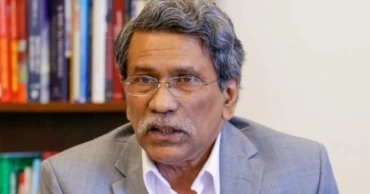
Upper house of legislature key to preventing autocracy: Ali Riaz
Professor Ali Riaz, special assistant to the Chief Adviser, has said establishing an upper house in the bicameral legislature is aimed at preventing the concentration of power in a single individual in the future.
Speaking at a discussion session held on Monday at Dr Kaiser Rahman Chowdhury Auditorium of Rajshahi Medical College to promote the upcoming referendum and encourage voter participation, Prof Riaz said Bangladesh’s current system has repeatedly allowed one person to accumulate power by exploiting institutional weaknesses.
“We must address this issue institutionally rather than rely on any single individual,” he said, adding that the July charter proposes the creation of an upper house in parliament, which would ensure representation of the people and all political parties, as well as reflect broad consensus in constitutional amendments.
Prof Riaz emphasised the vision of a state upholding equality, human dignity, and justice, noting that institutional decay over the past 54 years has repeatedly allowed personal or party interests to undermine governance.
Read more: Prof Yunus orders strict measures to prevent possible election fraud
He praised the role of the youth in creating opportunities through the 2024 popular uprising to prevent the rise of fascism in the future.
Monir Haider stressed that public approval of the July charter through the upcoming referendum is essential to safeguard the future of the next generation and warned that failure to pass the referendum could lead to a return of authoritarianism.
He assured officials that campaigning for ‘Yes’ or ‘No’ votes would face no restrictions, highlighting that the referendum is a collective agenda rather than a candidate election.
The session, chaired by Divisional Commissioner Dr ANM Bazlur Rashid, was attended by special assistant (consensus) Monir Haider, Rajshahi University of Engineering & Technology Vice-Chancellor Professor Dr SM Abdur Razzak, Rajshahi Range Police DIG Mohammad Shahjahan, and Rajshahi Police Commissioner Dr Mohammad Zillur Rahman.
Read more: Prof Yunus to focus on digital health, youth entrepreneurs, ‘Three Zeros’
Deputy Commissioners, police superintendents, other government officials, local journalists and civil society members from across Rajshahi division also participated.
Divisional Commissioner Dr Bazlur Rashid highlighted initiatives at divisional, district, and sub-district levels to raise awareness about the referendum and urged all officials to fulfill their responsibilities at this critical juncture.
9 months ago

TIB expresses frustration as ACC Ordinance approved without key reform provision
Transparency International Bangladesh (TIB) has expressed deep disappointment and indignation over the Advisory Council’s final approval of the Anti-Corruption Commission (ACC) Ordinance ‘ignoring strategically important recommendations.’
The recommendations were essential for ensuring transparency, accountability and institutional independence of the anti-graft body, it said in a statement on Friday (November 28).
The exclusion of “Selection and Review Committee” from the final ordinance despite being included in the July Charter is not only disappointing, but also indicates that like almost all other cases of reform proposals the state reform agenda has become hostage to the conspiracies of anti-reform circles within the government, it added.
TIB also questions whether by denying the provision to make ACC accountable as much as independent, the Chief Adviser, as the head of the consensus commission and the groundbreaking decision-maker to form the 11 reform commissions, is trying to send a message to all including political parties, that ‘state reforms are just a rhetoric for the Government.’
Read more: ACC’s year of mixed outcomes: 249 cases closed, yet acquittals dominate
Noting that the ACC Reform Commission had recommended the formation of a “Selection and Review Committee” considering the experience of the past two decades, the opinions of all stakeholders, international best practices, and the political and bureaucratic context of Bangladesh in order to ensure that the ACC does not continue to function as a tool of protection of those in power and harass political or other opponents, TIB Executive Director Dr. Iftekharuzzaman said.
“This proposal was made to overcome the dire situation of ACC as the institution has been suffering from a lack of public trust since its inception, as a puppet of vested quarters, it has become a tool of protection for those in power and harassment of opponents,” he said.
It is regrettable that the government has failed to understand the strategic value of this recommendation to transform the ACC into a truly accountable, independent, and impartial institution through half-yearly reviews, public hearings, and recommendations by the proposed committee, he said.
ACC’s year of mixed outcomes: 249 cases closed, yet acquittals dominate
“For a government responsible for state reforms, this is a self-contradictory and anti-reform precedent,” he added.
Dr. Zaman further said the matter is even more disappointing because according to reliable sources, at least seven Advisors have opposed this proposal at the Cabinet meeting.
“Yet they know that all the political parties that signed the July Charter have fully agreed on this provision. Before creating such a bad precedent of violating the July Charter, why the government does not realise that through this the Government is by itself actually encouraging political parties to violate the July Charter? Why then unprecedented bloodletting sacrifices were made? What kind of state reform is it that blocks the way to effectively curb corruption?” he questioned.
The draft of the ordinance that TIB had the opportunity to review seemed to be in some ways of a higher standard than the existing law for which the organization commends the government, it said.
TIB calls for full disclosure of agreements with foreign cos on Laldia, Pangaon terminals
However, the TIB Executive Director has expressed deep disappointment and regret as according to reliable sources, in addition to the mentioned issue several other important strategic recommendations on which political consensus was achieved have been omitted.
“This can be nothing but a corruption-enabling and anti-reform stance of vested interests and influential quarters within the government,” he added.
10 months ago
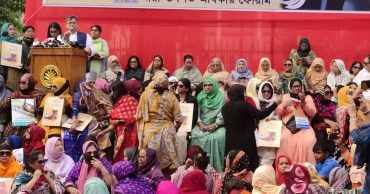
No imposed law can interfere with parliament’s sovereignty: Salahuddin
BNP senior leader Salahuddin Ahmed on Friday said no imposed law, order or forced proposal can be allowed to interfere with the sovereignty of the National Parliament.
“We do not want the sovereignty of the National Parliament to be undermined in any way. That is why we will not allow any imposed law, order or coercive proposal to interfere with Parliament’s sovereignty,” he said.
Speaking at a pre-march silent rally at Shahbagh, Salahuddin said Parliament is the country’s only sovereign House, representing the people. “Only the members elected by the people can exercise that sovereign authority.
In Bangladesh, he said, discussions or proceedings of Parliament cannot be challenged in court. “We repeat that no proposal or imposed measure can be allowed to dictate or undermine the sovereignty of that National Parliament.”
Salahuddin, a BNP Standing Committee member, said their party welcomes the proposal to hold a referendum on the same day as the next national election, saying it would save time and cost and allow greater voter participation.
“But a referendum cannot be used to enact laws or amend the Constitution. For that, a National Parliament must be formed. We want the national election to be held in the first half of February. We want to exercise our right to vote, and the people of this country are eager to cast their votes freely and enthusiastically,” he said.
Referring to the July National Charter, Salahuddin reiterated that BNP is committed to implementing the charter exactly as it was written and signed on October 17.
The rally titled “Growing Violence and Disrespect Against Women: Conscious Society Ready to Resist” was organised by the Women and Children Rights Forum in front of the National Museum at Shahbagh. After the rally, women participants covered their faces with black cloths and held a silent march from Shahbagh to the Central Shaheed Minar.
Salahuddin accused a certain religious political party of exploiting religion for political gain. “There is a party that does business in the name of religion, engages in political business, and wants to win votes by selling different kinds of ‘tickets to heaven’. Women are now being oppressed at their hands.”
BNP thanks Prof Yunus for reaffirming Feb election, same-day referendum
He said this party wants to confine women to their homes, keep half the population in darkness, and block women’s progress.
“They are calling for reduced working hours for women, claiming it will prevent inconvenience in employment. But reducing working hours will actually harm women’s employment. If working hours are cut, many offices, institutions and factories will hesitate to hire women. Employment will decrease, not increase,” the BNP leader warned.
Salahuddin said women must have the opportunity to work with dignity and prove their skills through full employment. “Those calling for reduced working hours have bad intentions. They want women confined. They do not want society to progress.”
He observed that the country can move forward only if both men and women progress equally and if their safety, dignity and opportunities are ensured in all sectors.
Salahuddin said BNP has prepared a comprehensive plan for women based on its 31-point agenda, covering education, employment, security and housing.
He strongly condemned the recent assault on BNP women activists in Rajshahi, who were allegedly beaten and humiliated by supporters of a religious party.
The BNP leader also criticised the case filed against a teacher of Jahangirnagar University for comments made during a talk show. “Her words offended a fanatical group, and they filed a case. We want a society where everyone is equal, without divisions based on religion, ethnicity, caste, culture or language.”
Salahuddin said ensuring equal rights for all citizens is the true spirit of democracy, independence and sovereignty. “Our only identity should be that we are citizens of Bangladesh. There should be no majority–minority divisions or cultural or linguistic discrimination.”
Chief Adviser breached signed July Charter, says Salahuddin
He said the July uprising and past movements were aimed at building such a Bangladesh, and the fight must continue to establish a strong democratic state free from discrimination.
The rally was chaired by BNP Standing Committee member and Forum convener Selima Rahman and conducted by member secretary Nipun Roy Chowdhury.
Jahangirnagar University Professor Mehrin Islam Khan, PSC member Professor Chowdhury Saima Ferdous, former MPs Shirin Sultana, Nilufar Chowdhury Moni, Bilkis Islam and Mayer Daak platform coordinator Sanjida Islam Tuli, among others, spoke the programme.
11 months ago
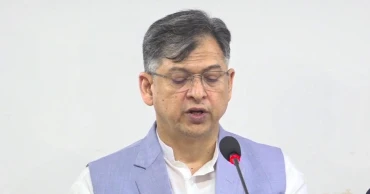
Chief Adviser breached signed July Charter, says Salahuddin
BNP Standing Committee member Salahuddin Ahmed on Thursday said the Chief Adviser has violated the July National Charter through his outlines on the implementation of the charter in his speech to the nation.
“The Chief Adviser himself signed the July Charter. In his speech, he violated the charter by including matters beyond the signed charter and adding new elements that were not mentioned in it,” he told UNB giving his initial reaction to Prof Yunus' address to the nation.
“If we analyse his speech alongside the signed charter, we will see that he has grossly breached it.” the BNP leader added.
Earlier in the day, Chief Adviser Prof Muhammad Yunus announced that the national election and the referendum on the July Charter will take place on the same day.
In a televised address to the nation, he said a meeting of the Council of Advisers had approved the July National Charter (Constitution Amendment) Implementation Order, 2025. “To implement the July Charter, this order includes several important provisions. These include holding a referendum on the constitutional amendment proposals of the charter and, subsequently, the formation of a Constitution Reform Council,” he said.
Later, speaking to reporters at his Gulshan residence, Salahuddin said the interim government and the July National Consensus Commission have created the current political crisis by going beyond the signed July National Charter.
He said the order issued by the government to implement the July National Charter (Constitutional Reform) included ‘many new and personal ideas’ that were never part of the original signed charter.
“We have already made it clear through our party’s press briefing that we will not agree to any matter imposed outside the signed July National Charter, and it will not be binding on the political parties that signed it,” the BNP leader said.
He alleged that several issues have been forcefully added, and political parties were being asked to say ‘yes or no’ to matters not included in the signed charter. “Many of the provisions in the order issued today (Thursday) are new and reflect their (govt’s) personal preferences.”
The BNP leader warned that such steps could lead to division instead of unity. “Some may be happy with this, but are we heading towards disunity in the nation? Are we creating divisions instead of harmony? Will the Chief Adviser take responsibility for that?”
He said the party would review the Chief Adviser’s address to the nation in its forum and issue a formal reaction.
Responding to a question about how the July Charter was violated, Salahuddin said the document was signed in a historic event witnessed by the entire nation. “The printed copies of the signed charter are available to all. Each section contains clear notes on proposals, consent, and notes of dissent from different parties.”
“This was not a conventional note of dissent. It was specifically stated that if any party mentions its differing views in its election manifesto and wins the people’s mandate, it can implement those issues accordingly. Has that principle now been abandoned? If the Chief Adviser goes beyond his own signed document, it amounts to a breach of the charter,” he clarified.
Referring to the proposed ‘Constitution Reform Council’, Salahuddin said the idea was never discussed or agreed upon in the National Consensus Commission.
He questioned the intention behind including such new ideas in the order without the consensus of the political parties.
The BNP leader said the Election Commission, under the Constitution, is responsible for conducting parliamentary and presidential elections.
“The MPs elected through that process will take oath as members of parliament — not as members of any Constitution Reform Council… Setting a timeframe, forming a council, and proposing constitutional reforms within 180 days are new ideas. Do they have the authority to do that?” Salahuddin asked.
He questioned whether dictating the next parliament through such orders has any legal basis. “Is this not interference in the sovereign authority of parliament?”
In Bangladesh, the BNP leader said, there is only one sovereign body — the National Parliament — as per the Constitution. “No court can interfere in discussions or proceedings inside parliament. So imposing such obligations would amount to interfering in the sovereignty of parliament.”
Salahuddin also said the idea of forming a constituent assembly or a reform council was contradictory. “If there had been any national consensus to form such a council, the Constitution would first need to be amended to empower the Election Commission for that purpose. Are we back in the pre-independence situation where we need a constituent assembly again? Bangladesh already has a Constitution. These ideas are conflicting.”
Replying to a question, he said both the government and the National Consensus Commission were responsible for the ongoing crisis. “They formed reform commissions first, then a National Consensus Commission. After nine months of discussions, the National Charter was prepared and signed. Why are you going beyond it now?”
The BNP leader said the crisis began when the consensus commission, chaired by the Chief Adviser himself, made recommendations to the government going beyond the signed charter. “He signed it as the Chief Adviser and then made recommendations to himself.”
He reiterated that BNP wants only the signed July Charter to be implemented. “The charter was prepared and signed based on consensus, including the Chief Adviser’s signature. Let’s just implement that.”
11 months ago
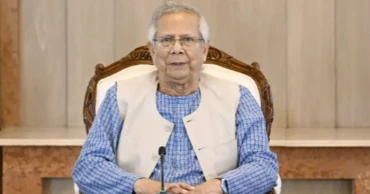
Prof Yunus urges pro-uprising parties to stay united for Feb election
Chief Adviser Professor Dr Muhammad Yunus on Thursday (November 13) urged all political parties that supported the July Uprising to remain united to ensure a fair election in February, warning that any discord could push the nation into grave danger.
“The unity the people built in the face of death must not be diminished by minor disagreements or conflict,” he said in an address to the nation in the afternoon.
He said the country’s people had been deprived of their rights to vote for nearly one and a half decades and are now eager to exercise that in the upcoming election.
“We must honour the sacrifices of 133 children, hundreds of young men and women and thousands who were injured or lost limbs,” he said.
Referendum, national election together in Feb: Prof Yunus
“The people of this country only wish that in respect for the countless victims, we show tolerance toward different opinions, rise above partisan interests and uphold our collective aspirations and national goals,” Prof Yunus added.
He expressed the hope that political parties would accept the decision on July Charter implementation in the broader national interest, paving the way for a festive and inclusive national election.
“Through this, we will step into a new Bangladesh. We are now at the threshold of building that new nation,” Yunus said.
Read more: Chief Adviser breached signed July Charter, says Salahuddin
11 months ago

BNP policymakers’ emergency meeting this evening
The BNP Standing Committee is set to hold an emergency meeting on Thursday evening (November 13) following the Chief Adviser’s announcement that the next national election and a referendum will be held on the same day, along with the approval of the July National Charter implementation order.
The meeting will begin at 7pm at the BNP Chairperson’s office in Gulshan, said BNP Media Cell member Sayrul Kabir Khan.
He said BNP Acting Chairman Tarique Rahman will join the meeting virtually and preside over it.Earlier in the day, Chief Adviser Prof Muhammad Yunus announced that the national election and the referendum on the July Charter will take place on the same day.
In a televised address to the nation, he said a meeting of the Council of Advisers had approved the July National Charter (Constitution Amendment) Implementation Order, 2025.
Referendum, national election together in Feb: Prof Yunus
“To implement the July Charter, this order includes several important provisions. These include holding a referendum on the constitutional amendment proposals of the charter and, subsequently, the formation of a Constitution Reform Council.”
A senior BNP leader said while their party welcomes the announcement of the election and the referendum on the same day, it has reservations about the implementation order and the nature of the referendum.
He said the meeting of the BNP Standing, the highest policymaking body of the party, will discuss these issues in detail and decide the party’s next course of action.
Read more: Chief Adviser breached signed July Charter, says Salahuddin
11 months ago
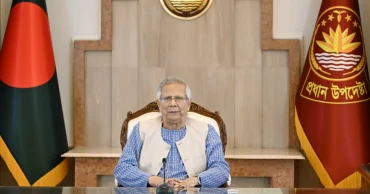
Referendum, national election together in Feb: Prof Yunus
Chief Adviser Professor Muhammad Yunus on Thursday (November 13) said that the national election and the referendum will be held simultaneously in the first half of February next year.
“The referendum will take place in the first half of February simultaneously with the general election. This will not in any way hinder the goals of reform; rather, it will make the election more festive and cost-effective,” he said in an address to the nation in the afternoon.
“Appropriate law will be formulated in due time to facilitate the holding of the referendum. We are taking all-out preparations to hold the election in a festive atmosphere,” the Chief Adviser added.
To implement the July Charter, the government has adopted several key provisions in the order, he said, adding, “These include holding a referendum on the charter’s proposed constitutional reforms and subsequently forming a Constitutional Reform Council.”
Dr Yunus said the interim government, in a meeting of the Council of Advisers, approved the July National Charter (Constitutional Reform) Implementation Order, 2025. “After the completion of necessary signings, it has reached the stage of issuing a gazette. It’s great news,” he added.
CA Prof Yunus to address nation at 2:30 pm
In line with the July Charter, the government has also finalised the question to be presented on the referendum ballot, Prof Yunus said.
The question will be as follows:
“Do you approve the July National Charter Constitutional Reform Implementation Order, 2025, and the following proposals regarding constitutional reforms as enlisted in the July National Charter?”
a) During the election period, the caretaker government, Election Commission, and other constitutional bodies will be formed in accordance with the procedures outlined in the July Charter.
b) The next parliament will be bicameral. Based on the proportion of votes received in the national election, a 100-member upper house will be formed, and any constitutional amendment will require the approval of the majority of the upper house members.
c) The political parties that win the next election will be obligated to implement the 30 reform proposals agreed upon in the July National Charter, including increased female representation in parliament, election of the deputy speaker and parliamentary committee chairs from the opposition, limitation of the prime minister’s tenure, enhancement of presidential powers, expansion of fundamental rights, independence of the judiciary, and strengthening of local government.
d) Other reforms outlined in the July Charter will be implemented as per the commitments of the political parties.
“On the day of the referendum, you will express your opinion on these four issues by casting a single vote — either ‘yes’ or ‘no,’” said Prof Yunus.
If a majority votes “yes,” a Constitutional Reform Council will be formed, comprising the representatives elected in the upcoming parliamentary election. These representatives will also serve as members of the national parliament. The council will complete the constitutional reform process within 180 working days from the date of its first session, he added.
ICT sets Nov 17 to deliver verdict on Hasina case
Within 30 working days after the reform is completed, an upper house will be constituted based on the proportion of votes received in the parliamentary election, and its term will continue until the final working day of the lower house, he said.
In accordance with the pledge to implement the July Charter, provisions will be made to incorporate the July National Charter into the Constitution, he added. “This inclusion has also been specified in today’s approved order.”
11 months ago
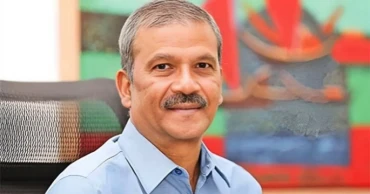
Asif Nazrul expects clear update on Charter implementation within days
Law Affairs Adviser Asif Nazrul on Tuesday (11th November 2025) said that a clear update on the implementation of the July Charter will be known within the next two to three days.
“Political parties will provide us with a unified directive after internal consultations, as we had expected. However, we have not remained idle; we have continued working independently. Within the next three to four days, it will become clear what steps we have taken regarding the implementation of the Charter,” he said.
The adviser was talking to reporters after a discussion on the draft amendment to the Legal Aid Provision Ordinance at the Judicial Administration Training Institute in Dhaka.
He said the matter is being discussed at various levels of the Advisory Council. “We are coordinating with all parties’ expectations to ensure that actions taken serve the country’s and people’s interests.”
Read more: July Charter signatories not bound by decisions beyond its scope: BNP to govt
During the meeting, the National Legal Aid Agency presented the draft of the Legal Aid Provision (Second Amendment) Ordinance, 2025.
The proposed amendment, emphasising recommendations from the Judicial Reform Commission and the National Consensus Commission, suggests transforming the agency into a directorate.
The aim is to expand its scope, strengthen legal aid services, and enhance its operational capacity.
Provisions include defining departmental responsibilities, forming a Legal Aid Advisory Council, establishing metropolitan committees, determining NGO operational areas and issuing accreditation certificates for mediators.
Attorney General Md Asaduzzaman, Law Secretary Liaquat Ali Molla, former district judge M/otahar Hossain, BLAST Executive Director Barrister Sara Hossain, and Special Consultant Barrister Tanim Hossain Shawon, among others, participated in the session, providing constructive feedback and recommendations on the proposed amendments.
Read more: No reason to worry about national election: Asif Nazrul
11 months ago