ICT-1
ICT-1 orders start of trial against Joy, Palak
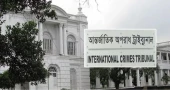
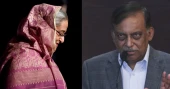
The International Crimes Tribunal-1 has ordered the commencement of trial against ex-prime minister Sheikh Hasina’s son Sajeeb Wazed Joy and former state minister for ICT Junaid Ahmed Palak in a crimes against humanity case over the killings during July-August mass uprising.
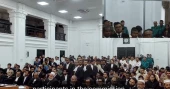
A three-member panel of ICT-1 led by Chairman Justice Golam Mortuza Mozumder passed the order on Wednesday after framing charges against the two accused.
Justice Shafiul Alam Mahmud then read out the three charges brought by the prosecution, following which the tribunal formally framed the charges, paving the way for the start of trial.
The tribunal fixed February 18 for opening statements and recording of testimonies.
Read More: Chankharpul massacre verdict deferred to Jan 26
Among the two accused, Palak is in custody and was produced before the tribunal from jail in the morning. Joy is being represented by state-appointed lawyer Manzur Alam.
On January 15, the ICT fixed January 21 for framing charges against them.
Three allegations brought against them in the case are Palak incited violence through a Facebook post on the night of July 14, 2024 as per the instructions from Joy.
Following the alleged provocation, police along with armed members of the Awami League and its student wing banned Chhatra League carried out attacks on protesters at Dhaka University and several other locations on July 15.
Besides, the accused encouraged the shutdown of internet services and instigated the use of lethal weapons while also providing assistance in acts of killing that left 28 people, including Russel and Mosleh Uddin killed.
The third charge relates to their role in facilitating 34 killings in Uttara.
On December 10, last year, ICT asked the authorities concerned to issue notice in national dailies asking Joy to surrender before the tribunal.
Read More: War crimes convict Abul Kalam Azad surrenders to ICT
9 months ago
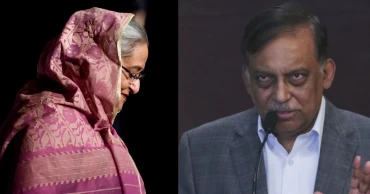
ICT releases full verdict on Hasina, Kamal’s death penalty
The International Crimes Tribunal (ICT)-1 on Wednesday (November 26) released the full text of its 453-page judgment that convicted and sentenced ousted prime minister Sheikh Hasina and former home minister Asaduzzaman Khan Kamal to death for crimes against humanity committed during last year’s July Mass Uprising.
International Crimes Tribunal Prosecutor Mizanul Islam confirmed that the prosecution has received a full copy of the verdict. “The registrar will decide when the copy of the verdict will be sent to the concerned department,” he said.
Meanwhile, Zayed Bin Amjad, lawyer for former Inspector General of Police (IGP) Chowdhury Abdullah Al Mamun—who was sentenced to five years in prison in the same case—said he has also received a copy of the full verdict.
State-appointed defence lawyer Md Amir Hossain, who represented Sheikh Hasina and Kamal, said he has not received any copy due to the absence of legal provision allowing it. As the two accused remain absconding, they will not have the opportunity to appeal, he added.
BNP hails Hasina’s death sentence verdict, says justice served
On November 17, the tribunal delivered the judgment against the three, finding them guilty on the charges brought forward.
The three-member tribunal, headed by Chairman Justice Md Golam Mortuza Majumder, began announcing the verdict at around 12:30pm, unveiling the 453-page document.
Five charges had initially been brought against ousted prime minister Sheikh Hasina for allegedly ordering crimes against humanity during the July–August mass student uprising.
The tribunal evaluated these allegations and proceeded with the trial. The charges were later reorganized into two broad charges, under which the accused were found guilty of a total of six offences.
Prosecutor Gazi M. H. Tamim said the tribunal’s verdict considered two consolidated charges, within which six distinct crimes were established.
The court found the ousted prime minister Sheikh Hasina and former Home Minister Asaduzzaman Khan Kamal guilty of three counts under charge number one.
Count-1: Inciting crimes through provocative speech at a press briefing on July 14, 2024, where she labelled protesters as children of Razakars.
Count-2: On the night of July 14, 2024, she had a telephonic conversation with the then vice-chancellor of the University of Dhaka, Dr ASM Maksud Kamal, where she again termed the protesters as Razakars and threatened to hang them. The tribunal found the accused had ordered and incited the violence that followed and did not obstruct their subordinates from committing the crimes.
Count-3: Following that, police shot and killed Begum Rokeya University, Rangpur (BRUR) student Abu Sayeed.
Read more: Dhaka writes to Delhi afresh seeking Hasina’s extradition
The tribunal sentenced both Sheikh Hasina and Asaduzzaman Khan Kamal to imprisonment unto death for three counts of charge number one.
It also found them guilty of three counts of charge number two.
Count-1: Ordering the deployment of helicopters, drones and lethal weapons against protesters, which was proved in the telephonic conversation of Sheikh Hasina with Hasanul Haque Inu.
Count-2: Following the order, six unarmed students were gunned down in the capital's Chankharpul area on August 5, 2024.
Count-3: Six protesters were gunned down in Ashulia on August 5, 2024, and their bodies were burned to hide evidence.
The tribunal sentenced Sheikh Hasina and Kamal to death for these offences.
The tribunal also ordered the authorities concerned to confiscate the property of Sheikh Hasina and Asaduzzaman Khan.
The court also asked the authorities concerned to take steps to provide adequate compensation from this property to the martyrs and injured victims of July-August movement in proportion to the extent of their losses.
Besides, former Inspector General of Police Chowdhury Abdullah Al-Mamun, who testified as a state witness in the case, was sentenced to five years in prison in both charges.
Read more: Delhi examining request for Hasina’s extradition; Dhaka expects response
11 months ago
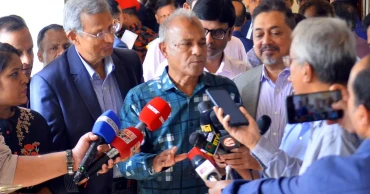
No unrest following verdict against Hasina: Home Adviser
Home Affairs Adviser Lt Gen (retd) Md Jahangir Alam Chowdhury on Wednesday (November 19) said there is no unrest in the country following the tribunal’s death sentence handed down to former Prime Minister Sheikh Hasina.
Talking to reporters at the Secretariat after an inter-ministerial security meeting held ahead of the Victory Day 2025 celebrations, the adviser reaffirmed that nothing unexpected had occurred in connection with the verdict.
Read more: Hasina verdict: Security forces in tense standoff with group looking to storm Dhanmandi 32
Responding to questions about reports of unrest after the court’s decision and any potential threats ahead of Victory Day, Jahangir said no such incidents had taken place and there was no cause for concern regarding the upcoming national celebrations.
He said the Victory Day events will proceed as scheduled and noted that there is no reason to anticipate any disturbance during the commemorations.
Parade will not take place this year too, he said.
Commenting on allegations that law enforcers picked up a journalist on Tuesday night, the adviser said he had only just been informed of the matter and would look into it.
Read more: Home Adviser signals zero tolerance on unrest as election in February
11 months ago
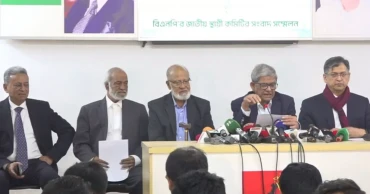
BNP hails Hasina’s death sentence verdict, says justice served
BNP on Monday night (November 17) said it believes justice has been served through the International Crimes Tribunal’s verdict sentencing deposed Prime Minister Sheikh Hasina to death for crimes against humanity committed during the July-August Uprising.
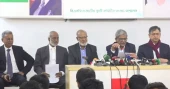
“After a long judicial process, following international standards, the International Crimes Tribunal has delivered its verdict against Awami fascist Sheikh Hasina and her two accomplices. This verdict has ensured justice,” said BNP Secretary General Mirza Fakhrul Islam Alamgir.
He shared the party’s formal reaction at a press briefing after a meeting of the BNP Standing Committee at the party chairperson’s Gulshan office.
Fakhrul said people at home and abroad had long called for accountability for the crimes committed under the previous regime.
“The people of Bangladesh and the international community have been waiting for justice for the brutal acts of murder, torture and genocide carried out by the fallen dictator and her associates,” he said.
Fakhrul said the tribunal handed down the maximum punishment under the law to Sheikh Hasina and former Home Minister Asaduzzaman Khan Kamal, while former Inspector General of Police Chowdhury Abdullah Al-Mamun, who cooperated with the court, received a reduced sentence of five years’ imprisonment.
Read more: UN rights body regrets Hasina’s death sentence, calls verdict important for victims
He said the BNP is firmly committed to the rule of law and urged the country’s people to stay alert in this regard.
Fakhrul said their party also demanded fair trials for all other accused persons in other cases.
“With this verdict, we believe the souls of those who were victims of enforced disappearances, killings and extrajudicial executions over the past sixteen years — and the thousands who were killed during the 2024 student uprising — will find some peace. The anger of their families will ease to some extent,” the BNP leader said.
The BNP Standing Committee meeting, chaired virtually by Acting Chairman Tarique Rahman from London, began at 8:30pm and continued for two hours.
BNP Standing Committee members Khandaker Mosharraf Hossain, Abdul Moyeen Khan, Amir Khosru Mahmud Chowdhury and Salahuddin Ahmed were also present at the press briefing.
Earlier in the day, the tribunal convicted Sheikh Hasina and two others in a case related to crimes against humanity committed during last year’s July–August uprising, in which more than 1,000 people were killed.
The ICT-1 sentenced Sheikh Hasina to death, while former Home Minister Asaduzzaman Kamal also received the death penalty. Former Inspector General of Police Chowdhury Abdullah Al-Mamun, who gave testimony as a state witness, was sentenced to five years’ imprisonment.
The court further ordered the confiscation of the properties of Sheikh Hasina and Asaduzzaman Kamal in favour of the state.
Read more: Awami League using looted money for acts of sabotage: Rizvi
11 months ago
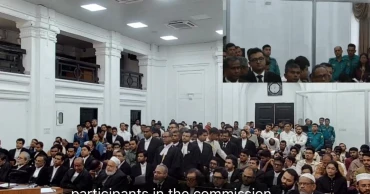
ICT-1 reading out verdict in Hasina’s case
The International Crimes Tribunal-1 (ICT-1) is reading out its verdict in a high-profile case against former Prime Minister Sheikh Hasina and two others for crimes against humanity committed during last year’s July-August uprising.
The three member tribunal led by Justice Md. Golam Mortuza Majumder started to read out the verdict at 12:30 pm.
Law enforcement agencies have taken all necessary preparations to tackle any possible chaos centering the verdict.
Two other accused in the case are former Home Minister Asaduzzaman Khan and former Inspector General of Police (IGP) Chowdhury Abdullah Al-Mamun. Mamun testified as a state witness.
Dhaka under security blanket as ICT set to deliver verdict in Hasina’s case today
Security has been tightened across the country, particularly in and around the International Crimes Tribunal (ICT) in Dhaka, ahead of verdict.
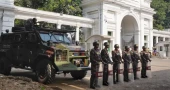
Border Guard Bangladesh (BGB) has been deployed in Dhaka, Gopalganj, Faridpur and Madaripur districts to ensure overall security and maintain law and order.
The prosecution has claimed all five charges against Hasina and other accused have been proven and sought the maximum punishment.
Home Affairs Adviser Lt Gen (retd) Md Jahangir Alam Chowdhury on Sunday said whatever verdict the tribunal delivers in case against former Prime Minister Sheikh Hasina on Monday (November 17) will be executed and people will accept it.
Bangladesh Television (BTV) is broadcasting the verdict live.
Read more: Relatives of July uprising martyrs gather at tribunal ahead of Hasina verdict
11 months ago
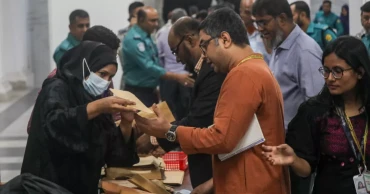
Relatives of July uprising martyrs gather at tribunal ahead of Hasina verdict
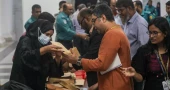
Relatives of the martyrs of last year’s July uprising gathered at the International Crimes Tribunal (ICT) area on Monday morning (November 17) ahead of the verdict in the case against former Prime Minister Sheikh Hasina and two others over alleged crimes against humanity during last year’s July-August.
Some of the injured victims of July movement were seen on the tribunal premises with posters and banners around their necks.
Dhaka under security blanket as ICT set to deliver verdict in Hasina’s case today
11 months ago
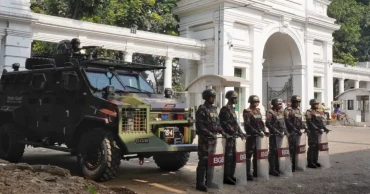
Dhaka under security blanket as ICT set to deliver verdict in Hasina’s case today
Dhaka remained under a stringent security blanket on Monday (November 17) as law enforcement agencies intensified vigilance ahead of a verdict by International Crimes Tribunal (ICT) in a case against Sheikh Hasina and two others over crimes against humanity.
Multiple security layers are in place from the early hours of the day to prevent any untoward incident as several teams of law enforcing agencies, including police and Rapid Action Battalion (Rab), were seen patrolling at key points of the city.
Movement of vehicles remained normal in Dhaka as Bangladesh Sarak Paribahan Workers Federation on Sunday announced that traffic would continue operating defying the planned ‘lockdown’ of the ousted Awami League.
Besides, people, particularly office-goers and students, were seen moving to their destinations and availability of the vehicles was sufficient.
Earlier, Awami League, which activities are banned, and its associated bodies had observed a countrywide ‘lockdown’ on November 13 as the ICT-1 led by its Chairman Justice Golam Mortuza Majumder was scheduled to fix the date for delivery of the verdict on that day.
Later, the tribunal set November 17 to deliver the judgment.
Several crude bombs exploded in Dhaka on eve of Hasina's verdict
Though the presence of law enforcers, including police, RAB, intelligence units and BGB was noticeable, vehicular movement across Dhaka was thinner compared to usual on that day.
However, the traffic flow on the city streets increased remarkably on Monday than that of November 13.
Since the early morning, Doel Chattar, High Court Mazar Crossing, Shahbagh, Press Club, Farmgate and other key points witnessed an extensive presence of police and other security forces.
Checkposts were set up across strategic routes where officers were performing duty by checking pedestrians, private vehicles and especially motorcyclists.
Law enforcement officials said motorcyclists are facing heightened scrutiny because assailants involved in recent explosions—reported since 10 November—used motorcycles to flee the scenes.
“Given the pattern of movement observed in previous incidents, we are checking every motorcycle to prevent any attempt to commit sabotage,” said a duty officer wishing not to be named at the High Court area.
Since morning, security personnel were seen stopping each motorcycle, verifying identity documents and searching bags and helmets. Foot patrols and mobile patrol teams were also deployed across busy commercial zones such as Motijheel, Gulistan and Karwan Bazar.
Business owners in the Motijheel commercial area reported that although the streets are calmer early in the day, security presence is “unusually high,” adding that it offered a sense of reassurance amid prevailing tension.
SC seeks army deployment ahead of verdict in Hasina case
Heavy security was also reported at major city entry points including Gabtoli, Jatrabari and Mohakhali where long-distance buses, trucks and private vehicles were screened.
According to law enforcement agencies, the highest level of alert remains in place to thwart any “spot violence” or organised attempts to disrupt public order on the verdict day.
Authorities said the security measures would continue throughout the day and into the evening.
Despite the undercurrent of anxiety surrounding the tribunal verdict, the visible security presence across Dhaka has contributed to a sense of controlled calm as the situation continues to evolve in real time.
11 months ago

Several crude bombs exploded in Dhaka on eve of Hasina's verdict
Several crude bombs went off at different points in the capital on Sunday evening (November 16), heightening tension on the eve of the verdict in the cases against former Prime Minister Sheikh Hasina and two others accused of crimes against humanity during last year’s July–August uprising.
Around 9pm, two crude bombs exploded in front of the Central Road residence of Syeda Rizwana Hasan, Adviser to the Ministry of Environment, Forest and Climate Change and the Ministry of Water Resources. However, no one was injured in the incident.
Witnesses said unidentified miscreants hurled the bombs and fled the scene immediately after the explosions.
Read more: BTV to broadcast live verdict on Hasina in July Uprising case
Earlier, around 7:30pm, two crude bombs also went off near the Saarc Fountain intersection in Karwan Bazar.
In a separate incident, two more explosions occurred minutes before 10pm in the Mohakhali Kacha Bazar and Amtoli areas.
Police said no one was hurt.
The series of explosions came a day ahead of Monday’s (November 17) scheduled verdict by the International Crimes Tribunal in the trial of the ousted Prime Minister Sheikh Hasina over allegations linked to last year’s July uprising.
Amid the tense political climate, the Awami League last week announced a nationwide “lockdown” programme. Since November 10, incidents of arson attacks on buses and trains, along with crude bomb explosions in Dhaka and other districts, have occurred amid tight security.
Meanwhile, the Supreme Court has requested the Bangladesh Army to deploy troops to bolster security around the International Crimes Tribunal (ICT) ahead of Monday’s verdict.
Besides, BGB personnel have been deployed in Dhaka, Gopalganj, Faridpur, and Madaripur districts to maintain overall security and ensure law and order.
Read more: Nation on alert as ICT set to deliver verdict in Hasina’s case
11 months ago
Nation on alert as ICT set to deliver verdict in Hasina’s case
Security has been tightened across the country, particularly in and around the International Crimes Tribunal (ICT) in Dhaka, ahead of Monday’s (November 17) verdict in a high-profile case of crimes against humanity.
The tribunal is set to deliver its judgement on cases against former Prime Minister Sheikh Hasina and two others, who stand accused of crimes against humanity committed during last year’s July-August uprising.
The verdict will be delivered amid fresh tensions as a series of arson and crude bomb attacks were reported in Dhaka, Savar, Kushtia, Gazipur and other parts of the country.
Awami League, whose activities remain banned in Bangladesh, called for a ‘complete shutdown’ on Sunday and Monday in protest citing several demands including the cancellation of the tribunal’s proceedings.
Border Guard Bangladesh (BGB) has been deployed in Dhaka, Gopalganj, Faridpur and Madaripur districts to ensure overall security and maintain law and order.
Read more: Fakhrul calls for full justice ahead of ICT verdict in Hasina’s case
Two other accused in the case are former Home Minister Asaduzzaman Khan and former Inspector General of Police (IGP) Chowdhury Abdullah Al-Mamun. Mamun testified as a state witness.
The prosecution has claimed all five charges against Hasina and other accused have been proven and sought the maximum punishment.
In a press briefing on November 13, Chief Prosecutor Md Tajul Islam said they have appealed to the court for the highest penalty.
On the other hand, state-appointed lawyer Md Amir Hossain has sought acquittal for both Hasina and Asaduzzaman Khan, while Mamun’s lawyer Zayed Bin Amjad has also sought his acquittal.
Home Affairs Adviser Lt Gen (retd) Md Jahangir Alam Chowdhury on Sunday said whatever verdict the tribunal delivers in case against former Prime Minister Sheikh Hasina on Monday will be executed and people will accept it.
Law enforcement agencies are fully prepared to prevent any untoward incident centering the verdict, he said.
Bangladesh Television (BTV) will broadcast the verdict live.
The live verdict will be shown via giant screen at 10 spots of the Dhaka, said MH Tamim, a prosecutor of the ICT.
BNP Secretary General Mirza Fakhrul Islam Alamgir on Sunday urged people and political parties to resist the ‘vested quarter’ that, he alleged, is trying to create anarchy ahead of Monday’s verdict in the case filed against ‘fascist Sheikh Hasina for committing genocide’.
“The verdict in the trial over the genocide committed by fascist Hasina will be delivered tomorrow (Monday). Extreme uncertainty and fear are now prevailing across the entire country because of this,” Fakhrul said at a discussion in Dhaka.
Jamaat, allies to mobilise on streets on Hasina verdict day
The UN Office of the High Commissioner for Human Rights (OHCHR) in its report on February 12 said Bangladesh’s previous government and security and intelligence services, alongside violent elements associated with the Awami League, systematically engaged in a range of serious human rights violations during last year’s student-led protests.
Based on deaths reported by various credible sources, the report estimates that as many as 1,400 people may have been killed between 15 July and 5 August, and thousands were injured, the vast majority of whom were shot by Bangladesh’s security forces. it said.
Initially, Sheikh Hasina was the sole accused in the case.
On March 16 this year, the prosecution appealed to include former IGP Mamun as an accused alongside Sheikh Hasina and the tribunal approved it.
After the Awami League government was toppled on August 5, 2024, the ICT was reconstituted.
The first case in the reconstituted tribunal concerned alleged crimes against humanity during the July uprising, with Sheikh Hasina as the accused.
The tribunal conducted its first hearing on October 17 last year, issuing an arrest warrant against Hasina that day.
After extending the deadline several times, the tribunal’s investigation agency submitted its final probe report to the Chief Prosecutor’s Office on May 12 this year.
On June 1, the prosecution formally filed charges against Sheikh Hasina and the two accused.
The charges include inciting violence in a press conference at Ganabhaban on 14 July 2024, ordering the elimination of protestors using helicopters, drones, and lethal weapons, shooting death of student Abu Sayed at Begum Rokeya University, Rangpur, killing of six protestors at Chankharpul, Dhaka and burning of six people to death in Ashulia.
The tribunal formally framed these charges on July 10.
Hasina and Asaduzzaman remain at large, while former IGP Mamun is the only arrested accused.
On the day the charges were framed, Mamun admitted his involvement in crimes against humanity during the uprising and applied to testify as a state witness.
Arguments in the case began on October 12 and concluded on October 23.
Relatives of victims, including the father of martyr Abu Sayed testified in the case, along with key witnesses including Nahid Islam, Convener of National Citizen Party (NCP) and Amar Desh editor Dr Mahmudur Rahman.
In total, 54 witnesses testified during the trial.
Read more: BGB deployed in Dhaka, 3 other districts
11 months ago
BTV to broadcast live verdict on Hasina in July Uprising case
Bangladesh Television (BTV) will broadcast live on Monday (November 17) the verdict in the case over crimes against humanity during last year’s July uprising, involving former Prime Minister Sheikh Hasina and two others.
A three-member bench headed by International Crimes Tribunal-1 (ICT-1) Chairman Justice Golam Mortuza Majumder will deliver the judgment.
The live verdict will be shown via giant screen at 10 spots of the Dhaka, said MH Tamim, a prosecutor of the ICT.
A foreign news agency has also sought permission for live coverage, the prosecutor said.
The prosecution has claimed all five charges against Hasina, former Home Minister Asaduzzaman Khan and former IGP Chowdhury Abdullah Al-Mamun have been proven, seeking the maximum punishment, including the death penalty.
In a press briefing on November 13, Chief Prosecutor Md Tajul Islam said they have appealed to the court for the highest penalty.
Initially, Sheikh Hasina was the sole accused in the case. On March 16 this year, the prosecution appealed to include former IGP Mamun as an accused alongside Sheikh Hasina and the tribunal approved it.
After the Awami League government was toppled on August 5, 2024, the ICT was reconstituted.
The first case in the reconstituted tribunal concerned alleged crimes against humanity during the July uprising, with Sheikh Hasina as the accused.
Tensions rise as ICT going to set verdict date in Hasina case
The tribunal conducted its first hearing on October 17 last year, issuing an arrest warrant against Hasina that day.
After extending the deadline several times, the tribunal’s investigation agency submitted its final probe report to the Chief Prosecutor’s Office on May 12 this year.
On June 1, the prosecution formally filed charges against Sheikh Hasina and the two accused.
The charges include:
- Inciting violence in a press conference at Ganabhaban on 14 July 2024;- Ordering the elimination of protestors using helicopters, drones, and lethal weapons;- The shooting death of student Abu Saeed at Begum Rokeya University, Rangpur;- The killing of six protestors at Chankharpul, Dhaka;- The burning of six individuals in Ashulia.
The tribunal formally framed these charges on July 10.
Hasina and Asaduzzaman remain at large, while former IGP Mamun is the only arrested accused. On the day the charges were framed, Mamun admitted his involvement in crimes against humanity during the uprising and applied to testify as a state witness.
Arguments in the case began on October 12 and concluded on October 23.
Chief Prosecutor Mohammad Tajul Islam has sought the death penalty for Hasina and Asaduzzaman over the alleged crimes.
On the other hand, state-appointed lawyer Md Amir Hossain has sought acquittal for both Hasina and Khan, while Mamun’s lawyer Zayed Bin Amjad has also sought his acquittal.
Read more: ICT sets Nov 17 to deliver verdict on Hasina case
11 months ago