LDC graduation challenges

Bangladesh’s LDC graduation debate intensifies amid ‘economic risks’
Bangladesh’s scheduled graduation from Least Developed Country (LDC) status in 2026 faces growing uncertainty, with experts warning that deep structural weaknesses and an inadequate transition strategy pose serious risks to the economy.
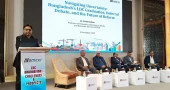
The remarks were made at a seminar on ‘LDC Graduation: Challenges & Prospects’ held on Sunday (9th November 2025) at a city hotel, organised by the Bangladesh-Malaysia Chamber of Commerce and Industry (BMCCI).
Senior policymakers, economists, and industry leaders to discuss strategic imperatives for the post-LDC transition, including trade competitiveness, institutional readiness, and inclusive development joined the seminar.
Commerce Secretary Mahbubur Rahman attended it as the guest of honour, while Professor Dr Selim Raihan, Executive Director of SANEM, delivered the keynote presentation. Economist Dr Zaidi Sattar, Chairman of the Policy Research Institute (PRI), chaired the seminar.
Read more: Tarique for urgent steps to tackle post-LDC graduation challenges
Other speakers included Dr Khondaker Golam Moazzem, Research Director at the Centre for Policy Dialogue (CPD); Dr A Razzaque, Chairman of Research and Policy Integration for Development (RAPID); Anwar-Ul-Alam Chowdhury (Parvez), President of the Bangladesh Chamber of Industries (BCI); and Faruque Hassan, former President of the Bangladesh Garment Manufacturers and Exporters Association (BGMEA).
Commerce Secretary Mahbubur Rahman said, “We request the United Nations General Assembly (UNGA) to visit Bangladesh to assess the latest situation ahead of the potential graduation. In addition to the EU and the USA, the government is in talks with Canada, Australia, Japan, South Korea, and other countries to boost bilateral trade and diversify export destinations.”
Dr Raihan highlighted that Bangladesh’s readiness for LDC graduation is under scrutiny amid global economic volatility and concerns over losing LDC-specific international support measures.
“The core risk lies in the trade sector, given Bangladesh’s heavy reliance on Ready-Made Garment (RMG) exports and duty-free, quota-free (DFQF) market access. The erosion of these trade privileges could cost the country billions in lost earnings and place additional pressure on foreign reserves,” he said.
Read more: Encouraged to see advanced preparation in Bangladesh for post-LDC graduation era: ADB Vice President
He pointed to persistent domestic structural challenges, including macroeconomic stress from low foreign reserves, fiscal gaps, high inflation, and global volatility; structural flaws such as weak tax collection, a fragile banking sector, high export concentration, and limited foreign direct investment (FDI); and reform deficits driven by entrenched ‘rent-seeking networks’ among political, business, and bureaucratic elites that continue to obstruct meaningful policy change
Dr Raihan also critiqued the government’s Smooth Transition Strategy (STS), describing it as ‘overly broad’ with an ‘overextended vision’ that risks becoming an unenforced policy document.
While the private sector advocates for a three-year deferral to gain ‘critical breathing space’ for compliance and to fast-track stalled reforms, securing a delay would be diplomatically challenging.
The UN Committee for Development Policy (CDP) requires evidence of ‘unforeseen and unmanageable’ shocks—not merely delayed reforms or poor preparedness—to grant a deferral. Experts also caution that seeking a delay could signal economic weakness, undermine investor confidence, and entrench complacency rather than promote essential reforms.
Dr Raihan concluded, “The real question is not timing but political will. Any deferral request must be transparent, evidence-based, and paired with a credible, time-bound reform agenda to ensure post-LDC resilience, rather than serving as a retreat.”
Read more: Munshiganj contingent of Advisory Council joins district-level consultation on LDC graduation
11 months ago
Tarique for urgent steps to tackle post-LDC graduation challenges
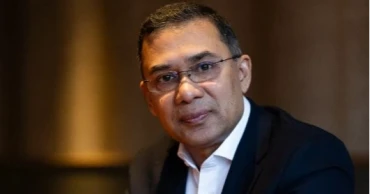
BNP Acting Chairman Tarique Rahman on Tuesday said Bangladesh’s graduation from the UN’s Least Developed Country (LDC) category in November 2026 is a milestone, but warned that the accompanying risks and challenges to the economy and people must be addressed urgently to reap its benefits.
“Graduation is not just a milestone, but it comes with risks and challenges which we need to be honest about, directly affecting our economy and people,” he said in a statement on his verified Facebook page.
Tarique said Bangladesh is on the path to graduate from the UN’s Least Developed Country (LDC) category in November 2026. “What does this mean for the resilience of our businesses, the engines of growth in our communities?”
He said the BNP is concerned about a multitude of issues if Bangladesh does not proceed with caution.
The BNP leader said loss of trade preferences may hurt the country’s garments exports and reduce competitiveness; access to concessional loans and aid will shrink, increasing financial pressure at a time when reserves and debts are already under stress; trade privileges afforded by the World Trade Organization (WTO), including flexibility on subsidies and medicine patents, will no longer apply, raising the cost of essential medicines; and export dependency on one sector makes Bangladesh vulnerable if competitive erodes.
Bangladesh better cuts reliance on LDC-specefic facilities: Anisuzzaman
“We must take urgent steps now to ensure our home grown businesses are not left vulnerable,” he said, stressing the importance of immediate preparations for the post-graduation period.
The BNP leader proposed a set of measures to mitigate the risks, including diversifying exports base beyond garments into ICT, pharmaceuticals and other value-added industries; strengthening public institutions to have better financial discipline to avoid a debt trap; investing in productivity, trade logistics and modern infrastructure to stay competitive globally; and actualising foreign commitments on trade facilities and green financing to support the transition.
Bangladesh’s LDC graduation: Call for stronger trade negotiation capacity
“Let us not leave our workers, farmers and youth behind in a vulnerable place. Bangladesh needs real, tangible progress and opportunities for its citizens before it can reap the benefits of graduating,” said Tarique Rahman.
1 year ago