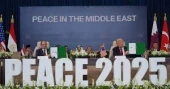
unity in Middle East
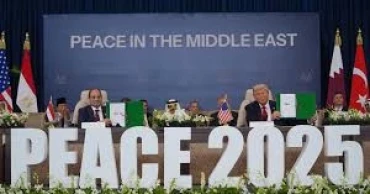
Trump calls for unity in Middle East, urges end to longstanding conflicts
During a global summit on Gaza’s future, former President Donald Trump urged regional leaders to move beyond historical animosities and embrace a new chapter of peace in the Middle East. His remarks followed a visit to Israel celebrating a U.S.-negotiated ceasefire with Hamas.
“We now have a rare opportunity to move past the longstanding grudges and deep-rooted hostilities,” Trump said, calling on leaders to reject the divisions of the past and build a shared future.
The summit in Egypt, which Trump attended after speaking at the Israeli Knesset, came at a moment of cautious optimism following two years of intense conflict between Israel and Hamas.
“Everyone said peace wasn’t possible. But it’s happening,” Trump said, standing beside Egyptian President Abdel Fattah el-Sissi.
Delegates from nearly 30 countries, including Middle Eastern and European nations, attended the summit. Israeli Prime Minister Benjamin Netanyahu was invited but declined due to the proximity of a Jewish holiday.
Trump’s Knesset speech briefly interrupted over Palestine
Trump joined el-Sissi, Turkish President Recep Tayyip Erdogan, and Qatari Emir Tamim bin Hamad Al Thani in signing a framework for Gaza’s future development, which he said would support lasting peace.
While many details about Gaza’s future remain uncertain, Trump expressed a strong commitment to fostering a new regional order.
In his speech to the Knesset earlier in the day—where he received a hero’s welcome—Trump declared victory over Hamas and encouraged Israelis to turn military success into long-term peace.
“You’ve won,” he told lawmakers. “Now it’s time to turn those victories into lasting peace and prosperity for the entire region.”
He also vowed to assist with rebuilding Gaza and appealed to Palestinians to renounce violence once and for all.
All surviving hostages released amid Trump’s visit to Knesset
“After years of pain and loss,” Trump said, “the focus must shift to lifting people up instead of tearing others down.”
In a surprise remark, Trump extended an olive branch to Iran, a country he had ordered strikes against during its brief conflict with Israel earlier in the year. He said the U.S. remained open to cooperation and friendship.
A Fast-Paced Diplomatic Tour
Trump arrived in Egypt behind schedule due to extended speeches at the Knesset, joking about Israeli leaders being long-winded.
During his visit, 20 hostages were released as part of a broader agreement aimed at ending the war that began on October 7, 2023, with a Hamas-led attack. Trump met with some of the released hostages’ families.
A woman told him, “Your name will be remembered for generations.”
Trump received multiple standing ovations in the Knesset, with some attendees wearing red hats echoing his signature campaign slogan, altered to say: “Trump, The Peace President.”
Netanyahu praised Trump as “Israel’s greatest friend in the White House” and pledged to work with him to secure peace. Trump, in turn, urged Israel’s president to pardon Netanyahu, who is facing corruption charges—though hearings have been delayed due to the war.
Trump also took the chance to thank allies and donors while criticizing previous Democratic administrations.
A Fragile But Historic Moment
The first stage of the ceasefire involves releasing the remaining hostages held by Hamas, freeing hundreds of Palestinian prisoners, increasing humanitarian aid into Gaza, and a partial Israeli troop withdrawal from urban centers.
Trump emphasized that the ceasefire marked a pivotal moment to reframe Israel’s relationship with its Arab neighbors.
“The war is over,” Trump told reporters on Air Force One. “People are exhausted. That’s why this peace can hold.”
He credited the opportunity to recent U.S. support for Israel’s actions against Iranian-backed groups like Hamas and Hezbollah. The White House also noted increased engagement from Arab and Muslim nations toward resolving the longstanding Israeli-Palestinian conflict.
Back in February, Trump had envisioned Gaza becoming the “Riviera of the Middle East,” but on the flight to Egypt, he acknowledged the reality. “Right now, it looks like a demolition site,” he said, though he expressed hope to visit it one day.
Key issues remain unresolved, including postwar governance in Gaza, reconstruction plans, and Israel’s demand for Hamas to disarm. Talks could break down, and Israel has warned that it may resume military operations if progress stalls.
Much of Gaza lies in ruins, with its 2 million residents facing severe humanitarian conditions. As part of the deal, Israel has reopened five border crossings to allow aid to flow more freely into the besieged territory, where famine conditions persist.
To support and monitor the ceasefire, around 200 U.S. troops will join a coalition of international partners, NGOs, and private organizations.
11 months ago