national referendum

Referendum: DUCSU announces month-long programme to secure victory for ‘Yes’
Dhaka University Central Students’ Union (DUCSU) has announced a month-long programme comprising 15 events across the country to ensure the victory of the ‘Yes’ vote in the upcoming national referendum.
The initiatives aim to increase public awareness and participation in the referendum under the pro-reforms slogan, “Vote ‘Yes’, Choose a Safe Bangladesh.”
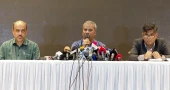
The programmes were announced on Wednesday at a press conference held in front of the DUCSU building. DUCSU Vice President (VP) Shadik Kayem outlined the month-long plan at the briefing.
According to the press conference, the 15 initiatives to build public support in favour of ‘Yes’ include nationwide door-to-door outreach, online campaigns, exhibition debates, seminars on state reforms, exchange meetings with civil society members and journalists, discussions with online activists, a discussion titled “Thoughts of the July Injured,” publication of songs, poems and documentaries, speech competitions, street plays and mime performances, dialogue with student and social organisations, and visits to educational institutions across the country to unite students.
In his written statement, Shadik Kayem said the core spirit of the July mass uprising was the reform of the existing state structure and the establishment of a discrimination-free society. He described the referendum as a historic pathway to implementing those reforms, adding that participating in the referendum and casting a ‘Yes’ vote is a responsibility to uphold the sacred legacy of the blood of the July martyrs.
Hadi shooting: DUCSU leaders march to Home Adviser’s office
He said a ‘Yes’ vote would pave the way for reforms such as limiting any individual from serving as prime minister for more than two terms, ensuring transparency in public sector recruitment, enabling public participation in major constitutional changes, increasing women’s representation, safeguarding the legitimate rights of people of all religions and ideologies, and recognising internet access as a fundamental right. At the same time, it would help end the culture of enforced disappearances, extrajudicial killings, secret detention centres, and other human rights violations.
At the press conference, DUCSU called upon all anti-fascist political parties including BNP, Jamaat, and NCP, along with student organisations, professional bodies, civil society members, and the wider student community and general public to unite and create a nationwide groundswell in favour of the ‘Yes’ vote in the referendum.
8 months ago
Upper house of legislature key to preventing autocracy: Ali Riaz
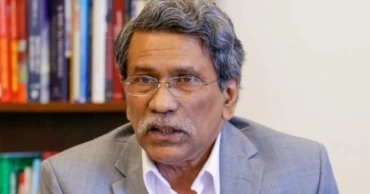
Professor Ali Riaz, special assistant to the Chief Adviser, has said establishing an upper house in the bicameral legislature is aimed at preventing the concentration of power in a single individual in the future.
Speaking at a discussion session held on Monday at Dr Kaiser Rahman Chowdhury Auditorium of Rajshahi Medical College to promote the upcoming referendum and encourage voter participation, Prof Riaz said Bangladesh’s current system has repeatedly allowed one person to accumulate power by exploiting institutional weaknesses.
“We must address this issue institutionally rather than rely on any single individual,” he said, adding that the July charter proposes the creation of an upper house in parliament, which would ensure representation of the people and all political parties, as well as reflect broad consensus in constitutional amendments.
Prof Riaz emphasised the vision of a state upholding equality, human dignity, and justice, noting that institutional decay over the past 54 years has repeatedly allowed personal or party interests to undermine governance.
Read more: Prof Yunus orders strict measures to prevent possible election fraud
He praised the role of the youth in creating opportunities through the 2024 popular uprising to prevent the rise of fascism in the future.
Monir Haider stressed that public approval of the July charter through the upcoming referendum is essential to safeguard the future of the next generation and warned that failure to pass the referendum could lead to a return of authoritarianism.
He assured officials that campaigning for ‘Yes’ or ‘No’ votes would face no restrictions, highlighting that the referendum is a collective agenda rather than a candidate election.
The session, chaired by Divisional Commissioner Dr ANM Bazlur Rashid, was attended by special assistant (consensus) Monir Haider, Rajshahi University of Engineering & Technology Vice-Chancellor Professor Dr SM Abdur Razzak, Rajshahi Range Police DIG Mohammad Shahjahan, and Rajshahi Police Commissioner Dr Mohammad Zillur Rahman.
Read more: Prof Yunus to focus on digital health, youth entrepreneurs, ‘Three Zeros’
Deputy Commissioners, police superintendents, other government officials, local journalists and civil society members from across Rajshahi division also participated.
Divisional Commissioner Dr Bazlur Rashid highlighted initiatives at divisional, district, and sub-district levels to raise awareness about the referendum and urged all officials to fulfill their responsibilities at this critical juncture.
8 months ago
Asif Nazrul decries political rift, says CA to decide on referendum
Law Adviser Asif Nazrul on Thursday voiced disappointment over the widening rift among political parties regarding the proposed national referendum, terming the lack of consensus after prolonged dialogue ‘deeply frustrating’.
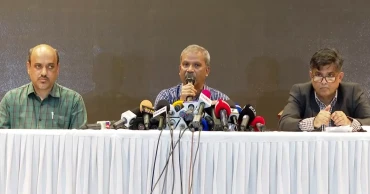
Speaking at a briefing at the Foreign Service Academy in the city, Asif Nazrul said the issue of escalating tensions and disagreements among political parties was discussed at the Council of Advisers meeting.
“The Consensus Commission has proposed two options-- one is to implement the July Charter first and then hold the referendum, if not done within 270 days the constitutional amendment would take effect automatically. Another is to leave the matter to the elected parliament. Parties remain sharply divided over which of the two options they find more acceptable. Disagreements over the timing of the referendum have reached their peak,” he said.
The adviser warned that any attempt by a political party to impose its own position on the government would contradict the spirit of July.
Fakhrul slams ‘one-sided’ July Charter recommendations
“If any political party tries to unilaterally impose its decision on the government, where does that leave the spirit of July? Whatever anyone says, the election will be held in the first half of February. But ensuring a proper electoral environment is not only the government’s responsibility — the parties share that responsibility, too,” he added.
Asked who will make the final decision on the timing of the referendum, Asif said the Chief Adviser Prof Muhammad Yunus will make the ultimate call, with advisers serving as his associates in the process.
“This decision will be taken by the Chief Adviser himself. He will consult us if necessary, and once a decision is made, we will stand firmly by it. The decision will come very soon,” he said.
Responding to questions about political ultimatum, Asif said, “If any party sets a deadline or attempts to enforce its stance that only shows there is no consensus among them. It also means they want the government to uphold their partisan position.”
Memo to CEC: Jamaat among 8 parties demand referendum in Nov
“They have been given enough time for discussions. The disunity they are showing now — they should reflect on where that leaves the spirit of July,” he added with visible frustration.
Asif also discussed the timeframe for implementing the July Charter, noting that the feasibility of automatic implementation within the stipulated 270 days is being reviewed.
He said the Council of Advisers held preliminary discussions on issuing an order to implement the July Charter and that a decision on the matter will be made soon.
11 months ago