northern farmers
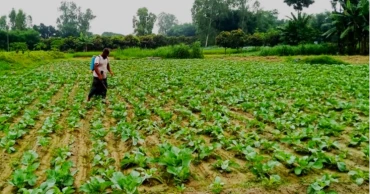
Early winter vegetables bring new hopes to northern farmers
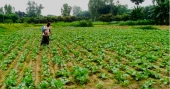
The fields are turning green as farmers work from dawn to dusk to grow early varieties of winter vegetables across the northern districts , hoping to recover from last year’s losses and earn a better return this season.
Although winter is yet to set in, vegetables traditionally associated with the colder months have already begun appearing in markets.
Beans and cabbage are among the early arrivals, while farmers are busy tending fields of cauliflower, radish, cabbage, bottle gourd, tomato, red amaranth, coriander and other winter vegetables.
For many farmers, early cultivation is a race against time—and the weather.
Producing vegetables before the peak winter season allows them to target higher prices, but it also exposes their crops to unpredictable rainfall, pests and diseases.
Despite the risks, the prospect of a good harvest and fair prices is encouraging farmers to expand cultivation across the region.
According to the Department of Agricultural Extension (DAE), farmers in the eight northern districts—Rangpur, Dinajpur, Kurigram, Lalmonirhat, Nilphamari, Gaibandha, Thakurgaon and Panchagarh—have set a target of cultivating early winter vegetables on around 33,900 hectares this season.
The expected production is around 314,000 tonnes.
The region has long been known for its abundant vegetable production, with Rangpur often described as a “vegetable hub”.
1 month ago
TSP fertiliser shortage worries northern farmers; officials point to excessive use
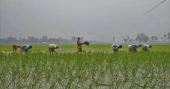
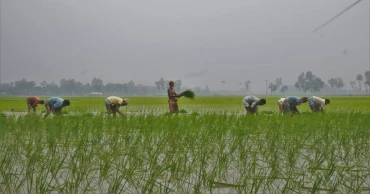
Farmers in northern Bangladesh are struggling to collect triple super phosphate (TSP) fertiliser during the peak Aman rice season, with many saying they cannot obtain the fertiliser even by paying above the government-fixed price.
Although urea and diammonium phosphate (DAP) are generally available according to demand, TSP supplies remain inadequate in several areas, leaving farmers worried about timely application and crop yields.
The situation is particularly difficult for farmers living in chars and riverbank areas where the absence of fertiliser dealers forces them to travel long distances to buy the necessary inputs.
In some of these areas, farmers also alleged that urea and DAP are being sold at prices higher than the government-fixed rates.
The shortage is being reported across the five districts of the Rangpur region—Rangpur, Lalmonirhat, Kurigram, Gaibandha and Nilphamari—at a time when farmers are busy transplanting Aman seedlings in their fields.
Lalmonirhat Sadar upazila farmer Nazrul Islam has cultivated transplanted Aman on eight bighas of land and needs around 100 kg of TSP fertiliser. But after visiting six fertiliser shops, he managed to collect only 45 kg.
Of that amount, he bought 15 kg at the government-fixed price of Tk 27 per kg. For the remaining 30 kg, he had to pay Tk 3-4 more per kg.
Nazrul said TSP is important for strengthening the roots of rice plants and helping them grow quickly.
“I am extremely worried because I have not been able to collect the amount of TSP I need. Even after offering a higher price, I could not get enough,” he said.
He said urea and DAP were available according to demand, but the shortage of TSP was causing serious concern.
“If we cannot apply the required amount of TSP to the fields at the right time, we may not get the expected Aman yield,” he said.
Bablu Mia, a farmer from Char Shailmari in Kaliganj upazila of Lalmonirhat, said farmers are receiving less than 20 percent of the TSP they needed.
He has cultivated Aman on 12 bighas and needs around 170 kg of TSP, but has managed to collect only 50 kg.
“Dealers tell us that there is no TSP available. Even if we are willing to pay more, we cannot get it,” Bablu said.
He said farmers sre able to obtain urea and DAP, but have to pay Tk 2-3 more per kg than the government-fixed prices in some cases.
In Rangpur’s Gangachara upazila, farmer Monnaf Mia of Mahipur Teesta Char has also been struggling to collect TSP. He spent three days visiting fertiliser shops in search of the fertiliser.
Monnaf has cultivated Aman on 10 bighas and needs around 150 kg of TSP. So far, he has managed to collect only 50 kg, paying more than the official price.
Julhas Hossain, a fertiliser dealer in Bajra area of Ulipur upazila in Kurigram, said demand for TSP has increased sharply among farmers.
“My shop receives demand for at least 10,000 kg of TSP every week, but I have been allocated only 500 kg by the government,” he said.
“If the government does not increase the allocation, how can we meet farmers’ demand?” he asked.
According to the Department of Agricultural Extension, the target for Aman cultivation in the five districts of the Rangpur division has been set at 621,550 hectares this year, with a production target of 2,001,391 tonnes of rice.
Last year, Aman was cultivated on 621,398 hectares in the region. The cultivation target has therefore increased by 152 hectares this year, although officials expect the actual acreage could exceed the target.
According to Bangladesh Agricultural Development Corporation (BADC) fertiliser sources, the government has fixed the retail price of urea at Tk 27 per kg, TSP at Tk 27 and DAP at Tk 21.
However, agricultural officials say the current demand for TSP is partly driven by excessive use by farmers.
Dr Sirajul Islam, additional director of the Department of Agricultural Extension in the Rangpur region, said TSP is not required in large quantities at the stage when Aman seedlings are being transplanted.
“Farmers do not want to understand this. They are becoming increasingly dependent on TSP,” he said, adding that necessary nutrients are also available through urea and DAP.
He said farmers are using five to six times more TSP than recommended, creating the impression that government allocations were insufficient compared with demand.
“Demand for TSP is assessed according to recommended agricultural practices, and the government allocates fertiliser accordingly. Farmers are using excessive amounts based on their own expectations, which may actually harm the soil rather than benefit it,” Dr Sirajul said.
He said the agricultural department is conducting awareness campaigns to encourage farmers to use fertiliser according to recommendations.
Meanwhile, Shahidul Islam, joint director of the Rangpur regional BADC (Fertiliser), said there was no overall shortage of fertiliser in the region.
“There is sufficient stock of fertiliser until October,” he said.
He said fertiliser is allocated based on demand submitted by the agricultural department and supplied to farmers through registered dealers every month at government-fixed retail prices.
“If there is a shortage somewhere or fertiliser is being sold at a higher price, dealers may be creating an artificial shortage to make additional profits,” Shahidul said.
He added that the agricultural department and local administration are monitoring the situation in the field.
2 months ago
Teesta Irrigation Project: A lifeline for northern farmers, saves Tk 60cr in diesel costs
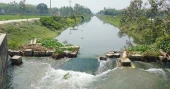
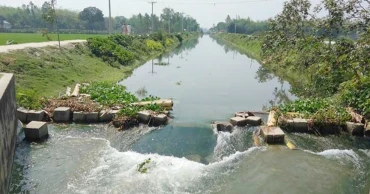
The Teesta Irrigation Project has emerged as a blessing for farmers across four northern districts, ensuring uninterrupted irrigation during the ongoing Boro season when many parts of the country are struggling with fuel and electricity disruptions.
Farmers in Rangpur, Nilphamari, Dinajpur and Bogura say the project has brought relief by providing affordable and reliable irrigation water, boosting hopes of higher crop production this season.
Officials say the project has also helped save nearly Tk 60 crore in diesel costs, reducing dependence on fuel-powered irrigation amid the ongoing energy constraints.
According to the Water Development Board, Rangpur zone, about 10 lakh farmers are currently benefiting from the project, which has ensured uninterrupted irrigation across the region without major disruptions.
“Farmers are getting water smoothly through the Teesta project, which has reduced irrigation costs significantly,” said Mizanur Rahman, Superintending Engineer of Bangladesh Water Development Board, Rangpur.
He said the availability of water through the system is also helping improve soil fertility, further encouraging farmers to expand cultivation every year.
Officials said around 88,000 hectares of land across 12 upazilas in four districts have come under irrigation coverage this Boro season.
Under the system, 32,000 hectares in Nilphamari, 6,000 hectares in Dinajpur, 23,000 hectares in Bogura and 27,000 hectares in Rangpur district are being irrigated through canals fed by water from the Teesta River.
Field visits show water from the river is being channelled through a network of canals, including a 10-kilometre canal from Sayrabari to Bakpur in Gangachara upazila, irrigating around 130 acres of farmland.
Currently, around 8,000-9,000 cusecs of water are flowing in the river, compared to only 3,000 cusecs during the same period last year.
Local farmers say the project has drastically reduced irrigation costs. Abdus Salam, a farmer from Gangachara’s Borobil union, said irrigating one acre of land now costs only Tk 1,200-1,500 under the project, compared to nearly Tk 10,000 using other sources.
He also expressed hope for yields of 85-90 maunds per acre this season.
Farmers say the silt carried by Teesta water helps improve soil fertility and reduces the need for chemical fertilisers. Shahjahan Ali, general secretary of a local water management group, said this natural process increases productivity, with yields rising by 3-4 maunds per bigha compared to other irrigation systems.
However, farmers also pointed out several challenges, including delayed water supply before February, forcing them to depend on alternative sources for seedbed preparation.
They also cited issues such as rodent damage in earthen canals and difficulties in supplying water to uneven land.
In Nilphamari’s Kishoreganj upazila, canal renovation work has temporarily disrupted water supply in some areas, prompting locals to demand earlier and uninterrupted distribution from January.
Despite the limitations, farmers and officials remain optimistic. They say if Teesta is properly dredged and canal flow is improved, agricultural output in the region could increase significantly.
Authorities, however, noted that irrigation timing varies due to different crops such as rice, tobacco and maize. They also said ongoing canal maintenance has limited further expansion this season, but water supply is expected to continue for the next two months.
5 months ago
Hidden hands in the fields: Dealers blamed for artificial fertiliser shortage in north
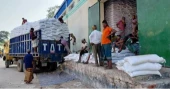
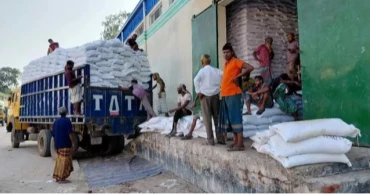
Farmers across five northern districts — Rangpur, Lalmonirhat, Kurigram, Gaibandha and Nilphamari — are facing mounting difficulties due to what they describe as an artificial crisis of non-urea fertilisers such as TSP, DAP and MOP.
Many have been forced to pay extra or delay cultivation, raising fears of reduced crop yields.
Although the Agriculture Department has dismissed the situation as artificial, farmers say fertilisers are simply unavailable through official dealers.
They allege that retailers are selling fertilisers at inflated prices, taking advantage of the high seasonal demand.
Officials insist that there is no genuine shortage, claiming that sufficient stock is available in the Bangladesh Agricultural Development Corporation (BADC) warehouses.
They blame a section of unscrupulous dealers for creating an artificial crisis to earn higher profits.
Farmers struggling to prepare land
With the potato and maize planting season approaching, many farmers have been unable to prepare their fields in time.
Abdar Hossain, a farmer from Karanpur village in Lalmonirhat, said, “When we go to dealers, they say fertiliser is out of stock. But retail shops have plenty—only they charge Tk 8–10 more per kilogramme.”
Govt approves purchase of 65,000 MT of fertilizer
Abu Taleb, a farmer from Baura in Patgram upazila, echoed similar concerns, “Land cannot be prepared without non-urea fertiliser. Fertiliser is needed most now, and demand will rise further in November. If we do not get it on time, we will suffer a big loss.”
In Rangpur’s Gangachara, farmer Sujan Mia said they are unable to get fertiliser even after offering to pay extra. “We are at a loss as to how to cultivate maize in the pasture,” he said.
Another farmer, Joynal Abedin of Kaunia, expressed frustration, saying, “Fertiliser is not available from dealers, but retailers sell it at a higher price. In which country do we live? Nothing seems to be in order.”
BADC Lalmonirhat warehouse assistant director Ekramul Haque said fertilisers are being sold through 144 authorised dealers in the district at government-fixed prices.
“The government sells TSP at Tk 25 per kg, DAP at Tk 19 and MOP at Tk 18 to dealers, who may add a Tk 2 profit per kg,” he explained.
Haque maintained that the warehouse holds sufficient stocks as per government allocation, though he acknowledged that the allocation is around 25 percent lower than total demand.
Similarly, the BADC additional director in Rangpur claimed there was no shortage in any district and blamed dishonest traders for creating panic in the market. “We are closely monitoring the market, and the problem will be resolved soon,” he added.
Sirajul Islam, additional director of the Department of Agricultural Extension in Rangpur, agreed that the crisis was being fuelled by a few profiteering traders. “There is sufficient fertiliser stock in BADC warehouses. Some traders are creating an artificial shortage in the hope of higher profits. Mobile courts are being conducted against such unscrupulous traders,” he said.
416 bags of fertilizer unauthorised for sale seized in Lalmonirhat
11 months ago