Constitutional Reform Council
Constitutional Reform Council's fate may be decided by MPs in Parliament, hints Salahuddin
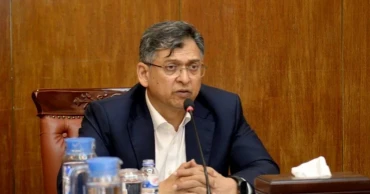
Home Minister Salahuddin Ahmed on Saturday said the issue of forming a Constitutional Reform Council may be discussed on the floor of the Parliament.
“The discussion may take place on the floor (of the House). It was not discussed here,” he said when asked about the Constitutional Reform Council.
Speaking to reporters after a meeting of the Business Advisory Committee, the Home Minister said the matter was not discussed in the committee meeting but could be raised during the parliamentary session.
The minister said Saturday’s meeting was the first sitting of the Business Advisory Committee, where members discussed the duration of the first session of parliament, the agenda for debates, proposed bills and the time allocation for discussion on the President’s address.
According to him, the House will adjourn on March 15. It will remain prorogued from March 16 to March 28 and resume on March 29. The parliamentary session is expected to continue throughout April.
Regarding the ordinances issued during the tenure of the interim government, the minister said a special parliamentary committee had been formed last Thursday to review them.
He said such a committee is traditionally formed before the constitution of ministry-related standing committees.
The Law Minister will formally place the matter in parliament, after which the ordinances will be sent to the special committee for scrutiny and review before being presented to the House in the form of reports, he said.
Asaduzzaman, the Law Minister, said discussions on the issue would take place in parliament.
“We will present our position in parliament. Parliament is the centre of all discussions,” he said in response to a question about the political debate surrounding the Constitutional Reform Council.
Mirza Abbas's post-surgery scan report 'good'
Meanwhile, Opposition Chief Whip Nahid Islam said the opposition would present its position during the discussion on the President’s address.
“We will explain why we walked out and why we felt it was inappropriate for the President to deliver that speech. We will present our position but will not offer thanks to the President,” he said.
On constitutional reform, he added that the opposition leader would raise the issue of the Constitutional Reform Council in parliament at an appropriate time.
He also noted that since the referendum verdict favoured constitutional reforms, there had been an expectation that a separate constitutional reform session would be convened alongside the parliamentary session.
“The government side had earlier said the matter would be discussed in parliament. We want to hear the government’s position there and will determine our course of action accordingly,” he said.
The opposition, he added, would like to see the current parliament transformed into a Constitutional Reform Council as soon as possible.
6 months ago
Referendum, national election together in Feb: Prof Yunus
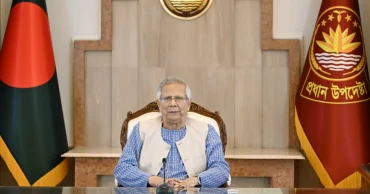
Chief Adviser Professor Muhammad Yunus on Thursday (November 13) said that the national election and the referendum will be held simultaneously in the first half of February next year.
“The referendum will take place in the first half of February simultaneously with the general election. This will not in any way hinder the goals of reform; rather, it will make the election more festive and cost-effective,” he said in an address to the nation in the afternoon.
“Appropriate law will be formulated in due time to facilitate the holding of the referendum. We are taking all-out preparations to hold the election in a festive atmosphere,” the Chief Adviser added.
To implement the July Charter, the government has adopted several key provisions in the order, he said, adding, “These include holding a referendum on the charter’s proposed constitutional reforms and subsequently forming a Constitutional Reform Council.”
Dr Yunus said the interim government, in a meeting of the Council of Advisers, approved the July National Charter (Constitutional Reform) Implementation Order, 2025. “After the completion of necessary signings, it has reached the stage of issuing a gazette. It’s great news,” he added.
CA Prof Yunus to address nation at 2:30 pm
In line with the July Charter, the government has also finalised the question to be presented on the referendum ballot, Prof Yunus said.
The question will be as follows:
“Do you approve the July National Charter Constitutional Reform Implementation Order, 2025, and the following proposals regarding constitutional reforms as enlisted in the July National Charter?”
a) During the election period, the caretaker government, Election Commission, and other constitutional bodies will be formed in accordance with the procedures outlined in the July Charter.
b) The next parliament will be bicameral. Based on the proportion of votes received in the national election, a 100-member upper house will be formed, and any constitutional amendment will require the approval of the majority of the upper house members.
c) The political parties that win the next election will be obligated to implement the 30 reform proposals agreed upon in the July National Charter, including increased female representation in parliament, election of the deputy speaker and parliamentary committee chairs from the opposition, limitation of the prime minister’s tenure, enhancement of presidential powers, expansion of fundamental rights, independence of the judiciary, and strengthening of local government.
d) Other reforms outlined in the July Charter will be implemented as per the commitments of the political parties.
“On the day of the referendum, you will express your opinion on these four issues by casting a single vote — either ‘yes’ or ‘no,’” said Prof Yunus.
If a majority votes “yes,” a Constitutional Reform Council will be formed, comprising the representatives elected in the upcoming parliamentary election. These representatives will also serve as members of the national parliament. The council will complete the constitutional reform process within 180 working days from the date of its first session, he added.
ICT sets Nov 17 to deliver verdict on Hasina case
Within 30 working days after the reform is completed, an upper house will be constituted based on the proportion of votes received in the parliamentary election, and its term will continue until the final working day of the lower house, he said.
In accordance with the pledge to implement the July Charter, provisions will be made to incorporate the July National Charter into the Constitution, he added. “This inclusion has also been specified in today’s approved order.”
10 months ago