July National Charter (Constitution Amendment) Implementation Order, 2025
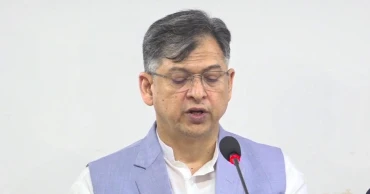
Chief Adviser breached signed July Charter, says Salahuddin
BNP Standing Committee member Salahuddin Ahmed on Thursday said the Chief Adviser has violated the July National Charter through his outlines on the implementation of the charter in his speech to the nation.
“The Chief Adviser himself signed the July Charter. In his speech, he violated the charter by including matters beyond the signed charter and adding new elements that were not mentioned in it,” he told UNB giving his initial reaction to Prof Yunus' address to the nation.
“If we analyse his speech alongside the signed charter, we will see that he has grossly breached it.” the BNP leader added.
Earlier in the day, Chief Adviser Prof Muhammad Yunus announced that the national election and the referendum on the July Charter will take place on the same day.
In a televised address to the nation, he said a meeting of the Council of Advisers had approved the July National Charter (Constitution Amendment) Implementation Order, 2025. “To implement the July Charter, this order includes several important provisions. These include holding a referendum on the constitutional amendment proposals of the charter and, subsequently, the formation of a Constitution Reform Council,” he said.
Later, speaking to reporters at his Gulshan residence, Salahuddin said the interim government and the July National Consensus Commission have created the current political crisis by going beyond the signed July National Charter.
He said the order issued by the government to implement the July National Charter (Constitutional Reform) included ‘many new and personal ideas’ that were never part of the original signed charter.
“We have already made it clear through our party’s press briefing that we will not agree to any matter imposed outside the signed July National Charter, and it will not be binding on the political parties that signed it,” the BNP leader said.
He alleged that several issues have been forcefully added, and political parties were being asked to say ‘yes or no’ to matters not included in the signed charter. “Many of the provisions in the order issued today (Thursday) are new and reflect their (govt’s) personal preferences.”
The BNP leader warned that such steps could lead to division instead of unity. “Some may be happy with this, but are we heading towards disunity in the nation? Are we creating divisions instead of harmony? Will the Chief Adviser take responsibility for that?”
He said the party would review the Chief Adviser’s address to the nation in its forum and issue a formal reaction.
Responding to a question about how the July Charter was violated, Salahuddin said the document was signed in a historic event witnessed by the entire nation. “The printed copies of the signed charter are available to all. Each section contains clear notes on proposals, consent, and notes of dissent from different parties.”
“This was not a conventional note of dissent. It was specifically stated that if any party mentions its differing views in its election manifesto and wins the people’s mandate, it can implement those issues accordingly. Has that principle now been abandoned? If the Chief Adviser goes beyond his own signed document, it amounts to a breach of the charter,” he clarified.
Referring to the proposed ‘Constitution Reform Council’, Salahuddin said the idea was never discussed or agreed upon in the National Consensus Commission.
He questioned the intention behind including such new ideas in the order without the consensus of the political parties.
The BNP leader said the Election Commission, under the Constitution, is responsible for conducting parliamentary and presidential elections.
“The MPs elected through that process will take oath as members of parliament — not as members of any Constitution Reform Council… Setting a timeframe, forming a council, and proposing constitutional reforms within 180 days are new ideas. Do they have the authority to do that?” Salahuddin asked.
He questioned whether dictating the next parliament through such orders has any legal basis. “Is this not interference in the sovereign authority of parliament?”
In Bangladesh, the BNP leader said, there is only one sovereign body — the National Parliament — as per the Constitution. “No court can interfere in discussions or proceedings inside parliament. So imposing such obligations would amount to interfering in the sovereignty of parliament.”
Salahuddin also said the idea of forming a constituent assembly or a reform council was contradictory. “If there had been any national consensus to form such a council, the Constitution would first need to be amended to empower the Election Commission for that purpose. Are we back in the pre-independence situation where we need a constituent assembly again? Bangladesh already has a Constitution. These ideas are conflicting.”
Replying to a question, he said both the government and the National Consensus Commission were responsible for the ongoing crisis. “They formed reform commissions first, then a National Consensus Commission. After nine months of discussions, the National Charter was prepared and signed. Why are you going beyond it now?”
The BNP leader said the crisis began when the consensus commission, chaired by the Chief Adviser himself, made recommendations to the government going beyond the signed charter. “He signed it as the Chief Adviser and then made recommendations to himself.”
He reiterated that BNP wants only the signed July Charter to be implemented. “The charter was prepared and signed based on consensus, including the Chief Adviser’s signature. Let’s just implement that.”
11 months ago

BNP policymakers’ emergency meeting this evening
The BNP Standing Committee is set to hold an emergency meeting on Thursday evening (November 13) following the Chief Adviser’s announcement that the next national election and a referendum will be held on the same day, along with the approval of the July National Charter implementation order.
The meeting will begin at 7pm at the BNP Chairperson’s office in Gulshan, said BNP Media Cell member Sayrul Kabir Khan.
He said BNP Acting Chairman Tarique Rahman will join the meeting virtually and preside over it.Earlier in the day, Chief Adviser Prof Muhammad Yunus announced that the national election and the referendum on the July Charter will take place on the same day.
In a televised address to the nation, he said a meeting of the Council of Advisers had approved the July National Charter (Constitution Amendment) Implementation Order, 2025.
Referendum, national election together in Feb: Prof Yunus
“To implement the July Charter, this order includes several important provisions. These include holding a referendum on the constitutional amendment proposals of the charter and, subsequently, the formation of a Constitution Reform Council.”
A senior BNP leader said while their party welcomes the announcement of the election and the referendum on the same day, it has reservations about the implementation order and the nature of the referendum.
He said the meeting of the BNP Standing, the highest policymaking body of the party, will discuss these issues in detail and decide the party’s next course of action.
Read more: Chief Adviser breached signed July Charter, says Salahuddin
11 months ago
Referendum, national election together in Feb: Prof Yunus
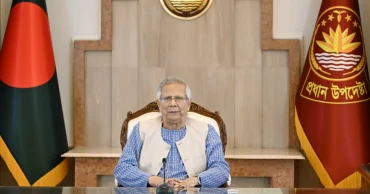
Chief Adviser Professor Muhammad Yunus on Thursday (November 13) said that the national election and the referendum will be held simultaneously in the first half of February next year.
“The referendum will take place in the first half of February simultaneously with the general election. This will not in any way hinder the goals of reform; rather, it will make the election more festive and cost-effective,” he said in an address to the nation in the afternoon.
“Appropriate law will be formulated in due time to facilitate the holding of the referendum. We are taking all-out preparations to hold the election in a festive atmosphere,” the Chief Adviser added.
To implement the July Charter, the government has adopted several key provisions in the order, he said, adding, “These include holding a referendum on the charter’s proposed constitutional reforms and subsequently forming a Constitutional Reform Council.”
Dr Yunus said the interim government, in a meeting of the Council of Advisers, approved the July National Charter (Constitutional Reform) Implementation Order, 2025. “After the completion of necessary signings, it has reached the stage of issuing a gazette. It’s great news,” he added.
CA Prof Yunus to address nation at 2:30 pm
In line with the July Charter, the government has also finalised the question to be presented on the referendum ballot, Prof Yunus said.
The question will be as follows:
“Do you approve the July National Charter Constitutional Reform Implementation Order, 2025, and the following proposals regarding constitutional reforms as enlisted in the July National Charter?”
a) During the election period, the caretaker government, Election Commission, and other constitutional bodies will be formed in accordance with the procedures outlined in the July Charter.
b) The next parliament will be bicameral. Based on the proportion of votes received in the national election, a 100-member upper house will be formed, and any constitutional amendment will require the approval of the majority of the upper house members.
c) The political parties that win the next election will be obligated to implement the 30 reform proposals agreed upon in the July National Charter, including increased female representation in parliament, election of the deputy speaker and parliamentary committee chairs from the opposition, limitation of the prime minister’s tenure, enhancement of presidential powers, expansion of fundamental rights, independence of the judiciary, and strengthening of local government.
d) Other reforms outlined in the July Charter will be implemented as per the commitments of the political parties.
“On the day of the referendum, you will express your opinion on these four issues by casting a single vote — either ‘yes’ or ‘no,’” said Prof Yunus.
If a majority votes “yes,” a Constitutional Reform Council will be formed, comprising the representatives elected in the upcoming parliamentary election. These representatives will also serve as members of the national parliament. The council will complete the constitutional reform process within 180 working days from the date of its first session, he added.
ICT sets Nov 17 to deliver verdict on Hasina case
Within 30 working days after the reform is completed, an upper house will be constituted based on the proportion of votes received in the parliamentary election, and its term will continue until the final working day of the lower house, he said.
In accordance with the pledge to implement the July Charter, provisions will be made to incorporate the July National Charter into the Constitution, he added. “This inclusion has also been specified in today’s approved order.”
11 months ago