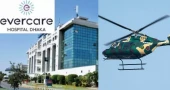
Dhaka's Evercare Hospital
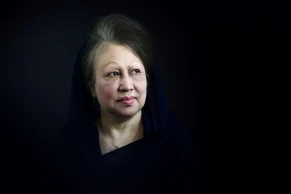
Former Prime Minister Khaleda Zia passes away
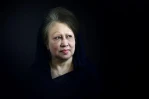
The long, turbulent and towering journey of Khaleda Zia — three-time former Prime Minister and Chairperson of the Bangladesh Nationalist Party (BNP) — came to a solemn end on Tuesday morning at the age of 80.
The chairperson of the Bangladesh Nationalist Party (BNP) breathed her last at 6am on Tuesday, according to AKM Wahiduzzaman, the party’s ICT Affairs Secretary and head of its Online Activists Network.
Khaleda Zia had been receiving treatment at the Coronary Care Unit (CCU) of Evercare Hospital in Dhaka’s Bashundhara residential area since November 23.
The 80-year-old former prime minister has long been suffering from multiple health complications, including arthritis, diabetes, and ailments affecting her kidneys, liver, lungs, heart and eyes. She has been under medical care for these conditions for several years.
Widow of slain President and BNP founder Ziaur Rahman, Khaleda Zia had long been woven into the fabric of Bangladesh’s political drama — its rises, ruptures, hopes, and hostilities.
Her final months were marked by an unrelenting battle against pneumonia, chronic lung infections and persistent cardiac complications. Even as her frail condition worsened, those close to her recall a woman who held on with the same resolve that once defined her political life.
Khaleda Zia’s condition turns extremely critical, say physicians
For supporters, her passing marks the end of an era — a painful goodbye to a matriarch who shaped oppositional politics for decades. For others, it seals the chapter on a figure whose legacy will forever spark debate. But for Bangladesh, the departure of Khaleda Zia leaves behind a silence — one heavy with history, conf
“It is with a heavy heart that we announce the passing of our esteemed Chairperson,” Fakhrul said, his voice choked with emotion.
Khaleda Zia was admitted to Evercare Hospital on the night of November 23 on the advice of a medical board after being diagnosed with infections in her heart and lungs.
She had been nominated for three constituencies — Dinajpur-3, Feni-1 and Bogura-7 — for the upcoming 13th parliamentary election.
Khaleda Zia’s death marks the end of an era in Bangladesh politics. She was known for her firm commitment to democracy and her significant contributions to national politics and governance.
She is survived by her eldest son Tarique Rahman, three granddaughters, and millions of supporters and admirers. Her long political career has left a lasting mark on Bangladesh’s political landscape and inspired generations.
Khaleda had long been suffering from liver cirrhosis, arthritis, diabetes, kidney, lung, heart and eye problems.
Since her conditional release in 2020, she had been receiving regular treatment under a medical board led by cardiologist Prof Shahabuddin Talukder.
Jamaat Ameer mourns Khaleda Zia’s death
In June 2022, she suffered a heart attack caused by a 95 percent blockage in her left artery. A stent was placed to remove the blockage. Doctors detected two more blocks, but they could not be removed due to her fragile health.
On June 23, 2024, specialist doctors led by Prof Shahabuddin Talukder implanted a pacemaker in her chest.
During the Awami League government, her doctors repeatedly recommended sending her abroad after she was diagnosed with liver cirrhosis in November 2021. Despite the severity of her condition, she was not granted permission to travel, as the government cited legal complications relating to her convictions.
On October 26, 2023, as her condition worsened, a group of US specialist doctors performed a TIPS procedure to stop water accumulation in her abdomen and chest and to prevent bleeding caused by liver complications.
On August 6, 2024, a day after the fall of the Awami League government, Khaleda Zia was fully freed through an order from President Mohammed Shahabuddin, clearing the way for her overseas treatment.
After a tearful reunion with her eldest son and BNP Acting Chairman Tarique Rahman at London’s Heathrow Airport — their first meeting in more than seven years — she was taken directly to the London Clinic.
She received treatment there for 17 days under a medical board led by liver specialist Professor John Patrick Kennedy.
After being discharged on January 25, she moved to Tarique Rahman’s residence, where she continued treatment under the supervision of Professors Kennedy and Jennifer Cross.
She celebrated Eid in London with her family for the first time in more than six years.
On May 6, she returned home on a Qatari royal air ambulance, accompanied by her two daughters-in-law, including Dr Zubaida Rahman. The return followed nearly four months of advanced treatment in London and drew a large and emotional public reception.
Since her return, Khaleda had been under the care of a medical board and her personal physicians at her Gulshan residence. She was also hospitalised at Evercare on several occasions.
Born on August 15, 1945, in Dinajpur, Khaleda Zia led a simple early life before her marriage to General Ziaur Rahman, who would later become President of Bangladesh. She played a supportive role during the 1971 Liberation War.
After Ziaur Rahman’s assassination in 1981, she entered politics. She became BNP Chairperson in 1984 and held the position for nearly four decades.
She became a central figure in the movement against military ruler HM Ershad, earning wide respect for her steadfast and uncompromising commitment to democracy.
Khaleda Zia became Bangladesh’s first female Prime Minister in 1991. On 20 March 1991,
She was sworn in as Bangladesh’s first female Prime Minister, marking a historic milestone in the country’s political history.
She played a key role in reintroducing the parliamentary system of government, replacing the presidential system. The 12th constitutional amendment, which she piloted, was passed by the Jatiya Sangsad on 6 August 1991, and Khaleda Zia took oath under the new parliamentary system on 19 September 1991.
During her first term (1991–1996), her government made significant progress in education, including introducing free and compulsory primary education, tuition-free schooling for girls up to class ten, stipends for female students, and the Food for Education program.
Her administration also promoted nationwide tree plantation campaigns and initiated the construction of the Jamuna Multipurpose Bridge. On the regional front, Khaleda Zia revitalised the South Asian Association for Regional Cooperation (SAARC) by hosting a summit in Dhaka in 1993.
However, her first term was also marked by political challenges. Opposition parties, including the Awami League, Jatiya Party, and Jamaat-e-Islami, launched movements demanding a neutral caretaker government to oversee parliamentary elections, creating significant political unrest.
Khaleda Zia was re-elected for a second consecutive term after BNP’s victory in the 6th Jatiya Sangsad elections on 15 February 1996, although all major opposition parties boycotted the polls. To address demands for a caretaker system, the 6th Jatiya Sangsad passed the 13th constitutional amendment. Khaleda subsequently handed over power to a caretaker government on 30 March 1996. In the elections held under Justice Muhammad Habibur Rahman’s caretaker administration on 12 June 1996, the BNP was defeated by the Awami League.
Between 1996 and 2001, she served as Leader of the Opposition.
In the October 1, 2001 election, held under a neutral caretaker government, Khaleda Zia’s BNP-led alliance won a landslide victory, and she took office as Prime Minister for the third time on October 10.
During her third term, her government oversaw a significant rise in export earnings and remittances from Bangladeshi workers abroad.
The industrial and telecommunications sectors grew steadily, and foreign direct investment gradually increased.
Her administration also took major steps to improve law and order, including launching Operation Clean Heart and creating the Rapid Action Battalion.
There was a strong crackdown on Islamic extremist groups, including the JMB and HUJI. Her administration faced ongoing criticism over allegations of corruption and political unrest.
Khaleda Zia held the unique record of winning from five constituencies in different elections and never personally losing any seat.
Khaleda Zia left office on 28 October 2006. In the subsequent Ninth Jatiya Sangsad election on 29 December 2008, held under the two-year caretaker government of Dr Fakhruddin Ahmed, her party won only 30 seats.
During the caretaker government period in 2007–2008, several corruption cases were filed against her.
On September 3, 2007, she was arrested on corruption charges and spent nearly a year in detention before her release on September 11, 2008. After a heavy defeat in the December 2008 election, she again became Leader of the Opposition.
She continued her push for electoral reforms after the abolition of the caretaker system in 2011. Her political activities faced restrictions, including confinement to her house and office before the 2014 election, which BNP boycotted.
In 2014, her Gulshan office was blocked by sand trucks for weeks, limiting her ability to protest. She remained in her office for 92 days. During this time, she could not even attend the funeral of her younger son, Arafat Rahman Koko, due to arrest warrants issued in graft cases.
Her family members gradually moved abroad after 2008, leaving her largely isolated as she battled both legal and health challenges.
On February 8, 2018, she was jailed after being sentenced in the Zia Orphanage Trust case. The High Court later extended her sentence to 10 years, and she was also convicted in the Zia Charitable Trust case.
She was released on March 25, 2020, on humanitarian grounds during the COVID-19 pandemic, but was restricted to her home and barred from leaving the country.
On August 6, 2024, Khaleda Zia was fully freed after President Mohammed Shahabuddin, exercising his authority under Article 49 of the Constitution, exempted her from all remaining sentences.
She made her first public appearance in six years at the Armed Forces Day reception at Senakunja on November 21, 2024, and attended the same event again this year, just two days before being admitted to hospital.
Khaleda Zia is remembered as an uncompromising champion of democracy. In 1986, when major political parties joined the election under military ruler Ershad, she boycotted it, refusing to legitimise an autocratic regime.
Even when the army-backed government later tried to negotiate, offered her ways to return to power, and attempted to send her abroad, she firmly refused.
She said Bangladesh was her only home and she would never leave her country or her people.
Her resolve was also clear in 2017. Although she could have stayed in the UK as convictions in what she described as “false cases” loomed, she returned to Dhaka knowing she would likely be jailed.
Six months later, she indeed went to prison. Such decisions defined her character — a leader who never compromised on principles, never surrendered to authoritarian pressure, and never abandoned her people.
Khaleda Zia was an icon of unity, widely respected and accepted not only by the people but also by leaders across most political parties.
Khaleda in critical condition, undergoing challenging treatment phase: Dr Zahid
During times of national crisis, she brought people together and guided the nation through challenging periods.
Her broad acceptance was evident when she was admitted to the hospital: leaders from numerous political parties visited to inquire about her condition, many publicly expressed concern, and offered prayers for her recovery.
Social media was also flooded with messages and well-wishes, reflecting the deep respect and affection she commanded across the country.
Her journey of life — from a private homemaker to a defining figure in national politics — reflects her unwavering dedication to public service, even though personal tragedy, political turbulence and prolonged imprisonment. Her legacy will continue to shape Bangladesh’s democratic history.
9 months ago
Fakhrul warns of ‘targeted killings’ after gun attack on Hadi
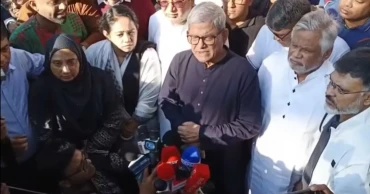
BNP Secretary General Mirza Fakhrul Islam Alamgir on Sunday (December 14, 2025) voiced concern that incidents similar to the gun attack on Sharif Osman Hadi may recur, warning that the enemies of Bangladesh are once again resorting to targeted killings in an attempt to destabilise the country.
“When Bangladesh is seeing a new sun and moving towards a new chapter, and when the people of Bangladesh are dreaming of building a democratic country through a fair election, at that very time its enemies have once again indulged in a killing spree,” he said.
The BNP leader made the remarks while talking to reporters after paying tributes to the martyred intellectuals at the Martyred Intellectuals Memorial in Mirpur in the morning.
He said their party strongly condemned the attack on Dhaka-8 independent candidate Sharif Osman Hadi. “We fear that similar incidents may happen again,” Fakhrul said.
Read more: What we know about at least one of Hadi's would-be assassins
Osman Hadi was shot in Dhaka on Friday, a day after the Election Commission announced the schedule for the 13th parliamentary election and referendum, leaving him seriously injured.
He is currently undergoing treatment at Evercare Hospital with a bullet injury to his head.
Recalling the history of December 14, Fakhrul said when the defeat of the Pakistani occupation forces became inevitable and the Liberation War forces surrounded Dhaka, the occupation army, with the help of their collaborators, abducted and killed the nation’s brightest minds to destroy Bangladesh intellectually.
“They picked up university teachers, doctors, researchers, writers, journalists and many others and killed them. It was a planned massacre aimed at making the nation intellectually weak,” he said.
Fakhrul said the nation remembers this painful history every year on this day.
Read more: Tarique Rahman to return on Dec 25 after 18 years in exile
On behalf of party Chairperson Begum Khaleda Zia, who is currently ill, and Acting Chairman Tarique Rahman, he said they came to the memorial to pay homage to the martyred intellectuals, marking the Martyred Intellectuals Day.
“We have taken an oath that, at any cost, we will protect Bangladesh’s independence and sovereignty and move the democratic journey forward,” Fakhrul said.
He paid deep respect to all those who sacrificed their lives for the country’s independence and democracy, and also remembered BNP founder and proclaimer of independence, martyred President Ziaur Rahman, for his role in bringing fundamental changes to Bangladesh.
The BNP leader also remembered the young people who were killed during the mass uprising in 2024.
BNP senior leaders and leaders and activists of its Dhaka city units and affiliated organisations were present there.
Read more: Roots of Hadi's would-be assassins to be uprooted: Attorney General
9 months ago
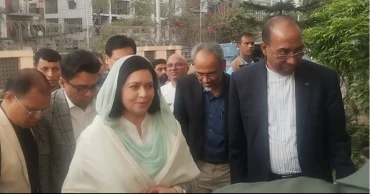
Zubaida visits Evercare Hospital to stand beside ailing Khaleda
Dr Zubaida Rahman, wife of BNP Acting Chairman Tarique Rahman, visited Evercare Hospital on Saturday afternoon (December 06, 2025) to be by the side of BNP Chairperson Begum Khaleda Zia, who has been undergoing treatment there for the past two weeks.
Atiqur Rahman Rumon, a member of the BNP Media Cell, said Zubaida reached the hospital at around 3:38pm after spending some time with her mother at their Dhanmondi residence, Mahbub Bhaban.
“She is now in the CCU, staying by Begum Khaleda Zia’s bedside,” Rumon said.
He said Zubaida returned to her father’s Dhanmondi home late on Wednesday night, where her mother, Syeda Iqbal Mandu Banu, is also staying.
Read more: Zubaida goes to Evercare again at night
Zubaida arrived in Dhaka on Friday morning from London on a Biman Bangladesh Airlines flight.
She went straight from Hazrat Shahjalal International Airport to Evercare Hospital to see the BNP chief.
Since her arrival, she has attended several meetings with members of Khaleda Zia’s medical board.
Although she had been joining earlier meetings virtually, she met the board members in person for the first time on Friday.
Rumon said Zubaida has been closely monitoring Khaleda Zia’s condition round the clock. “Even when she goes home, she stays in constant touch with the doctors by phone to stay updated about her mother-in-law’s health.”
Read more: Air ambulance delay may slightly push back Khaleda Zia’s departure
The BNP chief has been receiving treatment at Evercare Hospital since November 23 and was moved to the Critical Care Unit on November 27 with multiple health complications.
Khaleda’s treatment is being supervised by a medical board led by Professor Shahabuddin Talukder, with both local and foreign specialists involved.
Dr Zubaida Rahman — also a member of the medical board — arrived in Dhaka from London to accompany her mother-in-law abroad once she is cleared to fly.
Read more: Tarique Rahman may return home anytime: Amir Khosru
10 months ago
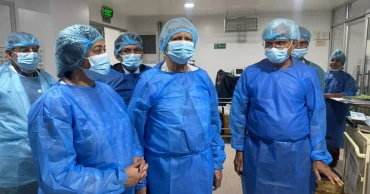
Prof Yunus visits Evercare Hospital to enquire about Khaleda’s health
Chief Adviser Prof Muhammad Yunus visited the Evercare Hospital in the city Wednesday evening (December 03, 2025) to see three-time former Prime Minister, former President’s wife and BNP Chairperson Begum Khaleda Zia.
He spent around 30 minutes at the hospital after 7pm and enquired about her health condition, a senior official at the Chief Adviser’s Office told UNB.
Read more: Army, BAF helicopters to conduct trial landing, takeoff near Evercare Hospital
Prof Yunus urged Khaleda Zia's family and party leaders and activists to be patient, and reiterated the government's assurance of all kinds of cooperation.
The Chief Adviser called on the people of the country to pray for Khaleda Zia's speedy recovery.
National Security Adviser Dr Khalilur Rahman accompanied the Chief Adviser during the visit.
10 months ago
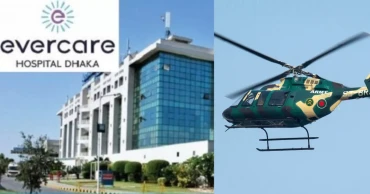
Army, BAF helicopters to conduct trial landing, takeoff near Evercare Hospital
The Bangladesh Army and Bangladesh Air Force (BAF) will conduct trial landing and takeoff of helicopters on two open fields near Evercare Hospital in the capital on Thursday (December 4).
The flight landing and takeoff will take place following the security protocol of the Special Security Force (SSF), according to the Chief Adviser’s press wing.
Read more: Govt declares Khaleda Zia a ‘very very important person’
Authorities have requested all to avoid spreading any rumour or confusion regarding the operation.
Special Security Force (SSF) protection has been deployed for former prime minister and BNP Chairperson Khaleda Zia, now undergoing treatment at Evercare Hospital, after she was declared a ‘very very important person’ (VVIP).
Khaleda Zia was admitted to the hospital on the night of November 23 on the advice of the medical board after being diagnosed with infections in her heart and lungs.
Read more: Army, Navy, Air chiefs visit Khaleda at Evercare
10 months ago

UK specialist arrives in Dhaka to assist Khaleda’s treatment
A specialist physician from the United Kingdom, Dr Richard Beale, arrived in Dhaka on Wednesday (December 03) to assist in the treatment of BNP Chairperson Khaleda Zia.
He reached Evercare Hospital around 10:30 am and joined the ongoing medical efforts for the ailing former prime minister.
In addition to the UK specialist, another medical team from China is scheduled to arrive today to support her treatment, though their arrival was originally planned for Tuesday (December 02).
Read more: Khaleda’s health still fragile, doctors report no improvement
Earlier on Monday, a five-member medical team from China had already arrived in Dhaka.
According to the medical board overseeing her treatment, the team expected this evening is the main group.
On Tuesday, Khaleda Zia’s personal physician, Dr AZM Zahid Hossain, briefed reporters about her health condition, urging patience.
Read more: Concern for Khaleda Zia goes far beyond BNP, says Rizvi
He said the BNP chief is currently able to receive the treatments prescribed by the medical board, and there is hope for her recovery.
Dr Hossain added that the medical board will decide whether she needs advanced treatment abroad, with the UK specialist present to assist in that assessment.
Khaleda Zia was admitted to Evercare Hospital on November 23 with multiple health complications. Her condition worsened on November 27, prompting doctors to transfer her to the Coronary Care Unit (CCU), where she remains under intensive treatment.
Read more: Army, Navy, Air chiefs visit Khaleda at Evercare
10 months ago
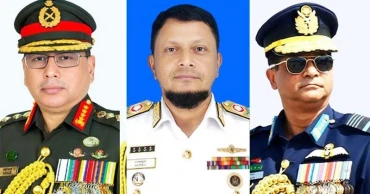
Army, Navy, Air chiefs visit Khaleda at Evercare
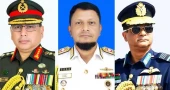
The chiefs of Army, Navy and Air on Tuesday night (December 02, 2025) visited ailing BNP Chairperson Khaleda Zia at Evercare Hospital in Dhaka.
According to Inter Services Public Relation (ISPR), chief of Army Staff General Waker-Uz-Zaman, chief of Naval Admiral M Nazmul Hassan, chief of Air Marshal Hasan Mahmood Khan visited the former prime minister.
Read more: Tarique Rahman’s return a personal, family decision: Khosru
Several political leaders and others are visiting Khaleda Zia who has been undergoing treatment at the hospital since November 23.
Meanwhile, two specialist medical teams from the UK and China are scheduled to arrive in Dhaka on Wednesday morning (December 03, 2025) to support the medical board formed to ensure treatment of the BNP chairperson.
Read more: Concern for Khaleda Zia goes far beyond BNP, says Rizvi
10 months ago
Khaleda’s health still fragile, doctors report no improvement
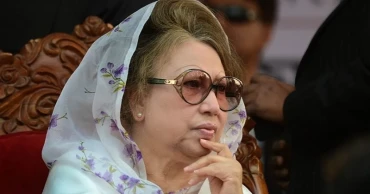
The health condition of BNP Chairperson Begum Khaleda Zia, now undergoing treatment at Evercare Hospital in the capital, has not shown any significant improvement, according to her medical board members and senior party leaders.
Doctors say the former prime minister is still suffering from pneumonia, which has caused infections in both her heart and lungs.
They said they are trying their utmost to bring the infections under control.
A member of the medical board, wishing to remain unnamed, said excess fluid has built up in her body, requiring regular dialysis.
Read more: No objection to Tarique’s return, says govt
She is also being given the oxygen support needed to help her breathe more comfortably.
Despite her critical condition, he said Khaleda Zia remains responsive, can move her hands and feet slightly, and is able to speak a few words at times.
BNP Joint Secretary General Khairul Kabir Khokon said their party chairperson’s condition is stable, with no marked improvement or deterioration.
“I went to the fourth floor of the hospital and spoke to her doctors. They told me it is still not possible to say when her condition might improve, but they remain hopeful. They said they are trying their best, and she may improve — now we just have to wait and see,” he told reporters after meeting the medical team.
BNP leaders and family members said if her condition improves, she may again be taken abroad for advanced treatment. Preparations have already begun, though BNP Secretary General Mirza Fakhrul Islam Alamgir said on Friday evening that she is still not medically fit to travel.
Speaking at a press conference at the BNP Chairperson’s Gulshan office, Fakhrul said the medical board treating Khaleda Zia believes she may need treatment abroad, but her present condition does not allow travel.
He said distinguished doctors from Bangladesh, as well as specialist physicians from Johns Hopkins in the United States and the London Clinic in the UK, are overseeing her treatment. The full medical board held a detailed meeting for nearly two and a half hours on Friday night.
“They discussed her treatment in depth and shared their views on the next steps. The board said she may need to be taken abroad, but in her current condition it is not possible. She is not fit for overseas travel right now,” Fakhrul said.
Once her condition stabilises, he said the medical board will consider whether she can travel abroad.
Read more: Khaleda may be taken to London for treatment, says Mahdi Amin
Fakhrul also said preparations for possible overseas treatment are already underway.
“Visa procedures, communication with countries where treatment may be possible, and other formalities have been discussed. These preparations are progressing so that, if the need arises and she becomes fit to fly, a quick decision can be made,” he said.
Khaleda Zia has been under intensive monitoring since she was admitted to Evercare Hospital on 23 November with severe infections in her heart and lungs. She was first kept in a cabin but was later moved to the Coronary Care Unit (CCU) as her condition worsened. Members of the medical board have been working round the clock, closely observing her vital signs.
Another medical board member told UNB that the BNP Chairperson’s condition remains complicated.
“She is on dialysis due to excess fluid in her body. The main reason is that her mitral valve has become stiff, preventing the heart from pumping blood properly. Some blood is leaking back through the valve, which raises the risk of right-side heart failure,” he said.
He also said a severe infection has put her body under extreme stress, while acute pancreatitis has further worsened her condition.
BNP Standing Committee member Dr Abdul Moyeen Khan said both local and foreign doctors are providing all necessary treatment. “Specialist doctors from abroad are also involved. Whatever treatment she needs is being given,” he said.
No objection to Tarique’s return, says govt
Mahdi Amin, adviser to BNP’s acting chairman Tarique Rahman, wrote in a Facebook post on Saturday that the Zia family is planning to take Khaleda Zia to London for advanced treatment once her condition improves even slightly.
He said Tarique Rahman and his wife have already contacted the London hospital and the specialist doctors under whose care she stayed for four months earlier this year, when she showed significant improvement.
“Arrangements are being made to organise a specially equipped, state-of-the-art air ambulance for that purpose,” Mahdi wrote.
Khaleda’s former press secretary Maruf Kamal Khan also wrote on Facebook that her condition has not improved noticeably. He said the family is considering taking her to London, Singapore or even China, depending on the medical board’s approval.
Nagorik Oikya President Mahmudur Rahman Manna, who visited the hospital on Saturday, said preparations are underway to take her to Singapore or Europe, but she is “not in a condition to fly yet”.
As large numbers of people have continued gathering around the hospital, Mirza Fakhrul and other senior BNP leaders have urged the public not to crowd the area. They said the overwhelming number of visitors has made hospital staff and doctors uneasy, affecting the treatment of Khaleda Zia as well as other patients.
Read more: Khaleda may need treatment abroad, but not fit for travel: Fakhrul
Apart from BNP leaders, several other political party leaders also visited Evercare Hospital on Saturday to inquire about her health. Among them were Bangladesh Khilafat Majlis Ameer Maulana Muhammad Mamunul Haque, NCP Senior Joint Member-Secretary Dr Tasnim Jara, Chief Coordinator Nasiruddin Patwari and Chief Organiser (South) Hasnat Abdullah.
Speaking to reporters, they urged the people of the country to pray for Khaleda Zia’s speedy recovery.
Hasnat Abdullah blamed the former prime minister’s declining health on inadequate medical care during her imprisonment. He alleged that she had been denied proper treatment in jail, which led to the gradual deterioration of her condition.
He said people across the country, irrespective of political views, were praying for her recovery.
Meanwhile, prayers continue nationwide for the former prime minister’s health. Since Friday, people from different walks of life have been posting on social media expressing deep concern and seeking divine blessings for her quick healing.
Read more: Khaleda responding to treatment: Dr Zahid
10 months ago