Spain

Tens of thousands protest across Spain over Ceuta border crisis
Tens of thousands of people took to the streets across Spain on Wednesday to protest the ongoing humanitarian and border crisis in Ceuta, demanding urgent solutions and blaming Prime Minister Pedro Sánchez's government for its handling of the situation.
Ceuta, a small Spanish territory on the northern coast of Africa, usually marks its Sept. 2 annual holiday with official ceremonies and cultural events. This year, however, the celebrations were overshadowed by Spain's worst border crisis in recent memory.
In Madrid, authorities said around 50,000 people joined the protest. After the demonstration ended, an Associated Press journalist heard gunshots and explosions, while Spanish newspaper El País reported that police used rubber bullets and tear gas to disperse crowds.
Large protests were also held in Barcelona, Valencia and Seville.
Waving Spanish flags, protesters chanted slogans against Sánchez and irregular migration, including calls for a “united Ceuta” and demands for migrants to leave the city.
The protests came weeks after around 72,000 people swam, climbed or rushed across the border into Ceuta from Morocco in late July. At least 90 people died while attempting to reach the Spanish territory.
Although most of the migrants later returned or were sent back across the border, the Spanish government said around 5,000 people, including 1,200 minors, remain in Ceuta. Local authorities have put the number even higher.
The sudden arrival of tens of thousands of people placed enormous pressure on Ceuta, which has a population of about 84,000, and left many residents frustrated. Local officials accused Spain's central government of failing to act on warning signs before the border crossing.
Ceuta's regional leader Juan Jesús Vivas said the incident was more than a migration crisis.
“What happened was the violation of Spain's territorial integrity,” he said during an official event marking the city's annual holiday.
Vivas, a member of the opposition conservative Popular Party, has called on the government to strengthen Ceuta's border with Morocco and reduce Spain's dependence on cooperation from its neighbour.
The Popular Party and the far-right Vox party have made the Ceuta crisis a major political issue as they seek to challenge Sánchez's left-wing government.
Spain's Territorial Policy Minister Ángel Víctor Torres, however, dismissed Wednesday's protests as politically motivated.
“This is not to show support for Ceuta or its residents; it is to attack the government of Spain,” he said.
The Spanish government has denied abandoning the city and recently allocated 309 million euros ($357 million) to support Ceuta's social services, migrant accommodation, economy and security.
Questions have also been raised about whether Morocco could have done more to prevent the mass border crossing. Sánchez has defended Moroccan authorities, saying they helped quickly return most of those who entered Ceuta.
The Spanish prime minister has claimed that misinformation on social media, including posts allegedly amplified by accounts linked to Russia and Israel as well as right-wing groups, worsened the crisis. He did not present public evidence to support the allegations.
Russia and Israel have rejected the claims.
Meanwhile, life in Ceuta has yet to return to normal. Many migrants, including unaccompanied minors, are still sleeping on the streets or camping on beaches as authorities struggle to provide shelter, complete registration and return eligible migrants to Morocco.
“We're suffering and want to reach Europe or find a solution,” Moroccan migrant Nebil Tazi told AP, saying many people were still sleeping on the beach after waiting for weeks.
Vivas said restoring normal life in Ceuta should now be the main priority. He also vowed to continue seeking answers about what led to the mass crossing.
“If we don't strengthen the border, there will always be someone tempted to use migration as a tool for political purposes,” he said.
In a video message released Wednesday, Sánchez said his government was using all available resources to help restore calm and normalcy in Ceuta.
The city's annual holiday marks Sept. 2, 1415, when Portuguese forces took control of the territory. Ceuta later came under Spanish rule in 1580.
1 month ago
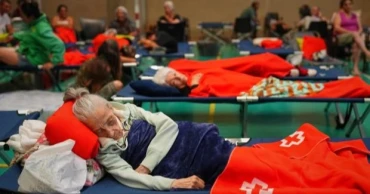
More than 200,000 flee wildfires in France and Spain as blazes spread rapidly
More than 200,000 people were forced to evacuate their homes in France and Spain on Friday as fast-moving wildfires swept across both countries, threatening communities near Bordeaux and Madrid.
Authorities said about 141,000 people were evacuated from southwestern France, while another 60,000 fled their homes in central Spain as firefighters struggled to contain multiple blazes fueled by extreme heat and dry conditions.
Officials in both countries said the fires spread so quickly that emergency crews were caught off guard. In Spain, firefighters said some blazes were too intense to tackle directly, while in France, some residents escaped by boat as flames reached the Atlantic coast.
Although dozens of firefighters were injured in France, no deaths had been reported in either country by Friday. Police went door-to-door urging people to leave as thick smoke and flames approached towns.
Fire moves toward BordeauxFrench Interior Minister Laurent Nunez said a major wildfire that began near the Cap Ferret peninsula was moving toward the city of Bordeaux after changing direction with the wind.
The fire has burned around 140 square kilometres of land, forcing about 110,000 people to evacuate in the Gironde region.
President Emmanuel Macron ordered the government to activate its national crisis response and instructed the military to assist emergency services.
Officials said the fire, which started on Wednesday near the Atlantic coast about 60 kilometres from Bordeaux, has destroyed 53 homes and a campsite. Forty-two firefighters have been injured.
Around 1,500 people were evacuated from the Cap Ferret peninsula by sea, using water taxis and larger boats to reach the nearby city of Arcachon.
A separate wildfire in the Landes department forced another 31,000 people to leave their homes. Authorities believe both French fires were caused accidentally.
France also requested assistance from European Union partners. Macron said Croatia, Portugal, the Czech Republic and Slovakia were sending firefighting aircraft and helicopters to help battle the blazes.
Spain declares national wildfire emergencySpain declared a national wildfire emergency for the first time after fires near Madrid and in the neighboring province of Ávila forced tens of thousands of residents to evacuate.
Prime Minister Pedro Sánchez expressed support for affected families and said he would visit the fire-hit areas on Saturday.
The fires are being driven by a heatwave, with temperatures expected to exceed 39 degrees Celsius.
Two large fires west of Madrid merged into one massive blaze that burned about 30 square kilometres by Friday afternoon. Madrid regional leader Isabel Díaz Ayuso described it as the worst wildfire in the region's history.
Authorities also ordered about 20,000 more people to remain indoors as a precaution, while emergency crews focused on protecting the historic town of San Lorenzo de El Escorial.
In Ávila province, another wildfire has burned about 90 square kilometres. Police arrested one person and are investigating another after suspecting that heavy machinery may have sparked the blaze.
Residents described chaotic scenes as smoke and flames surrounded their communities before evacuation orders were issued.
A severe wildfire seasonSpain has experienced one of its worst wildfire seasons in recent years.
Firefighters are still battling the country's second-largest wildfire on record in Guadalajara province, where about 320 square kilometres have burned over the past week.
Earlier this month, 13 people died in a wildfire in southern Spain, the country's deadliest such incident in recent memory.
Spain's Ecological Transition Ministry said about 1,140 square kilometres have burned nationwide so far this year—more than five times the area destroyed during the same period in 2025.
Experts say climate change, prolonged heatwaves and the abandonment of rural farmland have increased the risk of larger and more destructive wildfires, with vegetation now growing much closer to homes and villages.
2 months ago
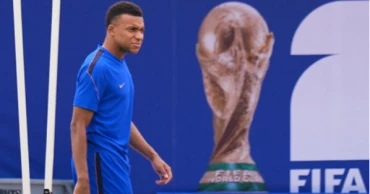
France, Spain set for blockbuster World Cup semifinal with unbeaten records on the line
France and Spain will put their unbeaten records on the line when they face each other in the first semifinal of the FIFA World Cup on Tuesday, with only one team earning a place in Sunday's final.
Both sides are playing in their 17th World Cup and neither has trailed in any match during this year's tournament. France, led by Kylian Mbappé, and Spain, inspired by teenage star Lamine Yamal and impact substitute Mikel Merino, will meet at AT&T Stadium, home of the NFL's Dallas Cowboys.
Top-ranked France has scored 14 goals while conceding only twice in the tournament. Mbappé, winner of the 2022 Golden Boot, has scored eight goals to share the tournament lead with Argentina captain Lionel Messi. The French forward is also just one goal away from matching Messi's career World Cup record of 21 goals.
"We are confident because of the journey we have had so far, but we also want to remain humble, which has defined us since the start of the tournament," France midfielder Adrien Rabiot said.
Mbappé, 27, has now scored 20 goals in 20 World Cup matches. He famously scored in France's 2018 final victory over Croatia, becoming only the second teenager after Pele to score in a World Cup final. Coach Didier Deschamps said Mbappé is fully fit after being substituted in the 77th minute of France's quarterfinal victory over Morocco, in which he scored.
Spain will rely on 19-year-old Yamal, who celebrated his birthday on Monday. The young winger has already enjoyed success against France, scoring in Spain's 2-1 victory in the semifinals of the 2024 European Championship just before turning 17. Spain also defeated France 5-4 in last year's UEFA Nations League.
"I think if France has to fear anyone, it should be us," Yamal said after Spain's quarterfinal win over Belgium. "We were the team that eliminated them before."
Yamal has scored once in this World Cup while registering 10 shots on target despite still recovering from a left hamstring injury that forced him to miss the closing weeks of Barcelona's season.
"This is the biggest match I have ever played," Yamal said on Monday. "The best birthday gift would be reaching the final."
France defender Jules Koundé, Yamal's teammate at Barcelona, said he was not bothered by the youngster's confident remarks.
"He always believes in himself and in the team he plays for. That's simply extra motivation for him," Koundé said.
Spain has scored 10 goals and conceded only once since opening the tournament with a goalless draw against Cape Verde. Merino has emerged as a key player, scoring late winning goals in Spain's last two knockout matches.
The Arsenal forward scored in the 88th minute to seal a 2-1 victory over Belgium in the quarterfinals after netting in first-half stoppage time of extra time during Spain's 1-0 win over Portugal in the round of 16 at the same venue.
Goalkeeper Unai Simón also enjoyed a record-breaking run, going 650 World Cup minutes without conceding before Belgium scored in the 41st minute of the quarterfinal.
Spain midfielder Alex Baena said the team has continued to improve throughout the tournament.
"From the first game until now, we've gradually found our rhythm. The more we have played and trained together, the stronger we have become," he said.
Four former champions in the semifinals
For the first time since 1990, all four World Cup semifinalists are former champions.
Defending champion Argentina, which beat France in the dramatic 2022 final, will face England in the second semifinal on Wednesday in Atlanta.
The World Cup final will be played on Sunday at MetLife Stadium in East Rutherford, New Jersey, while the third-place playoff is scheduled for Saturday in Miami Gardens, Florida.
History between France and Spain
France and Spain have met only once before in the World Cup, with France winning 3-1 in the round of 16 at the 2006 tournament in Germany.
Since then, both countries have lifted the trophy. Spain won its only World Cup title in 2010, while France claimed its second crown in 2018.
France, playing on Bastille Day, is aiming to become only the third nation after Brazil and Germany to reach three consecutive World Cup finals. Brazil achieved the feat between 1994 and 2002, while West Germany reached three straight finals from 1982 to 1990.
France is appearing in its seventh World Cup semifinal and its fifth in the last eight editions. Spain has reached the semifinals only twice before—in 1950 and during its title-winning campaign in 2010.
Dallas hosts its final World Cup match
Tuesday's semifinal will be the ninth and final World Cup match at AT&T Stadium, the highest number hosted by any venue during the tournament.
The stadium has witnessed several memorable moments, including Lionel Messi scoring three goals during Argentina's group-stage matches. On June 22, after missing a penalty, Messi scored twice against Austria to become the all-time leading World Cup scorer with his 20th and 21st career goals before adding another against Jordan on June 27.
The venue also hosted Cristiano Ronaldo's final World Cup appearance, as the 41-year-old Portugal star ended his sixth and last tournament in a 1-0 round-of-16 defeat to Spain on July 6.
2 months ago

Merino's late goal sends Spain into World Cup quarterfinals, ends Ronaldo's World Cup journey
Mikel Merino struck deep into stoppage time to give Spain a dramatic 1-0 victory over Portugal on Monday, booking La Roja's place in the quarterfinals of the 2026 FIFA World Cup and bringing Cristiano Ronaldo's World Cup career to an end.
Merino, who came on as a substitute in the 85th minute, scored in the opening minute of second-half added time. After winning a free kick, he quickly restarted play, continued his run into the penalty area and calmly finished from Ferran Torres' pass beyond goalkeeper Diogo Costa.
The victory sent Spain into the World Cup quarterfinals for the first time since lifting the trophy in 2010. They will face either the United States or Belgium on Friday in Inglewood, California.
For Portugal, the defeat marked the end of an era as 41-year-old Cristiano Ronaldo made what is expected to be his final World Cup appearance. The all-time leader in men's international football with 146 goals in 233 matches scored three goals during this tournament but found few opportunities against Spain's disciplined defense.
3 months ago

Spain probes expired vaccines given to 253 children in Basque Country
Health authorities in Spain’s Basque Country have launched an investigation after 253 patients, mostly infants, received expired doses of the childhood hexavalent vaccine, officials said Thursday.
The Basque public health service, Osakidetza, detected the issue on January 15 and has begun contacting the affected families. Basque Health Minister Alberto Martinez said consultations with the national medicines agency AEMPS, the Basque Vaccine Advisory Council, and the manufacturer confirmed that the expired vaccines pose no health risk.
However, Martinez acknowledged the incident as “serious” and issued an apology to families. He added that an internal probe has been opened to identify the supply chain lapse and implement measures to prevent recurrence.
The hexavalent vaccine protects children against six diseases, including diphtheria, tetanus, whooping cough, polio, Hepatitis B, and Haemophilus influenzae type B. While the Basque Country manages local health services, the central Spanish government oversees national medicine regulations through AEMPS.
Officials stressed that day-to-day management and responses to local incidents remain under Basque control, and corrective actions are being taken to maintain vaccine safety standards.
With inputs from ALJAZEERA
8 months ago
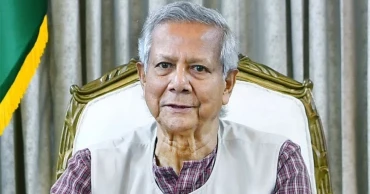
Spain’s deadly train crash saddens Prof Yunus
Chief Adviser Prof Muhammad Yunus has expressed deepest condolences and sympathies following the devastating accident of high-speed trains in Adamuz, near the city of Córdoba, Southern Spain Sunday evening, stating that the grave tragedy has saddened them immensely.
“It is with profound sorrow and a heavy heart that I extend, on behalf of the people and government of Bangladesh, and on my own behalf, our deepest condolences and sympathies to Your Excellency and, thorough you, to the victims and their families,” he said in a message to President of Spain Pedro Sanchez.
The deadly train wreck in southern Spain has cast a pall of gloom over one of the nation’s symbols of success.
The collision on Sunday killed at least 41 people and injured dozens more as of Tuesday.
Prof Yunus said the news of this tragic accident, resulting in the tragic loss of precious lives and leaving many injured, has saddened them immensely.
“Our thoughts and prayers are with the families of the victims of this terrible train crush and the people of Spain during this period of grief. May the Almighty bestow His mercy on the departed souls of the deceased and grant their family members the courage and fortitude to bear their irreparable losses,” he said.
Prof Yunus said they also pray for the quick and complete recovery of all those injured in this grave tragedy.
8 months ago

Spain begins 3 days of mourning after deadly train crash
Spain on Tuesday began three days of national mourning for the victims of a deadly train accident in the country’s south, as emergency crews continued searching the wreckage for possible additional bodies.
Flags were lowered to half-staff across the country as the official death toll from Sunday’s crash climbed to 40 by late Monday. Authorities, however, warned that the figure may rise further, with rescuers still combing through what Andalusia’s regional president Juanma Moreno described as “a twisted mass of metal.”
Interior Minister Fernando Grande-Marlaska told Spanish state broadcaster RTVE that search teams believe three more bodies remain trapped inside the wreckage, though they have not yet been added to the official death count.
The accident occurred around 7:45pm on Sunday when the rear section of a train carrying 289 passengers from Malaga to Madrid derailed and collided with an oncoming train travelling from Madrid to the southern city of Huelva, rail operator Adif said.
Spain train crash kills at least 39, dozens injured
The front of the second train, which was carrying nearly 200 passengers, bore the brunt of the impact. The collision forced its first two carriages off the track and sent them plunging down a four-metre slope. Some victims were found hundreds of metres from the crash site, Moreno said.
Investigators are continuing to probe the cause of the crash, which Spanish Transport Minister Óscar Puente described as “strange” since it occurred on a straight stretch of track and neither train was travelling at excessive speed. Puente said a broken section of track had been discovered, though it remains unclear whether it was the cause or the result of the derailment.
Ukrainian drone strike kills one, injures three in Russian city of Voronezh
Prime Minister Pedro Sánchez visited the crash site near the town of Adamuz on Monday and declared three days of mourning, ordering flags to be flown at half-mast on all public buildings and navy vessels. King Felipe and Queen Letizia are scheduled to visit the area on Tuesday.
Meanwhile, Spain’s Civil Guard is collecting DNA samples from relatives who fear their loved ones may be among the unidentified victims.
8 months ago

Spain train crash kills at least 39, dozens injured
At least 39 people were killed and 159 others injured after two high-speed trains collided in southern Spain late Sunday, with rescue operations continuing through the night, Spanish police said on Monday.
The crash happened around 7:45 pm when the rear section of a train carrying about 300 passengers from Malaga to Madrid derailed and slammed into an oncoming train traveling from Madrid to Huelva, according to rail operator Adif. The collision occurred near the town of Adamuz in the province of Cordoba, about 370 kilometers south of Madrid.
Authorities said five of the injured were in critical condition, while 24 others were seriously hurt. Transport Minister Óscar Puente said the death toll was not final and warned that the number could rise.
Videos and photographs from the scene showed twisted train carriages lying on their sides under floodlights as emergency crews worked through the night. Passengers were seen climbing out of shattered windows, some using emergency hammers to escape.
Salvador Jiménez, a journalist with Spanish broadcaster RTVE who was on one of the derailed trains, said passengers felt a violent jolt moments before the derailment.
“There was a moment when it felt like an earthquake and the train had indeed derailed,” he told the network by phone.
In Adamuz, a local sports centre was converted into a temporary hospital, while the Spanish Red Cross set up an assistance centre for victims and their families. Members of the civil guard and civil defence remained at the site overnight.
Transport Minister Puente described the accident as “truly strange”, noting that it occurred on a flat stretch of track renovated in May and involved a train that was less than four years old. The derailed train belonged to private operator Iryo, while the second train was operated by state-run company Renfe.
He said the rear of the first train jumped the tracks and crashed into the front of the second, knocking its first two carriages off the line and down a four-metre slope. An investigation into the cause of the crash could take up to a month, he added.
Spanish Prime Minister Pedro Sánchez expressed condolences to the victims’ families, calling it “a night of deep pain for our country.”
Train services between Madrid and cities in Andalusia were cancelled on Monday.
Spain has Europe’s largest high-speed rail network, with more than 3,100 kilometres of track. More than 25 million passengers travelled on Renfe’s high-speed trains in 2024.
8 months ago

FIFA tweaks World Cup draw to keep top teams apart until Semifinals
FIFA has overhauled the 2026 World Cup draw format to ensure the four highest-ranked teams like Spain, Argentina, France and England avoid each other until the semifinals, provided they top their groups.
The draw, set for December 5 at the Kennedy Center in Washington, D.C., will use a tennis-style bracket system for the first time. FIFA confirmed Tuesday that the new format rewards top-ranked sides by placing them in separate pathways for the 48-team tournament hosted by the United States, Canada and Mexico from June 11 to July 19.
The change means defending champions Argentina, led by Lionel Messi, and European champions Spain, inspired by Lamine Yamal, can only meet in the final at MetLife Stadium near New York, if both win their respective groups.
“To ensure competitive balance, two separate pathways to the semifinals have been established,” FIFA said in a statement, aiming to reward teams whose consistent good results have raised their world ranking.
Unlike previous World Cups where knockout paths were tied to group allocation, the new approach fixes the bracket in advance.
This year’s draw will place 48 teams into four pots before assigning them to 12 groups of four. A full, updated match schedule, with stadiums and kickoff times, will be released on December 6. The ceremony will last about 90 minutes, with the draw itself taking an estimated 45 minutes.
As hosts, Canada, Mexico and the United States enter Pot 1, joined by the nine highest-ranked teams: Spain, Argentina, France, England, Brazil, Portugal, the Netherlands, Belgium and Germany.
Forty-two teams have already qualified, including Iran and Haiti, which FIFA expects to play as drawn despite political sensitivities with the U.S. The tournament will span 16 venues across the three host nations, including 11 NFL stadiums in the U.S.
The remaining six entrants will be decided in March through European and intercontinental playoffs. Those teams will enter Pot 4, the lowest-ranked tier, meaning four-time champions Italy could prove a dangerous wildcard next week when the final placing draw is made.
Host nations will be marked with different colored balls: Mexico as A1 (green ball), Canada as B1 (red ball), and USA as D1 (blue ball). The other nine Pot 1 teams will automatically be assigned to position 1 in their respective groups.
Pot 2 features the next 12 teams: Croatia, Morocco, Colombia, Uruguay, Switzerland, Japan, Senegal, IR Iran, Korea Republic, Ecuador, Austria and Australia.
Pot 3 includes Norway, Panama, Egypt, Algeria, Scotland, Paraguay, Tunisia, Côte d'Ivoire, Uzbekistan, Qatar, Saudi Arabia and South Africa.
Pot 4 contains Jordan, Cape Verde, Ghana, Curaçao, Haiti, New Zealand and the six playoff winners.
Teams from the same confederation cannot be drawn together, except for Europe, which will have 16 representatives, forcing four groups to include two UEFA nations.
To maintain bracket balance, Spain (rank 1) and Argentina (rank 2) will be placed in opposite pathways. The same applies to France (rank 3) and England (rank 4), ensuring the top sides stay separated until late.
For the host schedules, the USA, placed in Group D, will open on June 12 in Inglewood against a Pot 3 team, then face a Pot 2 opponent in Seattle on June 19, and finish against a Pot 4 side back in Inglewood.
Mexico, in Group A, will kick off the tournament on June 11 at the Estadio Azteca against a Pot 3 team, then play a Pot 2 team on June 18 in Guadalajara, before returning to Mexico City for their final group match against a Pot 4 opponent.
Canada starts on June 12 in Toronto against a Pot 4 team, then moves to Vancouver for matches against Pot 3 and Pot 2 sides.
World Cup draw pots:
Pot 1: Canada, Mexico, USA, Spain, Argentina, France, England, Brazil, Portugal, Netherlands, Belgium, Germany
Pot 2: Croatia, Morocco, Colombia, Uruguay, Switzerland, Japan, Senegal, IR Iran, Korea Republic, Ecuador, Austria, Australia
Pot 3: Norway, Panama, Egypt, Algeria, Scotland, Paraguay, Tunisia, Côte d'Ivoire, Uzbekistan, Qatar, Saudi Arabia, South Africa
Pot 4: Jordan, Cabo Verde, Ghana, Curaçao, Haiti, New Zealand, European Playoff A, B, C, D, FIFA Playoff Tournament 1 and 2
Information from The Associated Press was used in this report.
10 months ago

FIFA tweaks World Cup draw to keep top teams apart until Semifinals
FIFA has overhauled the 2026 World Cup draw format to ensure the four highest-ranked teams like Spain, Argentina, France and England avoid each other until the semifinals, provided they top their groups.
The draw, set for December 5 at the Kennedy Center in Washington, D.C., will use a tennis-style bracket system for the first time. FIFA confirmed Tuesday that the new format rewards top-ranked sides by placing them in separate pathways for the 48-team tournament hosted by the United States, Canada and Mexico from June 11 to July 19.
The change means defending champions Argentina, led by Lionel Messi, and European champions Spain, inspired by Lamine Yamal, can only meet in the final at MetLife Stadium near New York, if both win their respective groups.
“To ensure competitive balance, two separate pathways to the semifinals have been established,” FIFA said in a statement, aiming to reward teams whose consistent good results have raised their world ranking.
Unlike previous World Cups where knockout paths were tied to group allocation, the new approach fixes the bracket in advance.
This year’s draw will place 48 teams into four pots before assigning them to 12 groups of four. A full, updated match schedule, with stadiums and kickoff times, will be released on December 6. The ceremony will last about 90 minutes, with the draw itself taking an estimated 45 minutes.
As hosts, Canada, Mexico and the United States enter Pot 1, joined by the nine highest-ranked teams: Spain, Argentina, France, England, Brazil, Portugal, the Netherlands, Belgium and Germany.
Forty-two teams have already qualified, including Iran and Haiti, which FIFA expects to play as drawn despite political sensitivities with the U.S. The tournament will span 16 venues across the three host nations, including 11 NFL stadiums in the U.S.
The remaining six entrants will be decided in March through European and intercontinental playoffs. Those teams will enter Pot 4, the lowest-ranked tier, meaning four-time champions Italy could prove a dangerous wildcard next week when the final placing draw is made.
Host nations will be marked with different colored balls: Mexico as A1 (green ball), Canada as B1 (red ball), and USA as D1 (blue ball). The other nine Pot 1 teams will automatically be assigned to position 1 in their respective groups.
Pot 2 features the next 12 teams: Croatia, Morocco, Colombia, Uruguay, Switzerland, Japan, Senegal, IR Iran, Korea Republic, Ecuador, Austria and Australia.
Pot 3 includes Norway, Panama, Egypt, Algeria, Scotland, Paraguay, Tunisia, Côte d'Ivoire, Uzbekistan, Qatar, Saudi Arabia and South Africa.
Pot 4 contains Jordan, Cape Verde, Ghana, Curaçao, Haiti, New Zealand and the six playoff winners.
Teams from the same confederation cannot be drawn together, except for Europe, which will have 16 representatives, forcing four groups to include two UEFA nations.
To maintain bracket balance, Spain (rank 1) and Argentina (rank 2) will be placed in opposite pathways. The same applies to France (rank 3) and England (rank 4), ensuring the top sides stay separated until late.
For the host schedules, the USA, placed in Group D, will open on June 12 in Inglewood against a Pot 3 team, then face a Pot 2 opponent in Seattle on June 19, and finish against a Pot 4 side back in Inglewood.
Mexico, in Group A, will kick off the tournament on June 11 at the Estadio Azteca against a Pot 3 team, then play a Pot 2 team on June 18 in Guadalajara, before returning to Mexico City for their final group match against a Pot 4 opponent.
Canada starts on June 12 in Toronto against a Pot 4 team, then moves to Vancouver for matches against Pot 3 and Pot 2 sides.
World Cup draw pots:
Pot 1: Canada, Mexico, USA, Spain, Argentina, France, England, Brazil, Portugal, Netherlands, Belgium, Germany
Pot 2: Croatia, Morocco, Colombia, Uruguay, Switzerland, Japan, Senegal, IR Iran, Korea Republic, Ecuador, Austria, Australia
Pot 3: Norway, Panama, Egypt, Algeria, Scotland, Paraguay, Tunisia, Côte d'Ivoire, Uzbekistan, Qatar, Saudi Arabia, South Africa
Pot 4: Jordan, Cabo Verde, Ghana, Curaçao, Haiti, New Zealand, European Playoff A, B, C, D, FIFA Playoff Tournament 1 and 2
Information from The Associated Press was used in this report.
10 months ago