BNP's drive against corruption
BNP worked to curb corruption, fake voter claims baseless: Nazrul
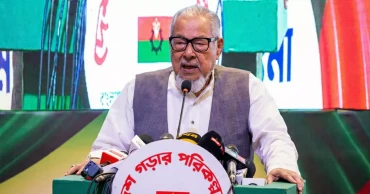
BNP Standing Committee member Nazrul Islam Khan on Tuesday (December 09, 2025) rejected allegations that the party created fake voters and made Bangladesh the ‘champion of corruption’ during its tenure, calling the claims politically motivated and factually incorrect.
Speaking at the inaugural session of BNP’s ‘Plan to Build the Country,’ discussion at Khamarbari Krishibid Institute, Nazrul said the party worked sincerely to curb corruption after coming to power, particularly in its final two years in office.
“But eliminating corruption built up over many years is not something that can be done overnight,” he added.
Nazrul Islam said corruption perception reports were not published before 2001. BNP assumed office in October that year, and Bangladesh’s position in the index reflected corruption under preceding caretaker and Awami League governments, he claimed.
Read more: ‘Religion card’ no longer fooling citizens, says Salahuddin
He also dismissed claims that BNP created 1.5 million fake voters, saying those making such allegations “are not aware of the facts.”
Nazrul Islam said BNP had sought to update the voter list, but the Awami League moved to court to block the process.
“While people are eager to register as voters, there is little incentive for relatives to remove names after someone dies. Many of those labelled as fake voters had already passed away. Their names simply weren’t removed. BNP tried to renew the list but was prevented,” he explained.
Nazrul Islam also spoke against using religion for electioneering, noting that Bangladesh’s Muslims are among the most devout in the world. “People here don’t need to vote to secure a place in heaven. They will achieve that through their own deeds,” he said.
Read more: Tarique warns BNP of ‘something terrible’ if unity falters
He assured that BNP has clear plans for the country, promising greater income equality and overall development if the party is voted into power.
Urging party activists to avoid internal divisions, Nazrul said, “You may not get nomination, may not become an MP or minister, or even a district secretary. But if BNP forms the government, your dignity and importance will increase. Keep working for the party with that in mind.”
Nazrul Islam described BNP as most organised under the leadership of acting chairman Tarique Rahman. “Ziaur Rahman founded BNP, Khaleda Zia established it as a political force, and Tarique Rahman strengthened the organization further,” he said.
BNP is currently more organised than ever, with significantly lower levels of defection compared to previous years, and that the party’s main priority is improving people’s quality of life, he added.
Read more: BNP ready to lead fresh drive against corruption: Tarique
10 months ago

BNP ready to lead fresh drive against corruption: Tarique
BNP Acting Chairman Tarique Rahman on Tuesday (December 09, 2025) said his party is ready to lead a fresh strong and comprehensive drive against corruption if voted to power as graft has become deeply rooted in Bangladesh and continues to disrupt the daily lives of millions of people.
“Fighting corruption will be an uphill battle after years of systemic abuse. But Bangladesh’s own history proves progress is possible. With commitment, discipline, and public support, meaningful reform can return. If entrusted by the people, BNP is prepared to lead that charge, once again,” he said in a post on his verified Facebook page, marking International Anti-Corruption Day.
Tarique said corruption now affects every part of life--from graduates seeking jobs on merit, to farmers waiting for services, young families struggling for healthcare and education, and entrepreneurs paying extra just to keep their businesses running.
Read more: Tarique warns BNP of ‘something terrible’ if unity falters
“From food prices to school quality to road safety, corruption cripple’s daily life for millions,” he wrote.
The BNP leader mentioned that early governance reforms under President Ziaur Rahman prioritised administrative discipline, clean public service and economic liberalisation that reduced bottlenecks and discretionary power.
Later, he said the administrations of Prime Minister Khaleda Zia modernised institutions through procurement rules, financial administration laws, strengthened audits, and clearer oversight mechanisms.
Tarique pointed to the formation of the Anti-Corruption Commission (ACC) in 2004 as a “major milestone”, replacing the Bureau of Anti-Corruption and enabling independent investigation and prosecution in line with global standards “Development partners such as the World Bank and ADB recognised this as a significant step toward accountability.”
Read more: Tarique slams Jamaat for ‘propaganda’ against BNP echoing Awami League
“Despite reservations about Transparency International Bangladesh’s (TIB) methodology at the time, even they reported improved CPI performance: Bangladesh’s score rose from 1.2 in 2002 to 1.7 in 2005. Transparency International’s Global Corruption Barometer (2003) found that 66% of citizens felt corruption had decreased. These gains reflected reforms that strengthened clarity, reduced discretion, and expanded oversight,” he observed.
Tarique said BNP takes pride in reforms made in those years, including stronger financial governance, improved treasury systems, tighter budgets, better audits, and early anti-money-laundering and banking regulations, competitive procurement rules, expansion of media and telecom sectors, and early digitisation and decentralisation efforts that reduced bureaucratic discretion.
“The record speaks for itself: BNP is the only party so far to make sustained progress in reducing corruption,” he claimed.
Outlining the party’s future agenda, he said BNP plans to ensure complete institutional independence for the judiciary, ACC, election bodies, public service and law enforcement, introduce open procurement and real-time audits, modernise policing, prosecution and case management, expand e-governance, protect whistleblowers, strengthen ethics and civic education, and closely monitor public spending through independent audits and stronger parliamentary oversight.
Read more: ‘Religion card’ no longer fooling citizens, says Salahuddin
10 months ago