trade threats
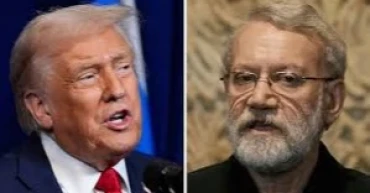
Trump and Iranian leaders trade threats as protests spread across Iran
U.S. President Donald Trump and senior Iranian officials exchanged sharp warnings on Friday as protests expanded across Iran, further heightening tensions between the two countries following U.S. airstrikes on Iranian nuclear facilities in June.
Violence linked to the demonstrations has left at least eight people dead so far. The unrest began partly due to the collapse of Iran’s currency, the rial, but has increasingly taken on a political tone, with protesters voicing opposition to the government.
Now in their sixth day, the protests are the largest Iran has seen since 2022, when the death of 22-year-old Mahsa Amini while in police custody sparked nationwide unrest. While serious, the current demonstrations have not yet reached the scale or intensity of those earlier protests, which were triggered by Amini’s arrest over alleged hijab violations.
Trump’s remarks prompt swift reaction from Tehran
Trump posted on his Truth Social account that if Iran “violently kills peaceful protesters,” the United States would intervene. “We are locked and loaded and ready to go,” he wrote, offering no further details.
In response, Ali Larijani, a former parliamentary speaker and current secretary of Iran’s Supreme National Security Council, accused the U.S. and Israel of fueling the unrest, though he provided no evidence. Iranian officials have repeatedly made similar claims during past protest movements.
Larijani warned on X that U.S. involvement in Iran’s internal affairs would destabilize the entire region and damage American interests. He also cautioned that Trump’s actions could put U.S. troops in the region at risk.
His comments appeared to reference the significant U.S. military presence in the Middle East. In June, Iran launched missiles at the Al Udeid Air Base in Qatar following U.S. strikes on Iranian nuclear sites during Israel’s 12-day conflict with Iran. Although one missile struck a building, no injuries were reported.
Iran warns of harsh response to any attack amid Trump’s nuclear threat
A U.S. official said there had been no changes to American troop deployments or readiness levels in the region following Trump’s statements.
Iran’s ambassador to the United Nations, Amir Saeid Iravani, sent a letter to U.N. Secretary-General António Guterres and the Security Council calling for condemnation of Trump’s remarks and reaffirming Iran’s right to defend its sovereignty. He warned that the U.S. would be responsible for any consequences resulting from what he described as unlawful threats.
Separately, Ali Shamkhani, an adviser to Supreme Leader Ayatollah Ali Khamenei, cautioned that any foreign interference threatening Iran’s security would be met with force.
U.S. shows open support for protesters
Trump’s comments marked a rare, explicit show of U.S. support for Iranian demonstrators. Previous American leaders avoided such statements out of concern they could undermine protest movements. During Iran’s 2009 Green Movement, President Barack Obama refrained from public support, later calling that decision a mistake.
Analysts warn that Trump’s remarks could give Iranian authorities justification to claim the unrest is driven by foreign interference. Naysan Rafati of the International Crisis Group said that while the protests stem from domestic grievances, official crackdowns justified by U.S. statements could provoke the very intervention Iran fears.
Iran’s Foreign Ministry has also pointed to long-standing grievances against U.S. actions, including the 1953 CIA-backed coup, the 1988 downing of an Iranian passenger plane, and the recent U.S. strikes.
Demonstrations continue nationwide
Protests continued Friday in multiple Iranian cities, though daily life in Tehran remained largely normal. According to the Human Rights Activists News Agency, demonstrations have occurred in more than 100 locations across 22 provinces, with the death toll rising to eight after a protester was killed in Marvdasht.
Crowds gathered in Zahedan, near the Pakistan border, and funerals for slain demonstrators triggered additional marches. Videos circulating online showed mourners confronting security forces at the funeral of 21-year-old Amirhessam Khodayari, who was killed in Kouhdasht. His father rejected claims that his son belonged to the Basij paramilitary force, and later reports suggested official accounts were under review.
President Masoud Pezeshkian’s reformist government has signaled a willingness to engage with protesters but admits it has limited ability to address the rapidly worsening economy. The rial’s collapse — now trading at about 1.4 million rials to the dollar — initially sparked the unrest.
Although rooted in economic hardship, the protests have also included chants against Iran’s ruling system. Efforts to stabilize the economy since the June conflict have largely failed.
Iran has recently announced it has halted uranium enrichment at all sites, signaling openness to renewed negotiations to ease sanctions. However, talks have yet to resume, as both Trump and Israeli Prime Minister Benjamin Netanyahu have warned Iran against reviving its nuclear program.
9 months ago