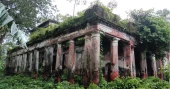
Maheshpur's 19th-century Nilkuthi building
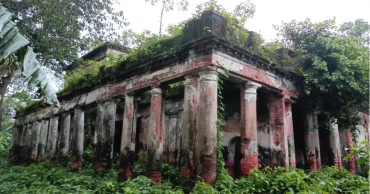
Jhenaidah’s heritage sites: Glory fading into dust
Jhenaidah’s 21 officially recognised heritage sites across six upazilas, with their rusting gates, crumbling walls, and silent courtyards, now teeter on the brink of ruin, victims of neglect, indifference and the passage of time.
Walking through the grounds of the 19th-century Nilkuthi building at Khalishpur in Maheshpur upazila, it is hard to imagine that this dilapidated structure was once a bustling centre of colonial activity. Its walls, gazette-listed in 2012, are now pockmarked with decay, and weeds creep through the cracked floors.
“After gazette listing, official supervision has effectively stopped. Some structures are even on private land, making preservation even more complicated,” says local resident Russell Ahmed.
Jhenaidah’s heritage is not limited to Nilkuthi. The Miyar Dalan, the historic Shahi Mosque in Shailkupa upazila, the Rajbari Temple in Naldanga upazila, and the ancient mosque in Borobazar all bear the scars of neglect.
Read more: UNESCO World Heritage Sites in Bangladesh
The ancestral homes of Ila Mitra, a prominent leader of the Tebhaga Movement, and Professor Kalipada Basu, a renowned mathematician, are quietly crumbling, their stories at risk of being erased from public memory.
According to the Department of Archaeology, these 21 structures are legally protected. Yet, field inspections reveal an uncomfortable truth: most lack effective security, maintenance, or even proper signage. Without intervention, their historic and cultural value may soon exist only in textbooks.
“Heritage is not just about old buildings; it is the soul of a community,” says Sujon Biplob, secretary of the Shailkupa Ila Mitra Memorial Preservation Council. “These sites could boost tourism, educate younger generations, and preserve our identity—but if we remain silent, they will vanish quietly.”
9 months ago