Japanese court verdict
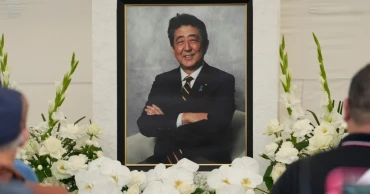
Former Japanese PM Shinzo Abe killer gets life in prison: Japanese court verdict
A Japanese court on Wednesday sentenced a man who admitted to assassinating former Prime Minister Shinzo Abe to life imprisonment, a case that has drawn attention to long-standing ties between Japan’s ruling party and a controversial South Korean religious group, NHK reported.
Tetsuya Yamagami, 45, pleaded guilty to killing Abe in July 2022 while the former leader was giving an election campaign speech in Nara. The Nara District Court confirmed the verdict and handed down a life sentence, in line with prosecutors’ demands. The trial, which began in October, saw Yamagami admit to murder.
Abe, one of Japan’s most influential politicians, was serving as a lawmaker after stepping down as prime minister when he was shot dead. His killing shocked the nation, known for strict gun control.
During the trial, Yamagami said he was motivated by anger toward a controversial religious group after seeing a video message Abe sent to a faction linked to the Unification Church. He told the court his aim was to harm the church and expose its connection with Abe.
Prosecutors sought life imprisonment, while Yamagami’s lawyers argued for no more than 20 years, citing his troubled childhood as the son of a church follower. While Japanese law allows the death penalty for murder, prosecutors usually seek it only in cases involving multiple victims.
The assassination intensified scrutiny of the ruling Liberal Democratic Party’s ties to the church, prompting the party to distance itself from the group. Investigations later led to the Japanese branch of the church losing its tax-exempt status and being ordered dissolved. The case also prompted authorities to review and strengthen security for political figures.
Abe was shot on July 8, 2022, outside a train station in Nara. Television footage showed him collapse after two shots, with officials saying he died almost instantly. Yamagami was arrested at the scene and later said he had originally planned to target the Unification Church leader but switched to Abe due to security difficulties.
Read More: Japan PM plans snap election to seek fresh mandate
The case highlighted the challenges faced by children of Unification Church followers and influenced legislation aimed at curbing coercive donation practices. Yamagami has also drawn public sympathy from critics of the church, with thousands signing petitions seeking leniency and others sending care packages to his family and the detention center where he is held.
8 months ago