Jupiter's moon Europa
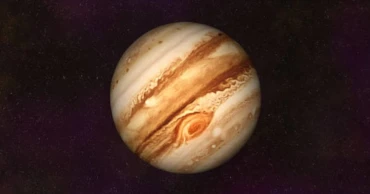
Jupiter's moon Europa’s surface may feed life-supporting chemicals to its ocean
Jupiter’s icy moon Europa may be sending chemicals that could support life to its hidden subsurface ocean, according to a new study by Washington State University researchers.
Europa’s ocean lies beneath a 30-kilometre-thick ice layer and may contain twice as much water as all Earth’s oceans. Unlike Earth, the ocean lacks sunlight and oxygen, so any life there would depend on chemical energy. Scientists have long wondered how oxidants on the moon’s surface could reach the ocean below.
The study finds that salt-rich ice near the surface may be denser and weaker than surrounding ice. Over time, this ice could break and slowly sink through the thicker layer to the ocean. This process, called lithospheric foundering, is similar to Earth’s crust sinking into the mantle.
Using computer models, researchers estimated that the top 300 meters of surface ice could reach the ocean in 5 to 10 million years. In weaker ice, the process could start in as little as 30,000 years. The findings suggest that Europa’s ocean may be gradually supplied with life-supporting chemicals from the surface.
NASA’s Europa Clipper mission, launched in 2024, will arrive at Jupiter in April 2030 and study the moon through about 50 flybys over four years. The mission will help scientists measure ocean depths and evaluate the moon’s potential habitability.
The study was published on January 20 in The Planetary Science Journal.
With inputs from NDTV
1 month ago