Japan’s Owakudani
Japan’s Owakudani: black eggs said to add seven years to life
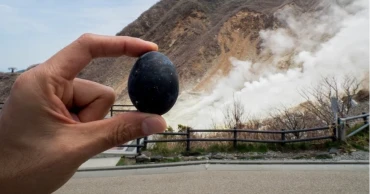
Nestled in Japan’s Hakone region, Owakudani is a steaming volcanic valley famous for its black eggs, known locally as kuro-tamago.
Boiled in sulphur-rich hot springs, the eggs turn jet black, and local legend promises that eating one adds seven years to a person’s life.
The story dates back over a thousand years to Kobo Daishi, a revered Buddhist monk and scholar, who encouraged locals to consume eggs boiled in the valley’s hot springs to promote health and vitality.
Over time, this belief evolved into the enduring legend of the seven-year lifespan boost.
Owakudani, about 90 km from Tokyo, attracts visitors with its dramatic landscape of hissing vents, steaming fissures, and rocky terrain.
The valley’s geothermal activity, formed by a volcanic eruption roughly 3,000 years ago, not only shapes the scenery but also gives the eggs their unique black shells. Inside, the eggs are regular hard-boiled eggs with only a faint sulphur taste.
Visitors usually take a train to Odawara, followed by local transport and the Hakone Ropeway, which glides over the volcanic valley. At Owakudani Station, the kuro-tamago are sold fresh, typically in packs of four, and meant to be eaten on-site, reports NDTV.
Read More: Why weight often comes back after quitting intermittent fasting, says Harvard doctor
While scientific evidence does not support the claim of added longevity, the eggs are a ritualistic experience for many Japanese and a fascinating cultural curiosity for international travellers.
Authorities advise visitors to follow safety rules strictly, as the area remains volcanically active with occasional restrictions due to gas emissions or seismic activity.
8 months ago