global gold
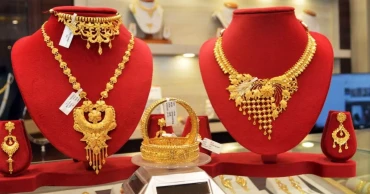
Gold prices plunge over 9%: what triggered the fall and where prices may head next
Gold’s sharp slide—down more than 9 percent in a single session—has rattled global markets and raised a pressing question among investors: will prices sink below the $4,403 mark or stage a recovery?
Spot gold fell to around $4,403 an ounce, marking its steepest one-day decline in decades. The selloff came amid broad weakness across commodities, equities and metals, following the nomination of Kevin Warsh as the next chair of the US Federal Reserve. The move sparked a surge in the US dollar and triggered heavy profit-taking after gold’s recent record highs.
Gold prices drop by Tk6,590 per bhori in Bangladesh
A stronger dollar typically weighs on gold, making the metal more expensive for investors holding other currencies. At the same time, easing geopolitical tensions and tighter trading conditions combined to intensify the downturn.
What drove gold’s steep fall?
Markets reacted swiftly after US President Donald Trump named Warsh, who is widely seen as hawkish on inflation, to lead the Federal Reserve. Expectations of a tougher stance on interest rates lifted the dollar and dampened demand for non-yielding assets like gold.
Spot gold slid more than 9 percent to $4,403.29 per ounce, its sharpest daily fall since 1983. Silver fared even worse, dropping over 13 percent on Monday after plunging 27 percent on Friday. Both metals had hit record highs just days earlier.
Selling pressure accelerated after CME Group raised margin requirements for metal futures, increasing trading costs and forcing many investors to pare back leveraged positions. Analysts said the move led to a rapid unwinding of speculative bets built up during the recent rally, reports The Economic Times.
Gold and silver were sold alongside equities, pointing to a broader market shift as investors reassessed risk. The dollar’s continued strength after Warsh’s nomination added further pressure on precious metals.
Beyond gold: a wider commodities selloff
The downturn spread well beyond bullion markets. Oil prices fell nearly 5.5 percent as signs of easing US-Iran tensions reduced supply concerns. Trump said Iran was in talks with Washington, while Tehran signalled it would not conduct live-fire drills in the Strait of Hormuz.
Gold sees sharpest one-day fall, down Tk15,746 per bhori
Industrial metals also came under heavy pressure. Copper prices slid sharply as demand softened ahead of China’s Lunar New Year holiday, with the most-active contract on the Shanghai Futures Exchange falling 9 percent. Aluminium, nickel and tin also hit limit-down levels.
On the London Metal Exchange, copper dropped nearly 5 percent, while aluminium, zinc, lead, nickel and tin posted steep losses, weighed down by high inventories and subdued buying interest.
Will gold fall further or rebound?
The immediate focus is whether gold will break below the $4,403 level or find support. Analysts say the selloff appears driven more by position unwinding and profit-taking than by a deterioration in fundamentals, suggesting the move could be a correction after an unusually rapid rally.
Outlooks remain divided. Some analysts believe gold could regain strength later in the year if economic risks resurface or expectations around US interest rates shift. For now, however, volatility is likely to persist as markets digest signals on US monetary policy and global growth.
What should investors watch?
Market watchers advise caution in the near term. Movements in the US dollar and signals from the Federal Reserve will be key drivers for gold prices. While some see the recent fall as a healthy correction, others warn that price swings could remain sharp.
7.8 million ounces of new gold resources discovered in Saudi Arabia
Long-term investors may prefer to wait for clearer signs of stability before increasing exposure, while short-term traders are urged to limit leverage amid higher margins and heightened volatility. Diversification, analysts say, remains crucial as markets navigate an uncertain phase.
8 months ago
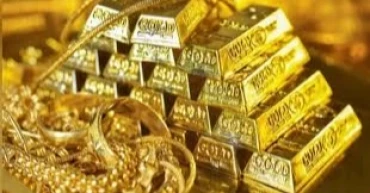
Why gold prices hit record highs and what triggered the sudden drop
Gold prices have climbed to unprecedented levels in recent weeks as investors rushed into the traditional safe-haven asset amid intensifying global political uncertainty.
The precious metal surged beyond the $5,000 (£3,646) per ounce threshold for the first time on Monday and briefly touched $5,500. Silver and platinum prices also recorded sharp gains during the same period.
However, prices of all three metals later retreated sharply following indications of greater political stability in the United States. Even so, they remain significantly higher than a year ago.
Trump-driven uncertainty reshapes investments
Global trade flows have been disrupted by tariffs imposed by US President Donald Trump on countries he considers unfavourable trading partners. His trade stance has continued to unsettle markets, fuelling demand for gold, according to Emma Wall, chief investment strategist at Hargreaves Lansdown.
In January, both gold and silver reached record highs while global stock markets fell, after Trump threatened new tariffs on eight European countries opposed to his proposed takeover of Greenland.
Hamad Hussain, an economist at Capital Economics, said gold’s reputation as a safe asset, compared with risks linked to US foreign and fiscal policies under Trump, has pushed the metal “in the spotlight”.
Wars and Greenland threats heighten tensions
Ongoing wars in Ukraine and Gaza have added to wider geopolitical anxiety. The US seizure of Venezuelan President Nicolás Maduro also sent gold prices soaring.
Trump’s Greenland threats further strained global politics, weakening confidence in the US dollar and prompting investors to turn to precious metals. The dollar’s sharpest decline during Trump’s presidency followed his so-called “Liberation Day” tariffs announced last spring.
“Gold is doing what it does best when the world feels messy, jumping amid rising trade tensions, geopolitical flare-ups, political uncertainty in the US,” Wall says.
Gold sees sharpest one-day fall, down Tk15,746 per bhori
“Fresh friction between the US, Canada and China, unease around Europe and the Middle East, and even shutdown risks in Washington have all added to gold’s appeal.”
Central banks fuel the rally
Heavy buying by central banks has been another major driver behind rising gold prices.
“Investors and global central banks have... favoured gold as their reserve currency of choice, which they believe insulates them from US policy dependence,” Wall says.
“Certain nations will have observed the threat of Russia having its US dollar assets seized by global players supportive of Ukraine, and subsequently considered the metal a more attractive neutral reserve,” she added.
Although central banks are still purchasing more gold than before 2022, Hussain noted that demand appeared to ease somewhat in 2025.
China remains the world’s largest gold buyer, with demand coming from jewellery purchases and investment. Western investors have also poured money into gold-owning and trading firms.
Hussain said new market entrants have also played a role, citing digital currency firm Tether, which has reportedly amassed gold reserves larger than those of some small countries.
Why prices fell recently
Gold prices had surged partly on fears Trump might appoint a Federal Reserve chair willing to cut interest rates aggressively, potentially weakening the dollar and stoking inflation. Gold is often bought as a hedge against such risks.
But prices of gold, silver and platinum dropped after reports suggested Trump would nominate Kevin Warsh, viewed as a more reassuring choice than other contenders, reports BBC.
U.S. stocks control higher as gold sets a fresh record and the dollar weakens again
Despite the pullback, precious metals remain far above last year’s levels due to persistent geopolitical tensions, existing tariffs, fresh tariff threats and ongoing global conflicts, keeping safe-haven demand strong.
One of gold’s enduring attractions is its limited supply.
Nicholas Frappell, global head of institutional markets at ABC Refinery, told the BBC: “When you own gold, it’s not attached to the debt of somebody else like a bond is or an equity where the performance of a company will drive performance.
“It’s a really good diversifier in a very uncertain world.”
Recent volatility, however, underscores that gold prices can fall as quickly as they rise, like other traded commodities.
Gold prices drop sharply in Bangladesh
Gold prices in Bangladesh dropped sharply again on Saturday, with the rate of 22-carat gold falling by Tk15,746 per bhori (11.664 grams) in a single day, according to the Bangladesh Jewellers Association (Bajus).
In a morning notice, Bajus said the price of 22-carat gold has been reset at Tk255,617 per bhori, following a decline in the local price of refined gold, known as tejabi sona.
Under the updated rates, 21-carat gold now costs Tk244,011 per bhori, while 18-carat gold is priced at Tk209,136. Gold produced under the traditional method has been fixed at Tk171,869 per bhori.
Greenland’s strategic role in nuclear defense comes into focus amid Trump’s ‘Golden Dome’ push
Bajus added that buyers will have to pay a mandatory 5 percent VAT along with a minimum 6 percent making charge set by the association, although the making charge may vary depending on the design and quality of the jewellery.
Earlier, on January 30, Bajus had reduced the price of 22-carat gold by Tk14,638 per bhori, bringing it down to Tk271,363. With the latest cut, gold prices in the local market have declined by a total of Tk30,384 within just two days.
Prior to these back-to-back reductions, gold prices were raised by Tk16,213 per bhori on January 29, pushing the price of 22-carat gold to an all-time high of Tk286,001 per bhori—the highest ever recorded in Bangladesh.
So far in 2026, Bajus has adjusted gold prices 18 times, with increases on 13 occasions and reductions five times.
8 months ago