Jupiter’s moon Europa
NASA detects ammonia compounds on Jupiter’s moon Europa
NASA scientists have discovered ammonia-bearing compounds on the surface of Jupiter’s icy moon Europa, shedding new light on the moon’s subsurface ocean, according to a recent analysis of decades-old space data.
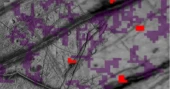
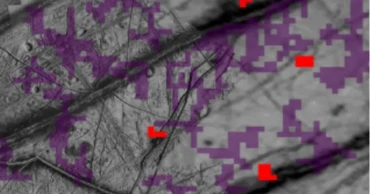
The breakthrough comes from a re-examination of information collected by NASA’s Galileo spacecraft, which orbited Jupiter from 1989 until 2003. Researchers created a composite image of a 400-kilometre-wide area on Europa using the spacecraft’s solid-state imaging camera, revealing dark, crossing bands on the moon’s surface that indicate cracks in the ice.
Data from Galileo’s Near-Infrared Mapping Spectrometer (NIMS) was overlaid on the image. Red pixels mark areas where ammonia compounds were detected, while purple pixels show regions without such compounds. The NIMS data was collected during Galileo’s 11th orbit of Jupiter in 1997.
Scientists suggest that the ammonia-rich compounds near these fractures could have been transported by cryovolcanic activity, potentially bringing liquid water from Europa’s subsurface ocean to the surface.
The discovery provides fresh insights into the moon’s geological activity and its potential to host conditions favourable for life beneath the ice, NASA reported.
With inputs from NDTV
7 months ago