Rafah crossing
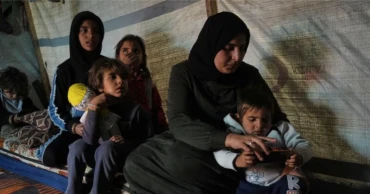
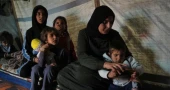
Women returning to Gaza allege blindfolding, interrogation by Israeli troops at Rafah
Palestinians returning to Gaza through the Rafah crossing from Egypt said Israeli troops blindfolded, handcuffed, and interrogated them for several hours, in what they described as humiliating treatment, according to accounts from three women who crossed on Monday.
The women were among 12 Palestinians — mostly women, children, and the elderly — allowed to enter Gaza after Rafah reopened following months of closure. Israeli forces had seized the crossing in May 2024 during the Israel-Hamas war.
Rotana al-Regeb and her mother, Huda Abu Abed, told the Associated Press that after crossing Rafah, they were taken to a screening station in the Israeli-controlled area. Israeli soldiers and members of the Palestinian armed group Abu Shabab reportedly searched their belongings and then took them into a room for interrogation. “They threatened that I will be detained and won’t return to my children,” said al-Regeb, who has four daughters and a son. Her mother confirmed the account. Another returnee, 57-year-old Sabah al-Qara, gave a similar account.
The Israeli military denied any misconduct, stating, “No incidents of inappropriate conduct, mistreatment, apprehensions, or confiscation of property by the Israeli security establishment are known.” The Shin Bet intelligence agency and COGAT, which oversees humanitarian aid in Gaza, did not respond to requests for comment.
Returnees said Israeli authorities restricted what they could bring, including limiting liquids, electronics, and other personal items. Only one mobile phone and about $650 were allowed per person with prior declaration. Some luggage, including food, children’s games, and electronics, was confiscated at the crossing.
The ordeal followed a long day of waiting. Al-Regeb said 42 Palestinians completed paperwork in Egypt by 10 a.m., but only 12 were allowed through in one bus after a six-hour wait. Once released, U.N. buses transported them to Nasser Hospital in Khan Younis, where they arrived after midnight.
Hamas condemned the alleged treatment, calling it “fascist behavior and organized terrorism” and urged mediators to ensure the safety of travelers. Human rights groups and Palestinian officials warned that such abuses could discourage others from returning through Rafah.
More than 110,000 Palestinians left Gaza in the early months of the war, with thousands evacuated abroad for medical treatment. About 30,000 have registered to return through Rafah, but Israeli authorities have indicated that only around 50 Palestinians a day will be allowed back.
8 months ago
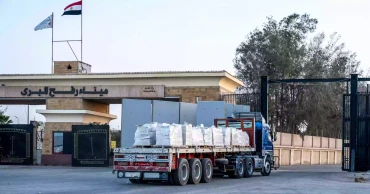
Gaza’s main Rafah crossing with Egypt reopens
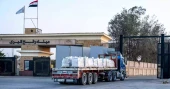
Palestinians have begun passing through the Rafah border crossing linking the Gaza Strip and Egypt following its reopening for passenger movement.
The crossing had been mostly shut since May 2024, after Israeli forces took control of the Palestinian side.
The long-awaited reopening forms a central element of the first phase of a ceasefire framework proposed by US President Donald Trump between Israel and Hamas, which took effect in October.
Under the arrangement, only a limited number of people, several dozen each day, will be permitted to cross in either direction. The passage of humanitarian assistance and commercial goods through the crossing remains prohibited.
About 20,000 Palestinians who are sick or wounded are awaiting permission to leave Gaza to receive medical treatment abroad.
According to Israeli media reports, only 50 patients will be allowed to exit the territory each day, accompanied by two relatives each. In addition, just 50 of the tens of thousands of Palestinians who left Gaza during the war will be permitted to return daily.
The World Health Organization (WHO) is expected to supervise the evacuation process. Patients will be transported by bus from areas under Hamas control, passing through zones controlled by the Israeli military before reaching the Rafah crossing, BBC News reported.
Read More: Israel to reopen Gaza–Egypt crossing after extended shutdown
Israeli Defence Minister Israel Katz warned that anyone crossing the Yellow Line, the boundary of Israeli-controlled territory under the ceasefire agreement, would be “met with fire”.
Under the arrangements, the Rafah crossing will be operated by European Union monitors alongside local Palestinian staff, while Israel will conduct security checks remotely. Israeli officials said a trial reopening of the crossing was successfully completed on Sunday.
A Palestinian official familiar with the trial phase told the BBC that around 30 Palestinian staff members had reached the Egyptian side of the crossing ahead of full operations.
The reopening follows provisions in US President Donald Trump’s 20-point Gaza peace plan, which states that the crossing will operate under mechanisms used during a previous ceasefire last January.
Before Israel seized control of Rafah in 2024, the crossing served as Gaza’s primary exit route and a key channel for humanitarian aid.
With inputs from BBC
8 months ago