calls for common platform
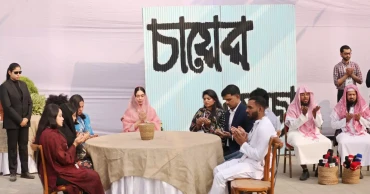
Zaima Rahman calls for common platform to build inclusive Bangladesh
Barrister Zaima Rahman, daughter of BNP Chairman Tarique Rahman, on Monday stressed the need for a common platform to ensure the participation of people from all walks of life in building inclusive Bangladesh.
“If people from different places and backgrounds want to work towards a common goal, we should give them that opportunity by creating a platform and providing access. That would benefit everyone. Everyone should have the chance to take part in state-building,” she said.
Zaima made the remarks while speaking with young people at an informal discussion programme titled ‘Chayer Adda’ (Tea Talk) held at Mohakhali DOHS playground in the afternoon. The event was organised by the BNP Election Steering Committee’s Content Generation Team.
Read More: Bangladesh cannot sideline half its population, says Zaima Rahman
During the programme, she moved from table to table, listening to the thoughts, concerns and aspirations of students from different universities and colleges.
Expressing concern over cyberbullying, Zaima said laws alone are not enough to tackle the problem unless they are properly enforced. “Women are often pushed out of public life through bullying, and changing such mindsets is very difficult.”
She also said the issue could be addressed more effectively if social media platforms set up offices in Bangladesh.
Zaima said young people have shown strong interest in contributing to the country, which should be seen positively. “There must be a platform where everyone can come forward and work together for the country.”
During discussions, students raised various issues, including air pollution in Dhaka, traffic congestion, unemployment, harassment of women, urbanisation problems and the need for decentralisation.
Read More: Zaima, other family members visit Khaleda Zia’s grave
She listened to students’ views on employment generation, including the need for part-time job opportunities during academic life, and discussed how open and practical planning can help young people become more independent.
Speaking about education, Zaima said disparities between urban and rural education could be reduced if steps were taken from the primary level.
She also said the gap between Dhaka University and other colleges and universities in and outside the capital needs to be reduced to ensure balanced education.
Zaima stressed the importance of practical and co-curricular activities alongside academic curricula at the higher education level.
On employment, she listened to students’ views on how young people could be better prepared for the job market.
Students also shared their opinions on reducing traffic congestion in Dhaka, noting that having the same schedules for offices and educational institutions worsens traffic jams.
In response, Zaima said better coordination of school and office timings could help reduce pressure on roads.
She also highlighted the importance of safe footpaths and proper street lighting to encourage walking and reduce reliance on vehicles.
Read More: Zaima, other family members visit Khaleda Zia’s grave
Zaima said people rely too much on vehicles even for short distances. “If roads, footpaths and street lighting are improved from a safety point of view, people can walk everywhere. Walking even 10 or 15 minutes would be better.”
Students also shared concerns about gas and water shortages in the capital, as well as the growing sense of loneliness among urban youth.
During the discussion, a question was raised about those who were injured, disabled or lost their eyesight during the July movement, many of whom are still very young.
In response, Zaima said the issue is a matter of concern for her family. “My father, my mother and I discuss this issue. The answer would be long, and time is short today. We will talk about this later.”
Asked whether she herself has the opportunity to contribute more actively, Tarique’s daughter smiled and replied, “Let’s see, Inshallah. We can work together. It is not possible to work alone.”
She said ordinary people often find it difficult to reach politicians, which limits diversity of opinions.
“If such opportunities are created, diversity will naturally grow. Criticism is an important element in decision-making. Good decisions come through criticism,” she said, adding that politics should be as open as possible to common people.
At another table, Zaima thanked the students for attending and said the purpose of the gathering was to understand what kind of Dhaka and Bangladesh young people want to see in the future. “We want an inclusive Dhaka where different kinds of people can live together,” she said.
At the end of the programme, she thanked the participants for joining the discussion and expressed her willingness to sit with young people again in similar informal gatherings in the future.
Organisers said the aim of the programme was to create a meaningful and constructive dialogue between young voters and national political voices, focusing on political awareness, voting rights and young people’s vision for Bangladesh.
Read More: Tarique Rahman also warns of election manipulation, urges vigilance
8 months ago