key brain network
Chinese scientists identify key brain network in Parkinson’s disease
Chinese researchers have identified a central brain network responsible for Parkinson’s disease, with early clinical trials showing encouraging results from treatments that directly target this network.
The discovery was made by a team led by Professor Liu Hesheng of Changping Laboratory in Beijing and was published on Thursday in the journal Nature.
According to the China Parkinson’s Disease Report 2025, more than 5 million people in China are living with Parkinson’s disease, accounting for about 40 percent of patients worldwide. The condition is the second most common neurodegenerative disorder after Alzheimer’s disease.
Parkinson’s has long been viewed mainly as a movement disorder, marked by symptoms such as tremors, slowed movement and difficulty walking. However, patients also suffer from a range of non-motor problems, including low blood pressure, sleep disorders and digestive issues, which have been harder to explain and treat.
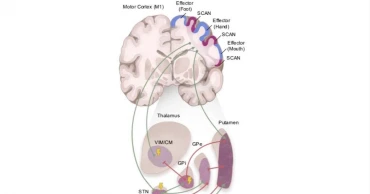
In a study involving more than 800 patients, the researchers found that Parkinson’s affects a brain system known as the somato-cognitive action network, or SCAN. Located in the cerebral cortex, this network connects key regions involved in movement control, including the basal ganglia and thalamus, which are common targets in existing treatments.
The study revealed that connections between SCAN and these regions are abnormally strengthened in Parkinson’s patients. Researchers said understanding this abnormal connectivity is critical, as it points to new treatment approaches that could address both motor and non-motor symptoms at their root.
Building on this and earlier work, Liu’s team helped develop a precision brain circuit stimulator through Galaxy Brain Scientific Inc., capable of targeting affected brain areas with millimeter-level accuracy. The technology is based on Personalized Brain Functional Sectors, which map individual brain functions in greater detail and are combined with real-time navigation for precise magnetic stimulation.
Because functional brain regions vary significantly from person to person, the new approach allows doctors to locate Parkinson’s-affected areas far more quickly. Under traditional methods, this process took 15 to 30 minutes, while the new system can identify targets in less than a second, said Deng Wei, CEO of Galaxy Brain Scientific Inc.
Once the target is identified, the device uses an external magnetic field to stimulate neural cells through transcranial magnetic stimulation, or TMS, helping improve brain function without invasive surgery.
Read More: NASA detects ammonia compounds on Jupiter’s moon Europa
Clinical trials showed that after two weeks of treatment, patients whose SCAN network was targeted achieved an effectiveness rate of 55.5 percent, compared with 22.2 percent in a control group treated in nearby brain regions.
The results support the potential of individualized, non-invasive and highly targeted treatments for Parkinson’s patients in China and other countries. Since 2025, five hospitals across China, including in Beijing, Henan, Guangdong, Zhejiang and Sichuan, have begun using the new equipment.
The cost is also significantly lower than surgery. While brain operations can cost around 200,000 yuan, each TMS session costs less than 200 yuan. A treatment course typically lasts two to three weeks and is repeated every six months, with long-term use potentially slowing disease progression.
Hu Ying, 64, was among the first patients to receive the treatment in 2022. Diagnosed in 2018, her condition rapidly worsened, leaving her with frequent falls, swallowing difficulties and loss of facial expression. As surgery was not suitable and medication became less effective, she opted for the new therapy.
After one 18-day course, Hu was able to walk independently again, and her speech and swallowing improved markedly. Nearly four years of continued treatment have even allowed her to sing karaoke with friends.
Her husband, Jiang Ke, said the therapy has transformed their lives, enabling them to travel across China and even visit Europe. “We never imagined we could still do this,” he said.
8 months ago