Bondi Beach
Israeli president begins Australia visit amid protests
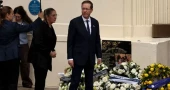
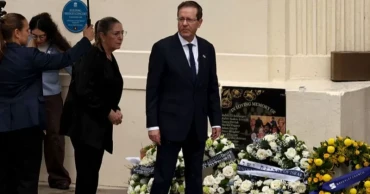
Israeli President Isaac Herzog on Monday laid a wreath and placed two stones brought from Jerusalem at Sydney’s Bondi Beach, marking the start of a tightly secured and controversial four-day visit to Australia.
Bondi Beach was the site of a deadly shooting in December during a Jewish Hanukkah festival, in which 15 people, including a 10-year-old girl, were killed. Paying tribute to the victims, Herzog said he had come to “embrace and console the bereaved families,” adding that pain felt by one Jew resonates across the global Jewish community.
Herzog’s visit, which includes stops in Canberra and Melbourne and meetings with Prime Minister Anthony Albanese, has drawn mixed reactions. Senior Jewish leaders welcomed the trip, saying it would bring comfort to a traumatised community. However, several civil society groups and activists have criticised the invitation, citing allegations that the Israeli president has incited violence in Gaza.
Albanese said the visit was intended to promote social cohesion and unity following the Bondi attack. Despite this, nationwide protests were planned, including a large demonstration in central Sydney, where organisers estimated around 5,000 participants.
Security measures were heightened across Sydney, particularly at Bondi Beach. The New South Wales government invoked rarely used “major event” powers, granting police expanded authority to restrict movement, conduct searches and impose fines for non-compliance. Shortly before the protest was due to begin, the Palestine Action Group lost a legal challenge against the use of these powers.
Police said they dealt with several individuals during the operation. One man who shouted at Herzog was issued a move-on direction, while another was arrested and charged with intimidation and offensive behaviour after allegedly abusing passengers on a bus.
Leaders of Australia’s Jewish community said Herzog’s presence carried deep symbolic meaning. Alex Ryvchin, co-chief executive of the Executive Council of Australian Jewry, said the visit would help lift the spirits of victims’ families and survivors and could help reset strained bilateral ties between Australia and Israel.
However, opposition to the visit has been vocal. The Jewish Council of Australia and the Australian National Imams Council said Herzog should not have been invited, arguing that his presence risks conflating Jewish identity with the actions of the Israeli state. A letter signed by around 600 Australian Jews was published in local media stating that Herzog did not represent them and was not welcome.
Human rights groups also pointed to a UN commission report that accused Herzog and other Israeli leaders of inciting genocide through public statements related to the Gaza war. Herzog has rejected the findings, saying his remarks were taken out of context, while Israel has denied committing genocide.
Responding to the protests, Herzog said he had come in goodwill, stressing the long-standing alliance between Australia and Israel. He also warned that rising antisemitism worldwide posed a serious global threat, saying hatred directed at Jews rarely stops with them.
With inputs from BBC
5 months ago