UK-EU
Starmer urges deeper UK-EU ties, vows stronger European defence
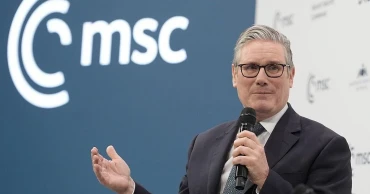
British Prime Minister Keir Starmer on Friday called for closer ties between the United Kingdom and the European Union, warning that Europe must be prepared to defend itself in an increasingly unstable world, as he addressed the Munich Security Conference.
Speaking on defence and security, Starmer said Europe could no longer rely on old assumptions and must be ready to use hard power if necessary to safeguard peace. He stressed that while Europe does not seek conflict, the reality of the age demands credible military strength.
Starmer announced that the UK would deploy a carrier strike group to the North Atlantic and the High North later this year, describing the move as a powerful demonstration of Britain’s commitment to Euro-Atlantic security. He said the deployment would be carried out alongside the United States, Canada and other Nato allies.
The British leader argued that Europe has underinvested in defence for years, sheltered by the US security umbrella, resulting in fragmented and inefficient capabilities. He said the war in Ukraine had exposed those weaknesses and created an urgent need for Europe to take greater responsibility for its own security.
Calling Europe a “sleeping giant” in defence terms, Starmer said the continent’s combined economic strength far outweighed that of Russia but had not been translated into effective military power. He urged European nations to spend more, coordinate better and strengthen a more European-focused Nato while maintaining strong transatlantic ties.
On relations with Washington, Starmer said the United States remained an indispensable ally and that the UK’s cooperation with the US on defence, security and intelligence was as strong as ever. He cautioned Europe against complacency or drifting away from the transatlantic partnership, saying it must be adapted to present-day challenges rather than weakened.
European Commission President Ursula von der Leyen, who also addressed the conference, said the European way of life was being challenged in new ways and that Europe had no choice but to strengthen its independence in defence, technology and security. She argued that a stronger Europe would ultimately reinforce, not undermine, the transatlantic alliance.
Earlier, US Secretary of State Marco Rubio told the conference that the United States and Europe belonged together, even as he criticised European approaches to climate policy and migration and questioned the effectiveness of the United Nations in resolving conflicts.
Despite clear differences between Europe and the United States, Starmer and other speakers emphasised the need to repair strains in the transatlantic relationship and to respond collectively to growing global security threats, with Ukraine remaining a central concern of the summit.
With inputs from BBC
8 months ago