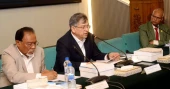
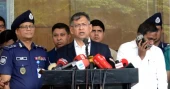
Home Minister Salahuddin Ahmed
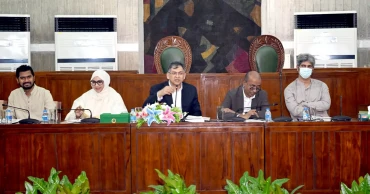
July warriors seek constitutional recognition, legal protection, rehabilitation
Injured July warriors and representatives of families of martyrs of the July uprising on Tuesday called for constitutional recognition of the mass uprising, legal protection for July fighters and proper treatment and rehabilitation for those injured during the movement.
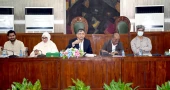
The demands were placed at the sixth meeting of the Special Committee on Constitutional Amendment, held at the Cabinet Room of the Jatiya Sangsad Bhaban with committee Chairman and Home Minister Salahuddin Ahmed in the chair.
More than 60 representatives of families of martyrs and injured July warriors took part in the meeting and presented their views and proposals on various issues.
They proposed incorporating the July Declaration and the spirit of the July mass uprising into an appropriate part of the Constitution, granting immunity to July warriors, resolving legal complications they face, and expediting the trials of genocide and crimes against humanity committed during the July mass uprising.
5 days ago
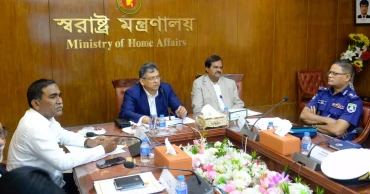
Crackdown on extortionists, criminals to be intensified : Home Minister
Home Minister Salahuddin Ahmed on Wednesday drives against terrorists, armed criminals, drug dealers and extortionists are underway and would be intensified further.
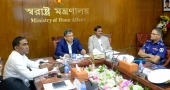
“Lists of terrorists, armed criminals, drug dealers and extortionists are always maintained by the police and regularly updated,” he said responding to a question from reporters after a meeting at the Secretariat on preparations for Durga Puja celebrations.
The police department is regularly collecting data on the number of terrorists, drug dealers and extortionists arrested, and the information is being published in the media, he added.
The home minister said the country’s overall law and order situation should not be assessed based on one or two isolated incidents, stressing that the government is continuing its efforts to ensure public safety and maintain peace in society.
“We have always told you this. We speak to the press almost every day. We are continuing our efforts to ensure the security of people and establish peace in society,” he said.
Asked about allegations of land grabbing and extortion using political influence, Salahuddin said the government considers a criminal a criminal irrespective of political identity.
He said police respond immediately to calls made to the national emergency service 999, go to the spot, make arrests and file cases.
“Whoever is involved, strict action will be taken against them and is being taken,” he said.
Asked about the role of a former lawmaker in an incident in Mirpur, the Home Minister said the matter is under investigation.
Regarding the incident at Radda Clinic, he said negligence of duty has been found on the part of a police officer. “The officer was immediately withdrawn and departmental action has been initiated against him.”
The minister also said there was no political involvement in the Radda MCH-FP centre incident.
However, he said some of those involved in crimes might have political identities, but the government was taking legal action against them without considering their political affiliations.
11 days ago
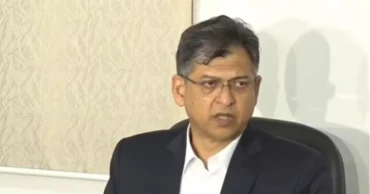
No journalist to be victimised under Cyber Security law: Salahuddin
The government is exercising utmost caution so that the proposed Cyber Security (Amendment) Act does not become an oppressive law and that no journalist or media outlet is victimised under it, Home Minister Salahuddin Ahmed said on Monday.
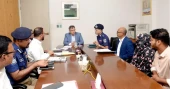
The proposed law would be finalised only after extensive consultations with stakeholders and consideration of their recommendations, he said at a press briefing at Secretariat following a consultation meeting with representatives of print and electronic media at the Ministry of Information and Broadcasting.
“Our primary objective is to ensure that no journalist falls victim to the misuse of this law,” he said.
The Home Minister said the draft amendment bill was earlier laced before the Cabinet which directed the authorities to hold extensive discussions with IT experts and other stakeholders involved in cyberspace.
Then the government published the draft on its website to seek opinions from people from all walks of life, he said adding that feedback has already been received from various institutions, human rights organisations, students and cyberspace users.
Monday’s meeting was the government’s second consultation with editors, senior journalists, newspaper organisations and representatives of professional journalists’ associations.
At the first meeting on September 10, editors were requested to submit their views in writing or through the website.
The minister said many participants presented their views at Monday’s meeting and pledged to submit written recommendations.
He said a proposal came to hold detailed discussions between media and cyber experts to ensure that the media is not harmed or victimised and that necessary safeguards are incorporated into the law.
“The government has gladly accepted the proposal,” Salahuddin said, adding that the government has no intention of enacting the law to target the media.
Regarding safeguards for journalists in print, electronic and online media, the minister said a proposal was made to make prior court approval mandatory before taking action against or arresting a journalist.
He said the government considered the proposal appropriate and logical.
Stakeholders will be given another 15 days to submit formal recommendations which will then be considered for inclusion in the draft, he said.
A provision setting a specific timeframe for the disposal of cases or appeals will also be considered to prevent people from remaining in legal uncertainty for an indefinite period, the minister added.
Salahuddin said a special coordination mechanism would be formed to help finalise the draft.
The Principal Information Officer will serve as the focal point, while the Ministry of Posts, Telecommunications and Information Technology and the Ministry of Information and Broadcasting will jointly coordinate the process.
Representatives of the Editors’ Council, Electronic Media Association and a panel of cyber experts formed by the IT ministry will participate in the process and are expected to submit recommendations within 7 to 15 days, said the minister.
The revised draft will then be published on the government website again for further public feedback before being placed before the Cabinet, the minister added.
If the recommendations are accepted they will be incorporated into the draft before an inter-ministerial review and submission to the Cabinet.
After Cabinet approval, the bill will be placed before Parliament where it will undergo further deliberation involving members of both the ruling and opposition parties as well as views emerging from seminars and symposiums outside Parliament.
Salahuddin said the main objective of the proposed law is to establish a balanced legal framework to protect the country, society and young people from cybercrimes and other criminal activities.
The act is also intended to comply with international standards while protecting social and religious harmony, family values and indigenous culture, he said.
13 days ago
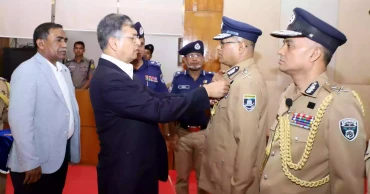
Home Minister announces rewards for arrest of “fascist’s associates”
Home Minister Salahuddin Ahmed on Saturday directed police force to use own intelligence information to bring “fascist’s associates” to justice and announced rewards for those who play a role in their arrests.
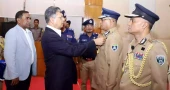
“Those who can bring the associates of fascism and Awami forces under the law will be rewarded,” he said while addressing a medal-giving ceremony marking Police Week-2026 at Rajarbagh police lines in the capital.
The minister said some of such people have been arrested recently including two “strong associates of fascism” in the previous week and another on Friday.
“They had been hiding here all this time. Where was our intelligence support?” he asked, urging police to make effective use of their own intelligence capabilities.
He also said legal action would be taken against those attempting to create instability in the country.
Citing the United Nations figures the minister said, around 1,400 people were killed in the country in one month during the movement.
He also referred to figures relating to extrajudicial killings, enforced disappearances and deaths in custody over the past 17 years.
He questioned whether people would ever want those responsible for such killings and the politicisation of state institutions to return to politics.
The minister said those who have not expressed regret, remorse or sought forgiveness after the killings are now speaking from outside Bangladesh.
On bringing back convicted fugitives including Sheikh Hasina, the home minister said Bangladesh has formally requested the neighbouring country to return them under the extradition treaty.
“We have officially requested the neighbouring country, as per the extradition treaty, to return the convicted fugitives including Sheikh Hasina,” he said.
He added that if the individuals concerned voluntarily return to Bangladesh and face the law, the legal process would take its own course.
At the ceremony, the home minister presented BPM and PPM medals to 98 police members.
Home Ministry Senior Secretary Manjur Morshed Chowdhury, Inspector General of Police Md Ali Hossain Fakir and senior police officials attended the programme.
15 days ago
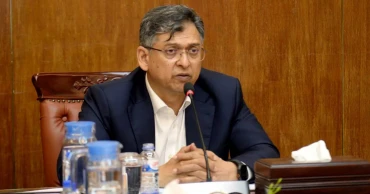
Opratim murder trial to be completed speedily: Salahuddin
Home Minister Salahuddin Ahmed on Sunday said the trial in the murder case of seventh-grader Yashat Shahriar Opratim in Cumilla will be completed quickly.
“I hope the trial of this murder will be completed in a short time, like the trial in the Ramisa murder case. The court will conduct the trial, and we will extend all necessary cooperation by completing the legal procedures and submitting the charge sheet,” he told reporters at the Secretariat.
Opratim laid to rest in Cumilla
The minister expressed hope that the judiciary will give due importance to the case and take steps to complete the trial quickly.
Noting that four arrests have so far been made in connection with the incident, he said they confessed to their part and police are now completing the necessary legal procedures, including examining whether their statements could be recorded under Section 164.
Salahuddin described the incident as tragic, saying the entire country is deeply saddened by it. “The boy was only 13 years old. His body was recovered within 24 hours of his disappearance,” he said.
Praising the police for their role in the investigation, he said they have arrested the suspects within 12 hours and recovered and seized evidence related to the case.
Of the four arrestees, three were picked up earlier, and another was arrested on Sunday.
The minister said two of those arrested earlier are believed to be over 18 and one could be under 18, while their national identity cards are being verified.
He suspected that they were part of a juvenile criminal group, saying they had a relationship, acquaintance and friendship with Opratim and often spent time with him. “Their ages appear to be five to 10 years higher than that of the victim,” he said.
The mobile phone Opratim had with him was also recovered from the prime suspect, Tuhin, Salahuddin said.
“Police have recovered all the evidence. They have confessed to the incident. Now police are working on other legal procedures, including whether their statements can be recorded under Section 164,” he said.
The minister said police are conducting forensic analysis and that Opratim’s post-mortem examination has been completed.
Opratim, the only son of Dr Nahida Begum, an associate professor of the Department of Bangla at Cumilla University, and KM Firoz Shahriar, was found dead in a jungle in the Kotbari area of Sadar Dakshin upazila of Cumilla on Saturday.
Opratim, a seventh-grade student at Cumilla Border Guard Public School, left his home in the area around 3:30pm on Friday, carrying his mother’s iPhone to take photos with his friends.
He was buried at their family graveyard in the Kotbari area on Sunday.
21 days ago
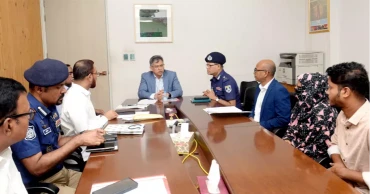
SB officer Altaf killing: Salahuddin orders swift arrest of all accused
Home Minister Salahuddin Ahmed on Thursday directed police to arrest all the accused in the killing of Special Branch (SB) Sub-Inspector Md Altaf Hossain in Aminbazar of Savar immediately.
He gave the directive while speaking to reporters after family members of the deceased met him at his office at the Bangladesh Secretariat.
During the meeting, Salahuddin assured the family of all-out efforts to ensure a speedy trial of the murder.
He said Tk 6 lakh has already been provided to the family from the police welfare fund.
The minister also announced that Community Bank Bangladesh Ltd will provide necessary loans and other assistance to help keep the deceased's family business operational.
He further directed the authorities concerned to take steps to confer the posthumous police medal on Altaf in recognition of his integrity and courageous service during his career.
Later, Salahuddin handed over the financial assistance to the deceased's wife, Sheuly Parvin.
Altaf came under attack by a group of assailants at Baradeshi Paschimpara in Aminbazar on September 5 while trying to settle an argument over the parking of a private car.
During the attack, he took shelter in his elder son's business establishment to save his life. Around 8:10pm, the attackers allegedly launched a violent assault there with locally made weapons, including rods, pipes, hammers and sticks.
Altaf's younger son, Md Ariful Islam, was also seriously injured in the attack while attempting to save his father.
Locals later rescued them and took them to Shaheed Suhrawardy Medical College Hospital, where doctors declared Altaf dead.
A murder case was filed with Savar Model Police Station against 15 people.
Altaf joined Bangladesh Police as a constable from Sirajganj district in 1986.
He had been serving with the Special Branch in Dhaka from 2011 until his death.
24 days ago
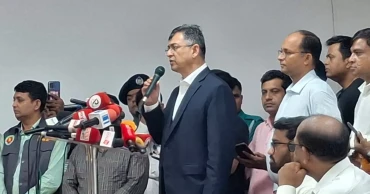
Salahuddin urges crime reporters to play responsible role in building safer society
Home Minister Salahuddin Ahmed on Wednesday urged crime reporters to play a responsible and objective role in preventing crime and building a safer society, saying their role is becoming increasingly important as the nature of crime changes with advances in technology.
He came up with the call while speaking as the chief guest at a programme marking the 43rd founding anniversary of the Bangladesh Crime Reporters Association (CRAB) at Segunbagicha in the capital.
The minister said the government will consider providing assistance, either through government initiatives or corporate social responsibility (CSR) funds, to crime reporters who are injured or otherwise affected while performing their professional duties.
He also said the government will examine, subject to legal considerations, whether certificates could be awarded by the Ministry of Home Affairs or the police department to recognise professional excellence and investigative journalism.
Salahuddin said crime reporting is different from many other journalistic beats and is largely a form of investigative journalism that involves risks.
As the nature of crime changes, journalists also need to improve their knowledge of technology and emerging forms of crime, he said.
The minister said crime reporters have a significant role in building a crime-free and secure society, while stressing that responsible and objective journalism is essential alongside modern legal frameworks to prevent and combat technology-driven crimes.
He said the media, police and the Ministry of Home Affairs are interconnected in combating crime and maintaining law and order, and that an organisation like CRAB has an important role in providing information and suggestions in this regard.
Salahuddin said CRAB, with 318 professional members, has established a respected position in investigative journalism over its 43-year journey.
He described investigative journalism as a knowledge-based field requiring extensive study and analysis of information.
Emphasising the need to identify the underlying causes of crime, the minister said crime should not be treated merely as a symptom and that its underlying causes must be addressed.
He identified drugs and gambling as major driving forces behind many serious crimes and said society must be analysed to understand why crimes occur, rather than focusing solely on punishing offenders.
Salahuddin said the government has taken steps to update the legal framework to address emerging crimes, including online gambling and drug-related offences.
Referring to the decline in acid-related crimes, he said strong laws, media attention and social awareness have contributed to reducing such offences and called for similar joint efforts to tackle drugs, online gambling and other crimes.
Describing the media as a mirror of society, the minister said journalists' active and responsible participation, alongside the government and law enforcement agencies, is essential to reducing crime.
25 days ago
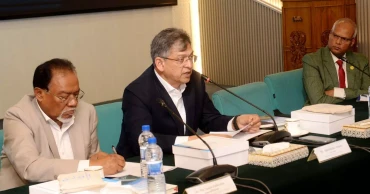
Global support crucial for sustainable Rohingya solution: Salahuddin
Home Minister Salahuddin Ahmed on Sunday said a quick and sustainable political solution to the Rohingya crisis requires strong cooperation from the international community and international organisations.
He urged the UN and the international community to keep the Rohingya crisis on the global agenda and ensure that it is not overshadowed by other global conflicts or crises.
“Through joint efforts and effective diplomacy by the international community, we must ensure the rapid and dignified repatriation of Rohingya refugees to their homeland in Myanmar,” the minister said while addressing a round-table discussion titled “The Rohingya Crisis: Emerging Challenges & Reframing Response Strategies.”
The Institute for Global Cooperation Foundation (IGCF) organised the programme at the auditorium of the Bangladesh Institute of International and Strategic Studies (BIISS).
Salahuddin said a permanent and sustainable solution to the crisis is possible with the direct support of leading countries in global politics and the UN.
He urged international human rights organisations, the UN High Commissioner for Refugees (UNHCR) and all other relevant stakeholders to play a more effective role in resolving the Rohingya crisis.
“Our main goal is one – to ensure that the nearly 1.5 million Forcibly Displaced Myanmar Nationals (FDMNs) currently taking shelter here can be sent back to their own country with full dignity and security,” the minister said.
“For this, continued support from the international community and the political role of leading countries are extremely important,” he said.
Highlighting the long-term impact of the crisis, Salahuddin said Bangladesh has been providing shelter, food, land, healthcare and basic security for livelihood to more than 1.5 million displaced Rohingyas on humanitarian grounds for over nine years.
“But over time, criminal activities, arms and drug smuggling, human trafficking, gender-based violence and activities of armed groups have increased in the camps, creating serious challenges to Bangladesh’s internal security,” he said.
Noting that the lives and environment of local communities living near the camps have also come under serious threat, the minister said necessary security measures such as fencing around the camps and a well-regulated movement system have become essential to control crime and ensure the overall security of both the Rohingya population and local citizens.
“The present government, under the capable and far-sighted leadership of Prime Minister Tarique Rahman, is determined to implement a 100 percent successful repatriation,” he said.
A “National Strategy Formulation Committee on Rohingya Affairs” has already been formed under the dynamic leadership of Prime Minister Tarique Rahman, Salahuddin said, adding that another high-level national committee, headed by himself, is active in maintaining law and order, border management and overall coordination.
“The government is working with a comprehensive whole-of-government approach involving the civil administration, security and defence agencies,” he said.
The minister warned that humanitarian assistance provided indefinitely without a specific and credible repatriation plan could reduce the pressure for a political solution in the long run.
“Therefore, going beyond emergency relief assistance, we need to move quickly towards a ‘transitional strategy’, whose main objective will be to create a safe and suitable environment in Myanmar’s Rakhine State for the Rohingyas to return,” he said.
Salahuddin expressed hope that through a combination of sustainable international engagement, national unity and a strong security framework, Bangladesh will soon be able to ensure the dignified and permanent repatriation of Rohingyas to their homeland.
Prime Minister’s Adviser on Public Administration Md Ismail Zabihullah delivered a speech as the guest of honour, while State Minister for Foreign Affairs Shama Obaed Islam attended the programme as a special guest.
1 month ago
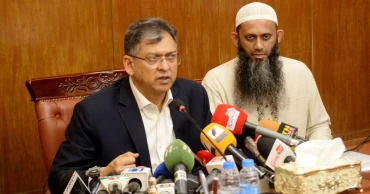
Zubair faction to hold two-phase Biswa Ijtema in January
The Biswa Ijtema of the Maulana Zubair Ahmed faction of Tabligh Jamaat will be held in two phases in January next year, with the first phase from January 8 to 10 and the second from January 15 to 17 at the Ijtema ground on the bank of the Turag River in Tongi.
However, no final decision has yet been made on when or where the followers of Maulana Syed Wasiful Islam, commonly known as the Saad faction, will hold their Ijtema, Home Minister Salahuddin Ahmed said on Thursday.
He disclosed the dates while talking to reporters after a meeting with leaders of the Saad faction at the Secretariat.
Salahuddin said the government earlier held discussions with the Zubair faction and met the Saad faction as part of efforts to reach a decision on the annual gathering.
He said both factions want access to the Ijtema ground, but there is disagreement over its use.
According to the minister, a government decision issued in 2025 stated that the Saad faction would not hold its Ijtema at the Tongi ground from next year, following an understanding that the Zubair faction would use the venue for the final time and the Saad faction would hold its gathering elsewhere.
However, leaders of the Saad faction told the government on Thursday that they did not agree with that arrangement.
The Saad faction proposed holding its Ijtema after the two phases organised by the Zubair faction, with a reasonable gap between the events and before the start of Ramadan.
It also proposed holding a one-phase Ijtema in late November, before the January gatherings.
The government will discuss the proposals with the Zubair faction as well as law enforcement and intelligence agencies before making a final decision, the minister said.
“The government’s highest priority is to maintain peace and order so that no clashes take place,” he said, noting that previous conflicts between the two factions resulted in casualties.
Salahuddin said the Zubair faction had proposed that the Saad faction organise its gathering at a venue other than the Tongi Ijtema ground and assured that the government would provide necessary assistance.
The Saad faction, however, did not agree to the proposal, he said.
The minister said the Biswa Ijtema had been held in two phases even before the split within Tabligh Jamaat, mainly because of the large number of people attending the gathering.
He also said the government called on both factions to pursue reconciliation and make efforts to reach an understanding.
Asked whether Maulana Saad will be able to attend the Ijtema in Bangladesh this year, Salahuddin said the issue will be handled by the Ministry of Religious Affairs.
1 month ago
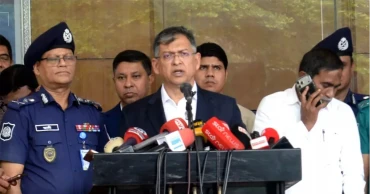
Govt raises rewards for information on looted, illegal arms
Home Minister Salahuddin Ahmed on Saturday announced increased cash rewards for people providing information leading to the recovery of looted and illegal firearms as part of intensified efforts to recover such weapons.
The minister warned that police officers who fail to make expected progress within the stipulated timeframe in curbing terrorism, extortion and drug-related crimes will face strict legal and administrative action.
The minister made the remarks while speaking at a press briefing after attending as the chief guest the Quarterly Crime Review Conference (April-June 2026: Second Quarter) organised by Police Headquarters at the Bangladesh Police Auditorium in Rajarbagh
Under the newly revised reward scheme, informants will receive up to Tk 2 lakh for information leading to the recovery of heavy weapons while those providing information on pistols, revolvers or shotguns will be rewarded up to Tk 50,000, said the minister.
Besides, people providing information leading to the recovery of sound grenades, looted tear-gas shells and other looted weapons will receive rewards of Tk 10,000, Tk 15,000 or Tk 20,000, depending on the circumstances, the minister said.
He assured that the identities of informants would be kept completely confidential.
Salahuddin said the government is regularly adopting strategic plans to bring the country’s law and order situation to the desired level and improve the image of the police by turning the force into a public-friendly and people-oriented institution.
He said a special unit has already been formed in coordination with various intelligence agencies to intensify operations to recover looted and illegal firearms.
Salahuddin said weapons whose cancelled licences were not surrendered within the stipulated deadline have already been treated as illegal firearms and cases have been filed, while drives to recover them are continuing.
He added that special strategic operations are being conducted across the country with assistance from intelligence agencies to prevent illegal arms, drugs, smuggling and extortion.
Inspector General of Police Md Ali Hossain Fakir chaired the conference, while Senior Secretary of the Ministry of Home Affairs Manzur Morshed Chowdhury addressed it as a special guest.
Additional IGP (Crime and Operations) Khandaker Rafiqul Islam delivered the welcome speech. Additional IGP (Administration) AKM Awlad Hossain, among others, was present.
During the conference, the minister responded to various questions from DIGs of different ranges, police commissioners and additional police commissioners of different metropolitan areas, and superintendents of police (SPs) of different districts and exchanged views.
1 month ago