middle east crisis
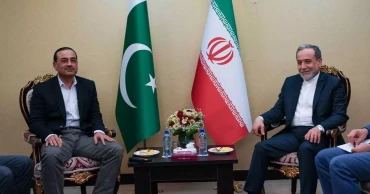
Iran’s FM meets Pakistan Army chief Asim Munir
Iranian Foreign Minister Abbas Araghchi has met Pakistan’s Army chief Asim Munir in Islamabad, according to Iranian state media, amid ongoing diplomatic efforts.
The meeting comes as Iran intensifies consultations with regional partners over evolving developments in the Middle East and stalled international negotiations, reports BBC.
Following his engagements in Pakistan, Araghchi said he will travel to Oman and Russia, noting in a social media post that the visits aim to “coordinate with our partners on bilateral matters and consult on regional developments.”
No further details of the discussions between the two sides were immediately disclosed.
The visit is being closely watched as diplomatic activity increases around efforts to revive stalled US-Iran dialogue and address regional security concerns.
5 months ago
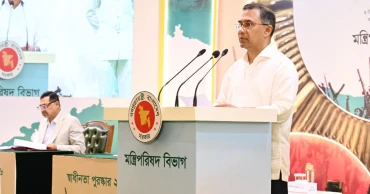
Don’t be worried, exercise austerity amid Middle East crisis: PM
Prime Minister Tarique Rahman on Thursday assured the country’s people not to be worried over the global crisis caused by the Middle East war but urged them to exercise restraint and avoid extravagance in state functions and family spending.
“Even amid the global war situation, we are trying to keep everything normal. Although fuel prices, including diesel, have been increased in all countries across the world, the current government has not raised prices in order to avoid public suffering,” he said.
Addressing the ‘Independence Award-2026’ ceremony at Osmani Memorial Auditorium in the capital, Tarique said the government is spending hundreds of crores of taka every day in subsidies in the fuel and energy sector to maintain stability and keep the situation normal.
He said the government is continuing all possible efforts to ensure public welfare as this is a government of people and accountable to them.
He said the new BNP-led government has started its journey amid a fragile economy weakened by corruption and mismanagement along with a weak governance structure and a deteriorating law and order situation.
Restoring peace and security in public life through improving law and order and strictly controlling corruption is one of the government’s key priorities, Tarique observed.
Stating that Bangladesh currently has a large working-age population, he said creating employment opportunities for this group is one of the major challenges at present.
“Not only the economy, the education system also suffered a major setback during the fascist rule. Unfortunately, even during the interim government period order in the education system has not been restored,” the Prime Minister said.
In today’s competitive world, the education system must be modernised and made job-oriented to ensure survival, he said, adding that work has already begun to make the education system more practical.
Tarique said more than half of the country’s population are women and no initiative can succeed easily unless a safe Bangladesh is ensured for them.
He said the government has identified each sector and started implementing its action plans.
The Prime Minister said the government earlier presented its election manifesto to people and signed the ‘July Charter’ with a commitment to state reform.
PM confers ‘Independence Award’ on Khaleda, others
“ People have supported all our commitments. Now it is time for implementation. We have already started working on fulfilling our promises,” he said.
Tarique said his government will implement the party manifesto and every clause and word of the signed July Charter.
“Personally, I believe that change in mindset is more important than changes on paper. The BNP government has proved it repeatedly whenever it has had the opportunity to run the state,” he said.
The Prime Minister said Bangladesh gained independence at the cost of many lives and has now completed 55 years as an independent nation.“We have both achievements and shortcomings. To build a self-reliant and prosperous Bangladesh, we must avoid revenge, retaliation and unnecessary controversy,” he said.
Quoting BNP founder and former President Ziaur Rahman, Tarique said, “National unity is our strength, division is our weakness.”
Tarique said differences of opinion are natural in a democracy but they should not turn into hostility. “We must remain alert about the country’s interest as anti-Bangladesh forces are still waiting for opportunities.”
He remembered the role and contributions of all national leaders of the country’s independence and Liberation War history including Shaheed President Ziaur Rahman, with deep respect and affection.
“If we, for narrow partisan interests, fail to respectfully acknowledge the roles of our national leaders in history, then future history will not forgive us. I believe that hesitation in accepting historical truth reflects inferiority,” Tarique said.
Earlier, the Prime Minister conferred the ‘Independence Award-2026’ on 15 distinguished individuals, including former Prime Minister Khaleda Zia and five institutions, in recognition of their outstanding contributions to the country.
He recalled that BNP founder and former President Ziaur Rahman introduced the award.
The Independence Award is the country’s highest civilian honour, given in recognition of outstanding contributions by individuals and institutions to the nation.
Cabinet Secretary Nasimul Ghani conducted the programme and presented brief profiles of all the award recipients.
Prime Minister’s spouse Dr Zubaida Rahman, daughter Barrister Zaima Rahman and Khaleda Zia’s sister Selima Islam were present at the programme organised by the Cabinet Division.
Local Government Minister Mirza Fakhrul Islam Alamgir, Home Minister Salahuddin Ahmed, Leader of the Opposition Shafiqur Rahman, members of the cabinet, MPs, judges, chiefs of the three services, diplomats, senior civil and military officials, and other dignitaries were present at the programme.
The Cabinet Division earlier announced the names of the nominees for this year’s Independence Award through a press release on March 5.
The Independence Award is the country’s highest civilian honour introduced in 1977 and awarded annually on the occasion of Independence Day on March 26.
5 months ago

US ready to resume combat if Iran rejects deal: Hegseth
The United States is prepared to resume military operations if Iran refuses to agree to a deal, US Defense Secretary Pete Hegseth said on Thursday.
Speaking to reporters in Washington, DC, Hegseth warned that US forces remain on standby to restart combat if diplomatic efforts fail, reports Al Jazeera.
He also claimed that the US Navy is currently controlling maritime traffic through the Strait of Hormuz, asserting that Iran “does not have a navy any more”.
Hegseth further said the United States would continue its naval blockade of Iran for “as long as it takes”, signalling no immediate plans to ease pressure on Tehran.
Delivering a direct warning, he added that Washington is closely monitoring Iran’s military movements.
“We are watching you,” Hegseth said, referring to Iranian activities and assets.
5 months ago
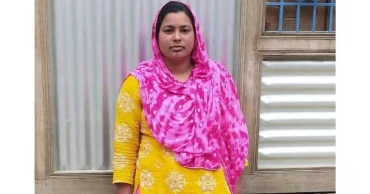
Bangladeshi woman killed in Israeli airstrike on Beirut building
A woman from Faridpur district has been killed in an Israeli airstrike in Beirut’s Hamra area of Lebanon amid the ongoing Middle East conflict.
The deceased, Dipali Akter, daughter of Sheikh Mofazzal alias Moka Sheikh of Purbo Shalepur village under Char Harirampur Union in Charbhadrasan upazila, was seriously injured in an Israeli airstrike on April 8 evening and later died while undergoing treatment at a local hospital.
Dipali had gone to Lebanon in 2024 to work as a domestic worker and had been living with a family there.
Family sources said the house where she worked came under a bombing attack on the day of the incident. The explosion also reportedly killed six members of her employer’s family.
Iran denies passage, BSC vessel ‘Banglar Joyjatra’ forced to return to Sharjah
Dipali’s younger sister, Laizu Begum, said she was the fourth among two brothers and three sisters. Her body has been kept at the morgue of Rafic Hariri Hospital in Beirut, and efforts are underway to repatriate it to Bangladesh.
She added that Bangladeshis living in Beirut informed the family, who have since contacted the Bangladesh Embassy.
Charbhadrasan Upazila Nirbahi Officer Suraiya Momtaz said local authorities have learned about the incident and assured that the family will be provided assistance to bring the body home. She also expressed deep condolences over the death of the migrant worker.
6 months ago
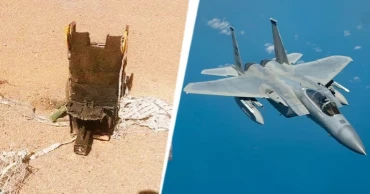
US rescues missing crew member from downed fighter jet in Iran
A U.S. service member who went missing after Iran shot down an F-15E Strike Eagle fighter jet on Friday has been rescued, President Donald Trump announced on social media Sunday. A second crew member had been rescued earlier.
Trump said the rescued aviator was injured but “will be just fine.” He described a massive search-and-rescue operation involving “dozens of aircraft” and 24-hour monitoring of the service member’s location. This was the first U.S. aircraft lost in Iranian territory since the conflict began in late February.
The downing occurred amid escalating U.S.-Iran tensions. Trump renewed his threat for Iran to reopen the Strait of Hormuz by Monday or face severe retaliation. In response, Iran’s Gen. Ali Abdollahi Aliabadi warned that the “doors of hell will be opened” on U.S. and Israeli infrastructure in the region.
Meanwhile, a second U.S. aircraft, an A-10 attack jet, also went down, though details of its crew and crash site remain unclear. Iranian state media said it was struck in the Persian Gulf.
Efforts to negotiate a ceasefire are ongoing, with Pakistan, Turkey, and Egypt mediating talks. Iran’s Foreign Minister Abbas Araghchi confirmed Tehran’s willingness to attend Islamabad-hosted talks. The proposed plan would halt hostilities to allow a diplomatic settlement.
The conflict, involving U.S.-Israel strikes on Iranian infrastructure, has killed over 1,900 people in Iran, more than 1,400 in Lebanon, dozens in Gulf Arab states and the West Bank, and 13 U.S. service members. Iran has also threatened strategic waterways, including the Bab el-Mandeb Strait, a major global shipping route.
The situation remains volatile as both sides continue air and missile operations, raising international concerns over civilian casualties and regional escalation.
6 months ago

Russian envoy discusses Dhaka-Moscow cooperation with Foreign Secretary
Russian Ambassador to Bangladesh Alexander Khozin on Sunday met Foreign Secretary Asad Alam Siam and discussed issues of mutual interest including the crisis in the Middle East.
“The crisis in the Middle East was also brought up,” said the Russian Embassy in Dhaka after the meeting.
Ambassador Alexander Khozin said Russia stands for a swift end to hostilities and is ready to facilitate a solution of the ongoing conflict and existing differences through political and diplomatic means.
2 Russian navy ships arrive in Chittagong on goodwill visit
The two sides discussed current Bangladesh-Russia cooperation including at the UN and between the two countries' Foreign Ministries.
6 months ago
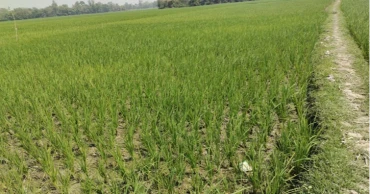
Diesel crisis disrupts irrigation in northern Bangladesh
Diesel shortage in Bangladesh’s northern districts is disrupting irrigation at a critical stage of the Boro season, raising fears of a drop in rice production and deepening anxiety among farmers.
Growers in 16 districts including Rangpur, Lalmonirhat, Kurigram, Gaibandha, Nilphamari, Rajshahi, Natore, Naogaon and Chapainawabganj, said they are unable to irrigate their fields due to a lack of fuel.
As vast tracts of cropland are drying up during peak Boro cultivation many fear irreversible damage to the country’s main food crop.
The ongoing fuel crunch has left diesel-run irrigation pumps, tube wells and agricultural machinery idle across large swathes of farmland.
Farmers allege that most filling stations in Rangpur and Rajshahi regions are either out of stock or unable to meet demand, forcing them to turn to the open market where diesel is being sold at Tk 50–80 above the government-set price.
The price surge has added to already rising cultivation costs, pushing many farmers deeper into debt.
A visit to Madhupur Char area in Kaunia upazila of Rangpur found the situation particularly severe.
Farmers there said diesel prices have jumped from Tk 102 to Tk 120 per litre within the past five days, significantly increasing irrigation expenses.
“Costs were already high. Now with rising fuel prices it has become even harder to manage irrigation,” said farmer Saidul Islam.
In Shialkhowa village of Kaliganj upazila in Lalmonirhat, farmer Hasim Mia said he failed to find diesel after visiting several filling stations. “I finally had to buy from a local retailer at Tk 220 per litre,” he said.
Another farmer from Kakina village, Moslem Uddin, said, “I searched the entire msrket on Friday but couldn’t find even a litre of diesel. My Boro field is drying up,” he said, adding that he was willing to pay up to Tk 250 per litre but still could not secure any fuel.
Operators of irrigation pumps said the shortage has made it nearly impossible to continue operations.
Many have been forced to increase irrigation charges, further burdening farmers.
According to the Department of Agricultural Extension (DAE), a target has been set to cultivate Boro rice on around 6,52,000 hectares of land this season in five districts—Rangpur, Kurigram, Lalmonirhat, Gaibandha and Nilphamari-- under Rangpur division and four districts—Rajshahi, Naogaon, Natore and Chapainawabganj-- under Rajshahi division.
Iran-backed Houthis join war, global markets on edge
However, with irrigation in these regions heavily dependent on diesel, the current crisis is disrupting water supply across a vast area.
Roughly 21 percent of irrigated land in these regions relies on diesel-powered pumps.
Of the 21,535 deep tube wells, 615 run on diesel.
Among 210,449 shallow tube wells, 98,268 are diesel-operated. Similarly, of the 17,647 low-lift pumps, 11,458 depend on diesel.
Agricultural economists have urged the government to prioritise fuel allocation for the farming sector to avert a potential food production crisis.
They said the global fuel market has been under pressure due to ongoing Iran-US conflicts, prompting the government to introduce rationing measures.
While such steps may be justified, experts stress the need to clearly prioritise critical sectors like agriculture in fuel distribution.
Agronomist Abdus Salam said Boro rice is Bangladesh’s principal food grain and is highly dependent on irrigation.
“Around 62 to 65 percent of Boro fields rely on diesel-powered irrigation. Ensuring fuel supply to agriculture at this stage is crucial,” he said.
He also suggested that similar to electricity, diesel supply for irrigation should be brought under a structured management system to ensure uninterrupted farming during peak seasons.
However, additional director Dr Azizur Rahman and additional director Sirajul Islam of the Department of Agricultural Extension in Rajshahi and Rangpur, respectively, claimed they have not received complaints regarding diesel shortages or overpricing and said irrigation activities remain normal.
However, farmer said if the fuel shortage continues, irrigation across vast crop fields will be severely affected.
Advocate Palash Kanti Nakh, president of Farmer and Workers Association, in Rangpur division, said the government must stand by farmers despite the global nature of the fuel crisis.
“Boro cultivation requires adequate water at this stage. Without irrigation, yields could drop by half, pushing farmers into deeper financial distress,” he said.
Rangpur Divisional Commissioner Shahidul Islam said efforts are underway to ensure farmers can access diesel more easily.
In a move to mitigate the urgent demand of the country, the Cabinet Committee on Economic Affairs on Thursday approved emergency diesel import proposals amid the unstable Middle East situation.
The decision was taken at a meeting of the Cabinet Committee on Economic Affairs for the current fiscal year held virtually with Finance and Planning Minister Amir Khosru Mahmud Chowdhury in the chair.
The meeting approved in principle two proposals of the Energy and Mineral Resources Division to ensure uninterrupted fuel supply in the country in the context of the ongoing geopolitical instability following tensions involving in the Middle East.
6 months ago
Iran sets conditions to end war with US, Israel
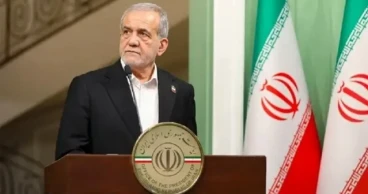
Iranian President Masoud Pezeshkian on Wednesday outlined several conditions for ending the ongoing conflict with the United States and Israel, saying Tehran is committed to regional peace but expects its rights to be recognised.
In a post on social media platform X, Pezeshkian said the conflict could only end if Iran’s “legitimate rights” are acknowledged, compensation is paid for damages and strong international guarantees are provided to prevent future attacks.
Earlier, Iran’s armed forces warned of a major retaliation if the United States carried out strikes on Iranian ports.
Abolfazl Shekarchi, spokesperson for Iran’s armed forces, told state-run IRIB TV that no port, economic centre or location in the Persian Gulf would be beyond Iran’s reach if Washington attacked Iranian port facilities.
His comments came after the US Central Command posted a warning on its Persian-language account on X urging civilians in Iran to stay away from port areas where Iranian naval operations were taking place.
The latest escalation follows joint US-Israeli attacks launched on Feb 28 targeting Tehran and several other Iranian cities. The strikes killed Iran’s then Supreme Leader Ali Khamenei, along with senior military commanders and civilians.
Iran later retaliated by launching multiple missile and drone attacks on Israeli and US-linked targets across the Middle East.
6 months ago

Middle East crisis pushes dollar rate to Tk 123 for import LCs
The ongoing crisis in the Middle East has begun to impact Bangladesh's foreign exchange market, driving up the price of the US dollar for both remittance procurement and import payments.
On Tuesday, commercial banks were seen purchasing remittance at a maximum rate of Tk 122.90 per dollar. Consequently, the exchange rate for settlement of import letters of credit (LCs) has climbed to Tk 123, according to banking sources.
Just a week ago, the dollar rate for imports stood at approximately Tk 122.50. The recent jump of nearly 50 paisa per dollar has sparked concerns among businesses.
"Banks are capitalizing on the war situation in the Middle East," an importer told the media on Tuesday.
"The sudden hike in the dollar rate is increasing our import costs, the impact of which will eventually be felt by consumers,’ he said.
Banking officials noted that uncertainty caused by the conflict has led foreign remittance houses to demand higher rates. While remittance dollars were previously available at Tk 122, the rate has now neared Tk 123 per dollar.
Bangladesh Bank’s latest exchange rate report reflects this upward trend. The average price of the dollar, which was Tk 122.33 on March 3, has now risen to Tk 122.58.
A top official of a private commercial bank stated that the central bank has issued an informal message to banks to ensure the rate does not cross the Tk 123 threshold for now.
"However, if the pressure of import liabilities increases and supply remains tight, the price may rise further," the official said, adding that the central bank might need to provide dollar support from the national reserves to stabilize the market.
Industry experts emphasized that moving toward a fully market-based exchange rate is crucial to increasing the supply of greenbacks in the local market.
7 months ago
57 students killed as US-Israel strikes on Iran escalate into regional crisis
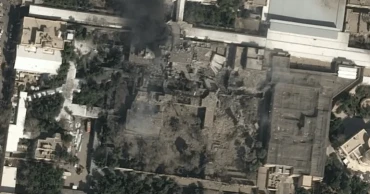
Iranian state media reported that an Israeli strike hit an elementary girls’ school in Minab, Hormozgan province, killing at least 57 students dead and 60 others wounded.
Iran's state news agency IRNA reported this information.
The massive joint attack by the United States and Israel on Iran has escalated tensions across the Middle East, raising fears of a broader regional conflict.
Iranian retaliation has targeted US assets in several Gulf Arab states, including Bahrain, Kuwait, Qatar, and the United Arab Emirates, where American military bases are hosted.
Iran’s Islamic Revolutionary Guard Corps (IRGC) claimed responsibility for strikes against “all Israeli and US military targets in the Middle East,” vowing that the operation “will continue relentlessly until the enemy is decisively defeated.”
At least one person was reported killed in Abu Dhabi after Iranian missiles were intercepted, while Bahrain reported a missile attack on the headquarters of the US Navy’s 5th Fleet.
The attacks have triggered widespread disruption of civil aviation. At least eight countries — Iran, Israel, Iraq, Jordan, Qatar, Bahrain, Kuwait, and the UAE — closed their airspace. Several international carriers, including Air France, British Airways, Lufthansa, Turkish Airlines, and Qatar Airways, canceled flights to the region.
Middle East airspace closure also disrupts flights from Dhaka
In Iran, explosions were reported in multiple cities, including Tehran, Kermanshah, Qom, Tabriz, Isfahan, Ilam, Karaj, and Lorestan province. Tehran strikes targeted University Street, Jomhouri area, and near the offices of Supreme Leader Ayatollah Ali Khamenei, along with the Islamic Revolutionary Guard Corps headquarters.
US President Donald Trump outlined the campaign’s objectives, saying the US aims to “destroy their missiles and raze their missile industry to the ground” and “annihilate their navy.” He urged Iranian military personnel to surrender, promising immunity to those who comply but warning of “certain death” for those who resist. Trump acknowledged possible US casualties in the operation, which the Pentagon has dubbed “massive and ongoing.”
Regional actors are closely monitoring the conflict. Kataib Hezbollah, an Iraqi paramilitary group, has threatened imminent attacks on US bases in retaliation. Russia called for an immediate halt to US and Israeli attacks, urging diplomatic resolution, while Saudi Arabia condemned Iranian missile strikes on Gulf states, warning of “dire consequences” for continued violations of sovereignty. The European Union urged restraint and diplomacy to prevent nuclear escalation. Pakistan condemned attacks on Iran, while Indonesia signaled readiness to facilitate US-Iran dialogue.
The Nobel Peace Prize-winning International Campaign to Abolish Nuclear Weapons condemned the military strikes, warning that the attacks “risk provoking further escalation” and increase the danger of nuclear proliferation.
Source: Agencies
7 months ago