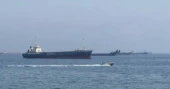
Hormuz
Chinese court resolves Strait of Hormuz collision dispute between foreign vessels
A Chinese maritime court has successfully mediated a dispute that had arisen from a collision between two foreign vessels near the Strait of Hormuz, China's Supreme People's Court (SPC) said on Monday.
The case, involving claims reaching 180 million yuan (about 26.5 million U.S. dollars), was handled by the Guangzhou Maritime Court (GMC) in south China's Guangdong Province under the guidance of the SPC. It involved the Antigua-and-Barbuda-flagged "Adalynn" and the Liberia-flagged "Front Eagle," both owned and operated by foreign enterprises, according to an SPC statement.
The two ships collided in June 2025, in waters near the Strait of Hormuz. While "Front Eagle" was undergoing repairs in Guangdong's Shenzhen, the owner of "Adalynn" applied to the GMC for an order to arrest the vessel.
Both foreign parties agreed to have the GMC hear the case and selected Chinese law as the governing law for resolving the substantive issues in dispute.
The GMC organized four pretrial meetings between October 2025 and July 2026 and held a public hearing on July 14, 2026, the statement said, adding that it also introduced maritime technical investigators to help ascertain facts regarding the collision, as no official authority had conducted an investigation into the accident and no official conclusions were available.
Through the fact-finding process, the court reconstructed the course of the collision, which helped clearly determine the parties' respective liabilities, according to Wu Guining, the presiding judge of the case.
Through the court's mediation, the relevant parties reached a settlement, and the court organized the liability fund distribution in late July.
Bilov Viacheslav, representative of the shipowner of the "Adalynn," said the company decided to submit the dispute to a Chinese court because of their trust in the impartiality and fairness of the country's legal and judicial systems, a choice that was ultimately proven right.
He also said that he was impressed by the efficiency of the Chinese court and professionalism of Chinese maritime experts.
2 months ago
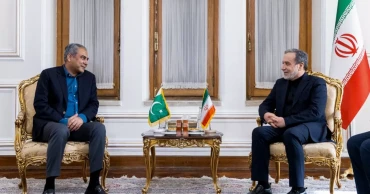
US-Iran talks set for today in Switzerland as Tehran claims Hormuz closure amid Lebanon conflict
US and Iranian negotiators are set to meet in Switzerland on Sunday discuss key details of an interim agreement aimed at ending the ongoing conflict, as tensions remain high over fighting in Lebanon and Iran's claim that it has again closed the Strait of Hormuz.
Iran said the strategic waterway was shut in response to continued Israeli military operations in Lebanon, warning that progress in negotiations would be difficult without a halt to the violence. However, the United States rejected the claim, insisting that maritime traffic through the strait remains uninterrupted.
US President Donald Trump warned that Washington could impose tolls on vessels using the Strait of Hormuz if a final agreement with Iran is not reached within 60 days. Under the interim deal, ships are allowed toll-free passage during the negotiation period.
The talks, mediated by Pakistan and Qatar, are expected to focus on Iran’s nuclear programme, regional security issues and steps toward a broader ceasefire. US Vice President JD Vance arrived in Switzerland alongside senior American negotiators, while Iran’s delegation is led by Parliament Speaker Mohammad Bagher Qalibaf and includes Foreign Minister Abbas Araghchi.
Iranian Foreign Ministry spokesperson Esmail Baghaei said negotiations on a permanent agreement would depend on all parties fulfilling their commitments under the interim accord, warning that failure to do so could jeopardise the entire understanding.
Meanwhile, the Strait of Hormuz remains a key point of contention. Iran’s military command claimed the waterway had been closed because of what it described as a US failure to uphold commitments related to ending the conflict. The US military disputed the assertion, saying commercial shipping continues normally and that dozens of vessels carrying more than 17 million barrels of oil passed through the strait on Saturday.
The interim agreement, signed earlier this week by Trump and Iranian President Masoud Pezeshkian, provides a 60-day window for negotiators to reach a comprehensive nuclear deal and includes provisions for lifting restrictions on Iran’s oil exports and unfreezing billions of dollars in Iranian assets.
In Lebanon, Israeli airstrikes on Saturday reportedly killed at least 16 people, including two children, according to Lebanese media and officials. Hezbollah said it would observe a ceasefire if Israel does the same, while an Israeli military official indicated that forces had received updated instructions to cease offensive operations and remain in a defensive posture.
The latest escalation has pushed the death toll in the Israel-Hezbollah conflict beyond 4,000, according to Lebanon’s health ministry. Diplomatic efforts to secure a broader ceasefire are expected to continue in Washington next week through US-backed talks involving Lebanon and Israel.
3 months ago
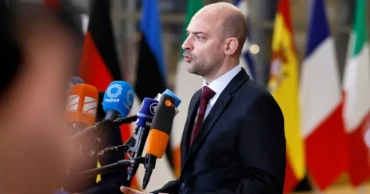
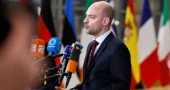
Sanctions on Iran to continue until Hormuz reopens: French Minister
French Foreign Minister Jean-Noel Barrot has said that sanctions on Iran will not be lifted unless the Strait of Hormuz is fully reopened and free of restrictions imposed by Iranian forces.
“We ourselves have imposed significant sanctions on Iran. But it is out of the question that any sanction whatsoever be lifted as long as the Strait of Hormuz remains blocked,” Barrot told French broadcaster RTL.
“It cannot be blocked, subjected to tolls, or used as leverage or blackmail.”
France must ensure it never finds itself again in a situation where it’s forced to pay the price for wars it didn’t choose to launch, Barrot said.
“That is why we must focus on … how Europe can rid itself of all these dependencies on hydrocarbons and oil – no longer being dependent on oil, no longer being dependent on digital technologies. In short, no longer being dependent on things that, in one way or another, draw us into conflicts, disasters, and crises in which we are not participants.”
Input from Al Jazeera
5 months ago
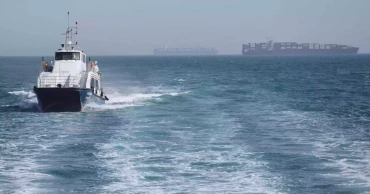
US moves to reopen Hormuz as UAE reports missile, drone attacks amid fragile truce
The United States said its forces engaged Iranian units and sank six small boats targeting civilian shipping as it sought to reopen the Strait of Hormuz on Monday, while the United Arab Emirates reported coming under attack for the first time since a ceasefire took effect in early April.
The US military said two American-flagged merchant vessels successfully transited the strait under a new initiative to restore safe passage through the key waterway.
The UAE Defence Ministry said its air defences intercepted 15 missiles and four drones launched from Iran. Authorities in Fujairah reported that one drone ignited a fire at a major oil facility, injuring three Indian nationals. The British military also reported two cargo ships ablaze off the UAE coast.
Iran did not clearly confirm or deny the attacks. Early Tuesday, Iranian Foreign Minister Abbas Araghchi warned on social media that both the US and the UAE should avoid being drawn back into a wider conflict. Earlier, Iranian state television quoted an unnamed official as saying Tehran had “no plan” to target the UAE or its oil facilities, blaming the incident on what it described as US military actions aimed at forcing an “illegal passage” through the strait.
The Strait of Hormuz, a vital route for global energy supplies, has been effectively restricted by Iran since late February, pushing up global fuel prices and heightening economic concerns. The US-led Joint Maritime Information Center said ships were being advised to use routes through Omani waters under enhanced security arrangements.
US Central Command chief Adm. Brad Cooper said American forces had cleared a safe corridor free of Iranian mines and repelled multiple threats, including cruise missiles, drones and small boat attacks on vessels under US protection.
President Donald Trump said efforts to block the strait would be met with force if necessary, describing the US initiative, dubbed “Project Freedom,” as aimed at assisting stranded commercial vessels in the Gulf.
The UAE condemned what it termed “renewed treacherous Iranian aggression” and called for an immediate halt to attacks. Residents received multiple missile alerts on Monday — the first since the ceasefire began — while several inbound commercial flights to the UAE were diverted midair.
In neighbouring Oman, authorities reported that a residential building near the strait was struck, injuring two foreign workers and damaging vehicles.
Iran has warned that all vessels transiting the strait must coordinate with its forces, cautioning that any foreign military presence, particularly that of the US, could be targeted.
Meanwhile, South Korea said a fire aboard a South Korean-operated vessel in the strait had been extinguished with no casualties among the 24 crew members. Earlier reports said the Panama-flagged ship experienced an explosion and engine fire while anchored near the UAE.
The UAE also accused Iran of targeting an oil tanker linked to its national energy company with drones, though no injuries were reported.
The ongoing disruption has strained energy-dependent economies in Europe and Asia, driving up oil and gas prices. The US has warned shipping companies against paying transit fees to Iran and has enforced a naval blockade on Iranian ports since mid-April, turning back dozens of commercial vessels.
US officials hope the pressure will push Tehran to make concessions in negotiations over its nuclear programme and other disputes. However, little progress has been reported.
Iran’s latest proposal calls for lifting US sanctions, ending the naval blockade, withdrawing foreign forces from the region and halting all hostilities, including Israeli operations in Lebanon. Iranian officials say the proposal does not address nuclear issues and aims to resolve other disputes within 30 days, rather than extend the current ceasefire.
Trump has expressed doubts that the proposal will lead to a breakthrough.
5 months ago
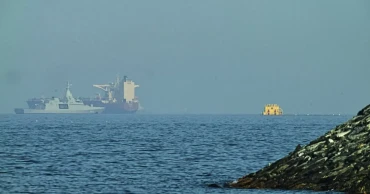
US warns shipping firms of sanctions over Iran toll payments in Hormuz
The United States has warned global shipping companies they could face sanctions if they pay Iran for safe passage through the Strait of Hormuz.
The warning, issued Friday by the U.S. Office of Foreign Assets Control, adds fresh pressure to the ongoing standoff between Washington and Tehran over control of the vital waterway.
Nearly one-fifth of the world’s oil and natural gas trade normally passes through the Strait of Hormuz during peacetime, making it one of the most important shipping routes globally.
Tensions escalated after Iran effectively disrupted regular traffic in the strait by attacking and threatening vessels following the start of the U.S.-Israel war on February 28. Iran later began allowing some ships to pass through alternative routes closer to its coast, sometimes charging fees for safe transit.
US authorities say these payments, described as a “toll” system, could expose companies to sanctions. According to OFAC, such payments may take different forms, including cash, digital assets, informal exchanges or even in-kind contributions like charitable donations or payments made through Iranian embassies.
“Both U.S. and non-U.S. entities risk sanctions if they make such payments or seek guarantees from Iran for safe passage, regardless of how the payment is made,” the agency said.
In response to Iran’s actions, the United States imposed its own naval blockade on April 13, preventing Iranian oil tankers from leaving the region and cutting off a key source of revenue for Tehran. US Central Command said at least 45 commercial vessels have been forced to turn back since the blockade began.
Meanwhile, US President Donald Trump has rejected Iran’s latest proposal aimed at ending the conflict.
“They want to make a deal, but I’m not satisfied,” Trump told reporters at the White House on Friday, criticizing what he called a lack of unity in Iran’s leadership.
Iran’s state-run IRNA news agency said Tehran submitted its proposal to mediators in Pakistan on Thursday night.
A fragile three-week ceasefire between the two sides appears to be holding, although both have accused each other of violations. The ongoing tensions have added strain to the global economy, pushing up prices and causing shortages of fuel and other oil-related products.
Diplomatic contacts are continuing by phone after Trump cancelled a planned visit by US envoys to Pakistan. He has also suggested a new plan to reopen the crucial waterway used by Gulf countries to export oil and gas.
Iranian Foreign Minister Abbas Araghchi has been in contact with regional leaders to discuss ways to end the war and held talks Friday with European Union foreign policy chief Kaja Kallas.
Separately, Iran said Saturday it executed two men convicted of spying for Israel. The judiciary’s Mizanonline news outlet identified them as Yaghoub Karimpour and Nasser Bekrzadeh, saying the Supreme Court had upheld their death sentences.
Authorities accused Karimpour of passing sensitive information to Israel’s Mossad intelligence agency, while Bekrzadeh allegedly shared details about Iranian officials and the Natanz nuclear facility, which was targeted in strikes last year.
Iran has executed more than a dozen people in recent weeks over alleged espionage and terrorism charges.
At the United Nations, China’s ambassador Fu Cong urged both sides to maintain the ceasefire and resume talks, calling it the most urgent priority.
He said China supports mediation efforts by Pakistan and blamed the crisis on what he described as an “illegitimate war” by the United States and Israel, warning of its impact on Iran, the wider region and the global economy.
5 months ago
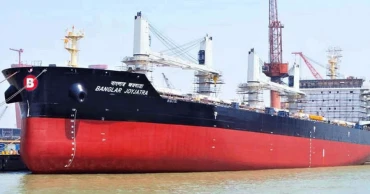
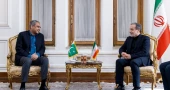
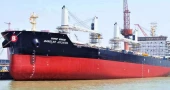
Dhaka requests Tehran to facilitate safe passage of ‘Banglar Joyjatra’ through Strait of Hormuz
Bangladesh has requested Deputy Foreign Minister of Iran Saeed Khatibzadeh to use his good offices to facilitate the safe passage of the Bangladesh-flagged vessel ‘Banglar Joyjatra’ through the Strait of Hormuz.
"We were very thankful when Iran included Bangladesh among the six countries whose vessels would be permitted to cross Hormuz," Foreign Minister Dr. Khalilur Rahman told the Iranian Deputy Foreign Minister during a recent meeting on the sidelines of the Antalya Diplomacy Forum in Turkiye.
The Deputy Foreign Minister of Iran followed up on the matter immediately and informed the Bangladesh Foreign Minister on Sunday night that while the situation continues to remain tense, necessary directives have been given to the authorities concerned in Iran.
The two leaders will continue to maintain communication on the matter, said the Ministry of Foreign Affairs on Monday.
Foreign Minister Dr Khalilur is currently visiting Brussels, Belgium.
Bangladesh and Iran exchanged views on the evolving situation in the Gulf region and other issues of mutual interest.
During the meeting, the Foreign Minister reiterated Bangladesh’s ‘consistent and balanced position’ on the ongoing developments, underscoring the importance of restraint by all parties and the resolution of differences through dialogue and diplomacy.
The Iranian Deputy Foreign Minister appreciated Bangladesh’s constructive stance and expressed hope that the Foreign Minister of Bangladesh would visit Tehran at a mutually convenient time.
Earlier, on 5 April 2026 in Dhaka, Foreign Minister Dr Khalilur held a meeting with Jalil Rahimi Jahanabadi, Ambassador of the Islamic Republic of Iran to Bangladesh, and requested facilitation of safe passage for Banglar Joyjatra as well as another Bangladesh-bound vessel carrying crude oil.
The Ambassador conveyed that the Iranian authorities were being approached at appropriate levels in this regard.
He also appreciated Bangladesh’s balanced stance on the current crisis and expressed gratitude to the Government of Bangladesh for adopting a condolence motion on the opening day of the 13th Parliament session following the targeted assassination of the late Supreme Leader, Ayatollah Ali Khameini.
He thanked the government for deputing Secretary (Bilateral) of Ministry of Foreign Affairs, Dr. Md. Nazrul Islam, to sign the condolence book at the Embassy of Iran on its behalf.
The Iranian Ambassador also conveyed appreciation for the Bangladesh government’s actions to facilitate dispatch of emergency medical supplies to Iran by the Bangladesh Red Crescent Society
Foreign Minister Dr Khalilur noted at that meeting he had addressed an official letter to Iranian Foreign Minister thanking him for the support extended by the Government of Iran to safe passage of 186 Bangladeshis from Iran to Azerbaijan.
5 months ago

Ceasefire in Iran war under strain amid disputes over Lebanon, Hormuz
A fragile ceasefire in the Iran war came under pressure on Thursday as disagreements over Lebanon, the Strait of Hormuz and other key issues cast doubt on whether the truce will hold.
Just hours after the ceasefire was announced, confusion emerged over whether it covered fighting between Israel and Hezbollah. Soon after, Israel launched heavy airstrikes on Beirut, marking the deadliest day in Lebanon since the conflict began on Feb. 28.
Iran and the United States, both claiming success after the truce, appeared to be increasing pressure on each other. Iranian semiofficial media suggested that forces may have planted sea mines in the Strait of Hormuz, a vital global oil route, highlighting Tehran’s strategic leverage. Meanwhile, President Donald Trump warned that US forces would carry out stronger attacks if Iran fails to honour the deal.
However, major questions remain unresolved. These include whether Lebanon is part of the ceasefire, the future of Iran’s enriched uranium stockpile, when normal shipping will resume through the strait, and limits on Iran’s missile capabilities.
Iran’s nuclear chief Mohammad Eslami said protecting the country’s right to enrich uranium is essential for any agreement with Washington. Speaking in Tehran, he criticised the US for not recognising enrichment as part of Iran’s proposed plan for a lasting ceasefire.
Talks between the US and Iran are expected to take place in Pakistan this weekend.
Violence in Lebanon has further threatened the truce. At least 182 people were killed on Wednesday as Israel intensified strikes on Hezbollah positions in Beirut. Rescue teams continued searching through rubble for survivors.
Israel said it killed Ali Yusuf Harshi, an aide to Hezbollah leader Naim Kassem, though Hezbollah has not commented.
Iranian Foreign Minister Abbas Araghchi insisted that halting the war in Lebanon was part of the ceasefire, but Israeli Prime Minister Benjamin Netanyahu and Trump rejected that claim.
A New York-based think tank warned the agreement is close to collapse, saying Israel’s large-scale strikes could be seen as escalating tensions, regardless of whether Lebanon is formally included.
Lebanon’s state news agency reported that an Israeli strike killed at least seven people in the south overnight, though Israel has not confirmed it.
Uncertainty over the Strait of Hormuz continues to push global oil prices higher. Iranian media published a map indicating a “danger zone” in the waterway, suggesting the presence of sea mines during the conflict.
Shipping traffic through the strait has dropped sharply, with only a few vessels passing since the war began due to security concerns. Although prices briefly fell after the ceasefire announcement, they rose again as doubts grew. Brent crude stood at around $98 on Thursday, up about 35% since the conflict started.
Iran has said it will allow ships to pass under international law once US military actions stop and Israel halts attacks in Lebanon.
Trump said US forces would remain deployed near Iran until a “real agreement” is fully implemented, warning of stronger military action if commitments are not met.
The White House said Vice President JD Vance will lead the US delegation in upcoming talks in Islamabad starting Saturday.
Key sticking points include Iran’s plan to potentially charge ships using the strait, which would challenge its status as an international waterway, and the future of Iran’s nuclear and missile programmes.
While the US wants Iran to abandon any ability to develop nuclear weapons and remove its stockpile of highly enriched uranium, Tehran maintains its programme is for peaceful purposes.
Trump said the US may work with Iran to remove the uranium, though Tehran has not confirmed this. In its own version of the agreement, Iran indicated it would continue uranium enrichment.
6 months ago
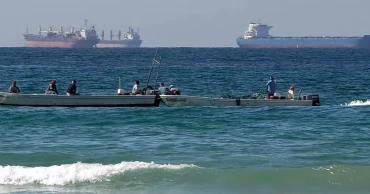
France, Italy hold talks with Iran on ensuring safe passage in Strait of Hormuz: FT
France and Italy have begun discussions with Tehran in an effort to ensure the safe passage of their vessels through the Strait of Hormuz, the Financial Times reported.
Citing three sources familiar with the matter, the report said the two European countries are trying to negotiate an arrangement with Iran that would guarantee safe navigation for their ships through the crucial maritime route. The talks remain at an early and tentative stage, the report added.
The effort comes as European states seek to revive oil and gas exports from the Middle East amid heightened regional tensions.
Al Jazeera said it could not independently verify the report.
Separately, Reuters reported that France is also working to assemble a broader international coalition aimed at securing the Strait of Hormuz once the security situation improves.
According to two French officials cited by Reuters, Paris has been consulting European, Asian and Gulf Arab countries on a plan that could involve deploying warships to escort oil tankers through the narrow waterway.
The strait is a vital corridor for global energy supplies. Data from the Germany-based CESifo Research Network shows that in 2024 about 6.2 percent of crude oil and 8.7 percent of liquefied natural gas imported from non-EU countries passed through the passage.
6 months ago

Some oil companies suspend fuel shipments in Strait of Hormuz: Reports
Several leading oil producers and trading firms have temporarily halted fuel shipments through the Strait of Hormuz following escalating attacks in the region, according to media reports.
A senior executive at a major trading company told Reuters that their vessels would remain stationary for the next few days as a precautionary measure, reports Al Jazeera.
Roughly 20 million barrels of crude oil and other petroleum products pass daily through the narrow but strategically vital corridor between the Arabian Peninsula and Iran. Any prolonged disruption in shipments through the waterway could trigger significant turbulence in global energy markets, analysts warn.
US-Israel attack on Iran: How world reacts
7 months ago