Nepal election
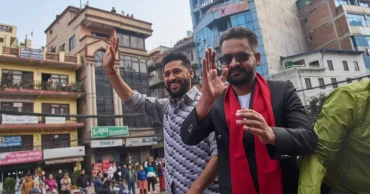
Nepalis head to polls in first election after youth-led uprising
Millions of Nepalis are preparing to vote in crucial parliamentary elections on Thursday, the first since a violent youth-led uprising toppled the previous government and brought forward demands for sweeping reforms across the Himalayan nation.
Authorities have deployed tight security nationwide, with regular police reinforced by thousands of temporary officers and army troops — usually confined to barracks — patrolling streets and guarding polling stations. The government has declared a three-day public holiday to allow voters to return home, while schools and public buildings have been converted into polling centers serving both remote Himalayan villages and urban areas in the southern plains.
Youth to play decisive role
The Election Commission of Nepal reported that over one million voters have been added to the rolls since 2022, many of them first-time voters who participated in last year’s protests that led to the resignation of former Prime Minister Khadga Prasad Oli. Analysts say this young electorate is expected to significantly influence the election outcome, demanding accountability from political leaders.
“This election, all political parties, whether old or new, are more focused on the youth. That is a major shift in our electoral history,” said Bhojraj Pokharel, an independent political analyst and former chief election commissioner of Nepal.
Voters seek change
Many citizens are seeking a break from traditional parties, calling for new leadership to combat corruption and strengthen governance.
“People don’t have big expectations from those being elected. They just want corruption controlled and better governance,” said Swastika Lamichane, a 28-year-old office worker.
Nepal’s FM Sharma to join oath-taking ceremony
Others expressed frustration with the political establishment. “For generations, the same old politicians and parties have been in power but have always failed us,” said Kalpana Saud, a 25-year-old housewife.
Three-way contest
The election is mainly a contest among three parties. The National Independent Party, formed in 2022, is seen as the frontrunner, challenging the long-dominant Nepali Congress and the Communist Party of Nepal (Unified Marxist–Leninist), which have alternated in power for decades.
The party’s prime ministerial candidate, Balendra Shah, a rapper-turned-politician who won Kathmandu mayoralty in 2022, has emerged as a prominent voice of discontent and enjoys strong support among young voters seeking alternatives. While the Nepali Congress and Communist Party maintain loyal voter bases, Shah’s party has drawn larger campaign crowds, signaling its growing influence.
Monarchy supporters seek representation
Groups advocating for the return of the monarchy also hope to win seats, citing rising public support for former king Gyanendra Shah, who remains a symbolic protector of the Hindu majority. Thousands of his supporters have rallied for his restoration, although his immediate return to power is considered unlikely.
Challenges ahead for new government
The incoming administration will face major challenges, including delivering on the demands of last year’s protests, tackling entrenched corruption, and managing relations with powerful neighbors India and China, both of which have historically sought influence in Nepal.
“The people have very high expectations from the new government, but resources are limited, making it difficult to meet all aspirations,” said Guna Raj Luitel, editor of popular Nepalese newspaper Nagarik.
3 months ago