possible successor
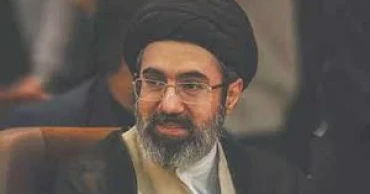
Son of Iran’s late Supreme Leader emerges as possible successor amid ongoing war
Mojtaba Khamenei, son of Iran’s late Supreme Leader Ali Khamenei, has long been viewed as a potential successor to his father — even before an Israeli airstrike at the outset of last week’s war killed the 86-year-old cleric. Despite never holding elected office or a formal government post, his name has frequently surfaced in succession discussions.
A reclusive and influential figure within Iran’s Islamic system, Mojtaba has not appeared in public since Saturday, when the strike targeted the supreme leader’s offices. Among those killed was his wife, Zahra Haddad Adel, whose family has longstanding ties to Iran’s ruling religious establishment. Iranian state media have not disclosed Mojtaba’s whereabouts, though he is widely believed to be alive and possibly in hiding as U.S. and Israeli airstrikes continue.
Standing strengthened after airstrikeCritics have previously warned that Mojtaba’s rise could resemble a dynastic transfer of power akin to Iran’s pre-revolution monarchy. However, with hard-liners portraying his father and wife as martyrs in the conflict with the United States and Israel, his position may have strengthened among senior clerics in the 88-member Assembly of Experts, the body tasked with appointing the next supreme leader.
The next leader will assume authority over a country at war and a stockpile of highly enriched uranium that could potentially be used for nuclear weapons, should such a decision be made.
Observers have likened Mojtaba’s behind-the-scenes role to that of Ahmad Khomeini, son of Iran’s first supreme leader Ruhollah Khomeini — acting as confidant, gatekeeper and power broker.
Early life shaped by revolutionBorn in 1969 in Mashhad, a decade before the 1979 Islamic Revolution, Mojtaba grew up during his father’s opposition to Shah Mohammad Reza Pahlavi. Family accounts describe a raid by the shah’s secret police, SAVAK, during which the elder Khamenei was beaten.
After the revolution, the family moved to Tehran. Mojtaba later fought in the Iran-Iraq war as a member of a battalion within Iran’s Revolutionary Guard, a force whose senior ranks have since included figures believed to be close to the Khamenei family.
When Ali Khamenei became supreme leader in 1989, Mojtaba gained proximity to significant financial and institutional networks, including religious foundations known as bonyads, which control vast economic assets.
Expanding influence behind the scenesOver the years, Mojtaba’s influence reportedly grew within his father’s office. U.S. diplomatic cables published by WikiLeaks described him as “the power behind the robes,” alleging he acted as a key gatekeeper and cultivated his own power base.
Though some observers questioned his theological credentials and relative youth, insiders have viewed him as an assertive and capable political operator with strong alliances.
He has reportedly maintained close ties with Iran’s Revolutionary Guard, including its elite Quds Force and the Basij militia, which has suppressed domestic protests.
The United States imposed sanctions on Mojtaba in 2019 during the administration of Donald Trump, accusing him of helping advance his father’s regional policies and domestic crackdown. Allegations have also linked him to backing the 2005 election of hard-line President Mahmoud Ahmadinejad and his disputed 2009 re-election, which triggered mass protests known as the Green Movement.
Reformist politician Mehdi Karroubi accused Mojtaba of interfering in those elections, calling him “a master’s son,” a charge dismissed at the time by his father.
High stakes in successionIran has witnessed only one previous transition in the supreme leadership — following the death of Ruhollah Khomeini in 1989.
The next supreme leader will take office amid heightened regional tensions following a 12-day conflict with Israel and broader U.S.-Israeli efforts aimed at curbing Iran’s nuclear and military capabilities.
As the highest authority in Iran’s Shiite theocratic system, the supreme leader holds ultimate decision-making power, serves as commander-in-chief of the armed forces and oversees the Revolutionary Guard. The Guard, which leads the so-called “Axis of Resistance” across the Middle East and controls Iran’s ballistic missile program, remains central to the country’s military and political structure.
With the country at a critical juncture, the question of succession has taken on renewed urgency.
7 months ago