Darwin
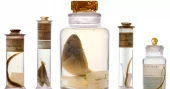
Scientists study Darwin’s 200-year-old specimens without opening jars
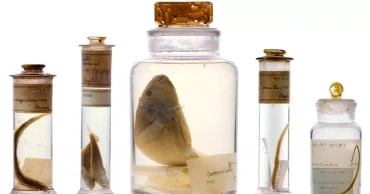
Scientists have found a way to examine Charles Darwin’s original specimens from his HMS Beagle voyage (1831–1836) without opening the nearly 200-year-old jars that preserve them.
The study focused on 46 historic specimens at London’s Natural History Museum, including mammals, reptiles, fish, jellyfish, and shrimp collected by Darwin and other early naturalists. Researchers found that preservation methods varied by organism and time period. While mammals and reptiles were often treated with formalin before storage in ethanol, invertebrates were kept in a mix of fluids, including formalin, buffered solutions, or glycerol-based liquids.
Using a portable laser spectroscopy technique called Spatially Offset Raman Spectroscopy (SORS), scientists were able to identify the preservation fluids in about 80% of the specimens, and partially in another 15%. SORS directs laser light through the jar walls, detecting chemical signatures without exposing the specimens. The method also helped identify whether containers were made of glass or plastic, offering insight into historical storage practices.
Dr. Sara Mosca of STFC’s Central Laser Facility said the technique allows museums to monitor and protect valuable specimens without risking contamination or damage. Wren Montgomery, a research technician at the Natural History Museum, added that this approach helps preserve collections for future research, reflecting the Museum’s commitment to advancing natural history studies.
Globally, museums hold over 100 million specimens preserved in liquids. Knowing the chemical makeup of preservation fluids is vital to prevent degradation and safeguard specimens. The new method offers curators a safer, non-invasive tool to track collection health and ensure long-term preservation.
The research, a collaboration between the Science and Technology Facilities Council, the Natural History Museum, and Agilent Technologies, was published in *ACS Omega* and highlighted as the ACS Editors’ Choice on January 13, 2026.
#From Science Daily
2 months ago