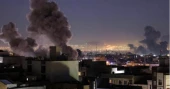
Israel warns Iran
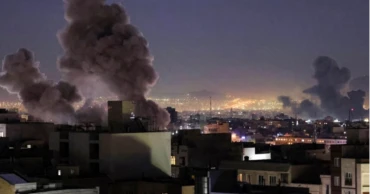
New strikes illuminate Tehran night as Israel warns of ‘many surprises’
Fresh explosions lit up the skies over Tehran late Saturday as the conflict between Iran and Israel intensified, with Israeli Prime Minister Benjamin Netanyahu warning that the next stage of the week-long war would bring “many surprises.”
Israel’s military said it had struck fuel storage facilities in the Iranian capital. Video footage showed flames rising above the site and the night horizon glowing over Tehran.
Trump says he doesn't want Kurds to be involved in war
The strike appeared to mark the first time a civilian industrial facility has been targeted since the conflict began. Iranian state media blamed the attack on “the United States and the Zionist regime,” saying the facility supplies fuel to Tehran and nearby northern provinces.
Meanwhile, Israeli airstrikes in southern Lebanon killed eight people, according to the Lebanese Health Ministry. Local media also reported that an Israeli drone hit a hotel in Beirut, leaving four dead and 10 others injured.
Early Sunday, the Israeli military said it had targeted commanders linked to the Lebanese branch of Iran’s Revolutionary Guards’ Quds Force in Beirut. The deaths added to at least 47 people killed in Israeli strikes the previous day.
US-Israeli strikes hit over 6,600 civilian sites: Red Crescent
The conflict has also spread across the region. Drone and missile attacks in Kuwait, Iraq and Saudi Arabia caused damage and additional casualties.
Earlier Saturday, Iranian President Masoud Pezeshkian apologized for attacks affecting “neighboring countries,” even as Iranian missiles and drones were launched toward Gulf Arab states. Hard-line leaders in Tehran insisted the country’s war strategy would remain unchanged.
Differences within Iran’s leadership have also emerged. Some officials are calling for de-escalation while others are pushing for continued confrontation with the United States and Israel. The conflicting positions come from members of the leadership council that has overseen Iran since the death of Supreme Leader Ali Khamenei in early Israeli airstrikes.
Pezeshkian rejected U.S. President Donald Trump’s demand that Tehran surrender unconditionally, saying such an expectation was unrealistic.
Trump, meanwhile, warned Iran could face heavier strikes and said more locations and groups might become targets, without providing details. The escalating conflict has already shaken global markets and weakened Iran’s leadership following hundreds of Israeli and U.S. airstrikes.
Speaking to reporters aboard Air Force One, Trump said Washington was not seeking a settlement at this stage. He described the ongoing U.S. military actions in Iran as an “excursion” and suggested issues like rising fuel prices and the safety of Americans would improve after the conflict ends.
Within Iran, mixed signals have emerged over military operations. Pezeshkian said the leadership council had instructed the armed forces not to attack neighboring countries unless Iran itself is attacked, urging a diplomatic solution.
However, judiciary chief Gholam Hossein Mohseni-Ejei indicated that the current strategy would continue, saying locations used by enemies to launch attacks on Iran would remain targets.
Parliament speaker Mohammad Bagher Ghalibaf also warned that as long as U.S. military bases remain in the region, neighboring countries will not experience stability.
Later, Iran’s mission to the United Nations suggested — without presenting evidence — that strikes on non-military locations may have been caused by U.S. electronic defense systems intercepting incoming attacks.
Senior security official Ali Larijani said Iran’s leadership remains united on the issue and confirmed that steps are being taken to convene the Assembly of Experts to choose the country’s next supreme leader.
7 months ago