migratory bird
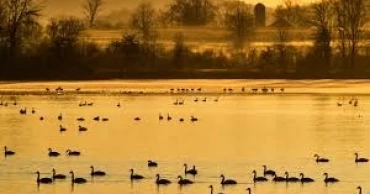
Raucous ‘bird tornado’ marks snow geese’s annual migration to Arctic
Dozens of birdwatchers gathered before dawn at a reservoir in Pennsylvania to witness a striking natural spectacle as thousands of migrating snow geese suddenly took flight during their annual journey north.
About an hour after sunrise, the birds which had been honking and grooming on the water — burst into the air in a dramatic swirl. They circled briefly before heading toward nearby farm fields to feed on leftover grains as they continued their long spring migration toward breeding grounds in the Arctic, passing through New York and Quebec.
The reservoir, created about 50 years ago to attract waterfowl, has gradually become a major stopover for migrating birds. Payton Miller, an environmental education specialist with the Pennsylvania Game Commission, described the moment when the flock lifts off the water as a loud “bird tornado.”
“It only takes one beautiful morning with a big flight to remind you how incredible it is to see so many of these birds together,” Miller said, adding that the sight never gets old.
Among the spectators was Adrian Binns, a safari guide from Paoli, Pennsylvania, who visited the Middle Creek Wildlife Management Area to experience something unique.
Snow geese have been arriving at the 6,300-acre Middle Creek site in increasing numbers since the late 1990s. Before reaching the area, many spend the winter along the Atlantic coast, from New Jersey to the Carolinas, with large groups staying on the Delmarva Peninsula near the Chesapeake Bay.
Although the geese stay at Middle Creek only briefly, the site attracts around 150,000 visitors each year, including about 1,000 hunters. According to the Pennsylvania Game Commission, about 100,000 snow geese gathered there on the busiest day last year, though the single-day record remains around 200,000 birds recorded on Feb. 21, 2018.
Snow goose populations have grown sharply over the past century. A 2017 study published by Springer Nature found that greater snow geese increased from about 3,000 in the early 1900s to roughly 700,000 by the 1990s. Today, their population is estimated at around one million, while the smaller lesser snow geese may number about 10 million.
The number of migrating tundra swans visiting Middle Creek has also risen, from only about a dozen in the mid-1970s to more than 5,000 in recent years. Birdwatchers have identified over 280 bird species at the site, including bald eagles, northern harriers, ospreys and owls.
However, the rapid growth of snow goose populations has created environmental concerns. Wildlife officials in the United States and Canada have been adjusting hunting rules while also addressing crop damage, migration changes and habitat destruction in the Arctic caused by the birds’ feeding habits.
David M. Bird, a wildlife biology professor at McGill University, said the growing population may be one of the biggest conservation challenges facing wildlife experts in North America. Snow geese often pull plants out by the roots while feeding, damaging fragile habitats used by other wildlife.
Meanwhile, the Pennsylvania Game Commission reported that avian influenza, present in the state since 2022, continues to circulate among wild birds. Authorities recently removed around 2,000 bird carcasses mostly snow geese from a quarry north of Bethlehem during December and January.
Bird noted that while nature lovers admire snow geese, farmers often see them as pests, hunters value them as food and animal rights advocates want them protected — making wildlife management a complex task.
7 months ago