Agricultural Technology
China’s farms go high-tech, boosting yields and cutting waste
Zhang Tong, 36, oversees his family farm along the Yellow River in Shandong Province, blending tradition with cutting-edge technology. Unlike past generations of farmers, Zhang relies on drones, smart machines, and precision irrigation to manage his 300-hectare wheat fields.
A sleek silver drone maps the plots, plans spraying routes, and checks for water stress, while snake-like pipes deliver water and fertilizer directly to plant roots, reducing water use by nearly 30 percent. “The pipes work like the fine blood vessels of the human body,” Zhang explained.
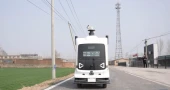
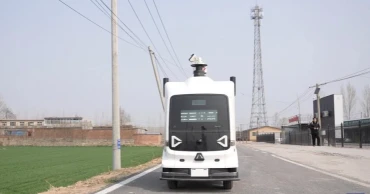
Since starting his farming career in 2019, Zhang has embraced automation. Intelligent seeders planted his entire farm in a month, while a fertilizer blender adjusts nutrients based on soil tests. Driverless harvesters and unmanned scout vehicles monitor crops and control pests. These innovations have pushed his annual wheat yield to 3,000 tonnes.
Across China, agriculture is undergoing a similar transformation. In the south, rice seedlings grow in climate-controlled facilities, while winter wheat in the north thrives under drone-guided care. The
centuries-old image of farmers with oxen and hoes is giving way to high-tech operations powered by AI, robotics, and data-driven planning.
Zhang is also experimenting with soybean-corn intercropping and custom seeders to optimize harvest timing. Researchers like Feng Lingyang of Peking University support farmers by using computer vision, machine learning, and gene editing to improve crop yields and create new revenue streams.
China produced a record 715 million tonnes of grain last year. Under the 15th Five-Year Plan (2026–2030), the country aims to increase production to 725 million tonnes, focusing on stabilizing rice and wheat while expanding corn and soybean output. Experts say technology will be key to achieving these goals.
On a neighboring farm, over 500 sensors track soil moisture, temperature, and wind across 660 hectares. Yu Long, general manager of Jinan Chengfa Agricultural Technology Co., said the goal is to cut grain loss by 5 percent, raise yields by 15 percent, and reduce fertilizer and pesticide use. “We are installing water-saving sprinklers and larger harvesters to further minimize losses,” he added.
The fields along the Yellow River reflect a new era of Chinese farming, where science and machinery are transforming how the nation feeds its 1.4 billion people.
6 months ago