PM’s Adviser

Govt working with full commitment to support flood-hit people, says PM’s adviser
The government is working with the highest level of commitment and responsibility under Prime Minister Tarique Rahman's directives to ensure rescue, relief and rehabilitation for flood-affected people across the country, Prime Minister's Adviser and PMO Spokesperson Mahdi Amin said on Saturday.
Briefing reporters at the Prime Minister's Office (PMO), he said the Prime Minister has been monitoring the flood situation round the clock and coordinating the government's response through officials at both the national and local levels.
Mahdi Amin said heavy rainfall has triggered floods, landslides and waterlogging in different parts of the country, with Chattogram, Cox's Bazar, Rangamati, Khagrachhari and Bandarban suffering the worst.
He said the Prime Minister on Friday spoke with divisional commissioners, deputy inspectors general of police, deputy commissioners, police supers, civil surgeons and fire service officials in the five worst-hit districts and instructed them to remain beside the affected people and ensure effective rescue and relief operations.
The PMO spokesperson said Tarique Rahman is also scheduled to meet all divisional commissioners on Sunday to review the situation and provide further directives.
He said a coordinated government response has already been launched, involving officials from the upazila to the national level.
Following the Prime Minister's instructions, State Minister for Power and Energy Aninda Islam Amit is now in Chattogram to supervise relief operations, while local MPs and political leaders are working alongside the administration in the affected areas, Mahdi Amin said.
He also said as BNP chairman, Tarique Rahman has instructed party leaders and activists, including those from Jatiyatbadi Chhatra Dal, Jubo Dal and Swechchhasebak Dal, to take part in rescue and relief work, and they are already active on the ground.
The adviser said the Prime Minister has approved emergency financial assistance of more than Tk 2 crore, while efforts are continuing to distribute rice and relief materials to affected families. Higher Secondary Certificate (HSC) examinations in the flood-hit districts of Chattogram division have also been postponed.
He said the Bangladesh Coast Guard has been deployed in coastal areas, Border Guard Bangladesh (BGB) in border regions and the Army where required. Medical teams have also been mobilised with medicines and vaccines to deal with water-borne diseases and snake bites.
Mahdi Amin said the government has instructed Local Government Engineering Department and the Roads and Highways Department to prepare for repairing damaged roads and railways once floodwaters recede.
He said work has also begun to compensate affected households, farmers, fish growers and livestock owners, while a food-friendly programme will be launched soon.
More than 1,000 shelters are currently operating with food, drinking water and sanitation facilities, the PMO spokesperson said, adding that efforts are underway to restore communication in areas where mobile networks have been disrupted.
"The Prime Minister has directed us to work simultaneously on rescue, relief and rehabilitation. During this disaster, everyone must stand united," he said.
Mahdi Amin expressed hope that government's coordinated efforts will help ease the suffering of flood victims and ensure they receive the support they need as quickly as possible.
2 months ago
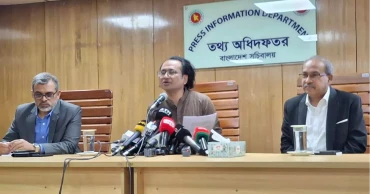
Govt to review Bangladesh-US trade agreement, says PM’s adviser Zahed
The government will review the trade agreement signed with the United States instead of moving immediately towards cancellation said Prime Minister’s Information and Broadcasting Adviser Zahed Ur Rahman on Tuesday.
The matter will be examined and investigated, he said at a press conference on the progress of various government activities at Press Information Department (PID) conference room at Secretariat.
“If we look at the agreement, we will see there is an option to cancel it. It can be cancelled with a 60-day notice. That is one aspect. Another condition in the agreement is that the two countries can modify different provisions through discussions.”
“From my position, I think we can at least first review the agreement at the government level,” he added
Referring to public discussions on the agreement, he said newspapers columnsanad video commentaries highlighting possible problematic aspects should continue.
Zahed said he has discussed the issue with the Prime Minister.
“We are reviewing the agreement within the government. It is a very strong agreement and we understand the impact if it is cancelled, as well as the context in which it was signed,” he said.
“However, we can consider revisiting certain problematic areas that we think may be harmful to the state. We would like to enter negotiations with them. Cancelling it may again create complications in bilateral relations or reciprocal tariffs,” he added.
Responding to another question, he said there are different types of agreements including contracts and memorandums of understanding (MoUs). “Some agreements are legally binding. In many cases, the legal bindings are so strict that leaving them can be more harmful than staying,” he said.
He also said that a democratically elected government considers multiple factors in such decisions.
4 months ago

China envoy meets PM’s adviser, stresses stronger cooperation in key sectors
Chinese Ambassador to Bangladesh Yao Wen on Tuesday met Prime Minister’s Political and Agriculture Adviser Nazrul Islam Khan and emphasised the need to strengthen cooperation in key sectors including agriculture and education.
The meeting was held at the Prime Minister’s Tejgaon office, where issues of mutual interest between Bangladesh and China were discussed, said a press release.
It said various bilateral issues were discussed with a focus on expanding cooperation in agriculture, forestry and education.
The two sides highlighted the need for closer collaboration in modern farming technology, afforestation to protect the environment, and skills development in the education sector in Bangladesh.
Nazrul Islam Khan sought more active support from China in these areas while the Chinese envoy assured continued cooperation in Bangladesh’s development efforts.
Chinese Embassy’s Cultural Counsellor Li Shaopeng and other officials were also present at the meeting.
5 months ago
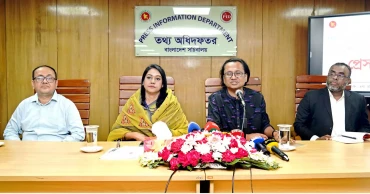
No severe fuel shortage, supply down slightly: PM’s Adviser
Prime Minister’s Adviser on Information and Broadcasting Dr Zahed Ur Rahman on Tuesday said there is some disruption in fuel supply in the country though it is not significant.
Concerns have arisen among people over long queues at fuel stations, prompting questions about whether supply has dropped sharply, he said at a press conference at the Department of Information conference room at Secretariat.
Comparing March figures of 2025 and 2026, the adviser said diesel supply declined slightly from 396,098 metric tonnes in March 2025 to 363,512 metric tonnes this year.
Dr Zahed, who also serves as adviser to the Ministry of Cultural Affairs and is in charge of policy and strategy matters, said octane supply increased marginally to 37,439 metric tonnes in March 2026 from 36,982 metric tonnes in the same month last year.
However, petrol supply decreased from 46,371 metric tonnes in March 2025 to 39,998 metric tonnes this March.
“This means there is some supply-related problem, but not a significant drop,” he said, adding that a reduction of around 7,000 metric tonnes in petrol supply indicates a manageable situation rather than a crisis.
“There are indications that some individuals are hoarding fuel with ill intentions, possibly for smuggling or selling at higher prices,” he added.
He noted that higher stock levels in homes and facilities in border areas could signal potential smuggling activities.
At the same time, he said public anxiety about future shortages has led many to purchase and store fuel in excess.
Providing data from recent enforcement drives, Dr. Jahed said that as of April 6 morning, stockpiles included 1,14,122 metric tonnes of diesel, 10,151 metric tonnes of octane and 13,805 metric tonnes of petrol.
Highlighting the heavy subsidy burden in the power and energy sector, the adviser said, “When we assumed office, there was already a subsidy burden exceeding Tk 45,000 crore and it still continues. The government is increasing subsidies further to keep fuel prices stable.”
Outstanding dues in the power sector also remain high, including Tk 20,272 crore owed to independent power producers (IPPs), Tk 2,904 crore to Adani Power, Tk 6,434 crore to joint ventures, Tk 10,045 crore to Petrobangla, and Tk 7,303 crore to state-owned power companies.
“There is significant pressure from subsidies. The government is trying to manage it in a way that minimises the impact on the public, though some pressure will remain,” he said.
Despite rising global fuel prices, the government has decided not to increase domestic fuel prices for at least another month, he added.
“We want to wait and observe. If the situation worsens, we may have to take tougher decisions. It is important to clearly communicate to the public why such decisions are taken and what outcomes we expect,” he said.
6 months ago