US blockade
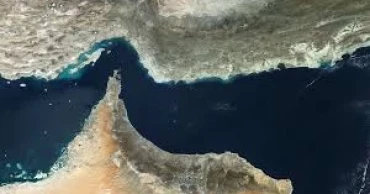
Iran reopens Strait of Hormuz but warns of closure as US blockade continues
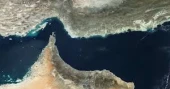
Iran has reopened the Strait of Hormuz to commercial shipping, but warned it could shut it again if the United States continues blocking Iranian vessels and ports.
In Beirut on April 18, officials said ships can pass through the key waterway—responsible for about 20% of global oil transport—but only along routes approved by Iran, indicating Tehran still maintains significant control. It remains unclear whether ships must pay fees. Data from a monitoring firm showed that traffic is still restricted to corridors requiring Iranian permission.
U.S. President Donald Trump stated that the American blockade will stay in place until Iran reaches a broader agreement with Washington, including over its nuclear program. Although he initially welcomed Iran’s move, he quickly clarified that the blockade would continue until negotiations are fully concluded.
Iranian leaders criticized the blockade as a breach of a recent ceasefire agreement and warned the strait could be closed again if U.S. restrictions persist. Since the blockade began, U.S. forces have reportedly turned back multiple Iranian ships.
Trump indicated that new talks with Iran could take place soon, after earlier discussions failed to produce an agreement, particularly over nuclear issues. Optimism around potential negotiations led to a drop in oil prices, amid concerns that continued disruption in the strait could worsen the global energy situation.
However, there were mixed signals within Iran itself, as some semi-official media outlets questioned the clarity and authority behind the decision to reopen the strait, suggesting it may still require approval from top leadership.
Meanwhile, a ceasefire between Israel and the Iran-backed Hezbollah group in Lebanon appeared to be holding, which could ease broader tensions and support diplomatic efforts. Still, uncertainty remains about whether all parties will fully adhere to the truce, especially with Israeli troops still present in southern Lebanon.
Despite the ceasefire, isolated violence continued, including an Israeli strike that caused casualties shortly after the truce began. Both sides have yet to confirm full compliance.
The broader conflict has caused thousands of deaths across multiple countries, and key sticking points in ongoing mediation include Iran’s nuclear program, control of the Strait of Hormuz, and compensation for war damages.
Trump also claimed Iran might concede on its enriched uranium stockpile—though this has not been confirmed by Iran or mediators.
5 months ago
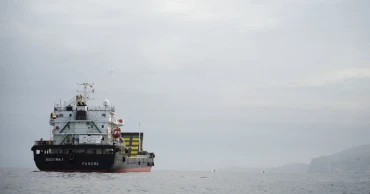
US Navy forces 8 Iran-linked oil tankers to turn back amid Iran blockade
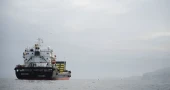
US naval forces have forced eight Iran-linked oil tankers to turn back since Monday, according to The Wall Street Journal (WSJ).
Citing officials, WSJ reported that US forces contacted the vessels via radio after they departed from or approached Iranian ports and instructed them to reverse course, reports Al Jazeera.
In each case, the tankers complied with the instructions, and no boarding operations were carried out.
The developments come amid heightened tensions in the Strait of Hormuz and increased US naval activity in the region.
Meanwhile, The US Central Command (CENTCOM) said the ongoing blockade on Iranian ports is being enforced against vessels of all nations entering or leaving Iran’s coastal areas.
Trump rules out ceasefire extension, predicts ‘amazing two days ahead’
In a statement, CENTCOM said the operation is being carried out “impartially” and includes US Navy guided-missile destroyers as part of the assets enforcing the blockade, reports Al Jazeera.
CENTCOM Commander Admiral Brad Cooper said the blockade has been “fully implemented,” claiming US forces have established maritime superiority in the region.
“An estimated 90% of Iran’s economy is fuelled by international trade by sea,” he said on X, adding that US forces have “completely halted” maritime trade in and out of Iran within 36 hours.
5 months ago
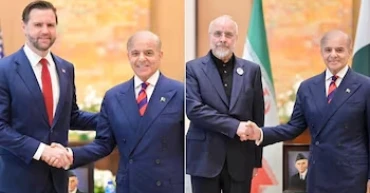
Diplomats push for fresh US-Iran talks as blockade enters first full day
Diplomats worked through back channels on Tuesday to arrange a new round of talks between the United States and Iran, as Washington enforced its blockade of Iranian ports and Tehran warned of possible retaliation across the region.
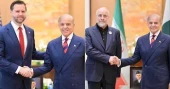
US President Donald Trump said a second round of talks could take place “over the next two days,” suggesting Islamabad as a possible venue. UN Secretary-General António Guterres also said it is “highly probable” negotiations will resume.
The first round of talks held in Pakistan last weekend failed to produce a deal, with Iran’s nuclear programme remaining a key sticking point. A US official said discussions on fresh talks are ongoing but no schedule has been finalised.
Pakistan’s Finance Minister Muhammad Aurangzeb said efforts to mediate between the two sides are continuing, adding that “our leadership is not giving up.”
The blockade, now in its first full day, is aimed at pressuring Iran, which has continued exporting oil—largely to Asia—since the conflict began on February 28.
A US official said forces enforcing the blockade are operating in the Gulf of Oman, monitoring vessels leaving Iranian ports before intercepting them after they pass through the Strait of Hormuz.
US Central Command said no ships passed through the blockade in the first 24 hours, while six vessels complied with orders to turn back.
The standoff over the vital waterway—through which about one-fifth of global oil flows in normal times—has raised fears of renewed hostilities and further economic fallout. Oil prices have surged as maritime traffic remains severely disrupted.
Meanwhile, separate talks between Israeli and Lebanese envoys in Washington were described as “productive,” with both sides agreeing to pursue direct negotiations, though major differences remain over Hezbollah and the ongoing conflict in southern Lebanon.
The war, now in its seventh week, has killed thousands across the region and displaced more than a million people, particularly in Lebanon, intensifying international calls for a broader ceasefire.
6 months ago
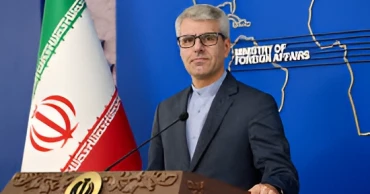
Iran’s Baghaei criticises US blockade, slams threats against ships
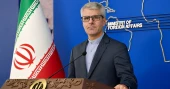
Iran’s Foreign Ministry spokesperson Esmaeil Baghaei has strongly criticised the US naval blockade, questioning whether what he termed an “illegal war of choice” could be won through a “revenge of choice” against the global economy.
In a post on X, Baghaei wrote: “Can an illegal ‘war of choice’ be won through a ‘revenge of choice’ against the global economy?!” He further added, “Is it ever worthwhile to cut off one’s nose to spite one’s face?!”
His remarks came after US President Donald Trump threatened Iranian vessels, saying they would be “eliminated” if they “come anywhere close to our blockade.”\
Iran warns of regional port threats as US plans blockade
The comments also followed the announcement by the US military that its blockade on all maritime traffic entering and exiting Iranian ports had officially begun in line with the stated deadline.
Source: Al Jazeera
6 months ago