Hanfu culture
Hanfu trend expands beyond humans to robots, dolls and pets in China
China’s traditional Hanfu clothing is no longer limited to people, as designers are now creating outfits for robots, dolls and even pets, reflecting a growing interest in blending culture with modern lifestyles.
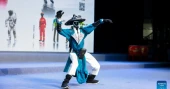
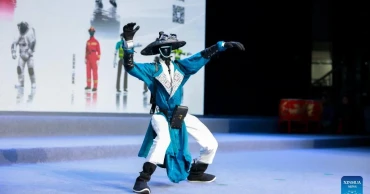
At a recent fashion show in Caoxian County in eastern Shandong Province, models appeared with dolls dressed in matching Hanfu, while humanoid robots also wore traditional outfits, drawing strong attention from visitors.
The event highlighted how Caoxian, one of China’s main Hanfu production centres, is shifting from mass manufacturing to more creative and specialised products.
Local companies that once focused on large-scale production are now exploring niche markets and original designs. Their new products include Hanfu for robots, collectible dolls and pets, along with designs suited for everyday use.
Hu Chunqing, general manager of Chenfei Clothing in Caoxian, said his company started making Hanfu for robots last winter.
With China’s robotics industry growing rapidly, he said combining traditional clothing with machines offers both a way to promote culture and a new area for innovation.
Within just over a month, his team developed more than 20 Hanfu designs for different robot models, including styles inspired by martial arts and various historical dynasties.
Hu noted that making clothes for robots is more complex than for humans, as designers must consider body structure, joints and materials that allow easy movement and heat control.
He believes robot Hanfu could be used beyond performances, with service robots in sectors like healthcare and public safety also wearing them to add a cultural touch.
The trend has also expanded into smaller products. Designer Yao Chixing, founder of Luoruyan, has introduced Hanfu for dolls, targeting young consumers who enjoy customising collectible toys.
She said making miniature Hanfu is even more challenging than regular designs, as all production steps are still required despite the smaller size.
Yao sees doll Hanfu as a growing market, combining modern toy culture with traditional fashion and reflecting cultural identity among young people.
Her brand has also introduced creative ideas, including scented Hanfu using floral fragrances and lighter, practical designs suitable for daily wear.
Meanwhile, Hanfu-inspired clothing for pets is gaining popularity in Caoxian.
Local company TAORAE now produces pet outfits based on traditional Hanfu styles, accounting for about 20 percent of its product range.
Founder Cheng Zhanying said rising pet ownership and demand for emotional connection have driven interest in pet clothing, while Hanfu design has provided a unique niche.
He added that pet outfits must prioritise comfort and flexibility, leading the company to introduce adjustable features based on customer feedback.
Another entrepreneur, Lan Shouku, has also entered the sector, launching a business focused on pet products, including Hanfu-style clothing.
His company’s red festive outfits became popular during the 2026 Spring Festival, when many people dressed in Hanfu and chose similar styles for their pets.
Lan said his team has already developed more than 30 new pet Hanfu designs this year.
Caoxian’s Hanfu industry began nearly 20 years ago with small-scale costume production. With the rise of e-commerce, local businesses quickly expanded and found strong demand.
Today, the county has over 2,800 Hanfu-related businesses employing nearly 100,000 people. In 2025, total sales exceeded 13 billion yuan, with a complete supply chain covering design, production and finishing.
The county now produces nearly half of China’s Hanfu garments.
However, growing competition has pushed companies to focus more on innovation, branding and specialised products.
At the recent event, Luoruyan launched a Hanfu collection linked to a popular historical TV series, marking a new step in brand collaboration.
An industrial base for intelligent robot apparel was also launched, aiming to combine traditional Hanfu with modern technology.
Xie Fangming of the China Fashion Association said Caoxian has developed into the country’s leading hub for original Hanfu production, with strong industrial capacity.
He added that further support will be provided in design talent, copyright protection and branding to help the sector grow into a creative centre.
Hanfu, which dates back to the Han Dynasty, is known for its detailed designs and cultural significance.
Industry insiders say expanding Hanfu to robots, dolls and pets is a way to promote traditional culture across new areas through innovation.
3 months ago