Bangladesh’s savings certificate
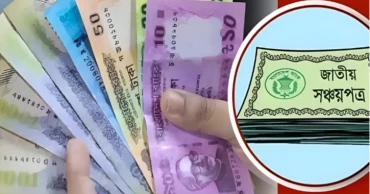
Negative trend hits savings certificates as encashment outpaces new investment
Bangladesh’s savings certificate sector is facing a silent crisis as rising inflation and economic uncertainty have driven a surge in encashment, outpacing new investments for the third consecutive fiscal year.
According to the latest data from the Department of National Savings, the net investment in savings certificates turned negative by approximately Tk 555 crore during the first eight months (July–February) of the current fiscal year, FY2025-26.
The decline was particularly sharp in January and February. In February, gross sales reached Tk 6,406 crore, but encashment (both matured and premature) stood at Tk 7,571 crore, resulting in a net negative investment of Tk 1,165 crore. This followed a January deficit of Tk 1,851 crore, where sales of Tk 7,161 crore were offset by Tk 9,012 crore in withdrawals.
Bangladesh cuts source tax on savings certificates for small investors
Inflation and high cost of living:
Market analysts point to persistent high inflation as the primary driver behind this trend. With the cost of essential goods rising significantly, many low and middle-income families are being forced to break into their previous savings to meet daily expenses.
Furthermore, the government’s decision to cap interest rates at a maximum of 11.98 percent at the start of the fiscal year has made these instruments less attractive. Meanwhile, rising yields on government treasury bills and bonds have prompted institutional and individual investors to shift their capital toward those platforms.
Impact on budget financing:
The negative growth in the savings sector has placed additional pressure on the government’s budget deficit financing. Since net investment in savings certificates is treated as a government loan, the shortfall has forced the state to rely more heavily on bank borrowing.
While the government set a bank borrowing target of Tk 1.04 lakh crore for the FY2025-26, data shows that borrowing has already reached Tk 1.06 lakh crore with several months remaining in the fiscal cycle.
Historical context:
The sector’s struggle is not new. In the FY2024-25, net investment was negative by nearly Tk 6,000 crore, despite an initial target to borrow Tk 15,400 crore from the sector. This followed an even steeper decline in the FY2023-24, when net investment plummeted to a negative Tk 21,124 crore.
Economists warn that a prolonged negative trend in savings could weaken the country's investment base and hinder overall economic growth in the long run.
2 months ago