weather observatory
America’s oldest weather observatory helps people understand climate science
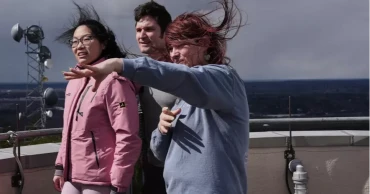
On a hilltop tower south of Boston, Matthew Douglas climbs a narrow staircase each morning and steps onto the roof of the Blue Hill Observatory and Science Center. There, an old glass sphere mounted in a metal frame burns a thin line on a paper strip, recording how much sunshine the area received the previous day.
It is part of a daily routine that has changed little for 141 years.
At the observatory, one of the oldest continuously operating weather stations in the United States, staff still use traditional instruments to measure temperature, humidity, rainfall, wind and sunlight. These long-running records help scientists track weather patterns and study climate change.
“My routine is the same every day,” said chief weather observer Douglas, who has worked there since 1997. “The only thing that changes are the numbers and the weather itself.”
Blue Hill Observatory, located about 15 miles south of Boston, has kept continuous weather records since 1885. According to executive director Alex Evans, it remains the oldest site in the country still operating without interruption.
Many of its tools are the same ones used more than a century ago, including mercury and alcohol thermometers, hair-based hygrometers to measure humidity, and the rooftop glass sphere that tracks sunshine hours.
Douglas said keeping the same instruments in the same location for so long helps ensure accuracy. If changes appear in the data, they are more likely to reflect real climate shifts rather than differences in equipment.
“That consistent record is very important for climate research,” he said.
As climate science faces political debate in the United States, including funding cuts to federal weather agencies since 2025, Blue Hill’s privately run operation has largely continued unaffected. But officials say future funding is uncertain.
Despite using older methods in a digital age, the observatory continues to play a role in both science and public education, helping people understand climate change through long-term data.
Experts say such continuous records are rare and valuable. Meteorologist Chris Fiebrich of the University of Oklahoma said the dataset is especially important because it covers a period before modern satellites and automated systems existed.
Blue Hill’s records show that average temperatures at the site have risen by about 5 degrees Fahrenheit since 1885. They also show that nearby ponds now stay frozen for nearly three weeks less than they used to.
The data also reflects broader environmental changes. Since the 1990s, the observatory has recorded more hours of bright sunshine, partly linked to cleaner air following the US Clean Air Act, which reduced air pollution over time.
Public understanding of climate change remains divided. A 2023 Pew Research Center survey found that a significant share of Americans have doubts about scientists’ understanding of climate change. Former US President Donald Trump has also publicly dismissed climate change as false, calling it “the greatest con job ever perpetrated on the world” in a speech last year.
Against this backdrop, experts say places like Blue Hill help make science more accessible.
At the observatory’s round, castle-like tower, observers Douglas and Amanda Joly work alongside computers and shelves filled with handwritten charts, old sun records and decades of weather data.
Inside, visitors can see historic instruments still in use or on display, including mercury barometers that measure air pressure. The readings from these devices are where the term “inches of mercury” comes from.
Another popular exhibit is the Campbell-Stokes sunshine recorder, a glass sphere that focuses sunlight onto a paper card, burning a line to show how many hours of bright sunshine occurred in a day.
For visitors, seeing the instruments in action helps demystify the science.
“If people see it while it’s being explained, it becomes less intimidating,” said chief scientist Michael Iacono.
Local residents often visit the observatory, which sits along a winding forest road. Many describe it as both scenic and educational.
Annie Hayes, who visited with her family, said watching how data is collected builds trust in climate science.
“It feels less like a mystery when you can actually see how it works,” she said.
The observatory also runs outreach programs, including a citizen science initiative that allows residents to collect rainfall data at home and contribute to a shared database.
Hayes said her family plans to join the program.
“It’s a great way to get kids involved and interested,” she said. “Maybe it will even inspire them in the future.”
5 months ago