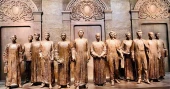
the birthplace of modern China
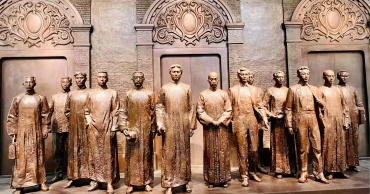
Echoes of 1921: Inside the birthplace of modern China
In the heart of Shanghai’s bustling Xintiandi district, tucked away within the grey-brick walls of a traditional shikumen house, lies the epicenter of a political earthquake that reshaped the global political map.
This is the Memorial Hall of the First National Congress of the Communist Party of China, a site often described as the place where the fate of China was sealed and the shape of the world was envisioned.
Recently, a delegation of journalists from Dhaka, visiting at the invitation of the Chinese government, joined thousands of international and domestic tourists to walk the halls of this historic landmark. What they found was a meticulously preserved bridge between China’s turbulent past and its superpower present.
A Secret Gathering in the French Concession
The story begins on July 23, 1921. At the time, the location at 106 Rue Wantz (now 76 Xingye Road) sat within the French Concession, offering a layer of precarious colonial protection from local warlords.
Thirteen delegates, including a young Mao Zedong and Dong Biwu, representing just over 50 early members, gathered in a modest living room. They were joined by two Comintern representatives, Maring and Nikolski. Together, they held six sessions in secrecy until the threat of a police raid on July 30 forced them to flee.
The final act of this historic drama didn’t even happen on land. The delegates moved their seventh and final session to a tourist boat on South Lake (Nanhu) in Jiaxing, Zhejiang Province, where the party’s first program and resolutions were officially passed.
2 months ago