Ganges treaty
Bangladesh wants new Ganges water-sharing treaty with guarantee clause: Water Resources Minister
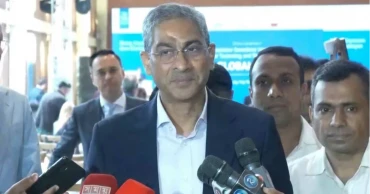
Water Resources Minister Md Shahiduddin Chowdhury Anee on Thursday said Bangladesh wants a new agreement with India on Ganges water sharing, not a renewal of the existing treaty that is set to expire this year. Specifically, Dhaka will be seeking to insert a guarantee clause to protect the country’s interests and ensure its required share of water.
“We certainly want a new agreement. We want to conclude it while protecting the interests of our country,” he said.
The minister made the remarks while talking to reporters after attending an event titled “High Level Event on Bangladesh Rivers Pollution Control, Conservation and Management of the Rivers Surrounding Capital Dhaka,” organised by the Team Europe Union at Aloki in Gulshan.
The minister said the first agreement, signed in 1977, was initially for five years and was subsequently continued for periods of around four to five years. It had a guarantee clause specifying how Bangladesh would receive its share of water.
He said another agreement was signed in 1996 for 30 years, but the guarantee clause was not included in that agreement.
“Even then, we continued it in the interest of the country and to maintain friendship, regardless of which government was in power. It was a continuous process,” he said.
The existing 30-year agreement is due to expire on December 12 this year, and the Joint Rivers Commission (JRC) has already started working on the issue, Anee said.
“We are very hopeful that the agreement will be concluded through good friendship between the two countries. We have a strong proposal to include the guarantee clause anew,” he said.
The minister said Bangladesh, being a downstream country, needs water at the right time and in the required quantity during both the dry and monsoon seasons.
“There should be a guarantee clause so that, based on our entitlement, we receive the right water at the right time,” he said.
He said a lack of water during the dry season could severely affect agriculture and fish production and ultimately hamper the country’s economic development.
“If there is no water during the dry season and there is no guarantee for receiving it, we will suffer greatly,” Anee said.
He said excessive water flow during the monsoon could also cause widespread flooding, riverbank erosion and damage to homes and settlements along rivers and canals.
“If a guarantee clause specifies how much water will flow at what time and in how many cusecs, we will receive water according to our requirements,” he said.
Anee also said the government has already obtained several domestic and international feasibility studies, including technical assistance, for the proposed Teesta Barrage project.
The Bangladesh-India Ganga/Ganges Water Treaty is expiring in December this year.
The Ganges Water Treaty was signed on December 12, 1996 for a period of 30 years.
Bangladesh and India share 54 rivers, including the Ganges, or Ganga.
24 days ago
India ties hinge on Ganges treaty renewal: Fakhrul
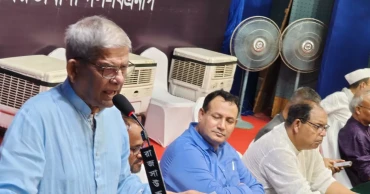
BNP Secretary General and Local Government, Rural Development and Cooperatives Minister Mirza Fakhrul Islam Alamgir on Saturday said d the prospect of maintaining good relations between Bangladesh and India largely depends on the renewal or conclusion of the Ganges water-sharing agreement, commonly known as the Farakka Treaty.
He made the remarks while addressing a discussion organised by BNP marking the Historic Farakka Day as the chief guest.
The discussion was presided over by BNP Senior Joint Secretary General and Political Adviser to the Prime Minister Advocate Ruhul Kabir Rizvi.
Fakhrul said Farakka Day symbolises resistance and recalled the role of Maulana Abdul Hamid Khan Bhashani, who had led movements throughout his life for the welfare of people without compromising with power.
“Maulana Bhashani raised resistance to protect the livelihood, biodiversity and environment of the people of Bangladesh,” he said.
He said the Ganges or Padma River is directly linked to the lives and livelihoods of nearly one-third of Bangladesh’s population and the Farakka Barrage had long threatened the country’s ecology and environment.
Referring to BNP founder and former President Ziaur Rahman, Fakhrul said Zia had internationalised the issue by mobilising public opinion and raising it on the global stage.
Fakhrul alleged that Bangladesh’s problems began after then Prime Minister Sheikh Mujibur Rahman allowed India in 1973 to experimentally divert water through the Farakka Barrage.
He also mentioned that later efforts regarding water-sharing agreements were made by former president Ziaur Rahman and former Prime Minister Khaleda Zia.
Fakhrul said a short-term agreement would not be enough.“This treaty must be for an indefinite period and remain effective until any future agreement replaces it,” he said.
The BNP leader said no demand could ever be realised unless people become united behind it.
“Maulana Bhashani united people over the Farakka issue, which later made it possible for Ziaur Rahman to implement an agreement,” he said.
Fakhrul said the current Ganges Treaty is set to expire on December 2026 and warned that failure to renew the agreement or ensure water flow would create serious concerns for Bangladesh.
“I thank our Prime Minister Tarique Rahman, who has taken a quick decision to move forward with the Padma Barrage project.This is a historic decision that will help protect vast areas of the country,” he said.
Fakhrul claimed that the government led by Tarique Rahman is a people’s government elected through a legitimate democratic process.
He alleged that certain groups are carrying out propaganda against the government and trying to destabilise the country. “The people of Bangladesh who earned democracy through sacrifice will never allow any conspiracy to raise its head,” he said.
Fakhrul said Bangladesh expects immediate discussions over the Farakka Treaty in consideration of the interests of the Bangladeshi people.
He also asserted that Bangladesh would never allow any agreement that undermines the country’s interests.
“We believe Tarique Rahman’s government will always prioritise Bangladesh’s interests above everything else,” Fakhrul added.
Among the special guests were BNP Chairperson’s Advisory Council member Goyeshwar Chandra Roy, BNP Vice-Chairman Shamsuzzaman Dudu, BNP Chairperson’s Advisory Council member and Land Minister Mizanur Rahman Minu, and BNP Chairperson’s Advisory Council member Ataur Rahman Dhali.
Among the discussants were Emeritus Professor and water resources and climate change expert Dr Ainun Nishat, Dhaka University Vice-Chancellor Prof Dr ABM Obaidul Islam, BUET Professor Dr Md Ataur Rahman, and Jahangirnagar University Professor Dr Nahrin Islam Khan.
Vice-Chancellor of Dhaka Central University Prof Dr Md Nurul Islam presented the keynote paper at the event.
5 months ago