Misinformation
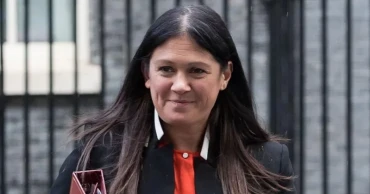
UK culture secretary quits X, says platform fuels abuse and misinformation
UK Culture Secretary Lisa Nandy has announced that she and the Department for Culture, Media and Sport (DCMS) will stop using Elon Musk's social media platform X, saying it no longer supports healthy public debate.
In what appeared to be her final post on X, Nandy said the platform had become harmful to democracy and communities.
She said a platform that was originally created to promote free speech and expression now gives greater space to abuse and misinformation than to meaningful discussion.
Nandy added that she would continue communicating through Instagram, Facebook and LinkedIn.
Her decision was criticized by Conservative Party leader Kemi Badenoch, who argued that the DCMS should confront misinformation rather than leave the platform.
A spokesperson for Prime Minister Sir Keir Starmer's office said the government regularly reviews its use of social media but confirmed that Downing Street would continue using X. The spokesperson added that individual ministers and government departments can decide for themselves whether to remain on the platform.
DCMS is the second UK government department to leave X after the Attorney General's Office stopped posting on the platform last month.
Attorney General Lord Hermer defended that decision, telling lawmakers in June that X frequently became a place for racism and misogyny and that his department could better engage in respectful and detailed public discussions through other channels.
He said while some government departments may need to interact with the public on X, the Attorney General's Office did not.
Prime Minister Starmer has also been critical of X owner Elon Musk, accusing him of using the platform to increase divisions in the UK following the murder of student Henry Nowak last month.
The case sparked violent protests in Southampton after police body-camera footage showed officers handcuffing the 18-year-old as he lay dying. His killer, Vickrum Digwa, had claimed he was acting in response to a racist attack.
The release of the footage triggered widespread political debate and drew criticism from Musk over the police's handling of the incident.
Earlier this year, several Members of Parliament, including Liberal Democrats Layla Moran and Vikki Slade and Labour MP Darren Paffey, also left X after reports that its Grok artificial intelligence tool had been used to create sexualized images, including images involving children.
X has previously said that anyone who uses or prompts Grok to create illegal content will face the same consequences as users who upload such material.
3 months ago
Misinformation is not free speech: Deputy Speaker
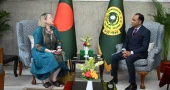
Deputy Speaker Barrister Kayser Kamal on Wednesday said freedom of expression is recognised as a fundamental right in the Constitution, but spreading misinformation through social media to create social disorder cannot be considered part of that right.
He stressed the need for greater awareness and engagement among lawmakers and stakeholders on the issue.
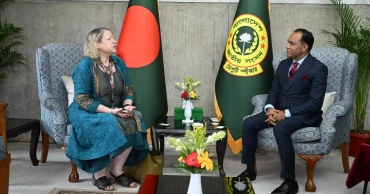
The remarks came when a delegation of the UNESCO, led by its Head of Office and Representative to Bangladesh Dr Susan Vize, paid a courtesy call on him at his Jatiya Sangsad Bhaban office.
Kayser Kamal said UNESCO’s activities in education, culture and information technology are benefiting children and the wider community.
He also underscored the importance of raising public awareness about laws related to cybercrime and cybersecurity.
During the meeting, UNESCO representatives expressed interest in working jointly to strengthen media and information literacy, promote professional standards in journalism and enhance citizens’ access to information.
The two sides also discussed several bilateral issues, including education, information technology, artificial intelligence and cybersecurity.
5 months ago
Fake photocards circulating online misquote State Minister: MoFA
The Ministry of Foreign Affairs (MoFA) on Monday urged the people to remain cautious and not be misled by misinformation circulating on social media, clarifying that recently shared photocards attributed to State Minister for Foreign Affairs Shama Obaed Islam are entirely false.
The MoFA noticed fabricated photocards that were circulated online falsely quoting the State Minister.
One such card claims, “We must approach India with submission, just as we now rely on them even for oil. Shouting slogans like ‘Delhi or Dhaka’ is meaningless. We need to understand that if we antagonise India, our very existence could be at risk."
The Ministry firmly said these claims are baseless, misleading, and deliberately fabricated.
It emphasised that the State Minister has never made such remarks.
“Therefore, everyone is requested not to be confused by this misinformation and rumor,” the MoFA said.
In fact, the State Minister said Bangladesh’s foreign policy is guided by a “Bangladesh first” principle.
“We will maintain relations with all countries and governments while safeguarding the interests of the people of Bangladesh. Bangladesh will stand firm and continue to engage, communicate, and foster friendly relations with all nations," the MoFA quoted her as saying.
6 months ago

AI-generated misinformation about Iran war spreads widely online as creators profit from new technology
An extraordinary surge of AI-generated misinformation linked to the US-Israel war with Iran is being exploited by online content creators who are using advanced generative AI tools to generate revenue, experts have told BBC Verify.
Analysis by BBC Verify uncovered numerous instances of AI-created videos and manipulated satellite images being circulated online to support false or misleading claims about the conflict. Collectively, such content has drawn hundreds of millions of views across social media platforms.
“The scale is deeply concerning and the current war has brought the issue into sharp focus,” said Timothy Graham, a digital media specialist at Queensland University of Technology.
“What previously required professional video production teams can now be produced within minutes using AI tools. The barrier to creating convincing synthetic footage of conflict has effectively disappeared,” he added.
The United States and Israel began launching military strikes on Iran on February 28. In response, Iran has carried out drone and missile attacks targeting Israel as well as several Gulf countries and US military assets across the region.
As the conflict escalated rapidly over the past week, many people turned to social media platforms to follow developments, seek updates and share information about the unfolding situation.
Social media platform X announced this week that it will temporarily remove creators from its monetisation programme if they share AI-generated videos of armed conflicts without clearly labelling them.
Under the programme, eligible users receive payments when their posts attract large numbers of views, likes, shares and comments.
Mahsa Alimardani, a researcher on Iran at the Oxford Internet Institute, said the decision signals that the platform recognises the scale of the problem.
“It’s a significant indication that they understand this is a major issue,” she said.
BBC Verify contacted TikTok and Meta, the parent company of Facebook and Instagram, to ask whether they plan to introduce similar measures. Neither company responded to requests for comment.
One example of misleading AI-generated content identified by BBC Verify appears to show missiles hitting the Israeli city of Tel Aviv while explosions can be heard in the background.
The clip has appeared in more than 300 separate posts and has been shared tens of thousands of times across multiple social media platforms.
Some users on X asked the platform’s AI chatbot Grok to verify whether the footage was authentic. However, BBC Verify found that in several cases the chatbot incorrectly claimed the AI-generated footage was real.
Another fabricated video, which has been viewed tens of millions of times, purports to show the Burj Khalifa skyscraper in Dubai engulfed in flames while crowds appear to run toward the building.
The AI-generated clip circulated widely online during a period of heightened anxiety among residents and tourists following reports of drone and missile strikes targeting the city.
According to Alimardani, such fabricated content damages public confidence in reliable information.
“Videos like these undermine trust in verified information available online and make it far more difficult to document genuine evidence,” she said.
BBC Verify also identified a new element emerging in the conflict: the spread of AI-generated satellite images.
On the first day of the war, BBC Verify confirmed several authentic videos showing Iranian drones and missiles striking the headquarters of the US Navy’s Fifth Fleet in Bahrain.
However, a manipulated satellite image shared on X by the state-linked newspaper The Tehran Times began circulating the following day, claiming to show severe destruction at the military facility.
The fabricated image appears to have been derived from a real satellite photo of a US naval base in Bahrain taken in February 2025, which is publicly available online.
Google’s SynthID watermark detection system indicates that the altered image was generated or modified using a Google AI tool.
Further examination shows that three vehicles parked outside the base appear in exactly the same positions in both the genuine satellite photo and the manipulated AI image, even though the pictures supposedly represent scenes captured a year apart.
Google’s AI products, including the video-generation tool Veo, are among a growing number of widely used AI platforms. Others include OpenAI’s Sora model, the Chinese AI application Seedance, and Grok, which is integrated into X.
Henry Ajder, a specialist in generative AI, said the range and accessibility of such tools has grown dramatically.
“The number of tools now available to create highly realistic AI manipulations across different formats is unprecedented,” he said.
“We have never seen these technologies so accessible, so simple to use and so inexpensive,” Ajder added.
Victoire Rio, executive director of the technology policy non-profit What To Fix, said this has contributed to a sharp rise in AI-generated material online because the process of producing and distributing such content can now be largely automated.
Meanwhile, X’s head of product said on Tuesday that about 99 percent of accounts sharing AI-generated war footage were attempting to “game monetisation” by posting content designed to attract high engagement and earn payments through the platform’s Creator Revenue Sharing programme.
X does not disclose how many accounts participate in the programme or the amount of money creators can earn from it.
However, Graham estimates that X may pay between eight and 12 dollars for every one million verified user impressions.
To qualify for the programme, creators must generate at least five million organic impressions within three months and maintain an X Premium subscription, he said.
“Once creators qualify, viral AI-generated content effectively becomes a money-making machine,” Graham added. “It has created the ultimate misinformation enterprise.”
X did not respond to BBC Verify’s requests for comment or questions about the Creator Revenue Sharing programme.
Experts told BBC Verify that although social media companies say they are attempting to improve moderation and detection systems to manage the rapid spread of AI-generated content, addressing the issue remains complex.
“The deeper problem is that monetisation driven by engagement and the distribution of accurate information are fundamentally at odds,” Graham said. “No platform has fully solved that conflict, and perhaps none ever will.”
7 months ago
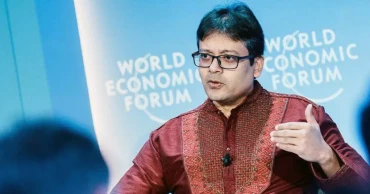
Bangladesh, Meta to coordinate to curb election misinformation: Lutfey Siddiqi
Bangladesh will maintain a real-time engagement with Meta to prevent the spread of misinformation and disinformation on Facebook during the upcoming 13th national election scheduled for February 12, said Chief Adviser’s Special Envoy on International Affairs Lutfey Siddiqi on Tuesday.
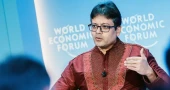
Lutfey Siddiqi made the remarks at a press conference held at the Foreign Service Academy, where he briefed the media on Bangladesh’s participation and outcomes at the World Economic Forum (WEF) annual meeting in Davos, Switzerland, last week.
He said Meta itself is keen to establish real-time communication with Bangladesh during the election period. “We have a meeting with Meta’s legal team on Wednesday morning. They want real-time engagement with us during the election.”
Election officials can’t campaign for or against referendum: EC Anwar
He also said Meta is already in contact with the Election Commission (EC). “Meta has its own tools to counter misinformation during elections, and they are discussing those with the EC. In serious situations, Meta will assist Bangladesh in stopping misinformation or shutting down provocative pages.”
Addressing concerns over Bangladesh’s data protection ordinance, Lutfey Siddiqi said initial tensions with Meta have now been resolved. “They misunderstood a few issues, which we clarified. Compared to any other time, our relationship with Meta is now quite strong.”
Lutfey Siddiqi also mentioned discussions with PayPal on the sidelines of the WEF meeting, saying the global digital payments platform has shown interest in entering the Bangladeshi market.
No possibility of postponing or destabilising Feb-12 election: Home Adviser
“PayPal has held talks with the Bangladesh Bank governor and CEO of several private banks and has taken a positive view of Bangladesh. They will discuss the matter at their governing board,” Lutfey Siddiqi said, adding that PayPal expressed satisfaction after engaging with local entrepreneurs, business leaders and banking analysts.
8 months ago
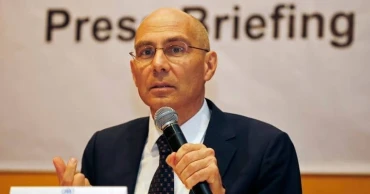
Aware of growing misinformation challenge, says UN rights chief offering support to combat
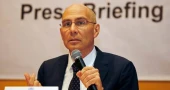
UN High Commissioner for Human Rights Volker Türk on Tuesday said he is aware of the growing misinformation and offered the support of the UN human rights office to address what he described as a growing misinformation challenge.
“There is a lot of misinformation. We will do whatever is needed,” Türk said, adding that the UN rights agency would work closely with Bangladesh to tackle the issue.
The UN rights chief made the remarks as Chief Adviser Prof Muhammad Yunus sought support from the United Nations human rights office to counter a surge of misinformation targeting the February 12 elections.
“There has been a flood of misinformation surrounding the elections. It is coming from both foreign media and local sources,” Prof Yunus said during a telephone conversation with Volker Türk.
“They have flooded social media with fake news, rumours and speculation. We are concerned about the impact this may have on the elections,” he added.
During the conversation, the two leaders also discussed the upcoming referendum, the importance of institutional reforms, the work of the Enforced Disappearance Commission, the formation of the National Human Rights Commission (NHRC), and the global geopolitical situation.
High Commissioner Türk stressed the importance of establishing “a truly independent” National Human Rights Commission to carry forward the work related to enforced disappearances, according to Chief Adviser's press wing.
In response, Prof Yunus said the NHRC ordinance has already been promulgated and that a new commission would be reconstituted ahead of the February 12 elections. “We will do it before we leave,” he said.
The Chief Adviser said he had shared the final report of the Enforced Disappearance Commission with the UN High Commissioner for Human Rights, describing it as a crucial document that would go a long way toward ensuring accountability and justice for the victims of enforced disappearances during the autocratic regime from 2009 to 2024.
UN High Commissioner for Human Rights Volker Türk praised the Chief Adviser’s efforts over the past year and a half.
Conflicts in the Mideast and Ukraine will loom over Biden's farewell address at the United Nations
He said his office had supported the work of the Enforced Disappearance Commission and would continue to do so.
SDGs Affairs Principal Coordinator and Senior Secretary Lamiya Morshed was present during the conversation.
8 months ago
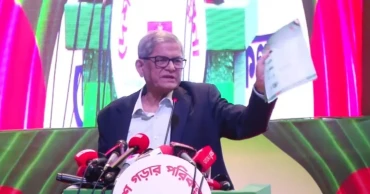
Fakhrul urges BNP followers to strongly counter misinformation in cyberspace
Stating that there is a campaign underway to brand their party as a negative force in politics, BNP Secretary General Mirza Fakhrul Islam Alamgir on Sunday (December 07, 2025) urged the party leaders and workers to be active in cyberspace to counter misinformation and not let conspiracies defeat them.
Inaugurating BNP’s six-day “Plan to Build the Country” programme, he also accused a vested quarter of trying to create division in the country in the name of religion.
“A trend has emerged now to portray BNP as a negative political party on a large scale. This trend must be broken, and we have to do it ourselves,” Fakhrul said.
Read more: Khaleda to fly to London Sunday pending doctors’ approval: Fakhrul
He said BNP leaders and activists must prove through their actions — by taking forward and implementing the plans of Acting Chairman Tarique Rahman — that their party is the one which in the past introduced key political and economic reforms and helped Bangladesh advance. “In the same way, under the leadership of Tarique and the BNP, Bangladesh will again move forward and become one of the prosperous economies and countries in the future.”
The BNP leader said Bangladesh is now at a critical turning point as after 15 years of authoritarian rule a chance has come to return to democracy.He said many obstacles have already appeared and more will come, but BNP must overcome them and achieve success.
“Many types of plots and propaganda are going on against us — false campaigns are being spread. The biggest challenge is this misinformation. We must work against it with our own actions. I always say — this is a cyber-war. If we cannot become fighters in this cyber war, then we will be defeated,” Fakhrul said.
He said the young generation must take responsibility for tackling false information online.Recalling the struggles under authoritarian rule, he said BNP always stressed in district and divisional meetings that the youth must come forward.
Pointing at the leaders and activists of BNP’s student wing, Jatiyatabadi Chhatra Dal, Fakhrul said they must remember that the biggest challenge ahead is the upcoming national election. “In that election, you must prove that BNP is the only political party that can turn the country into a prosperous nation. This is your first task. And all the necessary tools are being provided to you.”
He said BNP leaders and activists must tell the people that whatever success Bangladesh has achieved came through BNP’s initiatives.
“Today, a group is trying to create deep divisions in Bangladesh — they want to divide the country in the name of religion. We Bangladeshis are religious people. We respect our faith. But we do not believe in dividing the state or society using religion,” the BNP leader said.He said BNP believes that people of all religions in Bangladesh will live together and enjoy equal rights, upholding the core spirit of the 1971 Liberation War that Bangladesh belongs to everyone.
“That is why the slogan ‘Bangladesh First’ given by our leader (Tarique) is extremely important — both nationally and internationally. We must keep this slogan in our hearts and move forward with this principle,” Fakhrul said.
On November 27, BNP announced a six-day programme titled “Plans to Build the Country”, involving its affiliated bodies including Chhatra Dal, Krishak Dal, Ulema Dal and Swechchhasebak Dal, ahead of the upcoming national election.
Fakhrul inaugurated the programme at the Krishibid Institution Bangladesh (KIB) auditorium in Dhaka’s Farmgate. BNP Acting Chairman Tarique Rahman is scheduled to address the concluding session in the afternoon.
He said the ‘Plan to Build the Country’ programme reflects the vision of BNP Acting Chairman Tarique Rahman and aims to prepare the party, especially the student wing, with new ideas for building a modern Bangladesh and addressing the country’s current challenges.
“Since 24 July, the mindset of the people of Bangladesh, particularly the youth, has changed. Everyone now wants change – in governance, in our thinking, and in building a new Bangladesh. This idea is now in the minds of all,” the BNP leader said.
Fakhrul criticised the Awami League government for allegedly destroying public institutions during 15 years of rule and said Tarique Rahman has been working with experts and grassroots workers to develop practical plans to rebuild the country.
He said the first responsibility for delivering these plans to the people has been given to BNP’s student wing, with other affiliated bodies following gradually.
The BNP leader said the plans focus on areas such as supporting small and medium enterprises, developing the IT and industrial sectors, creating employment opportunities, providing vocational training and career support in higher education institutions, offering language and skills training for overseas employment, ensuring internet access for all, improving banking sector stability, promoting inclusivity, and creating opportunities for marginalised communities.
Fakhrul said employment is one of Bangladesh’s most pressing issues, with around three crore people unemployed.
Read more: Khaleda will recover with 'divine blessings', hopes Fakhrul
The BNP leader said Tarique Rahman has promised to create one million jobs in 18 months, not only through formal employment but also through business, agriculture, and labour opportunities.“Through this programme, BNP is proving that it is an advanced political party. Just as BNP has contributed to all of Bangladesh’s past achievements, it is now presenting new ideas to build a modern Bangladesh,” he said.
The BNP leader also recalled the legacy of their party founder Ziaur Rahman, saying he established the foundation for modern political and economic reforms, including the ready-made garments sector, media freedom, and democratic institutions.
He mentioned that their party chief, Khaleda Zia, introduced a parliamentary form of government, replacing the presidential system, and established free education for girls up to class ten.Fakhrul also cited former Finance Minister Saifur Rahman for introducing VAT, which has now become an effective method of revenue collection.
He urged the Chhatra Dal to increase their presence and activities in educational institutions, saying the lack of campus-based programmes has affected their performance in university elections.
Read more: Khaleda Zia to be flown to UK for advanced treatment: Fakhrul
10 months ago
Misinformation big threat to democracy: Shafiqul Alam
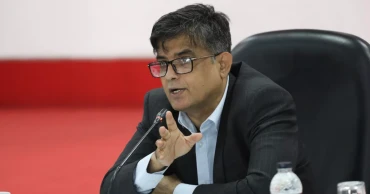
Chief Adviser’s Press Secretary Shafiqul Alam has warned that the future of democracy could be in jeopardy if the incoming government fails to effectively combat misinformation and disinformation.
“The government that will run the country should brainstorm about tackling misinformation. Otherwise, failure to address it will lead the country towards political turmoil,” he said at a dialogue session titled ‘Media Freedom: The Issue of Political Commitments in Manifesto’, held on Thursday (6th November, 2025) at the CIRDAP Auditorium and organised by the Centre for Governance Studies (CGS).
Shafiqul Alam reflected on the long and shifting relationship between the government and the media since 1947, noting that it has alternated between periods of openness and restriction.
“During Ayub Khan’s time, there was media freedom, but after 1990, journalists enjoyed the highest freedom under the caretaker government,” he said.
“During the Awami League government, journalism reached its lowest point. However, efforts are now being made to recover from that decline under Hasina’s leadership,” Shafiqul Alam added.
He said there is widespread fear of mobbing now but the current government has no intention of restricting the press. Now, the question is whether this culture will continue under a future political government?
Read more: Govt watching Hasina’s actions; she’s Bengal's ‘butcher’: Press Secretary
Even those who should know better, including university professors, are now spreading misinformation, he said.
The press secretary pointed out that misinformation has posed significant challenges for the government, particularly false news surrounding Saint Martin’s Island and Milestone.
“The amount of false information circulated about Chittagong Port was unimaginable,” he said.
Unlike in many other countries where penalties are imposed for spreading misinformation, no such mechanisms exist here, he said.
“False information is being spread daily on ‘Talk Shows’. We have urged Meta to take stronger action against misinformation on Facebook, but it remains a long-term process,” he added.
Read more: No pressure to bring AL into polls: Press Secretary
11 months ago

Unified action sought to counter misinformation, disinformation in quest for development
As Bangladesh navigates an important phase in its development, policymakers, national experts, media leaders, and development practitioners on Sunday sought combined efforts at a national dialogue to address the spread of misinformation and disinformation that threatens inclusive development, institutional trust, and social cohesion.
The dialogue, titled “Media in the Age of Misinformation and Disinformation – Challenges, Responsibilities, and the Path Forward for Development”, was organized by PIB and Oxfam in Bangladesh under the Development Media Forum initiative.
It created a platform to explore how misleading information distorts public perception across crucial sectors such as environment, gender, economy, disaster response, and the Rohingya crisis.
Speakers addressed how false or misleading content — whether politically motivated, economically driven, or algorithmically amplified — is reshaping narratives around climate change, gender rights, disaster response, economic justice, and the Rohingya crisis.
Speaking at the event, Syeda Rizwana Hasan, Adviser to the Ministry of Environment, Forest and Climate Change, said, “A society can only thrive when truth is protected, not manipulated. Instead of distorting facts for political or financial gain, we must strengthen institutions to serve people with integrity. Real progress comes from transparency, accountability, and collective responsibility. Let us build a future where facts inform policy, justice leads governance, and the public interest rises above all else.”
Kamal Ahmed, Head of the Media Reform Commission, said, “Fighting disinformation cannot be left to individual efforts alone. We need coordinated action — from government, media, and tech platforms — backed by political will. This is not just a media issue; it’s a national priority.”
“False narratives around Bangladesh’s development are often long-term, strategic, and institutionally enabled. Tackling disinformation means asking political questions — not just technical ones — and reclaiming the space for scientific, truthful debate," said Rashed Al Mahmud Titumir, Professor, University of Dhaka.
Misinformation now leading cause of stress for youth on social media: UNICEF
The dialogue emphasized the urgent need for coordinated responses that preserve press freedom while restoring public trust and ethical communication.
“We are at war with falsehood — and facts are our frontline defence. Media reform is not about control; it’s about restoring credibility, truth, and public accountability. An orchestrated information war is being waged against our people by powerful global actors and the allies of deposed rulers. Our response must be rooted in ethical journalism and national dignity,” said Faruk Wasif, Director General of the Press Institute Bangladesh (PIB)
Ashish Damle, Country Director of Oxfam in Bangladesh, reminded the audience of the human cost of misinformation, “Misinformation isn't just a media problem — it impacts the lives and dignity of people, especially the most vulnerable. From gender-based disinformation to communal rumormongering, we must act together to protect people, not just platforms.”
As Bangladesh advances toward its development goals and democratic stability, speakers urged greater collaboration among media institutions, government, academia, and development actors to build a healthier, more truthful information ecosystem.
Mohammad Azaz, Administrator of Dhaka North City Corporation, said, “In city governance, misinformation can escalate small issues into public crises. The solution lies in strengthening community dialogue, improving access to accurate information, and ensuring responsible media reporting. Truth must start at the local level.”
In the keynote presentation, Mohammad Mamun or Rashid, Assistant Professor (on lien), Jahangirnagar University and Consultant to the ICT Division, illustrated how media and digital platforms rapidly accelerate the spread of false content. Other distinguished speakers included Fahim Ahmed, CEO of Jamuna TV and Dr Din M. Sumon Rahman, Professor & Dean, School of Social Science, ULAB.
Key Recommendations from the Dialogue included: establishing a national multi-stakeholder mechanism to tackle misinformation and disinformation; integrating media literacy into school and university curricula; promoting independent, in-house fact-checking in media houses; enacting digital safety mechanisms to protect women from AI-generated harassment; upholding press freedom while pursuing transparent content regulation.
Moderated by Md Sariful Islam, Head of Influencing, Communications, Advocacy and Media at Oxfam in Bangladesh, the dialogue saw active participation from leading voices in journalism, academia, and development.
1 year ago
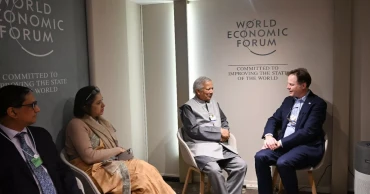
Dr Yunus urges Meta to intensify efforts against misinformation, fake news
Chief Adviser Prof Muhammad Yunus on Thursday urged Meta to step up efforts to tackle misinformation and fake news being spread through Facebook in Bangladesh.
Dr Yunus said "oligarchs and politicians" linked to the "toppled dictatorship of Sheikh Hasina" siphoned off tens of billions of dollars from Bangladesh during her 15 years of rule.
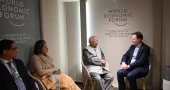
"These people are now spending their fortune to spread lies and misinformation about Bangladesh," the Chief Adviser told Sir Nick Clegg, the head of global affairs at Meta, on the sidelines of the World Economic Forum annual meeting in the Swiss city.
DP World, Maersk eye major investments in Bangladesh ports
Clegg is also a former deputy prime minister of the United Kingdom.
Probir Mehta, Director of Policy Planning of Meta; Lamiya Morshed, SDGs Affairs Principal Coordinator; and Ambassador Tareq Md Ariful Islam, Bangladesh's Permanent Representative in Geneva, also joined the meeting.
When Facebook launched in 2004, it changed the way people connect. Apps like Messenger, Instagram and WhatsApp further empowered billions around the world.
Now, Meta is moving beyond 2D screens toward immersive experiences like augmented, virtual and mixed reality to help build the next evolution in social technology.
Clegg said Facebook would continue to do fact-checking and digital verification in Bangladesh as it is an important country, with its population the world's eighth largest, Chief Adviser's Deputy Press Secretary Abul Kalam Azad Majumder told UNB.
Meta's decision to stop fact-checking in the United States would not be applicable for Bangladesh and countries in Europe, he said.
Switzerland reaffirms support to Bangladesh during important phase of transition
He said Facebook would likely scale up its digital verification service in Bangladesh and would explore ways to do fact checking by users -- similar to the operation of Wikipedia.
During the half-an-hour-long meeting, Clegg also offered Meta's expertise in drafting a new cybersecurity laws. "We have a lot of experience here," he said.
The Meta global affairs chief said Llama, the company's recently launched open-sourced large language model AI, could help revolutionise health care, farming and education.
He hoped it would be popular among the users in Bangladesh.
Prof Yunus asked Meta to organise month-long training programs on Llama in Bangladesh. "It will open up new opportunities for Bangladesh's young people," he said.
1 year ago