FIFA World Cup

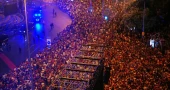
Spain's World Cup champions return home to royal welcome, Madrid parade
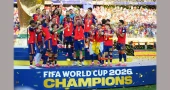
Spain's World Cup-winning football team is set to receive a heroes' welcome on Monday as the 26-man squad returns home following its 1-0 victory over defending champion Argentina in the FIFA World Cup final in East Rutherford, New Jersey.
The players will be welcomed by King Felipe VI, other members of the Spanish royal family and Prime Minister Pedro Sánchez before boarding an open-top bus for a victory parade through central Madrid.
Thousands of supporters are expected to line the route from near Moncloa Palace, the prime minister's official residence, to Cibeles Square, where a public celebration will be held. The square has traditionally hosted celebrations for Spain's national teams and their supporters.
Spain secured only its second men's World Cup title, having previously lifted the trophy in South Africa in 2010.
2 months ago
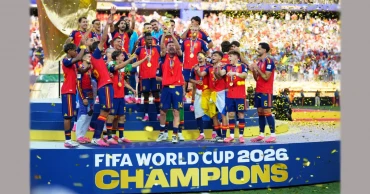
Spain claim 2nd World Cup title after beating Argentina
This is how good Spain was at the World Cup: Not even Lionel Messi had any answers.
And when it was over, Spain walked off with the trophy. Messi simply walked off in tears.
Spain is back atop the soccer world for a second time, after Ferran Torres’ first goal of this year's World Cup — unquestionably the goal of his life — gave his country a 1-0 win over now-dethroned champion Argentina in the final on Sunday.
“It was a goal scored by 47 million people,” Torres said, referring to Spain’s population.
Maybe not by them — but certainly for them.
The goal came with Argentina down to 10 men after Enzo Fernandez was sent off late in regulation following a reckless tackle. Tempers flared then, and flared again after the final whistle with Argentina coach Lionel Scaloni and players from both sides engaging in what appeared to be some pushing and shoving.
In the end, Spain denied Messi a second straight title in what he has indicated was his final World Cup match. Torres, a second-half substitute, pounced on a bouncing ball in the box and used his left foot to bury a shot just under the crossbar in the 106th minute.
From there, the airtight defense that dominated opponents throughout the tournament came through one final time. Spain — which also won the title in 2010 — allowed only one goal in eight matches in this World Cup run, setting a record for fewest goals allowed by a champion.
“I feel pride, to be honest,” said Spain coach Luis de la Fuente, who at 65 is now the oldest man to lead a team to a World Cup title. "Accompanying them on this journey is an honor.”
Spain gets a World Cup 1st
This title, combined with the Women's World Cup won by Spain in 2023, makes the European nation the first to hold both the men’s and women’s titles simultaneously. And in the streets of Madrid — probably many other places in Spain as well — countless people spilled into the streets, celebrating Sunday's victory long into the wee hours of Monday morning.
The score indicates this match was close, but only one team was in command.
Spain took the game’s first 20 shots on goal before Argentina — desperate for an equalizer — got its first attempt off in the second half of extra time. Spain took nine of the game’s first 10 corner kicks, and only a World Cup final-record 12 saves by Argentina goalkeeper Emiliano Martinez gave the 2022 champions a shot at going back-to-back.
“Dibu was nothing short of exceptional,” de la Fuente said, referring to Argentina's keeper by his nickname.
Spain is now unbeaten in its last 38 matches — 29 wins, nine draws — and is the outright holder of the longest such streak by any European men's team ever. Italy went 37 matches (28 wins, nine draws) from October 2018 through September 2021, before Spain ended that streak.
And for the last two-plus years, nobody has beaten Spain. Not even Messi. An Argentina team that was the kings of the late-game rally in this tournament had no answer this time.
“We lost the game, and we accept that,” Scaloni said. “That doesn’t mean that we will forget everything we’ve done so far, so I’d like to thank my people, my players and the country. I can tell them that we played our hearts out.”
Spain survives a late push
Messi took a corner kick with about four minutes left before the final whistle and the ball took a fortunate skip toward substitute Giuliano Simeone — who sent it high and over the crossbar, holding his head in disbelief afterward.
“When you have Messi on the other side, well, you are nervous,” Torres said. "At the end of the day, we always depended on us. We always come up with our football, and we showed it again.”
After the post-match scuffles, they also paid tribute to the former champions. Spain's players lined up to form an honor guard of sorts for Argentina's squad to walk through on its way to the stage for the runner-up medals from President Donald Trump and FIFA President Gianni Infantino.
“I think now I'm in a cloud,” said Spain midfielder Rodri, the Golden Ball winner as the tournament's best player.
Argentina was forced to finish the match down a man after Fernandez was sent off in second-half stoppage time after getting his second yellow card. Fernandez was whistled for a collision that sent Spain defender Pau Cubarsi cartwheeling into the air, and the card came out immediately.
Defense led Spain to a title
It was the 104th and last match of the biggest World Cup ever, a 48-team event that played out over the U.S., Canada and Mexico. Because there were more matches than any previous World Cup, it was no surprise that there were more goals than all other editions — more than 300, nearly three per match.
Except, of course, when Spain was involved. Spain's plan was simple and flawless: Hold the ball as much as possible, denying opponents any hint of chances.
It worked, all the way to the end.
Messi is 39 and the math certainly suggests that the Inter Miami star is at the end of his international career. There have been hints — such as Messi himself declaring that a home World Cup qualifying match against Venezuela last year would be his final competitive contest for Argentina on his nation’s soil.
“I experienced a lot of things on this pitch, good and not so good,” Messi said that night. “I’ll take the good with me.”
He retired from the national team after losing a Copa America final to Chile — in the same stadium he played in Sunday — a decade ago, then came back a few weeks later after changing his mind.
Good thing he did, because in that decade he went from superstar to absolute icon.
There was the World Cup title in 2022. There were two Copa America titles, the first in 2021 and the second in 2024. He won Argentina’s player of the year award 16 times in a span of 19 years, first winning it as a teenager and continuing to win it all the way into his late 30s.
He's a legend within the game and on all corners of the globe. But Spain was better Sunday.
“I spoke to my players, and they said: ‘Look, we’ve won everything, coach. We’ve won everything,'” de la Fuente said. “And that is beautiful.”
A final unlike any other
The spectacle was not limited to simply soccer.
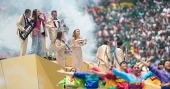
Madonna, Justin Bieber, BTS and Shakira were all part of a halftime show that also featured Burna Boy, Jason Sudeikis in character as “Ted Lasso” and even some of the Muppets. Jennifer Hudson, Post Malone and Tom Cruise had roles in the closing ceremony, which actually preceded the match.
A slew of actors, athletes and other celebrities were there: Spain’s Javier Bardem left happy, Luciana Barroso Damon — the wife of actor Matt Damon — probably did not, considering she was wearing the colors of her native Argentina.
They all came to see a show. So did 80,000 other people, not to mention perhaps as many as 2 billion watching around the globe.
Spain didn't disappoint. No team has won back-to-back men's World Cups since Brazil in 1958 and 1962, and Spain kept Argentina from pulling off that repeat.
“As I told the lads before the game, we have to go for the game, we need to face them, we have to look to their eyes and say we want this game,” Rodri said. “And then, life gives you the World Cup or not.”
Spain took it instead.
2 months ago
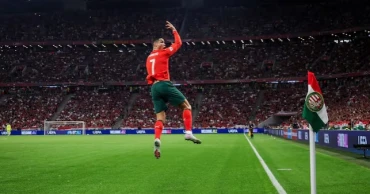
Can Ronaldo conquer the world in his 'last dance' with Portugal's most balanced team ever?
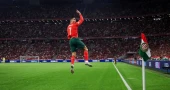
Cristiano Ronaldo walks into what is widely believed to be the final FIFA World Cup of his legendary career, and once again, the football world stops to watch.
At 41, the Portuguese icon is preparing for what many are calling his “Last Dance”, as Portugal begin their 2026 World Cup campaign against DR Congo in Group K at Houston’s NRG Stadium, kicks off at 11:00 PM Bangladesh Standard Time (BST).
Despite age no longer being on his side, Ronaldo remains the central figure of Portugal’s golden generation, a player whose legacy already includes over 965+ career goals, five Ballon d’Or awards, and international dominance across Europe and Nations League triumphs.
Yet one trophy still defines the missing chapter of his career: the FIFA World Cup.
The final chase for football’s biggest prize
Ronaldo’s World Cup journey began in 2006, where Portugal finished fourth. Since then, he has scored in five different World Cups, a record, but the knockout stage has often remained a barrier.
In total, Ronaldo has scored 8 World Cup goals and provided 2 assists in 22 matches, while maintaining one of the longest international careers in football history.
Despite his age, Ronaldo remains a decisive figure for Portugal and continues to feature among the top performers in the Saudi Pro League, where he finished as the third-highest goalscorer for Al Nassr (RSL) in the 2025/26 season.
Portugal arrive at the 2026 World Cup with arguably their most balanced and complete squad in recent memory under coach Roberto Martínez, blending experience, form, and European dominance across positions.
Built for glory?
This time, however, Portugal arrive not just as contenders, but as one of the most balanced squads in the tournament. Under Spanish Coach Roberto Martínez, the team blends experience and youth across all departments.
Vitinha, João Neves, Gonçalo Ramos and Nuno Mendes, all UEFA Champions League winners this season. Bruno Fernandes, Manchester United’s most in-form player in the 2025/26 season. Bernardo Silva, former Manchester City is a consistent creative force. Rafael Leão and Pedro Neto, key attacking outlets offering pace and direct threat, and finally up front the captain and focal point: Cristiano Ronaldo
The squad’s depth across midfield, defence and attack has placed Portugal among the favourites heading into the tournament.
Portugal, ranked among the world’s top five, also enter the tournament as reigning UEFA Nations League champions, strengthening belief that this could finally be their golden generation’s breakthrough moment.
Their group campaign includes DR Congo, Uzbekistan, and Colombia, with the opening fixture against DR Congo expected to set the tone.
Portugal are widely seen as favourites to top the group, but analysts warn of unpredictability from their opponents. DR Congo arrive with physical strength and counter-attacking threat, Colombia bring experience through James Rodríguez, while Uzbekistan make their World Cup debut under Fabio Cannavaro.
Still, all attention remains fixed on one man, Ronaldo. Ronaldo himself has indicated this tournament could mark his sixth and final World Cup appearance, an unprecedented milestone shared only with Lionel Messi in modern football discussions.
Even at 41, he remains decisive, a record international goalscorer with 143 goals for Portugal and the first player to score in five World Cups.
But the World Cup trophy is the one honour missing from his otherwise complete legacy.
The last dance begins
For Portugal, this is more than a campaign. It is a carefully balanced attempt to turn generations of talent into global glory.
For Ronaldo, it is something more personal, a final chance to complete his legacy in football.
Whether 2026 becomes a fairytale ending or another heartbreak, one reality is certain. The world will be watching every step of Cristiano Ronaldo’s last dance on football’s biggest stage.
3 months ago
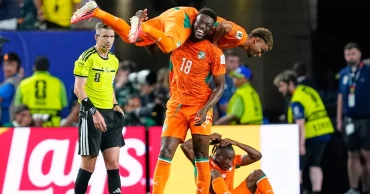
Diallo’s 90th-minute goal lifts Ivory Coast past Ecuador 1-0 in World Cup
Ivory Coast did not make the knockout round in three previous World Cups. Les Éléphant came to the United States set on changing that — and they are off to a great start.
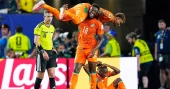
Amad Diallo scored in the 90th minute to lift Ivory Coast to a 1-0 victory over Ecuador in its first World Cup appearance in a dozen years.
“We came here with ambitions and high hopes,” coach Emerse Faé said through an interpreter. “Everything is going well.”
The teams combined to hit the crossbar three times before Diallo — the Manchester United winger who entered as a substitute in the 56th minute — broke through with a left-footed shot from just inside the penalty area that beat diving goalkeeper Hernán Galíndez. Wilfried Singo set up the goal with a strong run down the right side.
“This was a fantastic goal,” Faé said. “(Singo) delivered a wonderful assist to Diallo, and he finished well. Very happy to see just what we worked on.”
Ecuador saw its 19-game unbeaten streak end with its first loss since a 1-0 decision against Brazil on Sept. 6, 2024.
“It hurts,” Ecuador coach Sebastián Beccacece said through an interpreter. “This is a very painful situation. It needs to make you stronger for the future.”
Elye Wahi hit the crossbar in the 52nd minute for Ivory Coast after Ecuador’s John Yeboah and Nilson Angulo did the same in the opening half.
Ecuador, making its fifth World Cup appearance and looking to reach the knockout round for the second time, was playing a virtual home game at Lincoln Financial Field, with most of the capacity crowd of 68,274 wearing the yellow jerseys of La Tri.
“I am very sorry we did not give our fans the joy they came to seek,” Beccacece said.
Ecuador looked strong before Diallo’s goal. Its best chance after halftime came in the 68th minute on Gonzalo Plata’s hard shot from about 25 yards out that was parried away by goalkeeper Yahia Fofana.
“We’re leaving with a loss, but we’re keeping our heads held high knowing that this is just the beginning and there’s still a tournament ahead of us,” Ecuador captain Enner Valencia said.
Ivory Coast was bolstered by the forward play of Yan Diomande. The Leipzig attacker created several scoring chances, particularly down the right side. That included Wahi’s near goal on a flick following Diomande’s hard cross.
“He is very talented,” Faé said. “Incredible player.”
Ivory Coast, which did not concede a goal while going 8-0-2 in 10 qualifying matches, will next face four-time World Cup champion Germany, which defeated Curacao 7-1 earlier Sunday in Group E. Ecuador will meet Curacao. Both matches will be played June 20.
Ivory Coast captain Franck Kessié set the tone for the physical play of Les Éléphant with a hard foul in the fourth minute. Kessié went on to pick up one of three yellow cards for his side, all for reckless challenges, in the opening 45 minutes. Jackson Porozo of Ecuador was cautioned in the 73rd minute.
“We know that high-level football requires much intensity,” Faé said.
3 months ago
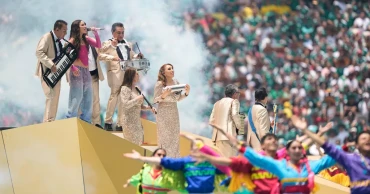
Star power lights up Mexico City as World Cup gets underway
Shakira, Maná, Andrea Bocelli and a surprise appearance by Salma Hayek lit up the World Cup opening ceremony ahead of Mexico's 2-0 victory over South Africa on Thursday.
Shakira performed “Dai Dai,” the tournament's official song, with Burna Boy. The Colombian star had a hit with “Waka Waka (This Time For Africa)” from the 2010 World Cup in South Africa and now seeks to score again.
A good World Cup song, Shakira earlier told The Associated Press, “needs to definitely have rhythm. It has to be rhythmic. It has to make people want to dance. And it has to be an anthem as well. It has to make people want to sing along in unison, sing out loud at the top of their lungs.”
Shakira has performed at previous World Cups, too: 2006 in Germany, 2010 in South Africa, and 2014 in Brazil.
In addition, she will perform at the first halftime show of a World Cup final on July 19 at MetLife Stadium in New Jersey with Madonna and BTS. Mexico, the United States and Canada are co-hosting the 48-team tournament.
A welcome for all
Lila Downs welcomed fans and players in Spanish, English, and the indigenous languages Mixtec and Nahuatl.
“People of the world, welcome to Mexico,” said Downs, who wore a white indigenous huipil with a lilac edge. “Mexico welcomes you with smiles from our heart, we are a nation of diversity, heritage and pride in ancestral lands where movement and ritual spirit endure.”
Downs, who is a singer-songwriter, was born in Tlaxiaco, Oaxaca. Her mother is Mixtec, and her father was American of Scottish descent. But her heart is green, white and red when it comes to the ball.
“It’s a great honor for me to represent my beautiful and diverse country,” Downs said in an interview with The AP. “Of course I’m going to root for Mexico’s team, Viva Mexico!”
Maná thrills fans
Maná electrified the stadium with “Oye Mi Amor” surrounded by pre-Hispanic dancers who moved their head plumes to the rhythm of rock while tens of thousands of fans chanted.
The band, founded in 1986, has sold more than 40 million records.
Shortly before their performance, they announced that they will be touring in Latin America, including stops in Bogotá, Lima, Santiago, Buenos Aires, and Mexico City.
From Iztapalapa to the World Cup
The Mexican cumbia group Los Ángeles Azules performed “Por Ella” with Belinda, one of the most danceable songs of FIFA's official World Cup album.
3 months ago
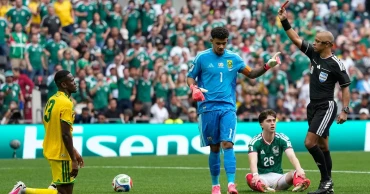
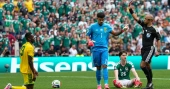
3 red cards mar Mexico-South Africa World Cup opener
The opening match of the World Cup delivered a rarity in international soccer: three players sent off with red cards.
No World Cup match has had that many players ejected since a 2006 game between Portugal and the Netherlands, when four players received red cards — a World Cup record.
The last World Cup in Qatar in 2022 had only four red cards in the entire tournament.
On Thursday at the Azteca Stadium in Mexico City, Sphephelo Sithole and Themba Zwane were sent off for South Africa while César Montes was shown a red card for the tournament co-host.
It’s the first time three players have been sent off in the opening match of a World Cup – and all three were straight red cards, meaning none of the ejected players were given two yellows.
Mexico won the match 2-0.
Sithole was red-carded after taking down Mexico’s Brian Gutierrez on the edge of the box at the start of the second half.
Things got worse for South Africa when Zwane was sent off following a video review for striking Roberto Alvarado in the face in the 84th minute. Finally, in stoppage time, Montes saw red for bringing down Khuliso Mudau.
The red cards mean the three players will be suspended for at least one more match. South Africa’s next match is against the Czech Republic and Mexico next faces South Korea in Guadalajara.
The match between Portugal and the Netherlands at the 2006 World Cup in Germany stands out with its four red cards – two for each team. That game in Nuremberg also had 16 yellow cards.
3 months ago
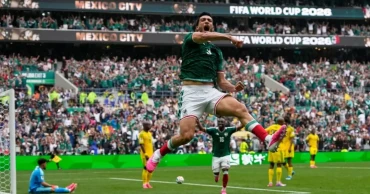
Mexico make dream start in World Cup opener
Mexico made an immediate impression on the largest World Cup in history, giving the roaring home crowd at the iconic Azteca Stadium a huge jolt of excitement four years after a major disappointment.
Mexico’s players understood the intense pressure and high expectations they were facing on Thursday in the opening match of the first 48-team World Cup tournament. But they embraced their role and got off to a winning start by beating South Africa 2-0 in a match that also produced three red cards.
“I made an effort to explain to them what a World Cup and an opening match on home soil meant, but they are young and had to experience it for themselves,” said Mexico coach Javier Aguirre, who played for his team the last time Mexico hosted the tournament in 1986. “I can no longer talk about having played in a home World Cup, because they already know what it’s like.”
Julián Quiñones and Raúl Jiménez scored the goals for Mexico, which is co-hosting the 2026 tournament with Canada and the United States.
The Mexicans rebounded from the massive disappointment of being eliminated after the group stage four years ago in Qatar. That followed seven straight trips to the round the 16 — an achievement that became more of a curse for failing to reach the quarterfinals.
But there is hope this year. Mexico has reached the quarterfinals twice in its history, and both times it was the host country — in 1970 and 1986. Aguirre was on that team in 1986.
3 months ago
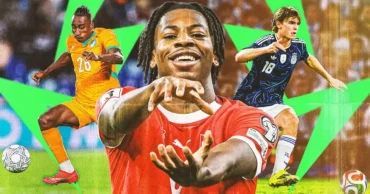
20 young players tipped to shine at World Cup 2026
A group of 20 emerging football talents from around the world are expected to attract global attention at the 2026 FIFA World Cup, as the tournament prepares to feature an expanded format and a record number of debutants.
The World Cup, to be jointly hosted by the United States, Canada and Mexico, will include 48 teams for the first time, with 891 of the 1,248 selected players set to make their World Cup debut.
The expanded structure, which also introduces a round of 32, is expected to give young and lesser-known players a bigger platform to showcase their talent on the global stage.
Among the standout prospects is Ivory Coast winger Yan Diomande, 19, who has impressed in the Bundesliga with RB Leipzig through strong goal contributions and is regarded as one of Europe’s most promising young attackers.
Mexico’s Gilberto Mora, 17, is the youngest player on the list and already a rising star in his country. The Tijuana midfielder has made senior international appearances and featured in major youth tournaments under coach Javier Aguirre, making him one of the key home hopes.
Switzerland’s Johan Manzambi, 20, has also drawn attention after a strong season with Freiburg, where he impressed in both domestic and European competitions with his versatility and attacking impact.
For the United States, PSV Eindhoven striker Ricardo Pepi is expected to carry attacking responsibilities after a productive season in the Netherlands.
Argentina’s Nico Paz, now playing for Como in Italy, is another highly rated talent following a standout Serie A campaign under former Spain international Cesc Fabregas.
Morocco features strongly with Gessime Yassine and Ayyoub Bouaddi among the promising young midfield and wing options, while Algeria’s Mohamed Amoura and Ibrahim Maza are seen as key attacking prospects.
Australia’s next generation is represented by Lucas Herrington and Alessandro Circati, both defenders already gaining senior experience at a young age. Croatia’s Luka Vušković, currently on loan at Hamburg from Tottenham Hotspur, is also among the defensive prospects to watch.
Other notable names include Turkey’s Can Uzun, Mexico’s Armando González and Brian Gutiérrez, Colombia’s Luis Suárez (Sporting), Iraq’s Ali Jasim, Bosnia and Herzegovina’s Kerim Alajbegović, and Ivory Coast winger Bazoumana Touré.
Analysts say many of these players are already featuring in top European leagues or major youth competitions, while others are breaking through at international level. The expanded World Cup format is expected to accelerate their rise and provide a major stage for breakthrough performances.
Source: BBC
4 months ago
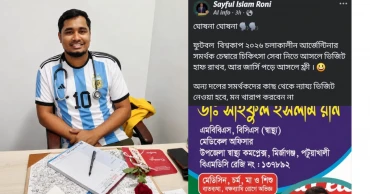
World Cup vibes: Another Patuakhali doctor offers free treatment to Argentina fans
Football fans worldwide are gearing up for the biggest edition of the FIFA World Cup as the tournament gets underway on June 11, 2026.
As World Cup fever grips Bangladesh, a government doctor in Patuakhali announced discounted medical consultation services for Argentina supporters, drawing widespread attention on social media.
Dr Saiful Islam Rony, a medical officer at Mirzaganj Upazila Health Complex, made the announcement in a Facebook post on Sunday evening.
According to the post, Argentina supporters visiting his private chamber during the World Cup and on match days of the Argentine national team will receive treatment at half the usual consultation fee. Patients wearing the team's jersey will be treated free of charge.
Dr Rony said the initiative was intended to celebrate the spirit of football and show support for his favourite team.
“During the 2026 World Cup, Argentina supporters will receive treatment at half the regular consultation fee at my diagnostic centre chamber, while those wearing the team’s jersey will receive treatment free of charge,” he wrote.
He also said patients would receive special discounts on necessary medical services.
“We have taken this exceptional initiative to express our love for football and support for our beloved team,” Dr Rony said.
He added that sports promote friendship, harmony and joy among people, and the special arrangement was made to allow Argentina fans to share in that spirit.
“Let us all support our beloved team and take care of our own health as well,” he said.
Earlier, Dr. Md. Habibur Rahman, a pain management specialist and assistant professor of anesthesiology at Patuakhali Medical College Hospital, captured public attention by offering a 50 percent discount on consultation fees to patients who visit his chamber wearing an Argentina jersey.
Dr. Habibur, who currently charges Tk 600 per consultation at Greenview Hospital in the town’s Kazipara area, said Argentina supporters will pay only Tk 300 during the World Cup period.
4 months ago
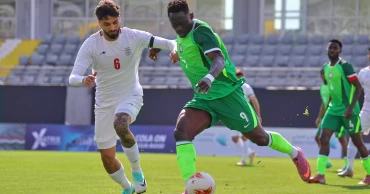
Iran heads to World Cup amid visa uncertainty for some football officials
Iran’s national football team is set to leave its training camp in Turkey for Mexico on Saturday as preparations continue for the FIFA World Cup, although several federation officials were still awaiting U.S. visas ahead of matches scheduled in the United States.
Iranian state television reported that a number of officials due to accompany the squad had not yet received permission to enter the U.S. Among them were Iranian Football Federation Secretary-General Hedayat Mombeini and Vice President Mehdi Mohammad Nabi, along with other support staff and administrators.
It remained unclear whether federation president Mehdi Taj had received a visa.
The issue comes amid heightened tensions following the conflict involving Iran, Israel and the United States. Visa-related complications earlier prompted Iran to relocate its World Cup training base from Tucson, Arizona, to Tijuana in Mexico near the U.S. border.
In a statement carried by Iran’s semi-official Tasnim and Mehr news agencies, the football federation accused the United States of “vindictive behavior” for denying visas to what it described as key managerial and administrative personnel.
The federation argued that the decision undermined fair competition and said it would raise the matter with world football governing body FIFA.
According to U.S. officials cited by The Associated Press, all Iranian players have been approved for visas. Visas were also reportedly issued to coaches, trainers and some support staff. However, one official suggested that certain applicants linked to the team had been denied visas after allegedly applying under false pretenses.
The officials spoke anonymously as they were not authorized to discuss the matter publicly.
Iran has been training in Antalya ahead of the tournament and has already secured visas for Mexico through the Mexican Embassy in Ankara.
Iran will begin its World Cup campaign against New Zealand in Inglewood, California, on June 15, before facing Belgium on June 21 at the same venue. The team will then travel to Seattle to take on Egypt on June 26.
A potential meeting between Iran and the United States could take place in the Round of 32 on July 3 in Arlington, Texas, if both teams finish second in their respective groups.
Earlier this year, U.S. President Donald Trump questioned Iran’s participation in the tournament, citing concerns over security and appropriateness. Iran’s national team rejected the suggestion, insisting that no one could prevent it from competing.
Iran announced its final World Cup squad on Monday, including 17 players from domestic clubs that have not played competitive matches since February due to the war. Star striker Sardar Azmoun was left out of the squad after reportedly posting content on social media that angered Iranian authorities during the conflict.
Although Iran’s sports minister said in March that participation in the World Cup might not be possible, the football federation later confirmed that preparations would continue and reiterated its demand that all players and staff, including those with past military service in the Islamic Revolutionary Guard Corps, be granted visas.
4 months ago