UNHCR

UN seeks greater regional, int’l support to advance political solution to Rohingya crisis
UNHCR, the UN Refugee Agency, on Wednesday said greater regional and international support is needed to advance a political solution to the crisis and end the hostilities in Myanmar.
The UNHCR called on the international community to maintain support for countries in the region hosting refugees from Myanmar.
“Until conditions in Myanmar allow for safe, dignified and sustainable returns, States must continue to provide access to asylum and uphold international protection obligations,” said the UN agency, noting that the UNHCR is “concerned” by Malaysia’s recent return of 1,476 people to Myanmar amid the country’s continuing conflict and dire human rights and humanitarian situation.
“We are concerned by these returns at a time when people sent back to Myanmar may face serious risks, and some within the group may be in need of international protection,” said UNHCR Assistant High Commissioner for Protection Edem Wosornu on Wednesday.
“While authorities say the returns are voluntary, those returned had been held in immigration detention. This raises serious questions about whether decisions to return were genuinely free and informed. UNHCR did not have access to the individuals to assess this.”
UNHCR fully recognised Malaysia’s sovereign responsibility to manage asylum and migration. However, UNHCR urged Malaysia to ensure that all returns are subject to robust safeguards, including individual assessments and access to protection procedures.
The UN agency said decisions to return must be voluntary and assessed outside detention settings.
Under the principle of non-refoulement, no one should be returned to a country where they may face persecution, torture or other serious threats to their life or freedom.
UNHCR said it remains ready to work with Malaysia to strengthen national asylum and protection arrangements.
10 days ago
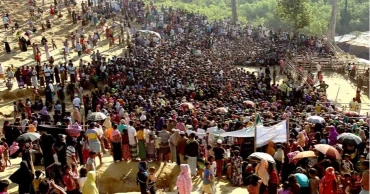
Australia commits AUD 25.25m to sustain life-saving support for Rohingyas
The Government of Australia and the UN Refugee Agency (UNHCR) on Monday announced a contribution of AUD 25.25 million to sustain life-saving assistance and protection for Rohingya refugees in Bangladesh.
This flexible, multi-year funding, part of Australia's 2026-28 humanitarian assistance package, will help ensure the continuation of essential services for one of the world's most vulnerable refugee populations and their host communities, according to a media statement.
Foreign Minister Khalilur Rahman and Australia's Assistant Minister for Citizenship, Customs and Multicultural Affairs, and Assistant Minister for International Education Julian Hill were present during the announcement.
It will enable UNHCR and partners to maintain key services across the camps, including protection activities, skills development programmes, and disaster risk reduction measures for refugees living in highly fragile and disaster-prone environments, said the statement.
“Australia continues to respond to the most significant humanitarian crises in our region, making our region safer, more stable and resilient” said Assistant Minister Julian Hill. “Australia remains committed to supporting the humanitarian needs of Rohingya in Myanmar and Bangladesh. Displaced Rohingya want to return home, but the conditions in Myanmar need to be in place for their voluntary, safe, dignified and sustainable return. These can only be met by addressing the root cause of the crisis in Myanmar.”
“Nearly nine years on, the Rohingya crisis risks fading from global attention as new emergencies emerge elsewhere,” said Juliette Murekeyisoni, UNHCR Representative in Bangladesh.
“Australia’s continued support sends a strong message that the Rohingya people have not been forgotten. Every refugee I speak to expresses the hope to return home safely, with their rights and dignity restored. Until conditions in Myanmar allow for voluntary, safe, and dignified return with full citizenship, the international community must remain steadfast in its support.”
“Australia remains committed to supporting Rohingya and their host communities in Bangladesh,” said H.E Susan Ryle, Australian High Commissioner to Bangladesh. “This latest contribution of AUD25.25 million to UNHCR will help to provide critical services to the most vulnerable, including for women, girls and people living with a disability”.
Since widespread violence and persecutions forced hundreds of thousands of refugees to seek safety in Bangladesh in 2017, around 1.2 million Rohingya refugees remain displaced there, most in overcrowded refugee camps near Cox’s Bazar.
The majority rely almost entirely on humanitarian assistance to meet their daily needs. Persistent funding gaps have deepened vulnerabilities, sometimes pushing people toward harmful coping mechanisms, including undertaking dangerous sea journeys in search of better opportunities in the region.
According to recent reports, nearly 900 Rohingya refugees went missing or died in 2025 while attempting perilous crossings in the Andaman Sea and Bay of Bengal. Australia’s ongoing assistance to Rohingya and host communities will help promote safer and sustainable coping mechanisms by supporting access to protection and essential services.
Funding shortages continue to disproportionately impact the most vulnerable, including women and girls, persons with disabilities, and older people. Since 2024, an estimated 150,000 new arrivals have joined the camps, many still lacking adequate shelter and access to basic services such as clean cooking fuel.
After years of displacement, most Rohingya refugees remain almost entirely dependent on external assistance. While meeting immediate needs is essential, expanding access to education and skills development is equally crucial for building resilience and preparing refugees for a future beyond displacement.
2 months ago
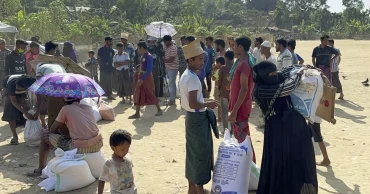
World Refugee Day: UNHCR urges stronger global support for 42 million displaced people
On World Refugee Day, UN High Commissioner for Refugees Barham Salih called on countries around the world to reinforce their support for the nearly 42 million people who have been forced to leave their home countries due to conflict, violence, or persecution.
Salih emphasised the positive impact refugees have on the communities that host them, noting their roles as workers, students, neighbours, artists, athletes, entrepreneurs, and leaders.
“Given the opportunity, they rebuild their lives and help strengthen the societies around them,” he said ahead of World Refugee Day, observed annually on 20 June.
Bangladesh at the heart of global refugee responseFor Bangladesh, World Refugee Day serves as a reminder of one of the world's largest and most prolonged refugee crises.
Nearly a decade after fleeing violence and persecution in Myanmar, around 1.3 million stateless Rohingya refugees continue to live in camps in southeastern Bangladesh.
Despite immense pressure on resources, Bangladesh has remained one of the world's leading refugee-hosting nations, providing shelter and humanitarian access to displaced Rohingyas.
However, the situation is entering what the UN refugee agency describes as a "fragile phase."
According to UNHCR, declining international funding, worsening camp conditions and limited livelihood opportunities are increasing the vulnerability of refugee families.
Most Rohingyas remain heavily dependent on humanitarian assistance, with only a small proportion able to earn income through cash-for-work programmes.
The agency warned that women, children, older persons, people with disabilities and approximately 150,000 newly arrived refugees who entered the camps since early 2024 are among the most vulnerable groups.
Bangladesh has renewed its call for the early repatriation of the Rohingya refugees to Myanmar.
State Minister for Foreign Affairs Shama Obaed Islam has called for stronger international action to protect civilians, uphold international humanitarian law and ensure sustained global support for the safe and dignified repatriation of Rohingyas to Myanmar.
She made the call while speaking at a high-level panel discussion of the 2026 Economic and Social Council (ECOSOC) Humanitarian Affairs Segment at the United Nations Headquarters in New York on Thursday, according to the Permanent Mission of Bangladesh to the UN.
Speaking at a UN briefing by the Secretary-General’s Special Envoy on Myanmar on June 19, Bangladesh’s Permanent Representative, Ambassador Salahuddin Noman Chowdhury underscored that the Rohingya crisis originated in Myanmar and that its durable solution must also be found there.
He noted that hosting approximately 1.2 million Rohingyas for nearly a decade has placed significant social, economic, environmental and security burdens on Bangladesh.
Reaffirming Bangladesh’s commitment to a peaceful resolution of the crisis, the Permanent Representative urged the international community and key regional actors to intensify diplomatic efforts and engagement to facilitate the early repatriation of the Rohingyas to Myanmar.
Rising challenges
UN Secretary-General António Guterres also issued a message urging greater assistance for displaced people and the communities that have provided them refuge.
“As divisions deepen across our world, new and protracted conflicts are compelling millions of women, children and men to seek safety far from home,” he said.
He underscored the need for increased cooperation and decisive measures to protect refugees, saying that “these turbulent times” require renewed solidarity and meaningful action.
The reality of displacement
Salih reflected on the difficult decision many refugees face, drawing from his own experience of fleeing repression in Iraq as a young man.
“Fleeing home to seek safety is one of the hardest choices anyone can make. I know that from personal experience,” said Salih, who as a young man fled repression in Iraq.
He stressed that refugee status should not determine a person’s entire future.
“While a person may, for a time, be defined as a refugee, becoming a refugee should not define a person’s life.”
Salih also warned that many refugees remain dependent on shrinking humanitarian assistance for their basic needs.
He noted that while emergency aid is essential, many refugees remain displaced for years or even decades.
“Being a refugee is meant to be a temporary condition, not a lifelong fate,” he said.
Reducing long-term displacement
To address this challenge, Salih announced a major objective aimed at reducing prolonged displacement.
“That is why I have set out an ambitious goal: to cut by half, within ten years, the number of refugees living in protracted displacement and reliant on humanitarian assistance.”
The initiative will concentrate on low- and middle-income countries, which host most of the world’s refugee population.
“Achieving this target…would vastly improve the lives of millions of people. It is how we can move from merely managing displacement to resolving it,” he said.
Marking 75 years of refugee protection
This year's World Refugee Day coincides with the 75th anniversary of the Refugee Convention. Adopted in 1951 after the Second World War, the treaty established the right of people fleeing war, conflict, or persecution to seek safety and protection.
“We must continue to uphold that promise. Until everyone is safe, none of us are safe,” said Mr. Salih.
“This is not merely a statement of solidarity but a call to action. Because the right to seek safety was made for times like these, and it is up to all of us to defend it.”
Campaign to support refugees
Salih leads the UN refugee agency, UNHCR, which is using this year’s World Refugee Day theme, Until Everyone is Safe, to encourage young people to support refugees and defend the right to asylum.
The campaign seeks to challenge common misconceptions about refugees and highlights that the right to seek safety extends beyond escaping war and violence.
It also aligns with UNHCR’s goal of cutting the number of refugees living in long-term displacement by half by 2035, a target outlined in the agency’s latest Global Trends Report.
Known as the 50 by 35 vision, the plan aims to expand refugees’ access to employment, education, healthcare, and social protection systems, helping them become more self-reliant and less dependent on humanitarian aid.
UN and its humanitarian partners called for renewed international support, as they presented the 2026 update of the Joint Response Plan (JRP) recently for the Rohingya humanitarian crisis.
The hyper-prioritised plan appeals for USD 710.5 million, to reach up to 1.56 million people, including refugees and Bangladeshi host communities.
The appeal - a 26% reduction from the 2025 JRP - covers only the minimum required to sustain lifesaving assistance.
Mid-way through the year, generous support from the international community has led the appeal to be already 60% funded.
3 months ago
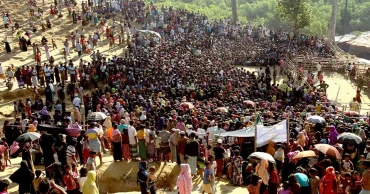
Cutting Rohingya assistance could have severe, costly consequences: UNHCR
UNHCR, the UN Refugee Agency, and humanitarian partners have asked the world not to forget Rohingyas in Bangladesh, noting that maintaining only minimum levels of humanitarian assistance risks generating "more complex, severe and costly" consequences.
"The international community has rallied to support the hyper-prioritized appeal, now 60 per cent funded. Maintaining only minimum levels of humanitarian assistance risks generating more complex, severe and costly consequences," said UNHCR spokesperson Babar Baloch while responding to a question at a press briefing at the Palais des Nations in Geneva.
UN food relief agency steps up aid for Rohingays amid heavy rains
This year, the world will mark nine years since the large-scale forced displacement of Rohingya refugees from Myanmar into Bangladesh.
"With our partners, UNHCR, the UN Refugee Agency, is calling on the international community not to forget the 1.2 million refugees in Bangladesh, most of them in camps in Cox’s Bazar," said the UNHCR spokesperson.
For decades, Rohingya people have been driven from their homes in Myanmar’s Rakhine State, with Bangladesh providing protection to successive movements of refugees since the late seventies.
The largest influx came in August 2017, when some 750,000 Rohingya were forced to flee across the border.
The generous support from Bangladesh and the international community has been critical in meeting their basic needs and providing protection.
Bangladesh is now hosting over 1.3 million Rohingyas in Cox’s Bazar and Bhasan Char.
UNHCR’s call comes amid growing global instability and rising humanitarian pressures, which have forced difficult prioritization and threatened essential services for vulnerable populations.
Last month in Bangladesh, the United Nations and partners, coordinating with the government of Bangladesh, called for renewed international support – appealing for $710.5 million to meet the most urgent needs of Rohingya refugees and local host communities.
Despite growing needs, this hyper-prioritized appeal is 26 per cent less than last year.
Since 2017, humanitarian funding for the Rohingya refugee response has allowed Bangladesh to sustain life-saving assistance and make major progress in refugee education, health and protection.
However, significant humanitarian needs persist and, without continued international solidarity, the plight of Rohingya families will deteriorate, said the UNHCR spokesperson.
Amid sharp reductions in humanitarian and development support, Rohingya refugees remain largely reliant on aid.
"Limited economic opportunities and reduced assistance continue to impact households," said the official, noting that the situation is more acute for vulnerable groups, including women and girls, people with disabilities, and older people, and some 150,000 new arrivals who fled renewed violence in Rakhine State since early 2024.
As targeted violence, persecution and conflict inside Myanmar’s Rakhine State continue, hopes for a return to Myanmar are fading, the UN Agency said.
More refugees are faced with desperate choices, including dangerous and often deadly sea journeys in search of opportunities in the region.
"2025 was the deadliest year on record for such voyages, with nearly 900 Rohingya refugees reported missing or dead in the Andaman Sea and Bay of Bengal," said the UN official.
Against this backdrop, the appeal focuses on the most critical humanitarian needs. Investment in resilience and self-reliance is crucial to preserving dignity and hope and reducing long-term dependence on aid.
Until the conflict and violence stop, the international community must continue to stand in solidarity with refugees from Myanmar, including Rohingya refugees, and their host communities, providing humanitarian assistance and renewing efforts to allow voluntary, safe and dignified return, UNHCR said.
4 months ago
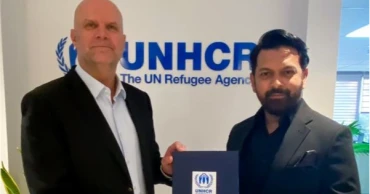
Tahsan, UNHCR renew Goodwill Ambassador partnership in support of Rohingyas
Tahsan Khan, popular Bangladeshi singer, song-writer, actor and TV host, on Wednesday renewed his engagement as a goodwill ambassador for UNHCR, the UN Refugee Agency.
“It has been nine years since the Rohingya fled Myanmar and sought shelter and safety here in Bangladesh. Without a sustainable solution in sight, it is essential to continue advocating for continued compassion with their plights is far from being done,” said Tahsan.
He met families who have endured unimaginable loss and hardship. "Their strength inspires me, and I want to use my voice to amplify their stories.”
Tahsan, UNHCR’s first Goodwill Ambassador in Bangladesh, was first appointed in 2021.
Tahsan is one of 36 Goodwill Ambassadors for UNHCR, a dedicated group of prominent
supporters playing a critical role in advancing UNHCR’s mandate by mobilizing public support and drawing attention to the needs and rights of people forced to flee, UNHCR officials told UNB.
The extension of Tahsan’s appointment reflects UNHCR’s appreciation for his continued commitment and its shared resolve to ensure that refugees are not forgotten.
He has since supported UNHCR’s advocacy and public engagement, helping raise awareness and inspire positive change in support of the plight, resilience, and rights of refugees.
“Tahsan has been a dedicated advocate for refugees over the years. His engagement
reflects the empathy and a deep sense of responsibility we all need in such time,” said Ivo Freijsen, UNHCR representative in Bangladesh.
“We are proud to extend his appointment
and look forward to continuing our collaboration to promote protection and hope for refugees. In a country that generously hosts over one million refugees, such a voice counts.”
Over the years, Tahsan actively supported UNHCR’s work with Rohingya refugees in Cox’s Bazar, including visits to refugee camps, engagement with refugee communities, and participation in global advocacy moments such as World Refugee Day.
In 2025, Tahsan visited the site of a recent fire that destroyed part of the camp, seeing
firsthand the devastation fire can bring to the camps, impacting thousands of lives.
He called the fire a tragic reminder of the hardship that Rohingya refugees continue to face.
“The refugees I met told me of their wish to return home, voluntarily, when it is safe for them to do so,” Tahsan said during his visit.
“Until that is possible, we must continue to stand by them, providing them with support, protection and life-saving services, supporting their resilience and keeping hope alive”.
He expressed his sincere gratitude to the UNHCR team for their tireless efforts in
alleviating the refugee crisis, especially given the significant risks associated with their work.
Bangladesh currently hosts nearly 1.2 million Rohingya refugees, the vast majority living in 33 densely populated camps in Cox’s Bazar district, one of the largest settlements in the world.
Many Rohingya refugees have now lived in the camps for almost nine years, with restricted access to formal education, livelihoods, and long-term opportunities.
5 months ago
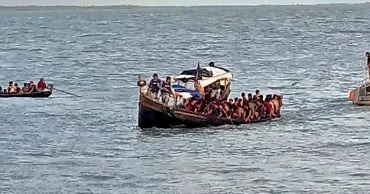
Nearly 900 Rohingya lost at sea in 2025, a new high: UNHCR
Nearly 900 Rohingya refugees died or went missing in the Andaman Sea and the Bay of Bengal in 2025, making it the deadliest year on record for sea crossings in South and Southeast Asia, according to the UN Refugee Agency (UNHCR).
The agency said more than 6,500 Rohingya attempted the dangerous sea journey during the year, with around one in seven reported dead or missing. This marks the highest death toll recorded on any major maritime route used by refugees and migrants worldwide, it said.
UNHCR mentioned that more than half of those attempting the journey in recent years have been women and children, a trend that has continued into 2026. Between January and April 13 this year, more than 2,800 Rohingya have already attempted the crossing.
The dangers were highlighted by a recent tragedy in which an overloaded boat departing from Bangladesh sank in rough seas in the Andaman Sea on 26 March.
Around 250 people are believed to be missing. Nine survivors were later rescued near the Andaman Islands on 9 April. UNHCR said it is providing medical, psychological and counselling support to survivors and is ready to assist local authorities.
Despite the risks of trafficking, exploitation and death at sea, return to Myanmar voluntarily, safely and with dignity. However, ongoing conflict, persecution and lack of citizenship prospects continue to prevent their return. Many Rohingya continue to attempt the journey. The overcrowded and unsafe boats usually depart from Cox’s Bazar in Bangladesh or Rakhine State in Myanmar, heading towards Indonesia or Malaysia.
UNHCR said many Rohingya refugees want to return to Myanmar voluntarily, safely and with dignity. However, ongoing conflict, persecution and lack of citizenship prospects continue to prevent their return.
At the same time, a severe funding shortage has reduced humanitarian assistance in Bangladesh, while instability in refugee camps and limited access to education and livelihoods are pushing some to take dangerous routes.
The agency has called on countries in the region to save lives by tackling human trafficking networks, addressing the root causes of displacement, expanding safe and legal migration pathways, and strengthening regional cooperation.
More than 1.3 million Rohingya refugees and asylum seekers are currently displaced across the region, including about 1.2 million in Bangladesh.
The 2025 Joint Response Plan has so far received only 53 percent of the required funding, highlighting an urgent need for greater international support.
5 months ago
Deadliest Year: 900 Rohingya missing or dead in 2025 sea crossings: UNHCR
UNHCR, the UN Refugee Agency, on Friday called on States to address the root causes of displacement, expand safe and legal pathways, and strengthen regional cooperation to save lives and combat smuggling and trafficking, noting that 2025 was deadliest year yet for maritime movements of Rohingya refugees.
"In 2025, nearly 900 Rohingya refugees were reported missing or dead in the Andaman Sea and Bay of Bengal, making it the deadliest year on record for maritime movements in South and South‑East Asia," said UNHCR spokesperson Babar Baloch in response to questions received at press briefing at the Palais des Nations in Geneva.
Grandi welcomes Barham Salih as newly elected UNHCR chief
Over 1.3 million Rohingya refugees and asylum-seekers remain displaced across the region, including 1.2 million in Bangladesh, where the 2025 Joint Response Plan was only 53 per cent funded, underscoring the urgent need for increased international support, according to data from UNHCR.
More than 6,500 Rohingya attempted perilous sea crossings that year, with one in seven reported missing or dead, the highest mortality rate worldwide of any major route for refugee and migrant sea journeys.
In recent years, over half of those attempting these crossings have been women and children.
The trend continues in 2026, with more than 2,800 Rohingya undertaking dangerous sea journeys between January and 13 April.
The severity of the data has been underlined by the most recent and tragic incident in the Andaman Sea, where an extremely overcrowded boat that departed Bangladesh on 26 March reportedly capsized due to rough seas, leaving an estimated 250 people missing, Babar Baloch said.
Nine survivors were rescued on 9 April near the Andaman Islands.
UNHCR is providing counselling and referrals for medical and psychosocial support to Rohingya survivors and is ready to support local authorities.
Despite the extreme dangers – including trafficking, exploitation, and death at sea – thousands of Rohingya refugees continue to undertake these journeys, said the UNHCR spokesperson.
Boats, often overcrowded and unseaworthy, typically depart from Cox’s Bazar in Bangladesh or from Rakhine State in Myanmar towards Indonesia or Malaysia.
While most Rohingya refugees wish to return to Myanmar once conditions allow for a voluntary, dignified and safe return, ongoing conflict, persecution and the absence of citizenship prospects leave them with little hope, Babar Baloch said.
Meanwhile, severe funding shortfalls have significantly reduced humanitarian aid in Bangladesh, compounded by insecurity in the camps and limited access to education and livelihoods, pushing refugees towards dangerous onward movement, UNHCR said.
5 months ago
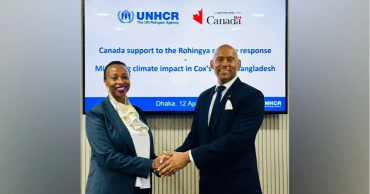
Canada supports Rohingya response for environmental protection, clean cooking fuel
Canadian High Commissioner to Bangladesh Ajit Singh on Sunday said Canada remains a ‘longstanding and steadfast partner’ in the Rohingya crisis response and accounted CAD 10 million contributions to provide clean, safe and sustainable cooking fuel for the Rohingyas in Cox’s Bazar.
“This climate-responsive humanitarian contribution will reduce deforestation and carbon emissions in an environmentally fragile district that will benefit refugees, Bangladeshis, and the wider population,” said the High Commissioner.
He said it will also lower the risks to vulnerable people, especially women, girls, and children, including those that stem from gathering firewood.
“Canada is pleased to provide this $10 million contribution to UNHCR and IOM to strengthen environmental protection that benefits us all, as well as advance the wellbeing of vulnerable Rohingya refugees,” said the High Commissioner.
The funding to UNHCR, the UN Refugee Agency, and IOM, the International Organization for Migration, will ensure the continued provision of liquefied petroleum gas (LPG) to the Rohingya, essential for them to cook, while helping to preserve the fragile environment surrounding the camps and improve safety, health and dignity for refugees, particularly women and children, said the UN agency.
Cox’s Bazar, one of the most climate-vulnerable regions of Bangladesh, faces recurrent flooding, landslides, cyclones, fires and environmental degradation.
Since the start of LPG distribution to Rohingya refugees, the programme has reduced firewood use by 80% among refugee households, preventing an estimated 407,000t of CO₂ emissions every year.
“Nine years on, Rohingya refugees are navigating one of the world’s most difficult displacement situations – protracted crisis compounded by climate vulnerability,” said UNHCR Deputy Representative in Bangladesh Juliette Murekeyisoni.
“Canada’s support comes at a crucial time, and I am deeply grateful for it. Sustained international solidarity remains critical to ensuring that refugees can live in dignity while we work toward conditions for their voluntary, safe, and dignified return.”
Chief of Mission for IOM in Bangladesh Giuseppe Loprete said safe, reliable energy is fundamental to the well-being of families who have experienced immense hardship for the past nine years.
“We thank Canada for their generous support, which ensures that refugees can avoid dangerous firewood collection and live in healthier environments, while also protecting local forests and biodiversity.”
The provision of LPG has been central to the response since 2018. Studies have shown it has dramatically improved indoor air quality in the densely populated camps and lowered household spending on cooking fuel.
The UN refugee agency said Canada’s contribution will support LPG access for some 243,500 refugee households and help conserve up to 10,700 hectares of protected forest in Cox’s Bazar.
It also strengthens community resilience by stabilizing slopes, reducing landslide risks, and lowering human wildlife conflict around ecologically sensitive areas.
5 months ago
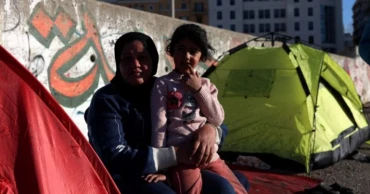
Israeli attacks displace 100,000 people in Lebanon in 24 hours: UNHCR
The number of people displaced in Lebanon due to intensifying Israeli attacks has risen sharply.
Speaking to reporters in Geneva from Beirut, the UN refugee agency’s representative in Lebanon said more than 100,000 people were newly displaced across the country within the past 24 hours.
Karolina Lindholm Billing said that, as of now, over 667,000 people in Lebanon have registered as displaced on the Lebanese government’s online platform, marking an increase of 100,000 in just a single day.
Israel accused of using white phosphorus in southern Lebanon
She noted that the current situation reflects a “faster pace of displacement” compared with 2024, when Israel and Hezbollah were engaged in their previous war.
Sources- Al Jazeera
7 months ago
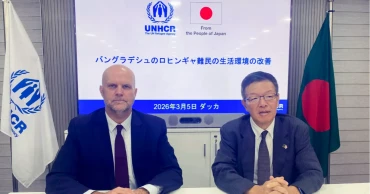
Japan, UNHCR sign USD 2.6 million assistance to Rohingyas in Cox’s Bazar
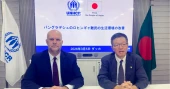
The government of Japan on Thursday renewed its commitment to Rohingyas in Bangladesh, pledging USD 2.6 million for shelter materials, primary healthcare, and clean cooking sets.
An exchange of notes was signed by Saida Shinichi, Ambassador of Japan to Bangladesh, and Ivo Freijsen, UNHCR Representative in Bangladesh.
Japan’s generous support enables UNHCR, the UN Refugee Agency, to maintain critical services in one of the world’s most densely populated refugee camps, where 1.18 million stateless Rohingya reside in precarious conditions.
Continued global assistance key to bolstering Bangladesh’s Rohingya response: UNHCR
Nine years since being forced to flee targeted persecution and conflict in Myanmar, Rohingya families still depend heavily on humanitarian assistance for safety, protection and survival.
In congested camps seasonally exposed to torrential rain, strong winds and drought, most Rohingya shelters are built of bamboo and tarpaulin, and regularly require urgent repairs.
Japan’s commitment covers essential repair materials for some 3,300 households, as well as the training and engagement of 300 shelter volunteers from the Rohingya community, said the UN refugee agency.
UNHCR welcomes Italy’s contribution of EUR 2.5mn for essential assistance to Rohingyas
It also strengthens health services through primary healthcare centres and health posts and engaging 162 refugees as community health workers.
These crucial livelihoods opportunities promote self-reliance and community ownership, and create hope.
The people of Japan’s steady support is deeply appreciated as the Rohingya enter their ninth year of displacement, said Freijsen.
“Steep reductions in global aid threaten lifesaving programmes and risk reversing critical achievements. In partnership with generous Bangladeshi host communities, we must safeguard and improve refugees’ dignity and well-being until political engagement in the context of Myanmar enables conditions for safe and voluntary return.”
Ambassador Saida expressed his hope that the support from the government of Japan will lead to improved living conditions for Rohingya refugees.
“I am delighted to announce Japan’s supplementary fund to UNHCR for critical assistance to Rohingya refugees in Bangladesh. We are confident this partnership with UNHCR will bring tangible positive change, and Japan remains committed to supporting a more secure and stable future for the Rohingya community,” said Ambassador Saida.
The grant also provides stove sets for 32,000 Rohingya households.
Complementing UNHCR’s liquified petroleum gas (LPG) distribution, these stove sets offer refugees cleaner cooking solutions, eliminating risks linked to firewood collection and use.
Women and girls face fewer protection challenges, and children spend more time in classrooms. LPG also prevents environmental degradation, allowing restoration of the area’s forested hills.
UNHCR and its partners, working with the government of Bangladesh, are preparing to launch the 2026 updated Joint Response Plan (JRP) for the Rohingya humanitarian crisis.
Japan has been a leading partner in the Rohingya response, contributing over USD 260 million to UNHCR and other UN agencies as well as Bangladeshi NGOs since 2017.
As humanitarian support continues to shrink globally, sustained and steadfast assistance of donors such as Japan is crucial until a durable solution can be achieved.
7 months ago