Health sector
Govt plans sweeping health sector reforms to take specialised care beyond Dhaka
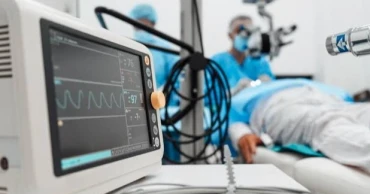
Bangladesh is preparing for one of the most ambitious restructurings of its healthcare system promising to move specialised medical services closer to people, recruit over 100,000 health workers, modernise medical education and strengthen pharmaceutical and medical equipment industries.
The roadmap, outlined in the FY2026-27 budget, seeks to address some of the chronic weaknesses that have plagued the health sector for years: overcrowded hospitals in Dhaka, shortages of doctors and nurses in rural areas, rising out-of-pocket medical expenses and an overdependence on imported medical devices.
If implemented effectively, the reforms could significantly reshape healthcare delivery across the country.
A shift away from Dhaka-centric healthcare
Instead of forcing patients to travel to the capital for advanced treatment, every district hospital will be integrated with surrounding upazila health complexes under a new “Secondary Healthcare Unit.”
Under the proposed structure, upazila health complexes will handle most maternal, neonatal, child and reproductive healthcare services while district hospitals will provide specialised treatment and surgeries, according to budget document.
The objective is allowing patients to receive quality care near their homes while easing the overwhelming burden on tertiary hospitals in Dhaka.
For decades, thousands of patients have travelled long distances to the capital because district-level facilities often lack specialists, equipment and diagnostic services. The resulting congestion has strained both hospitals and patients’ finances.
The government believes strengthening district hospitals could reduce unnecessary referrals, lower treatment costs and improve healthcare equity.
Expanding access through private hospitals
Recognising the limitations of the public health system, the government also plans to increase collaboration with the private sector.
Under a Strategic Purchasing model, selected healthcare services will be purchased from accredited private hospitals for poor and low-income patients who face long waiting times in government hospitals.
If properly regulated, the approach could shorten waiting lists while making better use of existing private-sector capacity.
The budget also proposes converting 192 unused government properties into modern primary healthcare centres under Public-Private Partnership (PPP) arrangements.
Addressing workforce shortages
Bangladesh continues to face shortages of doctors, nurses and community health workers, particularly outside major cities.
The government says recruitment has already begun for 5,000 MBBS doctors to fill long-vacant posts.
It has also launched recruitment for another 100,000 health workers, around 80 percent of whom are expected to be women to strengthen maternal and community healthcare.
Additional nursing positions have already been created, including 941 senior staff nurse posts and 947 midwife positions.
The government also plans to train 60,000 frontline workers engaged in health, nutrition and family planning services.
Modernising medical education
Medical education is also set for a major overhaul.
The existing MBBS curriculum will be redesigned using competency-based learning, integrated modular teaching, expanded clinical training and artificial intelligence-assisted medical technologies.
An expert committee under the Bangladesh Medical and Dental Council has begun preparing the new curriculum, which is scheduled for implementation by 2030.
The reforms extend beyond doctors.
The government plans to strengthen nursing education through a specialised Nurse Teacher Training Centre, expand master’s programmes in government nursing colleges and introduce additional Bachelor of Science in Nursing courses.
Medical and dental students will also receive access to student loans, while talented students pursuing higher education abroad will be eligible for special bank loan facilities.
To expose future physicians to rural healthcare realities, five Residential Field Site Training centres will be established using underutilised government facilities.
Strengthening preventive healthcare
A new national nutrition programme will target child stunting and malnutrition through coordination among the health, agriculture, education, sanitation, food security and social protection sectors.
Priority areas include maternal nutrition, adolescent health, breastfeeding promotion, complementary feeding and nutrition awareness.
Meanwhile, the government says it has rebuilt momentum in immunisation following the recent measles outbreak, claiming that nearly all eligible children were vaccinated against measles and rubella within its first 100 days in office.
Affordable medicines and local production
Another major pillar of the reform agenda focuses on reducing healthcare costs through improved access to medicines.
Authorities are updating the National Essential Medicines List and preparing a modern drug policy to ensure safe, effective and affordable medicines.
The pharmaceutical sector will continue receiving government support, including development of the Active Pharmaceutical Ingredient (API) Industrial Park and expansion of medicine and vaccine supply chains.
Beyond pharmaceuticals, the government wants Bangladesh to emerge as a manufacturing base for medical equipment.
The budget document identifies products such as syringes, ventilators, pulse oximeters, ECG machines, X-ray equipment, hospital beds and diagnostic kits as items with strong domestic production potential.
To encourage investment, authorities plan export incentives, internationally accredited testing laboratories, online licensing systems, a specialised medical technology park and easier access to low-interest financing.
Biomedical engineering education and research will also receive increased emphasis as the country seeks to build an export-oriented medical technology industry.
3 months ago
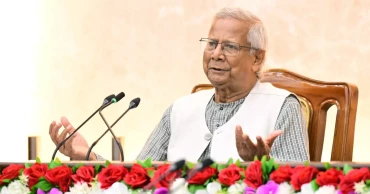
Prof Yunus sees "window of opportunity" for changes in health sector
Chief Adviser Professor Muhammad Yunus on Monday expressed optimism about bringing significant changes to Bangladesh’s health sector with the combined efforts of all involved in delivering healthcare services to better serve the people.
"No need to look back. This is a big opportunity for those who are involved in providing healthcare services. A little more attention and dedication from each one of you can bring a massive change," he said, explaining how at least 25 percent improvement is possible within the existing structure with sincere efforts.
Prof Yunus was addressing a conference of district civil surgeons at Shapla Hall in Chief Adviser's Office as the chief guest.
The Chief Adviser, who inaugurated the conference, said people may either get inspired or frustrated by seeing their (people in the health sector) efforts towards health services.
He, however, assured of addressing the requirements in the health sector but laid emphasis on ensuring better efforts from each person involved in the sector which is absolutely possible if due attention is given.
"We must ask ourselves, why can't we do that? I think if we have that mindset, changes are possible," Prof Yunus said.
Prof Yunus issues five directives for quick capital market reforms
Calling the present moment a "window of opportunity," Prof Yunus noted that global eyes are on Bangladesh, and encouraged all health professionals to seize the moment to better serve the nation.
He also referred to the Health Sector Reform Commission’s recently submitted report, which includes a set of recommendations aimed at systemic improvements.
Health and Family Welfare Adviser Nurjahan Begum also spoke at the event, sharing her observations from surprise visits to various hospitals.
She, in some cases, observed a lack of discipline and accountability. "Without addressing these issues, we cannot expect meaningful success."
The Health Adviser stressed the importance of collaboration between government and non-government organizations to improve healthcare delivery.
Echoing Prof Yunus’ ethos, she added, "Nothing is impossible. Turning the impossible into possible is your responsibility."
CA Prof Yunus seeks quick, coordinated actions for LDC graduation
1 year ago
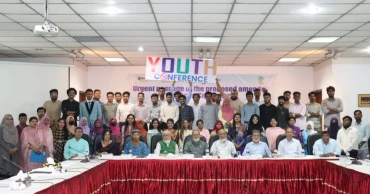
Health sector reform commission to submit report after reviewing proposed tobacco law amendments
Member of the Health Sector Reform Commission and Chairman of the Community Clinic Health Support Trust Dr. Mohammad Zakir Hossain on Sunday assured that the commission will thoroughly review the proposed amendments to the Tobacco Control Law and submit its report accordingly.
He made this assurance at a youth conference held at the CIRDAP auditorium in Dhaka. He emphasized that fighting against tobacco is a challenging task, but it is a challenge that must be taken on.
At the conference, DORP Youth Forum presented six major proposals in line with the WHO Framework Convention on Tobacco Control (FCTC) and the draft amendments formulated by the Health Services Division. These proposals include: eliminating designated smoking areas in all public places and public transport to protect non-smokers, banning the display of tobacco products at points of sale to prevent indirect promotion, prohibiting corporate social responsibility (CSR) activities by tobacco companies, implementing measures to protect children and youth from the harmful effects of e-cigarettes, banning the sale of loose and single-stick tobacco products, and increasing the size of graphic health warnings on tobacco packaging from 50% to 90%. Additionally, the youth forum highlighted various strategies, achievements, challenges, and demands related to achieving a tobacco-free Bangladesh.
Speaking as a special guest, Director General (Joint Secretary) of the National Tobacco Control Cell (NTCC) Md. Akhtaruzzaman stated that banning designated smoking areas and the retail sale of single tobacco sticks are already under consideration. He affirmed that all six demands will be implemented gradually.
Former additional Secretary of the Health Services Division Hossain Ali Khondker mentioned that Myanmar has amended its tobacco control law 12 times. So Bangladesh should learn from Myanmar’s example and expedite the passage of the proposed amendments.
The conference was chaired by A.H.M. Noman, Founder and Chief Executive Officer of DORP. The keynote presentation was delivered by Mohammad Zobair Hasan, Deputy Executive Director of DORP.
DORP has been engaged in various development initiatives since 1987 and is widely recognized for pioneering the introduction of the Maternity Allowance program in Bangladesh.
1 year ago

Bangladesh almost self-sufficient in treatment of heart diseases: PM Hasina
Prime Minister Sheikh Hasina on Friday said the country’s health sector has witnessed significant progress despite various limitations over the last 14 years.
“Bangladesh is now almost self-sufficient in cardiac care. Bangladesh has the capacity to treat 95 to 98 percent of cardiovascular diseases as skilled manpower, modern technology and equipment are available here in the country,” she said.
The premier said this in a video message aired in the 3rd International Scientific Conference arranged by Bangladesh Cardiovascular Research Foundation (BCRF) in the city.
She also opened the two-day conference being held at Pan Pacific Sonargaon Hotel.
Hasina said healthcare has now become much more accessible and reached the doorsteps of common people.
Also Read: Boost research on agriculture to increase production: PM Hasina tells scientists
“As the country's cardiologists and doctors provide better medical services to the patients in the country, the people of the country are benefiting and thus (the country’s) foreign currency is being saved,” she said.
She said work is underway to set up a full-fledged pediatric cardiac unit in Dhaka for better treatment of pediatric cardiac patients in the country. “Plans have been taken to extend such facilities to other government hospitals as well,” she added.
To increase the scope of pediatric cardiac treatment, the scope to produce pediatric cardiologists has been enhanced as a full-fledged pediatric cardiology and pediatric cardiac surgery unit was set up at Bangabandhu Sheikh Mujib Medical University, said the PM.
A 500-bed world-class 'Institute of Cardiovascular Science and Research Institute' has been established in Bangabandhu Sheikh Mujib Medical University, she said.
The premier stressed the need for focusing on preventive measures regarding cardiovascular diseases as the number of cardiac patients is on rise in the country.
Also Read: PM Hasina: Bangladesh to become aviation gateway between the east and the west
“The number of cardiac patients is increasing day by day in the country due to various reasons including diet, lack of physical work, smoking and excessive diabetes. Along with the development of cardiovascular disease care, we also need to pay attention to preventive measures,” she said.
PM Hasina said cardiovascular disease is one of the leading causes of death in Bangladesh and all over the world. According to the World Health Organization, some 17.9 million people die every year in the world due to cardiovascular diseases.
“About 27 percent of total deaths in Bangladesh are caused by cardiovascular diseases. At present, 10 children per thousand are suffering from cardiovascular diseases in the country. One in five young people in Bangladesh is at risk of heart disease,” she said.
Focusing on her government’s steps for the development of the health sector, the PM said it has taken a plan to build a medical college in every district. The number of medical colleges rose to 115 now from 50 ones in 2009, while the number of MBBS course seats went up to 10,789 from only 2,050 in 2009, she said.
She said her government will build a medical university in every division and four medical universities have already been set up.
Pointing to the participants, their participation in the 3rd Scientific Conference has created a unique opportunity to share knowledge and experiences among cardiac specialists.
3 years ago

Government has big plans in store for health sector
The government has plans to boost the health sector of the country aiming to provide more sustainable healthcare facilities to the doorsteps of the masses.
According to the election manifesto of the government, 100- bed cancer units are being established in 8 Divisional Hospitals.
Moreover, the implementation of the project to establish 50-bed dialysis units at medical college hospitals and 10-bed dialysis units at district hospitals is also underway.
According to an official policy document, the government has started establishing Burn Units at Rajshahi, Sylhet, Barishal, Rangpur and Faridpur Medical Colleges under a project with support from the Saudi Government.
Besides, for the management of medical waste at the district level and medical college hospitals, the implementation of the ‘Medical Waste Management’ project is underway.
The implementation of the feasibility study project to rebuild and transform Dhaka Medical College Hospital into a 5,000 bed modern world-class hospital is well in progress, the document said.
In addition, the project for the development and expansion of Pabna Mental Hospital to international standards and the establishment of full-fledged mental health units at every divisional level medical college are going to be taken up.
4 years ago

Chuadanga: Ambulance received from India remains unused
An intensive care unit (ICU) ambulance gifted by the India to Bangladesh is lying idle in the Chuadanga Civil Surgeon’s office for the past six months.
The Indian government gifted the ambulance to Chuadanga Sadar Hospital on November 26, 2021, on the occasion of the golden jubilee of Bangladesh’s Independence and also, the birth centenary of Bangabandhu Sheikh Mujibur Rahman. But, the ambulance hasn’t been used yet due to a shortage of trained medical personnel and necessary equipment.
None of the public or private hospitals in Chuadanga currently has ICU facilities. The same goes for ICU ambulances. The first ICU unit of the district was started by Sajeda Foundation on August 7, 2021, at a new building inside Chuadanga Sadar Hospital on a temporary basis.
Unfortunately, the foundation stopped the operation of the ICU unit as the Covid-19 situation became normal in the district.
Read: Chuadanga Sadar Hospital presents stark image of poor waste management
“Sometimes, cardiac patients die on their way to the hospital due to not getting life support facilities that can only be provided by ICU ambulances," said Coordinator of Chuadanga Sadar Hospital Dr Ataur Rahman.
"We’ve already spoken with higher authorities to restart the ICU facility at our hospital. I expect that the currently unused ICU ambulance will start operating once ICU facilities begin at our hospital,” he added.
Chuadanga Civil Surgeon Dr Sajjat Hasan said that the ambulance can’t be operated without trained personnel and necessary equipment. "I’ll take necessary steps to run the ambulance at the earliest,” he said.
4 years ago
.jpg)
Make country’s health sector more vibrant to tackle Covid-like crisis: President
President Abdul Hamid on Wednesday said Bangladesh has done better than even some developed countries in successfully tackling the Covid-19 pandemic. In spite of the success the country still needs to build a vibrant health sector in order to tackle similar crisis in future, he said while speaking to foreign students studying President Abdul Hamid Medical College at a programme at Shilpakala Academy in Kishorganj town.
Read: President Hamid calls for taking development benefits to people "Although we have achieved tremendous success in health sector, the Covid pandemic has also exposed some loopholes in the system. We are still in need of more skilled resources, especially specialist doctors, nursing staffs and medical technologists." he said. Hamid praised the health sector manpower, including doctors, nurses and technologists. He said Bangladesh ranked first in South Asia and 20th in the world in the 'COVID Resilience Ranking' compiled by Bloomberg news agency for successful handling of corona pandemic, economic revival and keeping the livelihoods running. "We have also managed to secure a steady supply of COVID-19 vaccine. Vaccination program is going on in a full swing and around 48 million people have already received at least first dose," he added. Urging both the medical institutions and the students not to choose the easiest path in taking medical education, the President said "Medical education is highly sensitive technical education and doctors are the people who are directly concerned with our health and lives.
Read: President's activities on day 2 of visit to home district Mentioning the overall standard of education in Bangladesh as very good and comparable to other developed countries, Hamid said that the students have the chance to get on hand training at the hospitals. "The cost of the complete course of MBBS in Bangladesh is also quite affordable as compared to other countries across the world," he added. He also said that the country is becoming one of the preferred destinations for medical students around the globe ensuring a great improvement in terms of medical education.
4 years ago

Opposition MPs slam mismanagement, politics in health sector
Opposition MPs on Wednesday sharply criticised the government for mismanagement in the health sector, particularly politics by physicians and high fees in private hospitals.
They came up with their harsh remarks while taking part in discussions on the Medical Colleges (Governing Bodies) (Repeal) Bill 2021 in Parliament.
In response to their criticisms of doctors for their involvement in politics, Health and Family Welfare Minister Zahid Maleque said all citizens have the right to do politics.
Joining the discussions, Jatiya Party MP Kazi Firoz Rashid (Dhaka-6) said BNP had formed DAB (Doctors’ Association of Bangladesh) and Awami League, coming in power, formed Swachip (Swadhinata Chikitsak Parishad).
“We would have been happy had he (Health Minister) incorporated a provision in this bill that the doctors and scientists wouldn’t be allowed to do politics, but he didn’t,” Firoz Rashid said.
He said if the physicians do politics, what would be the job of politicians! “Meritorious students study medical courses. But get deprived of medical services if they do politics,” said Firoz.
BNP MP Harunur Rashid (Chapainawabganj-3) said the health system is still in a sorry state even after the 50 years of the country’s independence. “Now those who’re working in government hospitals are also doing business in private hospitals.”
He said so many private medical colleges were established. “Do the colleges meet the standards? How many students of the colleges can qualify BCS exams?” he said.
Read: Health sector officials and staff directed to refrain from divulging info
5 years ago

Opposition MPs call Health Minister “shameless” over health sector “failures”
Terming Health Minister Zahid Maleque a "shameless man" for his “failure, widespread corruption in the health sector and mismanagement in coronavirus treatment, opposition MPs of Jatiya Party and BNP on Saturday demanded his immediate resignation.
They sharply criticized the health minister in Parliament for his failure to ensure oxygen in different hospitals for Covid-19 patients as many died in Satkhira and Bogura districts.
The health minister was not there in the House but Prime Minister Sheikh Hasina was present at the time.
BNP MP Gulam Mohammad Siraj from Bogura-6 first launched the blistering attack on the health minister while speaking on a point of order.
He alleged that around 24 Covid-19 patients died in the last two days in Bogura for lack of oxygen.
The BP MP said Mohammad Ali Hospital in Bogra is a dedicated hospital to Covid-19 treatment but there are only eight ICU beds there and only two high-flow nasal cannula oxygen facilities. “As a result, the rest of the ICU beds are useless.”
Also read: Corruption in health sector widespread: GM Quader
He also said 450 beds in 3 hospitals in Bogra are overwhelmed with Covid-19 patients leaving no scope for the hospitalization of new patients.
Gulam Mohammad demanded immediate supply of 20 high-flow oxygen to every hospital.
Jatiya Party Chairman and Deputy Leader of the Opposition in parliament GM Quader, in his winding-up speech, pointed out widespread mismanagement in the health sector, including the health ministry.
He said the health ministry is still there where it was a year ago. “There has been no improvement.”
5 years ago

No lockdown for health sector: Minister
There will be no lockdown for the health sector in Bangladesh as the number of Covid patients is increasing day by day, said Health Minister Zahid Maleque on Sunday.
Talking to reporters at the Secretariat, he also said there would be police, BGB and army members on the streets to monitor people and vehicles during the lockdown to be enforced to slow down the coronavirus transmission.
Also read: Export oriented factories to remain open amid ‘strict lockdown’
The minister hoped that people across the country would abide by the health guidelines by wearing masks, maintaining social distance and sanitizing hands.
Also read: Health minister hopes to get 11 crore vaccine doses by December
Already, 5,000 to 6,000 Covid patients have been admitted to hospitals across the country, the minister said, adding: "We’ve got a very large population. If we want to protect that population from infections, we must follow the health protocols."
Zahid Maleque said the country’s economy would suffer badly if the coronavirus is not effectively controlled.
Also read: Nationwide lockdown from Monday, 'all out lockdown’ from July 1
The government is set to enforce a nationwide partial lockdown from Monday and it will turn into a complete one from Thursday.
5 years ago