Faridpur farmers

Farmers worry over fair price despite good jute yield in Faridpur
Farmers in Faridpur are expecting a good harvest of quality jute this season, but rising production costs and uncertainty over market prices have raised concerns about whether they will be able to make a reasonable profit.
Faridpur is one of Bangladesh’s major jute-producing districts, and this year farmers have cultivated the crop on more land than the target set by the Department of Agricultural Extension (DAE).
Favourable weather, adequate rainfall and sufficient water in canals and beels during the harvesting period have contributed to good yields and improved colour and quality of the golden fibre, according to the DAE.
It expects around 196,000 tonnes of jute to be produced in the district this season.
Jute is currently selling for Tk 4,000 to Tk 4,200 per maund at markets, including Kanaipur, Nalermor, Talma, Kadirdi, Satoir and Boroga, depending on its variety and quality.
At the current market price, the total value of this season’s jute could exceed Tk 2,000 crore, according to the DAE.
But farmers say the rising cost of fertiliser, seed, labour and other inputs has made it increasingly difficult for them to earn a reasonable return.
According to DAE sources, the target for jute cultivation in Faridpur this season was 87,328 hectares. However, farmers cultivated the crop on around 87,400 hectares – about 72 hectares more than the target.
Faridpur DAE Deputy Director Md Shahaduzzaman said the weather had been particularly favourable for jute cultivation this year.
“Especially during the harvesting period, there was sufficient water in the canals and beels, which helped ensure good colour and quality of the fibre,” he said, adding that they expect around 196,000 tonnes of jute to be produced in Faridpur this season.
However, the good harvest has not completely eased farmers’ concerns.
1 month ago
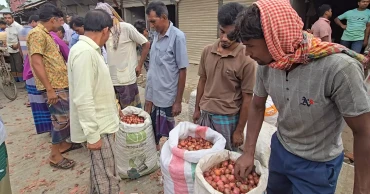
Onion vanishes: Faridpur faces price shock
Onion prices in Faridpur have surged by Tk 1,000 per maund over the past 10 days due to reduced supply in the market, affecting retail customers.
According to Md Shaheduzzaman, Deputy Director of the Department of Agricultural Extension (DAE) in Faridpur, the district is the second-largest onion-producing region in the country.
This year, a total of 38,000 hectares of land were brought under onion cultivation, yielding 6.77 lakh metric tonnes.
Farmers, however, were frustrated as they received only Tk 1,000 to Tk 1,500 per maund during the season, while they needed Tk 2,000–2,200 per maund to break even and make a profit.
In the past 10 days, the price of onion in the wholesale market has risen from Tk 1,500 to Tk 2,500–2,600 per maund, with retail prices now ranging between Tk 70 and Tk 75 per kg.
Traders blamed the supply shortage for the price hike, noting that farmers are currently occupied with jute processing, resulting in fewer onion deliveries to the market.
Tapan Kumar, a trader from Kanaipur, said there is no onion import from abroad at the moment and the local supply is insufficient to meet demand, which is pushing prices up sharply.
Moniruzzaman, an onion trader from Boalmari upazila, said, "Farmers are busy with retting, washing and drying jute. That’s why less onion is reaching the wholesale markets."
Faridpur farmers in distress as onion prices plummet
Expressing frustration, Saifur Rahman from Saltha upazila said farmers did not get fair prices during the harvesting season and now most of the remaining stock is in the hands of large wholesalers.
"It's the wholesalers who are profiting from the current price surge. We farmers have nothing left to gain," he said.
In local markets, including Kanaipur, Saltha, Boalmari and Nagarkanda, onions are selling at Tk 60 to Tk 75 per kg depending on the variety.
1 year ago

Golden fibre glows again; Faridpur fields promise Tk 2,000cr harvest
Weeks of worry over water scarcity have given way to a renewed hope, as timely monsoon rains ease retting woes and raise prospects for a bumper jute harvest in Bangladesh’s jute heartland.
This season, more than 86,500 hectares of land in the district have been brought under jute cultivation. Agricultural officials now expect production to surpass two lakh metric tonnes, with a market value exceeding Tk 2,000 crore.
Faridpur, a central district with an agriculture-based economy, has recorded a relatively good yield this season despite soaring production costs.
Farmers note that expenses have multiplied, especially due to the absence of early rainfall, which forced many to depend on irrigation to sustain their crops.
Water shortage disrupts jute retting in Lalmonirhat, sparking price concerns
Jute has been cultivated in eight of the district’s nine upazilas, with Charbhadrasan upazila being the only exception.
Surrounded by major rivers like the Padma, Arial Khan and Madhumati, Faridpur is naturally suited for jute cultivation thanks to its fertile land and favourable climate.
According to the Department of Agricultural Extension (DAE), over 75% of Faridpur’s arable land is currently dedicated to jute cultivation, engaging more than five lakh farmers directly and indirectly.
1 year ago

Faridpur farmers anticipate impressive mustard yield worth Tk 151.38 crore
In Faridpur, a significant increase in mustard cultivation has been reported, with the area under mustard crops expanding by over 2,000 hectares from the previous season. This expansion anticipates a high-yield output valued at an impressive Tk 151.38 crore.
The Department of Agricultural Extension (DAE) in Faridpur has noted that mustard now spans 14,842 hectares, targeting a yield of 1,360 kg per hectare. Given the current market rate, which surpasses Tk 3,000 per maund, the district's projected earnings are substantial.
Govt initiative to reduce edible oil imports: Jashore’s mustard farmers anticipate exceptional harvest
Anwar Hossain, the Agriculture Officer of Faridpur Sadar upazila, attributes this growth to the rising prices of edible oils. He observed that mustard cultivation has become a preferred choice in nearly all fields across the district’s nine upazilas. “Farmers are increasingly turning to mustard due to its lower maintenance, availability of resources like fertilizers and medicines, and encouraging government policies,” said Hossain.
The district has seen the cultivation of various mustard varieties, including BARI-14, 15, 16, 17, Bina-4, 8, 9, and Tori-7. This diversification, coupled with the growing demand for pure mustard oil, has led farmers to focus on high-yielding strains.
Local farmers, Ibrahim Mollah and Rahim Matabbar from Ambikapur, highlighted the advice from the Department of Agriculture to plant an additional crop before the boro paddy season. This strategy maximizes the use of fields and aligns with the mustard’s shorter growth period of just 80-90 days.
Farmers expect bumper mustard yield in Khulna
The cost of cultivating mustard ranges from Tk 7,000 to Tk 8,000 per bigha, with the potential to yield 5-6 maunds of seeds per bigha, especially under favorable weather conditions. This efficient production cycle and promising market rates are driving Faridpur’s agricultural sector towards a robust mustard season.
2 years ago

Floods devastate paddy in Faridpur
Around 15 hectares of paddy fields were damaged by floods in Faridpur district, causing huge losses to 63,425 farmers.
6 years ago
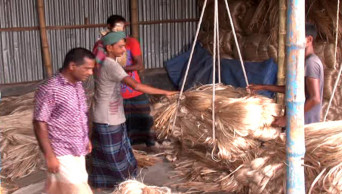
Low jute price frustrates Faridpur farmers
Faridpur, Sept 3 (UNB) – Farmers in the district, which is known for growing the golden fibre in aplenty, have become disappointed after failing to get the fair prices for their produce.
7 years ago