Supreme Court
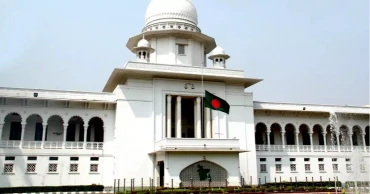
BNP's Aslam Chowdhury can't be sworn in as MP after Appellate Division cancels candidacy
The Appellate Division of the Supreme Court on Tuesday cancelled the candidature of BNP leader Aslam Chowdhury, who was unofficially declared elected from the Chattogram-4 constituency in the 13th Jatiya Sangsad election, on the ground of loan default.
The verdict, delivered by a four-member bench headed by the Chief Justice, means the election result for the constituency cannot be gazetted, effectively preventing Aslam from taking oath as a member of parliament.
The apex court had concluded hearings on June 15 and fixed June 30 for delivering its judgment.
Senior lawyers Barrister AM Mahbub Uddin Khokon and Miftah Uddin Chowdhury represented Aslam Chowdhury, assisted by Advocate Rokon Uddin Md Faruk. Attorney General Barrister Md Ruhul Quddus Kajal appeared for the state, while Senior Advocate Kamal Ul Alam represented Bank Asia PLC.
Earlier, on June 20, the Appellate Division appointed two senior lawyers M Kamrul Haque Siddique and Probir Neogi as amicus curiae (friends of the court) to assist the court during the hearing over Aslam's candidature.
The legal dispute began after the Returning Officer declared Aslam's nomination paper valid on January 3.
Subsequently, Jamaat-e-Islami candidate Anwar Siddiqui and Bank Asia PLC challenged the decision before the Election Commission, alleging that Aslam was a loan defaulter.
On January 18, the Election Commission rejected the appeals, allowing Aslam's candidature to stand. The decision was then challenged separately before the High Court, which dismissed both writ petitions on January 27, enabling the BNP leader to contest the election.
Aslam contested the February 12 parliamentary election as the BNP candidate from Chattogram-4 and was unofficially declared elected. However, publication of the official result was suspended following an earlier order of the Appellate Division.
On February 3, the Appellate Division granted leave to appeal against the High Court verdict following a petition filed by Jamaat candidate Anwar Siddiqui. The court ordered that if Aslam won the election, publication of the result would remain suspended until the appeal was finally disposed of.
Following the leave order, separate appeals were filed on March 31. The Chamber Judge's Court later referred the matter to the regular Appellate Division bench for hearing on April 28, and the case subsequently appeared on the court's cause list several times before the final hearing.
Meanwhile, Attorney General Barrister Md Ruhul Quddus Kajal said that if a fresh election is held in the Chattogram-4 constituency, there would be no legal bar to Aslam Chowdhury contesting the polls.
3 months ago
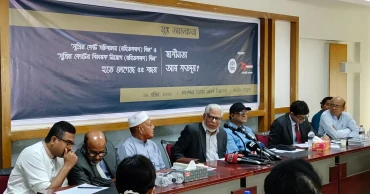
Repeal of Supreme Court-related bills could undermine democracy, say members of legal fraternity
Speakers at a discussion on Saturday warned that the situation created by the repeal of the Supreme Court Secretariat (Repeal) Bill and the Judicial Appointment (Repeal) Bill could push the country towards a “dangerous situation.”
They made the remarks at a free discussion titled “55 years since the repeal of the Supreme Court Secretariat (Repeal) Bill and Judicial Appointment (Repeal) Bill: How far is independence?” held at the Tafazzal Hossain Manik Mia Hall of the Jatiya Press Club.
The event was jointly organised by the human rights organisation Humanity Foundation and the law journal Ain O Bichar. It was chaired and moderated by Humanity Foundation founder chairperson and Ain O Bichar editor Muhammad Shafiqur Rahman.
Speaking as chief guest, Appellate Division Judge Justice Abdul Matin said that the extent of amendments made to the Constitution made reforms unavoidable. He argued that if the July uprising is not recognised as legitimate, then decisions taken during the interim government would lose validity, and even the current government’s legitimacy could be questioned.
He said discussions on judicial independence date back to the United Front government in 1954, stressing that the demand is not limited to 55 years but is universal and timeless. He also said the ordinances’ repeal effectively goes against what he referred to as the “July Charter,” calling it a “self-destructive” step.
He criticised recent administrative actions, including show-cause notices issued to 28 judicial officers, and questioned the legality of restrictions on speaking about judicial matters. He also said that if the president claimed he had been forced into signing decisions, he should resign and could be impeachable.
Former District Judge Masdar Hossain said the repeal of the bills was a step backward when legal frameworks should instead be strengthened. He said Parliament was often dominated by individuals acting with arrogance, while the judiciary had long been treated unfairly. He added that courts had increasingly become places of oppression rather than justice, and warned that political influence over judicial appointments could return.
Senior lawyer Barrister Ehsan A. Siddiq said the repeal could lead the country towards a difficult future and accused the government of abusing power. He said hopes for a fully independent judiciary remained uncertain.
Senior lawyer Hasan Tariq Chowdhury alleged that both past and present governments prefer a controlled judiciary, and said bureaucratic control over judicial promotions and transfers undermines independence.
Barrister Omar Faruq said the repeal could have serious long-term consequences and questioned the justification of the move. He warned that political interference in the judiciary could worsen governance challenges.
Former Joint District Judge Dr Md Sajjad Hossain said the decision could backfire on the government and claimed that political cultures influenced institutional independence, calling for continued struggle for judicial reform.
Arif Sohel, representing the July student movement and “Gonobiplobi Udyog,” said the judiciary had shown contradictory behaviour and remained influenced by the executive, adding that the repeal went against the spirit of the July uprising.
July uprising aimed at inclusive, new Bangladesh, not just govt change: Rumeen Farhana
In his presidential remarks, Muhammad Shafiqur Rahman said the repeal could hinder democratic development, increase authoritarian tendencies, and weaken judicial independence. He warned it could allow misuse of courts for political purposes, increase bureaucratic interference in judicial processes, and erode public trust in the justice system.
6 months ago

Trump announces plan to raise tariffs to 15% following Supreme Court ruling
President Donald Trump stated on Saturday that he intends to increase global tariffs to 15%, up from the 10% he had previously announced a day earlier, after the U.S. Supreme Court struck down many of the extensive import taxes he had imposed in the past year.
Trump's social media post signals that despite the court's limitation on his powers, the Republican president remains determined to escalate tariffs in unpredictable ways. Tariffs have been a key tool for Trump to reshape global trade and exert international pressure.
The Supreme Court's decision on Friday invalidated tariffs Trump had applied on nearly all countries using emergency powers. In response, Trump stated he would pursue an alternative, though more restricted, legal authority.
He had already signed an executive order to bypass Congress and impose a 10% tax on global imports, which was set to take effect on Tuesday, the same day as his State of the Union address. However, these tariffs will last only 150 days unless extended by legislation.
The White House has yet to respond to inquiries about when Trump will sign an updated order to raise tariffs to 15%.
In his social media post, Trump explained that his decision was based on a "thorough, detailed, and complete review" of what he called a "ridiculous, poorly written, and extraordinarily anti-American" Supreme Court ruling on tariffs.
By a 6-3 vote, the justices declared that Trump cannot unilaterally impose and alter tariffs, as the authority to tax resides with Congress.
In addition to the temporary 15% tariffs, Trump also indicated he would pursue tariffs under other sections of federal law, which require an investigation by the Commerce Department.
He stated on Saturday that the Trump Administration would "determine and issue the new and legally permissible Tariffs" in the coming months, continuing the process of "Making America Great Again."
After the Supreme Court ruling, Trump launched a personal attack on the justices who voted against him, including two of his own appointees, Justices Neil Gorsuch and Amy Coney Barrett. At a news conference on Friday, he called the decision "an embarrassment to their families." He continued to criticize them on social media, also attacking Chief Justice John Roberts, who joined the majority opinion. On Saturday morning, Trump declared Justice Brett Kavanaugh his "new hero" for writing a dissenting opinion, and praised Justices Clarence Thomas and Samuel Alito, who also dissented.
Tariffs have been a cornerstone of Trump’s economic policies, which he claims address issues like trade imbalances, reviving U.S. manufacturing, and pressuring foreign nations to take action on matters such as drug trafficking and international conflicts.
Despite evidence to the contrary, Trump has frequently stated that foreign governments, not American consumers and businesses, would bear the cost of these tariffs.
As of December, federal data showed that the Treasury had collected over $133 billion from the tariffs imposed under emergency powers. Trump has suggested that the funds could be used for purposes such as reducing the national debt or sending dividend checks to taxpayers. The Supreme Court’s ruling did not address the fate of these collected funds.
Democrats quickly criticized Trump's tariff proposal. Members of the House Ways and Means Committee accused Trump of "pickpocketing the American people" with his new tariff increase.
California Governor Gavin Newsom, a long-time Trump critic, added that "he does not care about you."
7 months ago
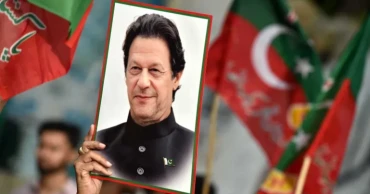
Pakistani ex-PM Imran Khan left with 15% eyesight in jail, Supreme Court intervenes
Pakistan’s Supreme Court has ordered an urgent medical review of jailed former Prime Minister Imran Khan after a court-appointed lawyer reported that he has lost most of the vision in his right eye.
Barrister Salman Safdar, appointed as amicus curiae (friend of the court), met Khan for about two hours on February 10 at Adiala Jail in Rawalpindi and later submitted a seven-page report to the court on Wednesday.
According to the report, the 73-year-old former premier now has only 15 percent vision in his right eye after authorities allegedly failed to act on his complaints of blurred and hazy sight for nearly three months. Safdar wrote that Khan eventually suffered a sudden and complete loss of vision in that eye.
A medical report dated February 6 diagnosed him with right central retinal vein occlusion, a condition caused by a blood clot that can seriously damage the retina. An eye specialist from a government hospital in Islamabad confirmed the diagnosis.
Safdar noted that Khan appeared distressed during their meeting, with watery eyes throughout the conversation. The report warned that any further delay in treatment could pose serious risks and recommended an immediate independent examination by specialist ophthalmologists, including his personal doctors.
Following the submission, the Supreme Court directed authorities to form a medical board to examine Khan and ordered that he be allowed to speak by phone with his sons, who live in the United Kingdom. The court asked that both steps be completed before February 16, with Chief Justice Yahya Afridi stressing that Khan’s health required urgent attention.
Khan’s party, Pakistan Tehreek-e-Insaf (PTI), expressed deep concern over his deteriorating eyesight and criticised prison authorities. The party said it may pursue legal action against officials and demanded unrestricted access to his personal physicians, transfer to a reputable hospital for specialised treatment, and restoration of full family visitation rights.
Khan, a former cricket captain who led Pakistan to a World Cup victory, served as prime minister from 2018 until he was removed in a no-confidence vote in 2022. He has been jailed since August 2023 on multiple charges, which his party describes as politically motivated.
Safdar’s report also stated that Khan has been held in solitary confinement for about two years and four months and has had limited access to his legal team and family members. In June 2024, a United Nations Working Group on Arbitrary Detention said his detention lacked legal basis and appeared aimed at barring him from political office.
The case has further intensified political tensions in Pakistan, with analysts calling for transparency regarding the former prime minister’s health and prison conditions.
With inputs from ALJAZEERA
8 months ago
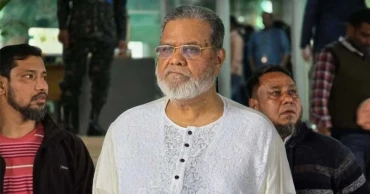
BNP’s Cumilla-4 candidate Munshi barred from contesting election
The Appellate Division on Sunday rejected a writ petition filed by BNP-nominated candidate Manjurul Ahsan Munshi, upholding the Election Commission’s decision to cancel his candidacy for the Cumilla-4 constituency on charges of loan default.
The Appellate Division bench, led by Chief Justice Zubayer Rahman Chowdhury, passed the order after dismissing Munshi’s leave-to-appeal petition.
Earlier, the High Court had declared Manjurul Ahsan Munshi’s candidacy invalid. He later filed an appeal challenging the High Court verdict.
Alliance partners can't share electoral symbol: High Court
The BNP candidate faces allegations of loan default after concealing relevant information in his affidavit. Although the returning officer initially found his nomination valid, the Election Commission cancelled it on January 17 following objections raised by NCP candidate Hasnat Abdullah, who alleged that Munshi was a loan defaulter.
Munshi then filed a writ petition with the High Court challenging the Election Commission’s decision. However, the High Court rejected the petition on January 21.
Meanwhile, the Appellate Division agreed to hear a leave-to-appeal petition filed by BNP candidate Mobasher Alam Bhuiyan of the Cumilla-10 constituency, seeking restoration of his candidacy. He was also allowed to take part in the election pending disposal of the appeal.
On the other hand, the Appellate Division rejected a separate leave-to-appeal petition filed by BNP candidate Abdul Gafur Bhuiyan, effectively barring him from contesting the polls.
8 months ago
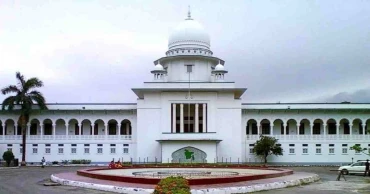
Appellate Division upholds HC order declaring interim govt valid
The Appellate Division on Thursday (December 04, 2025) upheld a High Court (HC) order that declared the swearing-in and formation of the interim government valid, dismissing a leave-to-appeal petition over the government.
A top court bench, led by Chief Justice Dr. Syed Refaat Ahmed, passed the order.
During Wednesday’s (December 03, 2025) hearing, Attorney General Md Asaduzzaman argued that the writ challenging the government’s legality was based on a mistaken notion.
Read more: Writ petition filed challenging provision of party symbols in the alliance's vote
Lawyers representing the government said that the formation of a government following a popular uprising cannot be questioned, and that raising doubts before the Supreme Court, which was reconstituted after the government took oath, is impermissible.
The petitioner’s counsel defended that during the August 5 uprising, the then Chief Justice and Appellate Division judges had sought shelter in the cantonment.
Consequently, under Article 106 of the Constitution, they were unable to provide the President with advice regarding government formation, rendering the current government’s oath-taking and formation process illegal.
In December last year, senior lawyer Mohsin Rashid first submitted a petition with the HC challenging the legality, which the court rejected, stating that the people’s approval legitimises the interim government and no one could question it.
Read more: Writ petition filed seeking stay on election activities
Following that, the petitioner sought leave to appeal in the Appellate Division, which was dismissed today (Thursday).
10 months ago
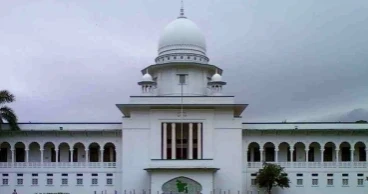
Bangladesh’s top court regains full authority over lower court judges
The High Court on Tuesday declared the amendment to article 116 of the constitution relating to the control and discipline of subordinate judiciary unconstitutional and void.
The HC bench of Justice Ahmed Sohel and Justice Debasish Roy Chowdhury passed the order returning the full authority to the Supreme Court.
With this order, the Supreme Court will have full authority over lower court judges, including matters related to their posting, promotion and granting of leave, restoring the judiciary’s administrative independence.
Supreme Court Helpline receives over 1,000 calls in 3 months
The judgment reinstates the original article 116 as it appeared in the constitution of 1972.
With this, the control and disciplinary authority over judges of subordinate courts is now fully vested in the Supreme Court.
The HC also asked the authorities concerned to establish a separate Secretariat within three months as per the proposal of the Supreme Court authority.
Besides, the disciplinary rules created for the judges in 2017 have been declared contradictory to the constitution. As a result, the Supreme Court will no longer need to seek the President's approval for the transfer and disciplinary measures of judges.
Advocate Mohammad Shishir Manir stood for the petitioner while Attorney General Md Asaduzzaman represented the state.
Senior lawyer Sharif Bhuiyan was also present during the hearing as amicus curiae.
Supreme Court upholds removal of judges through Judicial Council
Speaking to reporters, Shishir Manir said the order has fully restored the Supreme Court’s control over judges, including their postings, promotions and leave approvals.
From now on, the Ministry of Law will have no control over the transfer and discipline of judges in the name of the appropriate authority. They will be able to deliver judgments without fear, he said.
After delivering a verdict, judges will no longer have to fear being transferred in the dead of night due to the wrath of the executive authority and the order is a historic order.
Earlier on August 25, last year, seven lawyers of the Supreme Court filed a writ petition seeking to transfer the authority of controlling magistrates of subordinate courts (posting, promotion, and leave approval) from the President to the Supreme Court.
They are Advocate Mohammad Saddam Hossain, Zahirul Islam, Mustafizur Rahman, Abdullah Sadique, Md Mizanul Haque, Aminul Islam Shakil and Zayed Bin Amzad.
According to the petition, the 1972 Constitution originally vested the control of magistrates in subordinate courts with the Supreme Court. The1974 4th Amendment shifted this authority to the President.
Later, the 5th Amendment inserted the clause "in consultation with the Supreme Court." When the Appellate Division of the Supreme Court declared the 5th Amendment unconstitutional, the 15th Amendment Act of 2011 reinstated the current provision in Article 116.
The petitioners argue that giving the President control over magistrates compromises judicial independence. They believe the Supreme Court should retain full control over magistrates for a truly independent judiciary.
On October 27, last year, the HC bench of Justice Farah Mahbub and Justice Debashish Roy Chowdhury, issued a rule asking the government to explain as to why Article 116 of the Constitution, which grants the President the authority to control magistrates of subordinate courts, including matters of posting, promotion and leave approval, should not be declared unconstitutional.
It also issued another rule asking the government to explain as to why a separate Secretariat for Judiciary should not be formed.
The registrar general of the Supreme Court was asked to submit a progress report within 60 working days.
1 year ago
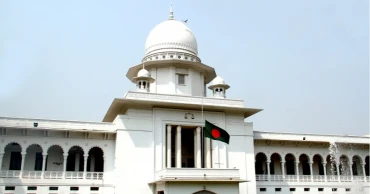
SC upholds HC order scraping defamation case against Yunus in M’sing
The Appellate Division of the Supreme Court on Sunday upheld the High Court order that had dismissed the defamation case filed against Chief Adviser Dr Yunus in Mymensingh.
The three-member bench of the Appellate Division led by Justice Zubayer Rahman Chowdhury passed the order after rejecting the leave-to-appeal petition filed by the High Court.
The defamation case against Dr Yunus, the then managing director of Grameen Bank, was filed with Mymensingh court in 2010.
In 2011, Dr Yunus filed a petition with the High Court seeking cancellation of the case.
On October 24, last year, the High Court scrapped the case activities.
Appointment of administrator to Nagad legal: High Court
On July 2, the High Court published the full text of the verdict. The State counsel filed a leave-to-appeal petition.
Additional Attorney General Aneek R Haque stood for the state while Advocate Taufiq Hossain stood for Dr Yunus.
Nazrul Islam Chunnu, member of Mymensingh District Bar Association and joint secretary of Jasod filed the case against Dr Yunus in 2011 with Mymensingh court.
According to the case statement, in 2007, Dr Yunus during an interview said that “Bangladeshi politicians engage in politics for money, not for public interest.
1 year ago
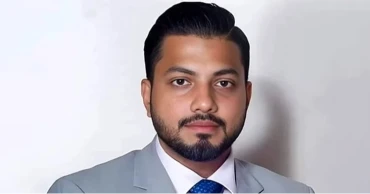
SC to hear leave-to-appeal petition of Ishraque Wednesday
The Appellate Division of the Supreme Court is set to hear the leave-to-appeal petition, filed seeking stay on the lower court verdict and gazette notification issued by the Election Commission, announcing Ishraque Hossain as the mayor of Dhaka South City Corporation (DSCC), on Wednesday.
Chamber Judge of the Appellate Division Justice Md Rezaul Haque on Tuesday fixed the date for hearing the appeal petition.
Barrister Mahbub Uddin Khokon stood for Ishraque while Advocate Mohammad Hossain represented the petitioner.
Earlier on Monday, a leave-to-appeal petition filed seeking stay on the lower court verdict and gazette notification issued by the Election Commission, announcing Ishraque as the mayor of Dhaka South City Corporation (DSCC).
Senior Advocate Mohammad Hossain filed the leave-to-appeal petition at the Appellate Division.
On May 22, the High Court dismissed a writ petition that sought a directive against administering the oath of office to BNP leader Ishraque as mayor of DSCC, clearing the way for his swearing-in.
On May 14, Dhaka South resident Md Mamunur Rashid filed the writ petition seeking a stay on Ishraque’s swearing-in and disciplinary action against the judge who declared him mayor.
SC orders reinstatement of 988 dismissed National University employees
The petition also challenged the validity of the lower court’s verdict, which overturned the result of the 2020 DSCC polls.
The same High Court bench had fixed May 22 for delivering its order on the matter after hearing arguments on May 21.
Advocate Kazi Akbar Ali represented the petitioner during the hearing, while Ishraque was represented by his legal team, who welcomed the decision and said there was now no legal barrier to his taking oath as DSCC mayor.
The development comes nearly two months after a lower court annulled the 2020 DSCC election result and declared Ishraque the BNP-nominated candidate, as the rightful mayor.
On February 1, 2020, Awami League candidate Sheikh Fazle Noor Taposh was declared the winner of the DSCC election, defeating Ishraque by a margin of nearly 200,000 votes. However, on 27 March 2024, Judge Md Nurul Islam of the Dhaka First Joint District Judge and Electoral Tribunal nullified that result and declared Ishraque the victor.
Following the verdict, the constitutional body sought legal advice from the Ministry of Law on 22 April regarding publication of the gazette.
Subsequently, on 27 April, the Election Commission issued a gazette notification announcing Ishraque as the new mayor of DSCC.
Meanwhile, supporters of Ishraque resumed their protests in front of Nagar Bhaban on Monday, demanding that he be handed over the responsibilities of DSCC mayor without further delay.
1 year ago
Supreme Court orders Trump admin to help bring back man wrongfully deported
The Supreme Court ruled on Thursday that the Trump administration must assist in bringing Kilmar Abrego Garcia back to the U.S. after he was wrongly deported to El Salvador. The Court rejected an emergency appeal from the administration. Abrego Garcia, a Maryland resident and Salvadoran national, had a court order protecting him from deportation due to concerns he could be targeted by gangs in his home country.
While the administration alleged that Abrego Garcia was affiliated with the MS-13 gang, his lawyers argued there is no evidence supporting that claim, and he has never been charged or convicted of any crime.
EU pauses tariff retaliation for 90 days to align with Trump’s delay
Despite admitting the deportation was a mistake, the administration contended it was no longer in a position to reverse the action, even though Abrego Garcia is currently imprisoned in a well-known El Salvador prison.
1 year ago