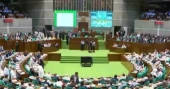
National Parliament
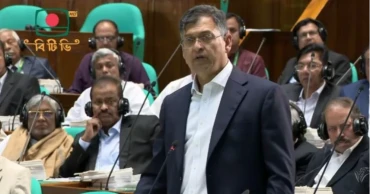
No constitutional existence of ‘Reform Council’ yet: Home Minister
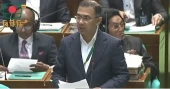
Home Minister Salahuddin Ahmed on Sunday said the Constitution of Bangladesh does not recognise anything named a ‘Reform Council’, noting that such a council could only be established after a constitutional amendment.
“The honourable President has convened a session of the National Parliament, not a session of any ‘Reform Council,” he told reporters before joining the adjourned sitting of the Jatiya Sangsad.
Referring to the proposal mentioned in the July National Charter, Salahuddin said that if a constitutional reform council is to be implemented under that framework, the Constitution must first be amended.
He also noted that the legality of the proposed council has already been challenged in court.
“The Constitutional validity of the council mentioned under the July National Charter has been challenged, and the court has issued a rule in this regard. The matter is now under judicial consideration,” he said.
The Minister said that if such a council is to be formed based on the outcome of a referendum, the Constitution must first be amended through discussion.
Fuel rationing withdrawn, normal supply resumes at filling stations
“Only after the Constitution is amended and the provision incorporated can steps be taken to form the council and arrange the oath-taking, if necessary,” he added.
Responding to another question regarding the Speaker and Deputy Speaker, the Home Minister said both still hold their primary membership in their respective political parties.
“They have not resigned from their parties. Therefore, Article 70 of the Constitution does not apply here,” he said, adding that the provision becomes applicable only when a member resigns from their party.
7 months ago
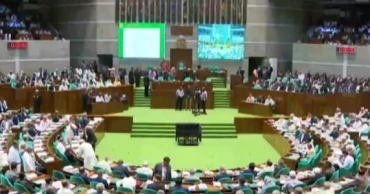
Panel of chairmen nominated for 13th parliament session
Speaker Hafiz Uddin Ahmed on Thursday nominated a five-member panel of chairmen for the first session of the 13th Jatiya Sangsad.The panel members are Mirja Abbas Uddin Ahmed, Goyasawar Chandra Roy, Dr Abdul Moyeen Khan, Md Manirul Haque Chowdhury, and ATM Azharul Islam. They will preside over parliamentary proceedings in the absence of the Speaker and Deputy Speaker.
7 months ago
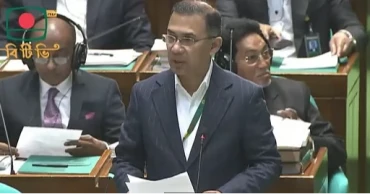
PM seeks support from people, MPs to build self-reliant Bangladesh
Prime Minister Tarique Rahman on Thursday sought support and cooperation from people and Members of Parliament (MPs) including those from the opposition to transform Bangladesh into a self-reliant, prosperous, safe and democratic country.
“Our political goal is to make every family self-reliant. Through making every family self-reliant, BNP wants to establish a self-reliant, prosperous, secure and democratic Bangladesh,” he said while delivering his welcome speech at the outset of the maiden session of the 13th Parliament.
The Prime Minister said to achieve the goal he seeks the support and cooperation of democracy-loving people of the country.
“In this great National Parliament, I also expect the support and cooperation of every elected Member of Parliament from all parties,” he added.
Tarique Rahman said he believes that political parties, opinions and programmes may differ.“But there can be no disagreement among us when it comes to establishing an independent, sovereign, secure and self-reliant Bangladesh free from subservience and fascism. There is no conflict on that.”
Instead of making the National Parliament the centre of national activities, he alleged that the ousted fascist Awami League government had rendered the parliament ineffective.
“We want to transform this great National Parliament into the central forum for reasoned discussion, debate and the resolution of national problems,” the Prime Minister added.
Tarique said he was elected for the first time as a Member of Parliament from the BNP and was also elected Leader of the House.
“Although I represent my party in the National Parliament, as Prime Minister I represent the country in this Parliament. Regardless of party, opinion, religion or ethnicity, I represent the people of the country. My politics is the politics of protecting the interests of the country and its people,” he added.
The Prime Minister said the politics of the BNP is focused on improving people’s living standards and building a self-reliant Bangladesh.
Addressing fellow Members of Parliament, the Prime Minister recalled the sacrifices of countless people who suffered under fascism and those who gave their lives for the country’s freedom and democracy.
He also paid tribute to mothers who lost their children, families bereaved of loved ones, and those who endured torture, harassment, or false charges, recognising their contributions to Bangladesh’s struggle for democracy.
The Prime Minister honoured the country’s brave citizens—from students, farmers, workers, teachers, poets, writers, journalists, doctors, engineers, and lawyers to rickshaw pullers, businesspeople, public and private employees, and homemakers—whose courage and determination could not be broken by violence, harassment, or oppression.
He congratulated these democracy-loving heroes for helping restore democracy as the 13th National Parliament begins its journey.
“After years of struggle—from the 1971 Liberation War to the 2024 fight to protect the country and its people—we are starting a new journey today. I thank Allah for enabling us to take this path towards a just, democratic, and humane Bangladesh,” Tarique said.
The Prime Minister also paid heartfelt tribute to the late Prime Minister and his mother, Khaleda Zia, who founded and institutionalised parliamentary democracy in Bangladesh.
Despite years of oppression and attempts to undermine democratic institutions, he said, she fought tirelessly to restore the people’s rights and uphold justice.
“She never compromised with dictatorship or fascists in her life. From today, the journey of long-awaited parliamentary democracy begins again. Alhamdulillah. Khaleda Zia could not witness this moment of success for the country and its people. Today, standing in this National Parliament, we pay deep respect to the late Khaleda Zia, a remarkable, admirable, and exemplary leader, in the interest of the country and its people,” Tarique said.
He reminded MPs of a statement by BNP founder Ziaur Rahman that the people’s interest must come before the interests of any individual or political party. “This is the essence of BNP’s politics.”
Rahman also referred to the absence of the previous Speaker and Deputy Speaker at the inaugural session, highlighting the long-term impact of authoritarian rule.
In this context, he proposed veteran politician and five-time MP Khandaker Mosharraf Hossain to preside over the House in line with constitutional and parliamentary rules.
He concluded by warmly welcoming and greeting all Members of Parliament in the maiden session of the 13th Parliament.
Earlier, the 13th Parliament began its five-year journey with its first session, just a month after the February 12 general election, raising public expectations for a vibrant and effective legislature with the presence of a genuine opposition in the House after 12 years.
The maiden session of the newly formed parliament began at 11:05am with the recitation from the Holy Quran, followed by a welcome speech from the Leader of the House and Prime Minister Tarique Rahman.
In his welcome speech, the Prime Minister nominated veteran parliamentarian Khandaker Mosharraf Hossain to temporarily preside over the House for the election of the Speaker and the Deputy Speaker by Members of Parliament.
7 months ago
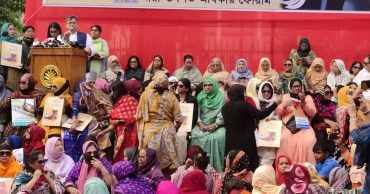
No imposed law can interfere with parliament’s sovereignty: Salahuddin
BNP senior leader Salahuddin Ahmed on Friday said no imposed law, order or forced proposal can be allowed to interfere with the sovereignty of the National Parliament.
“We do not want the sovereignty of the National Parliament to be undermined in any way. That is why we will not allow any imposed law, order or coercive proposal to interfere with Parliament’s sovereignty,” he said.
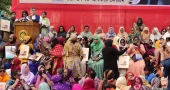
Speaking at a pre-march silent rally at Shahbagh, Salahuddin said Parliament is the country’s only sovereign House, representing the people. “Only the members elected by the people can exercise that sovereign authority.
In Bangladesh, he said, discussions or proceedings of Parliament cannot be challenged in court. “We repeat that no proposal or imposed measure can be allowed to dictate or undermine the sovereignty of that National Parliament.”
Salahuddin, a BNP Standing Committee member, said their party welcomes the proposal to hold a referendum on the same day as the next national election, saying it would save time and cost and allow greater voter participation.
“But a referendum cannot be used to enact laws or amend the Constitution. For that, a National Parliament must be formed. We want the national election to be held in the first half of February. We want to exercise our right to vote, and the people of this country are eager to cast their votes freely and enthusiastically,” he said.
Referring to the July National Charter, Salahuddin reiterated that BNP is committed to implementing the charter exactly as it was written and signed on October 17.
The rally titled “Growing Violence and Disrespect Against Women: Conscious Society Ready to Resist” was organised by the Women and Children Rights Forum in front of the National Museum at Shahbagh. After the rally, women participants covered their faces with black cloths and held a silent march from Shahbagh to the Central Shaheed Minar.
Salahuddin accused a certain religious political party of exploiting religion for political gain. “There is a party that does business in the name of religion, engages in political business, and wants to win votes by selling different kinds of ‘tickets to heaven’. Women are now being oppressed at their hands.”
BNP thanks Prof Yunus for reaffirming Feb election, same-day referendum
He said this party wants to confine women to their homes, keep half the population in darkness, and block women’s progress.
“They are calling for reduced working hours for women, claiming it will prevent inconvenience in employment. But reducing working hours will actually harm women’s employment. If working hours are cut, many offices, institutions and factories will hesitate to hire women. Employment will decrease, not increase,” the BNP leader warned.
Salahuddin said women must have the opportunity to work with dignity and prove their skills through full employment. “Those calling for reduced working hours have bad intentions. They want women confined. They do not want society to progress.”
He observed that the country can move forward only if both men and women progress equally and if their safety, dignity and opportunities are ensured in all sectors.
Salahuddin said BNP has prepared a comprehensive plan for women based on its 31-point agenda, covering education, employment, security and housing.
He strongly condemned the recent assault on BNP women activists in Rajshahi, who were allegedly beaten and humiliated by supporters of a religious party.
The BNP leader also criticised the case filed against a teacher of Jahangirnagar University for comments made during a talk show. “Her words offended a fanatical group, and they filed a case. We want a society where everyone is equal, without divisions based on religion, ethnicity, caste, culture or language.”
Salahuddin said ensuring equal rights for all citizens is the true spirit of democracy, independence and sovereignty. “Our only identity should be that we are citizens of Bangladesh. There should be no majority–minority divisions or cultural or linguistic discrimination.”
Chief Adviser breached signed July Charter, says Salahuddin
He said the July uprising and past movements were aimed at building such a Bangladesh, and the fight must continue to establish a strong democratic state free from discrimination.
The rally was chaired by BNP Standing Committee member and Forum convener Selima Rahman and conducted by member secretary Nipun Roy Chowdhury.
Jahangirnagar University Professor Mehrin Islam Khan, PSC member Professor Chowdhury Saima Ferdous, former MPs Shirin Sultana, Nilufar Chowdhury Moni, Bilkis Islam and Mayer Daak platform coordinator Sanjida Islam Tuli, among others, spoke the programme.
11 months ago
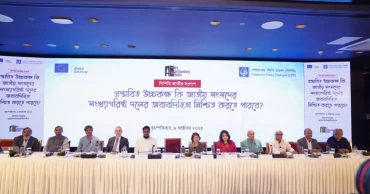
CPD calls for scrapping ‘Upper House’ plan, warns of deeper parliamentary chaos
The Centre for Policy Dialogue (CPD) on Thursday recommended scrapping the proposed plan to introduce an Upper House in the next (13th) national parliament, saying the move will not bring any effective change but rather add further complexity to Bangladesh’s parliamentary system.
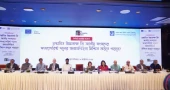
The observation came at a seminar titled ‘Proposed Upper House in the National Parliament: Can it Ensure Accountability of the Majority Party?’ held at a city hotel.
Presenting the keynote paper, CPD Research Director Dr Khondaker Golam Moazzem said the proposed Upper House lacks both logic and necessity in the country’s existing Westminster-style parliamentary system.
Prolonged short-term govt not good for economy: CPD
He urged the National Consensus Commission to focus on essential reforms instead of pursuing discussions on creating a second chamber. “Instead of an ‘Upper House’, a ‘Parliament Commission’ could be formed to act as the third eye of the legislature,” Moazzem suggested.
Sharing his experience, Moazzem said the Speaker often feels powerless when making crucial parliamentary decisions. “A separate commission can empower the Speaker and make parliament more effective,” he added.
Pointing to the dominance of the ruling party under the current system, he said, “In Bangladesh’s Westminster model, accountability is almost nonexistent. The majority party dominates nearly all law-making decisions—around 99 percent of the legislation.”
Moazzem also highlighted that the parliament has around 50 committees, but most are largely ineffective.
“If these committees were truly functional, accountability in lawmaking would naturally follow. We can strengthen parliamentary accountability within the existing structure. There is no need for an Upper House,” Moazzem said.
Bangladesh needs 35 GW renewable energy to meet 2040 clean power target: CPD
Supporting this view, Professor Nizam Ahmed of the University of Chittagong, another keynote speaker, called the rationale for the Upper House ‘weak and unconvincing’.
He pointed out that under the current proposal, bills passed by the lower chamber would be sent to the Upper House for review, but the latter would have no authority to amend them.
“If the ‘Upper House’ can only make recommendations, how will it ensure accountability?” he questioned.
He also noted that while the Lower House would be elected through direct voting, the Upper House would use proportional representation, potentially giving the opposition more influence. “How the balance between the two chambers will work must be carefully examined.”
However, Election Commission Reform Commission member Abdul Alim offered a partial defence of the concept, saying that a second chamber could help curb authoritarian tendencies. “If there’s an Upper House, the ruling party cannot act autocratically. It will naturally create a sense of internal accountability,” Alim said.
Still, he warned, the process might lead to political deadlocks and unnecessary duplication.
Presiding over the session, Prof Rounaq Jahan, a CPD Distinguished Fellow, emphasised the need for a Code of Conduct for Members of Parliament to strengthen accountability within the existing system.
She urged policymakers to fix the flaws in the current framework before experimenting with a new one.
1 year ago
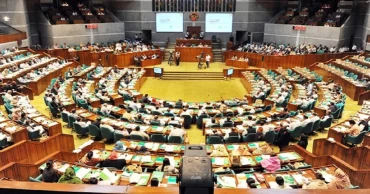
Parliament passes national budget for FY 2024-25 targeting GDP growth at 6.75pc, inflation at 6pc
The parliament of Bangladesh on Sunday (June 30, 2024) passed the Tk 797,000 crore national budget for FY 2024-25 setting the goal of economic growth at 6.75 percent and keeping annual inflation at around 6 percent.
Finance Minister Abul Hassan Mahmood Ali moved the Appropriations Bill 2024, seeking a budgetary allocation of Tk 12,41,752 crore which was passed by voice votes.
Earlier on Saturday, the parliament passed the Finance Bill 2024 with some minor changes.
Following the proposal mooted in the House by the Finance Ministry for the parliamentary approval of the appropriation of funds for meeting necessary development and non-development expenditures of the government, the ministers concerned placed justifications for the expenditure by their respective ministries through 59 demands for grants.
Read more: Proposed budget has high hopes, and low direction to achieve goals: RAPID
Earlier, the parliament rejected, by voice votes, a total of only 251 cut-motions that stood in the name of opposition members on 59 demands for grants for different ministries.
A total of seven MPs, including from Jatiya Party Mujibul Huq, Hafiz Uddin Ahmed, and Independent MP Pankaj Nath, Md Hamidul Haque Khandker, Md. Abul Kalam, Md Suhrab Uddin and Md. Nasser Shahrear Zahedee placed the cut motions.
They were, however, allowed to participate in the discussion on Law Ministry, Secondary and Higher Studies Division and Social Welfare Ministry.
Later, Speaker Shirin Sharmin Chaudhury quickened the process of passing the demands for grants for different ministries without giving a lunch break.
Opposition and independent MPs were present in the House when the Appropriation Bill was passed, and they did not raise objection to passing the bill.
Read more: Finance Bill 2024, entailing budget for next fiscal, passed in Jatiya Sangshad
2 years ago
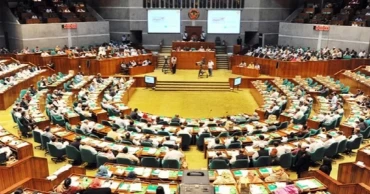
Press freedom won’t be curtailed despite new measures, Law Minister tells Parliament
Law Minister Anisul Huq assured the Parliament on Sunday (February 25, 2024) that the government is dedicated to safeguarding press freedom and will not impose any restrictions on it.
He highlighted upcoming legislation aimed at combating misinformation and fake news without infringing on media freedom.
Addressing the Parliament in the absence of the State Minister for Information and Broadcasting, Mohammad Ali Arafat, Huq responded to concerns raised by Jatiya Party MP from Patuakhali, ABM Ruhul Amin Hawladar, regarding the spread of false news by online media outlets.
Home Minister expresses hope for swift conclusion of BDR Carnage Case
Hawladar questioned the necessity of a law to prohibit such practices, to which Minister Huq reaffirmed the constitutional guarantee of free speech and press freedom.
“Law has to be made in that light and with due respect,” he said.
He referenced the existing Cyber Security Act, indicating that it, along with forthcoming laws proposed by the Ministry of Information and Broadcasting, aims to address the issue of misinformation responsibly.
The government's approach is to prevent confusion and the spread of fake news through appropriate measures, not control, the Law Minister emphasized, ensuring that the press's freedom remains intact.
Read more: Information Minister questions countries’ lack of concern when BBC office in India was searched
2 years ago

Stop loan default culture to save economy: Anisul Islam Mahmud
The main opposition Jatiya Party lawmaker Anisul Islam Mahmud on Tuesday (February 13, 2024) demanded the government of Bangladesh put an end to the loan default culture to save the country’s economy.
“In this situation, we need to stop the culture of wilful loan default,” he said.
Anisul Islam, a veteran parliamentarian and the deputy leader of the opposition, placed the demand in the House, taking the floor on a point of order.
Citing a newspaper story, he said the banking sector's defaulted loans soared by over 20 percent to Tk 145,633 crore in 2023 as both governance and accountability continue to get looser.
98 percent of the country's demand for medicine is produced locally: Health Minister
“Whenever this issue is being discussed, we are told that Bangladesh Bank and other banks are taking measures to reduce this (defaulted loans). But we never see that defaulted loans are declining, rather it is going higher,” he said.
The Jatiya Party MP said the amount of defaulted loans was Tk 28,000 crore as of 2008. The number of defaulted loans has increased to Tk 1.45 lac crore since 2008 to as of today which is very alarming.
He said there is a cash crisis and a dollar crisis in the banking sector. Some strong measures have been taken to tackle this situation.
With Pahela Falgun-Valentine’s Day, the nation eyes a festive February 14
Anisul said Bangladesh Bank (BB) is telling that they want to reduce the amount of defaulted loans from existing nine percent to eight percent of total outstanding loans.
“But their (BB) track record says that they will not do so,” he continued.
The opposition lawmaker requested the Finance Minister to give importance to stopping the loan default culture.
“The issue of loan default culture has been discussed in parliament so many times. But nothing has happened,” he added.
Govt okays project to provide freelancing training to youths in 48 districts
2 years ago
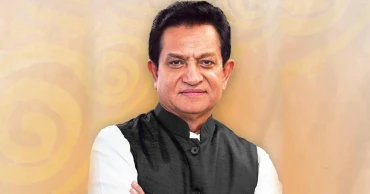
Publish list of loan defaulters who laundered money abroad in JS: AK Azad
Independent MP AK Azad on Monday (February 12, 2024) demanded a list of those who have laundered money abroad taking loans from banks be placed in Parliament.
Azad, who was elected MP for the first time, came up with the demand while participating in the discussion on the thanksgiving motion on the President’s speech.
He said that Prime Minister Sheikh Hasina is totally against corruption and Awami League's manifesto also cited that.
“First of all, good governance will have to be established in the banking sector,” Azad said.
Read more: Bangladesh Bank sets an 11-point roadmap to realise default loans
Welcoming Bangladesh Bank's roadmap for reforming the banking sector, Azad, also President of Newspapers Owners Association of Bangladesh (NOAB), said the amount of defaulted loans in Bangladesh is around Tk 1,45,633 crore.
“But in reality, the amount is much more. But through write off, the amount of debt is shown less. Those who have taken loans and invested in factories and failed to repay, may be exempted subject to investigation,” he said.
He demanded to bring to justice those who did not invest loan money in any business, and instead laundered the money.
“They made home at Begum Para, and second homes. Their list should be published in the parliament,” he demanded.
Read more: Bank MDs working under increased stress due to default loans, board interference: Experts
He also commented that Bangabandhu's dream will not be realised unless they are brought under the law.
The independent MP said that those who looted banks are responsible for the rise in commodity prices and inflation.
Azad said that he wants to be accountable to the countrymen and voters through this parliament.
Azad also said he wants to make the parliament effective and lively through constructive criticism of the government.
He expected cooperation of the Speaker in this regard.
Read more: Businesses should get opportunities to turn around before wholesale declaration of loan defaulters: FBCCI President
2 years ago

Food security remains protected amid int’l crisis: PM Hasina tells Parliament
Prime Minister Sheikh Hasina on Wednesday (September 13, 2023) told the parliament that the Bangladesh’s food security remains protected even amid the ongoing international crisis.
“Bangladesh has successfully faced Covid-19 pandemic. The food security remains protected in the country amid the current international crisis as well,” she said.
The premier made the remarks while replying to a question from Awami League lawmaker Md Shahiduzzaman Sarkar (Naogaon-2).
Earlier, Speaker Shirin Sharmin Chaudhry presented the question-answer session at the beginning of the day’s business.
Despite move to rein in price hike, food inflation rose to 12.54 percent in August: BBS
The PM said Bangladesh has already attained food autarky. “The government has been working intensively to maintain our (food) self-sufficiency,” she said.
She said the crisis has been created in the global supply chain of different commodities including foods following the Covid-19 pandemic and the Russia-Ukraine war.
“In this situation, the government has regularly been taking various steps on national and international levels to ensure food security by facing this crisis,” said Hasina.
She said Bangladesh has successfully attained the food autarky thanks to agricultural research, extension, continuous materials support and policy support in the agriculture sector.
“Bangladesh has now become a role model on the global stage in case of food security,” she said.
Dhaka finds Russian agri commodities competitive on price, but payment issues linger
She said the country’s food grains production was 328.96 lakh metric tons in 2008-09 fiscal year, which went up to 477.68 lakh metric tons in 2022-23 fiscal year.
Efforts to continue for recognition of 1971 genocide: PM
In reply another question from Awami League lawmaker Anwer Hossain Khan (Laxmipur-1), the prime minister said many countries demanded the recognition of genocide committed in their respective countries as International Genocide Day.
Later, the United Nations General Assembly on September 11, 2015 adopted a resolution through discussion to observe December 9 as the International Day for the Prevention of Genocide.
“Since December 9 has been observed as the International Day for the Prevention of Genocide, the proposal to observe another International Day on the same issue would not be rational,” she said.
She, however, said the Ministry of Foreign Affairs, the Ministry of Liberation War Affairs and the Liberation War Museum and some members of the martyrs' families are making efforts to achieve international recognition of the genocide taken place in Bangladesh in 1971.
The leader of the House said individuals and organizations working on the genocide are also working to attain the recognition of the genocide.
She said international recognition of the 1971 genocide taken place in Bangladesh is as complex and time-consuming as any other genocide in the world.
However, it would be easy to get international recognition of genocide by creating the global public opinion in favor of recognizing the genocide committed in Bangladesh. “Efforts will continue on the part of the government in this regard,” she said.
Onion prices cross Tk 100 per kg in Dhaka after India imposes extra duty
854km highways made four-lane, 1,131 bridges constructed since 2009: PM
Some 854 kilometers of highways have been upgraded to four-lane ones, while 11,434 kilometers of highways have been developed and construction of 1,131 bridges (123,254 meters) has been completed through 431 projects under the Department of Roads And Highways during the three terms of the present government from 2009 to 2023, said the Prime Minister replying to a question of Jatiya Party lawmaker Hafiz Uddin Ahmed (Thakurgaon-3).
In the current financial year, she said the works are underway to upgrade some 574km of highways to 4-lane ones, develop 4,634km of highway and construct 750 bridges (64,844 meters) under 131 projects.
Sheikh Hasina said the highway development projects completed during her three consecutive tenures from 2009 to June 2023 includes Up-gradation of Dhaka-Chattogram National Highway to 4-lane (Daudkandi-Chattogram Section) project, Joydebpur-Mymensingh Highway Development Project, Joydevpur-Chandra-Tangail-Elenga Highway Project with service lanes on both sides; Jatrabari Intersection-Mawa section of Dhaka- Khulna (N-8) Highway (including Ekuria-Babubazar link road).
Read more: Despite move to rein in price hike, food inflation rose to 12.54 percent in August: BBS
Among the bridges constructed in the three terms of the government were 2nd Kanchpur Bridge, Meghna Bridge, Gomti Bridge, Payra Bridge (Lebukhali Setu) over Payra River on Barisal-Patuakhali highway and Madhumati Bridge constructed over Madhumati River under Cross-Border Road Network Improvement Project (Bangladesh), she added.
Proposed investment in economic zones rose to US$ 26 billion:
Answering a question from AL lawmaker Md. Mamunur Rashid Kiron (Noakhali-3), the Leader of the House said that the overall proposed investment in the economic zone has now reached USD 26 billion.
Besides, 41 companies have started commercial production and 50 industries are under construction in different zones, she said, adding that these industries have produced products worth USD 14.8 billion and exported products worth USD 291 million, creating 50,000 jobs in these industries.
Read more: Half of Boro paddy procurement target not achieved yet, Food Minister tells JS
3 years ago