Houthi
Saudi-backed forces retake key areas near Bab el-Mandeb Strait
Forces backed by a Saudi-led military coalition have recaptured several key areas near the strategic Bab el-Mandeb Strait from Iran-backed Houthi rebels, Yemeni officials said, as fighting intensified along Yemen’s western coast.
The Houthis, meanwhile, claimed to have launched missile and drone attacks on Saudi oil facilities, airports and military bases.
Yemeni officials said government-allied forces retook the strategic town of Dhubab, just north of the strait, which connects the Red Sea with the Gulf of Aden and serves as a major international shipping route.
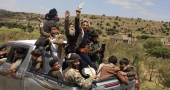
The forces also captured the towns of Bab and Hadeid, the officials said on Monday, speaking on condition of anonymity as they were not authorised to talk to reporters. Witnesses reported seeing government troops and tanks entering the towns.
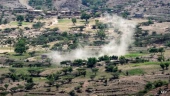
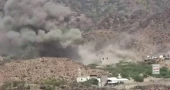
The offensive began early Monday with air support from the Saudi-led coalition.
Houthi military spokesman Brig Gen Yahya Saree said in a prerecorded statement that the rebels used ballistic and cruise missiles and drones to target King Khalid International Airport in Riyadh and an oil refinery in Rabigh, a Red Sea city.
He also claimed attacks on Abha airport, military facilities in Khamis Mushait and other strategic sites in Najran and Jizan.
US Secretary of State Marco Rubio said the Saudi-backed Yemeni government was expected to retaliate against the Houthis to regain lost territory.
Asked whether the operation had been coordinated with Washington, Rubio said Saudi Arabia and the United States had a defence agreement but declined to provide further details.
He said Saudi Arabia had the right to defend itself following Houthi attacks and the loss of government-controlled territory.
US warns citizens of possible attacks
The United States has provided support to Saudi Arabia in its campaign against the Houthis, including intelligence sharing, target identification and operational planning, according to a regional official and a US official who spoke anonymously because they were not authorised to comment publicly.
Washington had supported the Saudi-led coalition during the early years of Yemen’s war before withdrawing from the coalition in subsequent years.
The US Embassy in Riyadh urged American citizens to remain alert to possible drone and missile attacks.
The latest offensive came shortly after the Houthis announced further territorial gains in southwestern Yemen, including the capture of a key town as they advanced towards an important provincial capital.
Saudi-led coalition spokesman Maj Gen Turki al-Malki said 100 fighter jets were supporting government forces. He added that the coalition had secured air protection over the Bab el-Mandeb Strait and destroyed hundreds of Houthi targets.
Pakistan, Turkey agree to send forces to Saudi Arabia
On Monday, the foreign and defence ministers of Pakistan and Turkey agreed with Saudi Arabia to deploy military forces to the kingdom under their defence pact.
A joint statement issued by Pakistan’s Foreign Ministry after an emergency meeting in Riyadh did not specify the number of troops, the countries that would contribute them or the deployment schedule.
The three countries condemned what they described as attempted attacks on the holy cities of Mecca and Medina, along with continued attacks on Saudi cities, civilian facilities and economic infrastructure. The statement did not identify those responsible.
Fighting escalates after Houthi capture of key town
The latest escalation has reignited Yemen’s civil war following a four-year ceasefire.
The Houthis captured Turbah on Sunday. The town lies on a major road connecting Taiz, the provincial capital, with the port city of Aden, which serves as the interim seat of Yemen’s internationally recognised government.
Turbah has long been an important position for government forces defending Taiz.
The rebels had earlier captured several villages and areas on the outskirts of Taiz, raising concerns that they could encircle the country’s third-largest city.
The Houthis made rapid advances along Yemen’s western Red Sea coast in early September, capturing the strategic city of Mokha and several Red Sea islands. These gains enabled them to control Yemen’s side of the Bab el-Mandeb Strait, through which around 12% of global trade passes.
The Saudi-backed government announced on Sunday that it was mobilising troops across areas under its control.
Rashad al-Alimi, head of the Presidential Leadership Council, said in a televised address that the military operations aimed to recover the remaining territories held by the Houthis. He also urged the international community to support his government.
Hours later, coalition spokesman al-Malki pledged full military support for Yemeni government forces until the Houthis were eliminated.
Government launches ‘Yemen Dawn’ operation
In a post on X on Monday, al-Alimi said an operation dubbed “Yemen Dawn” had begun to restore state institutions, retake Sanaa, the rebel-controlled capital, and end what he called the Houthi militia’s coup.
Al-Nazili said government forces were conducting a strategic offensive towards Sanaa. Houthi media outlets reported multiple airstrikes on rebel-held areas, including the capital.
The capture of Turbah could make it harder for government forces to reinforce troops and deliver supplies to front-line positions across Taiz province, including the provincial capital, according to the Washington-based Institute for the Study of War.
Conflict takes a heavy humanitarian toll
Yemen’s civil war began in 2014 when the Houthis advanced from their northern stronghold, seized Sanaa and forced the government into exile in Saudi Arabia.
The conflict has caused one of the world’s worst humanitarian crises and killed more than 150,000 people over the years.
According to the World Health Organization, the latest round of fighting has killed at least 959 people and injured more than 4,200 others.
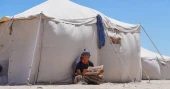
The UN migration agency said the violence had forced around 174,097 people to flee their homes within Yemen, while more than 3,000 others had crossed the sea to Djibouti.
Last week, Yemen’s Health Ministry, which operates under the internationally recognised government, warned that the conflict was disrupting healthcare services and putting medical workers at risk across Taiz province.
In a statement on Friday, the ministry said healthcare facilities in the province’s coastal, western and southern areas had either closed or were operating only partially.
12 days ago
Houthis capture another Yemeni town as they push toward strategic Taiz
Iran-backed Houthi rebels have seized more territory in southwestern Yemen, capturing a key town and dealing a setback to Saudi-backed government forces as they advance toward Taiz, a strategically important provincial capital.
The Houthis took control of Turbah on Sunday, shortly before Yemen’s internationally recognized government announced a major military campaign against the rebels. The escalation involving Saudi Arabia and the Houthis has reignited Yemen’s civil war following a four-year ceasefire.
Turbah lies along a major route connecting Taiz with the port city of Aden, the temporary headquarters of the internationally recognized government. The town has long served as an important position for government forces defending Taiz against Houthi attacks.
The rebels had earlier captured several villages and areas around Taiz, further advancing their efforts to surround the city, Yemen’s third-largest.
The Iranian-backed group also made rapid gains along Yemen’s western Red Sea coast in early September, capturing the strategic port city of Mokha and several islands. Those advances gave the Houthis control over the Yemeni side of the Bab al-Mandab Strait, a major global shipping route through which about 12 percent of world trade passes.
In an announcement Sunday, the Saudi-backed government said it was deploying additional forces across areas under its control.
Rashad al-Alimi, chairman of the Presidential Leadership Council, said in a televised address that the military campaign was aimed at "recovering the remaining territories" held by the Houthis. He urged the international community to support the Yemeni government.
Several hours later, Saudi military spokesman Maj. Gen. Turki al-Malki pledged "full operational support" for Yemeni government forces until the Houthis were "eliminated."
Al-Malki also said Saudi Arabia had the right to take necessary steps to deter the rebels, who have continued launching missiles and drones toward Saudi territory during the nearly three-month escalation.
The latest surge in violence began in mid-July when the Houthis accused Saudi Arabia of carrying out an airstrike on Sanaa airport, which is under rebel control, to prevent an unauthorized Iranian aircraft from landing there. The Houthis subsequently launched missile and drone attacks against Saudi Arabia and Yemeni government forces.
The rebels also declared a blockade of Saudi-linked shipping in the Red Sea and attacked several vessels associated with Saudi Arabia.
In September, they expanded their offensive along the Red Sea coast in what represented their biggest territorial advance in years.
The capture of Turbah is likely to seriously hamper the ability of government-aligned forces to reinforce and supply front-line positions across Taiz province and the provincial capital, according to the Washington-based Institute for the Study of War.
The think tank said in an analysis Sunday that cutting supply routes has clear military significance, while control of roads north of Turbah could also prevent government forces from withdrawing from the area.
The latest escalation has brought back the civil war that began in 2014, when the Houthis moved south from their northern stronghold, seized Sanaa and forced the government to flee to Saudi Arabia. The conflict triggered one of the world's worst humanitarian crises and has killed more than 150,000 people.
The latest violence has killed more than 800 people and injured over 3,600, according to the United Nations. The escalation has also displaced more than 145,000 people within Yemen, while over 3,000 others have crossed the sea to Djibouti, the UN migration agency said.
13 days ago
Houthis say Saudi strikes hit 4 Yemeni provinces
Yemen’s Houthi group said Friday that Saudi Arabia had conducted 14 airstrikes and missile attacks in four Yemeni provinces over the past 24 hours, as clashes between Houthi fighters and government forces continued on several fronts in southwestern Yemen.
Houthi military spokesperson Yahya Sarea said in a statement on X that Saudi F-15 and Typhoon fighter jets based in Khamis Mushait and Taif, along with missiles launched from Najran in southern Saudi Arabia, struck targets in the Yemeni provinces of Taiz, Amran, Marib and Saada.
According to Sarea, the latest attacks raised the number of Saudi-led coalition airstrikes and missile attacks to 1,032 since the latest escalation began.
The Houthi claims could not be independently verified, while Saudi authorities did not immediately comment on the allegations.
Meanwhile, fighting between Yemeni government forces and the Houthis continued on several fronts in Taiz province in the southwest and neighboring Lahj province on Friday, a Yemeni military official told Xinhua.
The official, speaking on condition of anonymity, said the opposing sides continued to exchange fire and carry out hit-and-run attacks, with control of some frontline positions changing hands repeatedly.
In a separate statement posted on X, Yemeni government forces said a drone strike on Houthi positions along the Al-Kadha front in western Taiz killed seven Houthi fighters and injured several others.
Clashes have intensified in Taiz and Lahj following recent Houthi advances near the Bab al-Mandab Strait. Government forces are attempting to prevent further Houthi advances toward strategic highlands overlooking the important maritime route.
The Bab al-Mandab Strait links the Red Sea with the Gulf of Aden and is considered one of the world's major maritime chokepoints, serving as an important route for global trade and energy shipments.
Yemen has remained embroiled in conflict since late 2014, when the Houthis captured the capital, Sanaa, and large parts of northern Yemen, forcing the internationally recognized government to leave the city.
A Saudi-led coalition intervened in March 2015 to support the Yemeni government.
22 days ago

World Insights: Mecca defense pact faces first test as Houthi-Saudi tensions intensify
Six weeks after Saudi Arabia, Türkiye and Pakistan signed a defense agreement in Mecca pledging to regard an armed attack on any one of them as an attack on all three, the escalating confrontation between the Houthis and Saudi Arabia is putting the commitment to its first major test.
Houthi forces have pushed along Yemen’s western coast toward the strategically important Bab al-Mandab Strait while increasing missile and drone attacks against targets deep inside Saudi Arabia. Saudi Arabia, in response, has stepped up airstrikes on Houthi positions in Yemen.
Tensions rose further after Saudi authorities said they had intercepted a Houthi drone south of Mecca before it entered the holy city’s airspace. The Houthis denied that they had targeted Mecca.
The confrontation then moved closer to the Saudi capital on Saturday. Explosions were reported in Riyadh as authorities issued an air alert, while the Saudi-led coalition said its air defenses intercepted a Houthi ballistic missile aimed at the city. The Houthis said they had launched attacks on targets in Riyadh and Yanbu, a major energy center on the Red Sea.
The widening exchange has turned the renewed conflict in Yemen into a broader test of regional deterrence. Türkiye and Pakistan have pledged to support Saudi Arabia, although neither country has announced plans to take part directly in combat operations against the Houthis.
The situation is raising a key question over the Mecca agreement: whether its members can make their collective defense commitment credible enough to discourage further attacks without becoming directly involved in a wider conflict.
Pressure spreads beyond YemenSaudi Arabia is coming under increasing pressure across a wider area, from fighting in Yemen and around the Bab al-Mandab Strait to attacks threatening its cities and energy facilities.
On Saturday, the Houthis said they had used ballistic and cruise missiles and drones to attack what they called “sensitive targets” in Riyadh and an Aramco facility in Yanbu in western Saudi Arabia.
Saudi authorities said their air defenses intercepted the missile aimed at Riyadh and stopped attacks targeting Baish, Taif, Farasan and Yanbu.
Houthi military spokesperson Yahya Sarea said the group was following a policy of “escalation for escalation,” linking the attacks to increased Saudi airstrikes in Yemen.
The situation on the ground in Yemen has also changed significantly.
Houthi forces captured the strategic Red Sea port of Mocha in southwestern Taiz province on Sept. 10. The following day, they took Dhubab and Mayyun Island in the Bab al-Mandab Strait after government forces withdrew farther south into neighboring Lahj province.
Fighting has since intensified around the Kahbub mountain region and nearby high ground overlooking the approaches to the strait. Both sides have been sending additional forces to the area.
The Bab al-Mandab Strait connects the Gulf of Aden with the Red Sea and, farther north, the Suez Canal, making it a key route for global trade and energy shipments.
With shipping through the Strait of Hormuz already affected by wider regional tensions, instability around Bab al-Mandab is adding pressure on another major maritime chokepoint.
From pledge to practiceOn Aug. 7, Saudi Crown Prince and Prime Minister Mohammed bin Salman bin Abdulaziz Al Saud, Turkish President Recep Tayyip Erdogan and Pakistani Prime Minister Muhammad Shehbaz Sharif signed the Mecca Joint Defense Agreement.
The agreement is based on the principle of collective defense, under which an armed attack against any of the three countries is to be treated as an attack against all of them.
Later that month, the three countries began establishing the pact’s institutional framework. At a meeting in Istanbul, they agreed to expand military coordination and defense-industry cooperation and to establish a permanent secretariat in Saudi Arabia.
The Houthi attacks have now shifted the agreement from institutional planning to a practical test.
Türkiye has offered the clearest indication of the possible form of its support. Turkish Foreign Minister Hakan Fidan said Saturday that Ankara would honor its commitments and could provide technical assistance to address Saudi military needs.
Pakistan has also issued strong political statements in support of Saudi Arabia. Islamabad has repeatedly condemned attacks on the kingdom and reaffirmed its support for Saudi sovereignty and territorial integrity. Pakistan’s military has said it would go “to any extent” to defend Saudi sovereignty.
However, neither Ankara nor Islamabad has announced direct military operations against the Houthis.
For Türkiye and Pakistan, fulfilling the collective-defense commitment does not necessarily mean immediately joining the fighting in Yemen. Analysts said their assistance could include air-defense coordination, intelligence sharing, technical support and logistics aimed at strengthening Saudi defenses while avoiding direct involvement in the conflict.
Deterrence without entanglement?The escalation is testing whether the new alliance can make its collective-defense pledge an effective deterrent without becoming directly involved in the war, Aden-based political analyst Muqbil Naji told Xinhua.
“The challenge is not simply to show solidarity with Saudi Arabia, but to make that solidarity credible enough to influence the calculations of those attacking it,” Naji said.
He said Turkish and Pakistani assistance could improve Saudi Arabia’s ability to detect and intercept incoming missiles and drones, but would not guarantee protection against every attack.
“More defenses can reduce the risk, but they cannot remove it,” he said. “The bigger challenge is preventing the attacks from continuing.”
Analysts also warned that greater involvement by Türkiye and Pakistan could create another risk by making the conflict more difficult to contain.
“The more actors enter the equation, the harder it becomes to keep the conflict contained,” said Ali bin Hadi, a military observer based in Aden.
He said the situation could become significantly more complicated if Turkish or Pakistani personnel or military assets were directly attacked.
“Once their own forces come under attack, staying purely defensive becomes much harder,” he said.
For now, analysts said there is still room for Türkiye and Pakistan to strengthen Saudi defenses while avoiding direct military intervention and maintaining diplomatic channels.
But that balance remains vulnerable to further escalation. A major attack causing heavy casualties in Saudi Arabia, significant damage to energy infrastructure or another incident near the holy sites could change the calculations quickly.
The first major test of the Mecca agreement, analysts said, may therefore be less about whether Turkish or Pakistani forces enter the Yemen conflict and more about whether their commitment can raise the cost of further attacks enough to discourage additional escalation.
27 days ago
Houthis say Saudi warplanes carry out 52 strikes across Yemen
Yemen's Houthi group said Tuesday that Saudi warplanes conducted 52 airstrikes in five Yemeni provinces over the past 24 hours as cross-border fighting between the two sides intensified.
Houthi military spokesperson Yahya Sarea said in a statement on X that F-15 and Typhoon fighter jets carried out the attacks after taking off from Saudi air bases in Khamis Mushait and Taif.
According to Sarea, the strikes targeted Taiz in southwestern Yemen, Al-Jawf in the north, Al-Bayda in central Yemen, and Saada and Amran provinces in the north.
He alleged that schools, bridges, roads and other civilian infrastructure were among the targets, and warned that the attacks “will not go unanswered,” indicating possible further Houthi retaliation.
Saudi authorities did not immediately comment on the allegations.
Meanwhile, Houthi-run al-Masirah TV reported that three civilians, including two children, were killed and two others injured in airstrikes on the Dhubab and Maqbanah districts of Taiz.
The broadcaster also reported additional strikes on a government complex in Khadir district in southeastern Taiz, saying there were casualties but providing no further details.
The latest Saudi strikes came a day after the Houthis launched missile and drone attacks on Khamis Mushait, Abha and Taif. The Saudi-led coalition said the attacks injured 13 civilians and pledged a “responsible and firm” response.
The escalation comes amid a Houthi offensive that began Sept. 3 and has changed front lines along Yemen's Red Sea coast.
The Houthis captured the strategic port city of Mocha on Sept. 10 before advancing toward the Bab al-Mandab area and taking control of Mayun Island, located in the strategic strait, on Sept. 11.
Yemen's conflict began in late 2014 when the Houthis seized Sanaa and large parts of northern Yemen. A Saudi-led coalition intervened in March 2015 in support of the internationally recognized government.
1 month ago

Israel strikes Yemen’s Hodeida port as Houthis activate air defenses
Israel carried out airstrikes on Yemen’s port city of Hodeida on Tuesday, prompting Iran-backed Houthi rebels to activate their air defenses.
The Israeli military said it targeted “military infrastructure” at the Hodeida port, claiming it was being used by the Houthis to transfer Iranian weapons for attacks against Israel and its allies.
“Our air defenses are currently confronting Israeli aircraft launching aggression against our country,” Houthi spokesperson Yahya Saree wrote on X. He added that Houthi defenses “caused great confusion” for Israeli fighter jets, forcing some formations to withdraw before carrying out deeper strikes inside Yemen.
Funerals for slain journalists
The latest strikes came as hundreds attended funerals in Sanaa for 31 Yemeni journalists reportedly killed in Israeli airstrikes last week. Those attacks followed a Houthi drone strike that penetrated Israel’s air defenses and hit a southern Israeli airport, injuring one person.
According to the Houthi-run health ministry, last week’s Israeli strikes killed dozens in Sanaa, including the journalists, and damaged residential areas, a military headquarters, a fuel station, and the National Museum of Yemen. A government facility in Hazm, the capital of northern Jawf province, was also hit.
Israel said the strikes targeted Houthi intelligence and propaganda facilities, as well as a fuel depot.
Al-Masirah TV broadcast Tuesday’s funerals, showing coffins carried into a mosque. Despite what mourners described as a “huge loss,” turnout was lower than expected, with heavy rain blamed for keeping many away.
Concerns for press freedom
The Committee to Protect Journalists (CPJ) said it is still working to verify the reported deaths but noted that strict Houthi censorship makes confirmation difficult. Human Rights Watch added that Israeli strikes also hit a media center in Sanaa housing two newspapers, calling it another example of the grave risks facing journalists in Yemen.
The Houthis, who say their attacks are in solidarity with Palestinians amid the war in Gaza, have been targeting Israel with drones and missiles, and striking ships in the Red Sea for more than 22 months.
1 year ago

Israel launches airstrikes on Yemen a day after Houthi rebels strike Israeli airport
On Monday, Israel’s military launched a series of intense airstrikes against Houthi rebels in Yemen’s Red Sea province of Hodeida, resulting in at least one death and 35 injuries. The attacks followed the rebels’ missile strike a day earlier that hit Israel’s main airport.
According to the Houthis’ media office, at least six airstrikes targeted the vital Hodeida port during the afternoon. Additional strikes reportedly hit a cement plant in the Bajil district, located about 55 kilometers (34 miles) northeast of Hodeida city. The full extent of the damage at both sites remains unknown.
The Israeli military confirmed that over 20 fighter jets participated in the assault, releasing more than 50 bombs on multiple targets.
Residents in Hodeida reported hearing loud explosions at the port, with smoke and flames visible in the area. They also said ambulance sirens echoed throughout the city.
“The blasts were extremely powerful,” said Ahmed Saleh, a local resident living near the port.
In Bajil, fires and thick columns of smoke were seen over the cement factory, which the Houthis said was hit by both U.S. and Israeli strikes. Ambulances also rushed to the area, said resident Khalid Seif.
The Houthi-run health ministry said at least one person was killed and 35 others were wounded in the Israeli strikes on the factory. It said rescuers were still searching for missing people.
On Sunday, the Houthis launched a missile from Yemen that struck an access road near Israel’s main airport, briefly halting flights and commuter traffic. Four people were lightly injured. It was the first time a missile struck the grounds of Israel’s airport since the start of the war.
The Houthis claimed that the strikes were a joint Israeli-American operation. However, a U.S. defense official said U.S. forces did not participate in the Israeli strikes on Yemen on Monday. The strikes were not part of Operation Rough Rider, which is the ongoing U.S. military operation against the Houthis in Yemen to prevent them from targeting ships in the Red Sea that started March 15. The official spoke on the condition of anonymity to discuss sensitive matters.
Iran's top diplomat holds talks in Pakistan to mediate in escalation with India over Kashmir attack
Separately, the U.S. military launched multiple strikes Monday on Sanaa, another U.S. official said. That official also spoke on condition of anonymity to discuss military operations.
Nasruddin Amer, head of the Houthi media office, said the Israeli strikes won’t deter the rebels, vowing they will respond to the attack.
“The aggressive Zionist-American raids on civilian facilities will not affect our military operations against the Zionist enemy entity,” he said on social media.
He said the Houthis will escalate their attacks and won’t stop targeting shipping routes and Israel until it stops the war in Gaza.
The Houthis have targeted Israel throughout the war in solidarity with Palestinians, raising their profile at home and internationally as the last member of Iran’s self-described “Axis of Resistance” capable of launching regular attacks on Israel. The U.S. military under President Donald Trump has launched an intensified campaign of daily airstrikes targeting the Houthis since March 15.
Houthi rebels have fired at Israel since the war with Gaza began on Oct. 7, 2023. The missiles have mostly been intercepted, although some have penetrated Israel’s missile defense systems, causing damage. Israel has struck back against the rebels in Yemen.
The Israeli military said it targeted the Hodeida port because Houthi rebels were using it to receive weapons and military equipment from Iran. Rebel-held Hodeida, about 145 kilometers (90 miles) southwest of the capital Sanaa, has been key for food shipments into Yemen as its decade-long war continues.
Israel has struck Yemen, and specifically the port city of Hodeida, multiple times. It previously struck Hodeida and its oil infrastructure in July after a Houthi drone attack killed one person and wounded 10 in Tel Aviv. In September, Israel struck Hodeida again, killing at least four people after a rebel missile targeted Israel’s Ben Gurion airport as Prime Minister Benjamin Netanyahu was arriving back to the country. In December, Israeli strikes killed at least nine people in Hodeida. The Houthis have launched multiple missiles toward Israel in the past week.
The attack on Ben-Gurion International Airport on Sunday came hours before Israeli Cabinet ministers voted to expand the war in Gaza, including to seize the Gaza Strip and to stay in the Palestinian territory for an unspecified amount of time. While air traffic resumed after an hour, the attack could lead to cancelations of many airlines, which had recently resumed flights to Israel.
1 year ago

Two US Navy pilots shot down over Red Sea in apparent 'friendly fire' incident
Two US Navy pilots were shot down Sunday over the Red Sea in an apparent “friendly fire” incident, the U.S military said.
Both pilots were recovered alive, with one suffering minor injuries, but the incident underlines just how dangerous the Red Sea corridor has become after a year of ongoing attacks on shipping by Yemen's Houthi rebels despite U.S. and European military coalitions patrolling the area.
The U.S. military had conducted airstrikes targeting Yemen’s Houthi rebels at the time, though the U.S. military’s Central Command did not elaborate on what their mission was.
“The guided missile cruiser USS Gettysburg, which is part of the USS Harry S. Truman Carrier Strike Group, mistakenly fired on and hit the F/A-18, which was flying off the USS Harry S. Truman,” Central Command said in a statement.
The Houthis have targeted about 100 merchant vessels with missiles and drones since the Israel-Hamas war in the Gaza Strip started in October 2023 after Hamas’ surprise attack on Israel that killed 1,200 people and saw 250 others taken hostage.
Rocket from Yemen Hits Tel Aviv, Injuring 16 People
Israel’s grinding offensive in Gaza has killed more than 45,000 Palestinians, local health officials say. The tally doesn’t distinguish between combatants and civilians.
The Houthis have seized one vessel and sunk two in a campaign that has also killed four sailors. Other missiles and drones have either been intercepted by separate U.S.- and European-led coalitions in the Red Sea or failed to reach their targets, which have also included Western military vessels.
The rebels maintain that they target ships linked to Israel, the U.S. or the United Kingdom to force an end to Israel’s campaign against Hamas in Gaza. However, many of the ships attacked have little or no connection to the conflict, including some bound for Iran.
1 year ago
.jpg)
Bangladesh denounces Houthi attacks
Bangladesh has strongly condemned the recurrence of Houthi militias' attacks, including the latest one deliberately targeting civilian facilities and energy installations in the Kingdom of Saudi Arabia.
These unlawful and cowardly acts of terrorism jeopardise the stability of the kingdom and the region, said the Ministry of Foreign Affairs on Monday.
Bangladesh feels that the repeated regular drone and ballistic missile attacks targeting civilian areas and establishments in the Kingdom are a flagrant violation in the face of international law and norms.
READ: Bangladesh condemns Houthi militias’ explosive-laden drones attack in Abu Dhabi
Bangladesh notes with dismay that the Houthi attacks came ahead of GCC-sponsored peace talks in Riyadh scheduled for March 29, MoFA said.
Bangladesh also called upon the Houthis to cooperate with the UN and GCC initiatives and refrain from escalation of conflict in the region.
4 years ago

Satellite photos show aftermath of Abu Dhabi oil site attack
Satellite photos obtained by The Associated Press on Tuesday appear to show the aftermath of a fatal attack on an oil facility in the capital of the United Arab Emirates claimed by Yemen's Houthi rebels.
The images by Planet Labs PBC analyzed by the AP show smoke rising over an Abu Dhabi National Oil Co. fuel depot in the Mussafah neighborhood of Abu Dhabi on Monday. Another image taken shortly after appears to show scorch marks and white fire-suppressing foam deployed on the grounds of the depot.
The Abu Dhabi National Oil Co., known by the acronym ADNOC, is the state-owned energy firm that provides much of the wealth of the UAE, a federation of seven sheikhdoms on the Arabian Peninsula also home to Dubai.
ADNOC did not respond to questions from the AP asking about the site and damage estimates from the attack. The company had said the attack happened around 10 a.m. Monday.
Also read: Yemen official says Houthi rebel missile hits city, kills 14
“We are working closely with the relevant authorities to determine the exact cause and a detailed investigation has commenced,” ADNOC said in an earlier statement.
The attack killed two Indian nationals and one Pakistani as three tankers at the site exploded, police said. Six people were also wounded at the facility, which is near Al-Dhafra Air Base, a massive Emirati installation also home to American and French forces.
Another fire also struck Abu Dhabi International Airport, though damage in that attack could not be seen. Police described the assault as a suspected drone attack.
Senior Emirati diplomat Anwar Gargash blamed the Houthis for the attack, saying on Twitter that Emirati authorities were handling the rebel group’s “vicious attack on some civilian facilities” in the United Arab Emirates’ capital with “transparency and responsibility.”
“The tampering of the region’s security by terrorist militias is too weak to affect the stability and safety in which we live,” he said.
The office of South Korean President Moon Jae-in, who had been in the Emirates on a state visit, said he spoke to Abu Dhabi's powerful Crown Prince, Sheikh Mohammed bin Zayed Al Nahyan, immediately after the attack.
Also read: Pompeo to designate Yemen’s Houthi rebels as terrorist group
The statement quoted Sheikh Mohammed as saying the attack had been “anticipated.” The two had been scheduled to meet during Moon's visit but the event had been cancelled prior to the attack over an “unforeseen and urgent matter of state,” according to Moon's office.
The Emirati Foreign Ministry did not immediately respond to a request for comment over Moon's statement.
Yemen’s Iranian-backed Houthi rebels claimed they were behind an attack targeting “sensitive Emirati facilities.” In a press conference late Monday, military spokesman Yehia Sarea said, without offering evidence, that the Houthis targeted the airports of Abu Dhabi and Dubai, as well as an oil refinery and other sites in the UAE with ballistic missiles and explosive-laden drones. Dubai's airport had normal operations Monday.
At dawn on Tuesday, the Saudi-led coalition fighting in Yemen announced it had started a bombing campaign targeting Houthi sites in the capital of Sanaa.
Overnight videos released by the Houthis showed damage, with the rebels saying the strike killed at least 12 people. An international aid worker in Sanaa said there were civilians among the dead. He said the airstrike hit a house for a senior military official who was killed along with his wife and son. The worker spoke on condition of anonymity for fear of reprisals.
Although the UAE has largely withdrawn its own forces from Yemen, it is still actively engaged in the conflict and supports Yemeni militias fighting the Houthis.
The incident comes as the Houthis face pressure and are suffering heavy losses. Yemeni government forces, allied and backed by the UAE, have pushed back the rebels in key provinces. Aided by the Emirati-backed Giants Brigades, the government forces took back the province of Shabwa earlier this month in a blow to Houthi efforts to complete their control of the entire northern half of Yemen.
Condemnations of the attack on the UAE poured in from across the world.
U.S. National Security Advisor Jake Sullivan said the United States would work with the UAE and international partners to hold the Houthis accountable, saying “we stand beside our Emirati partners against all threats to their territory.”
U.N. Secretary-General Antonio Guterres denounced the assault as “prohibited by international law” and urged all sides “to prevent any escalation amid heightened tensions in the region,” said spokesman Stephane Dujarric. The U.N. special envoy for Yemen Hans Grundberg was headed to Riyadh for meetings with Saudi and Yemeni officials on “the recent military uptick” in Yemen, Dujarric added.
Saudi Arabia and a host of other Arab states decried the assault as “a cowardly terrorist attack.” The kingdom, as well as the U.S., U.N. experts and others have accused Iran of supplying arms to the Houthis.
The UAE was a key member of the Saudi-led coalition that has waged war against the Houthis since 2015, trying to restore to power the internationally backed government, ousted by the rebels the previous year.
While Emirati troops have been killed over the course of the conflict, now in its eight year, the war has not directly affected daily life in the wider UAE, a country with a vast foreign workforce.
4 years ago