fake news

Hugely inflated, bulk of them were fake news: Yunus tells Modi over attacks on minorities
Chief Adviser Prof Muhammad Yunus on Friday conveyed to Indian Prime Minister Narendra Modi that the reports of attacks on the minorities were "hugely inflated" and bulk of them were "fake" news as Modi shared his "serious concerns" for the safety and well-being of Hindus and other minorities.
Responding to Prime Minister Modi's concern over the condition of minorities in Bangladesh, the Chief Adviser also asked the Indian leader to send reporters to Bangladesh to investigate the alleged attacks themselves.
During their meeting on the sidelines of the BIMSTEC Summit, Dr Yunus said he has instituted an effective system for monitoring every incident of religious and gender violence in the country and his government was taking serious actions to stop any occurrence of such incidents, according to Chief Adviser's press wing.
Through his social media handle, Modi said India remains committed to a "constructive and people-centric" relationship with Bangladesh.
"I reiterated India’s support for peace, stability, inclusivity and democracy in Bangladesh," he said, adding that they discussed measures to prevent illegal border crossings and expressed India's "serious concerns" for the safety and well-being of Hindus and other minorities.
Dr Yunus urges Bhutan to make investment in Bangladesh
In a separate media briefing in Bangkok, Indian Foreign Secretary Vikram Misri said Prime Minister Modi raised the issue of the condition of minorities in Bangladesh candidly during his conversation with Prof Yunus.
PM Modi conveyed India’s "deep concerns" on the matter and highlighted the broader societal implications of these developments.
The Prime Minister also made it clear that the responsibility for addressing these issues lies with the government of Bangladesh, Misri said.
Modi expressed his hope that the government would fulfill its responsibilities with seriousness and ensure that these matters are properly investigated and addressed.
Responding to a question, the Indian Foreign Secretary said as far as the issue of election is concerned, it is well understood that in any democracy, regular and "inclusive elections" are a vital component.
Prime Minister Modi shared his views on this matter with Prof Yunus and expressed his hope that, moving forward, they will see a "democratic, inclusive, and stable" Bangladesh, Misri said.
It is universally acknowledged that elections play a crucial role in achieving that vision, said the Indian Foreign Secretary.
Bangladesh urges Thailand to ease visa procedures
Responding to a question on former Prime Minister Sheikh Hasina’s extradition, Misri said as far as Sheikh Hasina is concerned and the reference that was made in that context from the Bangladesh side - yes, this matter was raised during discussions.
"As our spokesperson has already informed you earlier, we have indeed received a communication on this issue. At this point, it would not be appropriate for me to comment further on the subject," said the Indian Foreign Secretary.
Both leaders - Dr Yunus and Modi - concluded their "fruitful and honest dialogue" by wishing each other good health and personal well-being and extended their best wishes for continued peace, progress and prosperity for the people of both countries.
1 year ago
Ghost authors and fake news: Dismislab's deep dive into a website's role in Bangladesh disinformation campaign
Within days of The Guardian reporting that British Members of Parliament (MPs) had received emails containing fake news about Bangladesh Bank Governor Dr Ahsan H Mansur ahead of a key meeting, Bangladeshi fact-checking website Dismislab unveiled the results of an extensive investigation into the platform where these articles were published: the International Policy Digest (IPD).
The findings of this month-long study raised serious concerns about the integrity of IPD's editorial process and its role in disseminating targeted disinformation.
Dr Yunus urges Meta to intensify efforts against misinformation, fake news
Dismislab’s investigation traced 10 articles published on IPD's website that were critical of Bangladesh’s post-uprising government. The articles, written by authors whose identities could not be verified, were tied to a broader disinformation campaign aimed at undermining Dr Mansur, a key figure in Bangladesh’s financial sector.
These articles, often authored by “ghost authors” with no verifiable identities, credentials, or contact details, had gained significant traction in Bangladeshi media and on social media platforms. In some cases, they were shared and reshared by political figures, including Sajeeb Wazed Joy, the son of ousted prime minister Sheikh Hasina, amplifying the questionable narratives.
The articles focused primarily on Dr Mansur’s leadership of Bangladesh’s central bank, with some of the content even attacking his personal life. One particularly notable series of articles, coinciding with Dr. Mansur’s visit to the UK in March 2025 to discuss the repatriation of allegedly laundered funds, targeted him directly. These articles, all published around the time of his visit, questioned his qualifications and integrity while also taking aim at his daughter’s lifestyle, framing her as emblematic of the alleged hypocrisy of the country’s financial leadership.
This campaign culminated in The Guardian’s March 24, 2025 report, which revealed that British MPs from the All-Party Parliamentary Group (APPG) on Responsible Tax and Corruption had received emails before their scheduled session with Dr. Mansur. The emails contained links to articles published on IPD that questioned the wealth of Dr. Mansur’s family.
These emails, purportedly from a journalist and a UK public relations firm, suggested MPs investigate Dr. Mansur, but the journalist could not be traced, and the PR firm refused to disclose who had commissioned the emails. MPs feared they were being targeted by a smear campaign designed to disrupt their inquiry into corruption in Bangladesh.
Moscow decries "fake news" about ambitious Rooppur Nuclear Power Plant
Dismislab’s investigation provided crucial insight into the ghost authors behind these disinformation articles. The website identified at least eight authors who had no verifiable presence online. Their profile photos were found to be stock images taken from websites like Shutterstock and Freepik. When Dismislab attempted to verify the identities of these authors through social media and online databases, all criteria returned negative results.These so-called authors had no identifiable digital presence, and there were no available means of contacting them. One such ghost author, Tim Larkin, was behind the article “A House of Glass: The Hypocrisy of Bangladesh’s Interim Government”, which gained widespread attention in both Bangladeshi news outlets and on social media. Another ghost author, Kristopher O’Brian, wrote an article before the uprising criticizing Bangladesh’s caretaker government system.
Dismislab’s findings revealed a significant flaw in IPD’s editorial process. The platform’s editor-in-chief, John Lyman, responded to questions about the verification process, admitting that some “fake authors may have slipped through,” given that the publication has nearly 3,000 contributors. He claimed that some authors requested anonymity, which he granted. However, he did not clarify whether any background checks were conducted before publishing articles.
Despite these admissions, Lyman maintained that IPD does publish articles from credible authors, citing previous pieces on Bangladesh that featured writers with verifiable credentials. However, Dismislab’s investigation found that the site’s editorial standards were so weak that misinformation and propaganda could easily slip through without proper scrutiny. The fact that an article accusing the United Nations of bias in its report on the July 2024 uprising was published without verification only underscores this vulnerability.
The investigation revealed that many of the articles published on IPD followed a clear narrative attacking Bangladesh’s banking system and its governor. The first in the series, “Crisis of Confidence: How Bangladesh’s Banking Woes Threaten Stability” (November 2024), criticized the country’s financial system but did not single out individuals. However, subsequent pieces shifted the focus toward personal attacks on Dr. Mansur, with articles such as “The Unelected Banker: Ahsan Mansur’s Gamble with Bangladesh’s Economy” (February 2025) directly questioning his qualifications and decision-making. The series of articles culminated with “The Missing Transparency in Bangladesh’s Financial Crusade” (March 2025), which argued that the financial strategies under the interim government disproportionately benefited certain individuals, undermining economic stability.
The timing of these articles was also suspicious. The attack on Dr. Mansur’s credibility coincided with his diplomatic mission to the UK, where he was seeking British government support to recover funds allegedly siphoned abroad by members of the Bangladeshi government. The articles seemed designed to undermine his standing and credibility at a critical moment in his international efforts.
Moreover, these IPD articles quickly gained traction within Bangladeshi media. For instance, “A House of Glass: The Hypocrisy of Bangladesh’s Interim Government” was republished by BD Digest, Khaborer Kagoj, and Daily Janakantha, among others. On social media, the articles were shared by the Facebook page of Bangladesh Students’ League, a student wing of the Awami League, and by Sajeeb Wazed Joy, further amplifying the disinformation.
British MPs targeted with disinformation campaign on Bangladesh Bank governor ahead of important meeting
Dismislab’s investigation also involved a sting operation submitting fake articles to IPD to test its editorial processes. One fabricated article, “Does the United Nations Have a Bias Problem?”, was submitted under the fake name Sarah Sunehra Zaman. The article, which included false claims about the July 2024 uprising and the UN’s alleged bias, was published by IPD despite the misinformation being easily debunked by fact-checkers. The submission process was alarmingly simple, requiring only the completion of a Google form and an email submission.In contrast, a second fabricated article, “National Citizen Party: The Students’ Hope for Bangladesh’s Future”, written under the fake name Najib Khan, was not published. This discrepancy raises further concerns about the editorial inconsistency and lack of rigorous verification at IPD.
Professor A Al Mamun, a Mass Communication and Journalism expert at Rajshahi University, noted that these articles were part of a sustained and well-planned propaganda campaign. He pointed out that fake experts had been used in previous disinformation campaigns targeting Bangladesh, and the current situation appeared to be an extension of this strategy.
India calls reports on visa ban for six Bangladeshi student leaders ‘fake news’
The findings of this investigation call into question IPD’s responsibility as an international media outlet. The publication’s failure to verify the identities of its contributors or fact-check the content it publishes has allowed disinformation to spread unchecked, further contributing to the political instability in Bangladesh. Given the platform’s role in amplifying misleading narratives and the ongoing use of fake authors to push political agendas, IPD’s editorial practices must be critically reassessed.
1 year ago
Dr Yunus urges Meta to intensify efforts against misinformation, fake news
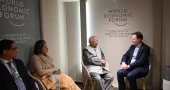
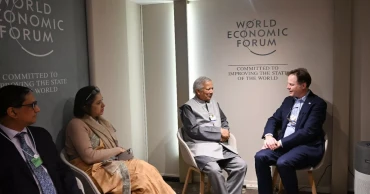
Chief Adviser Prof Muhammad Yunus on Thursday urged Meta to step up efforts to tackle misinformation and fake news being spread through Facebook in Bangladesh.
Dr Yunus said "oligarchs and politicians" linked to the "toppled dictatorship of Sheikh Hasina" siphoned off tens of billions of dollars from Bangladesh during her 15 years of rule.
"These people are now spending their fortune to spread lies and misinformation about Bangladesh," the Chief Adviser told Sir Nick Clegg, the head of global affairs at Meta, on the sidelines of the World Economic Forum annual meeting in the Swiss city.
DP World, Maersk eye major investments in Bangladesh ports
Clegg is also a former deputy prime minister of the United Kingdom.
Probir Mehta, Director of Policy Planning of Meta; Lamiya Morshed, SDGs Affairs Principal Coordinator; and Ambassador Tareq Md Ariful Islam, Bangladesh's Permanent Representative in Geneva, also joined the meeting.
When Facebook launched in 2004, it changed the way people connect. Apps like Messenger, Instagram and WhatsApp further empowered billions around the world.
Now, Meta is moving beyond 2D screens toward immersive experiences like augmented, virtual and mixed reality to help build the next evolution in social technology.
Clegg said Facebook would continue to do fact-checking and digital verification in Bangladesh as it is an important country, with its population the world's eighth largest, Chief Adviser's Deputy Press Secretary Abul Kalam Azad Majumder told UNB.
Meta's decision to stop fact-checking in the United States would not be applicable for Bangladesh and countries in Europe, he said.
Switzerland reaffirms support to Bangladesh during important phase of transition
He said Facebook would likely scale up its digital verification service in Bangladesh and would explore ways to do fact checking by users -- similar to the operation of Wikipedia.
During the half-an-hour-long meeting, Clegg also offered Meta's expertise in drafting a new cybersecurity laws. "We have a lot of experience here," he said.
The Meta global affairs chief said Llama, the company's recently launched open-sourced large language model AI, could help revolutionise health care, farming and education.
He hoped it would be popular among the users in Bangladesh.
Prof Yunus asked Meta to organise month-long training programs on Llama in Bangladesh. "It will open up new opportunities for Bangladesh's young people," he said.
1 year ago
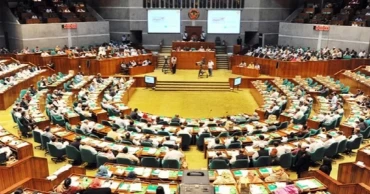
Press freedom won’t be curtailed despite new measures, Law Minister tells Parliament
Law Minister Anisul Huq assured the Parliament on Sunday (February 25, 2024) that the government is dedicated to safeguarding press freedom and will not impose any restrictions on it.
He highlighted upcoming legislation aimed at combating misinformation and fake news without infringing on media freedom.
Addressing the Parliament in the absence of the State Minister for Information and Broadcasting, Mohammad Ali Arafat, Huq responded to concerns raised by Jatiya Party MP from Patuakhali, ABM Ruhul Amin Hawladar, regarding the spread of false news by online media outlets.
Home Minister expresses hope for swift conclusion of BDR Carnage Case
Hawladar questioned the necessity of a law to prohibit such practices, to which Minister Huq reaffirmed the constitutional guarantee of free speech and press freedom.
“Law has to be made in that light and with due respect,” he said.
He referenced the existing Cyber Security Act, indicating that it, along with forthcoming laws proposed by the Ministry of Information and Broadcasting, aims to address the issue of misinformation responsibly.
The government's approach is to prevent confusion and the spread of fake news through appropriate measures, not control, the Law Minister emphasized, ensuring that the press's freedom remains intact.
Read more: Information Minister questions countries’ lack of concern when BBC office in India was searched
2 years ago
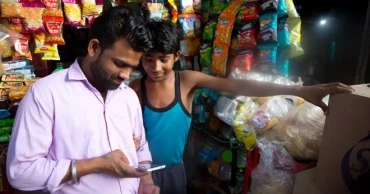
India considering banning govt-identified ‘fake news’ on social media
The Indian government is considering blocking news it identifies as “false” on social media.
A draft proposal of new IT regulations revealed this week stated that the Indian government would not allow social media platforms to contain any content that it deems to be incorrect, according to NDTV.
This is only the most recent in a slew of actions taken by Prime Minister Narendra Modi’s administration to control major tech companies.
Read more: UN Human Rights Council adopts 'fake news' resolution
Any information identified as “fake or fraudulent” by the Press Information Bureau (PIB), or by any other agency authorised for fact-checking by the government or “by its department in which such business is transacted”, would be prohibited according to the draft.
The government has also frequently engaged in disputes with different social media platforms when they disregarded requests for the removal of content or accounts that were allegedly propagating misinformation.
For spreading false information and endangering national security, the Indian government has blocked 104 YouTube channels, 45 videos, four Facebook accounts, three Instagram accounts, five Twitter handles and six websites
Read more: Instagram fact-check: Can a new flagging tool stop fake news?
Earlier in October, the government made the announcement that a panel would be set up to hear complaints from users about social media companies’ content moderation decisions. These businesses are already required to appoint internal grievance redress officers and executives to work with law enforcement officials.
3 years ago

Misinformation, fake news a grave concern, says Md Shahriar Alam
State Minister for Foreign Affairs Md Shahriar Alam on Tuesday said the government is committed to ensure people’s right to know and respect freedom of speech.
However, the State Minister said that the increasing trend of misinformation and fake news has become a grave concern day by day.
“We all have to work in a responsible way. If we all work together, we shall be able to fight the mounting trend of misinformation and fake news,” he said while speaking as the chief guest at a discussion at Jatiya Press Club.
The Women Journalists Network Bangladesh (WJNB), in partnership with the High Commission of Canada in Bangladesh, organised the discussion on the “Importance of Digital Literacy to combat Hate Speech and Misinformation” under the project “Digital Literacy and Digital Safety”.
Read more: BNP ployed to press for right to peaceful assembly through violent means: Foreign Ministry tells diplomatic missions
3 years ago

HC orders removal of ‘fake news’ from Facebook, YouTube
The High Court (HC) on Tuesday ordered the authorities concerned to remove six 'fake' news stories and video links containing provocative content that is creating unrest in public life from Facebook and YouTube, along with steps to stop the spread of such content.
The HC bench of Justice Md Khasruzzaman and Justice Md Iqbal Kabir passed the order after hearing a writ petition regarding the issue.
Two government bodies, the Bangladesh Telecommunication Regulatory Commission (BTRC) and the Digital Security Agency, were asked to submit a report within two weeks in this regard.
At the same time, HC ordered an accountability strategy in accordance with the relevant laws, to verify the authenticity of all the news and videos posted on Facebook and YouTube.
Lawyer Munshi Moniruzzaman and Arafat Hossain Khan appeared for the writ petition in the court while Deputy Attorney General Bipul Bagmar represented the state.
On August 21, Barrister Arafat Hossain Khan, on behalf of lawyer Nilufar Anjum and barrister Ashraful Islam, served a legal notice to these two social media (Facebook-YouTube) authorities along with the relevant government agencies to remove six fake video links from the social platform.
On August 25, failed to get a response, lawyer Nilufar Anjum and barrister Ashraful Islam filed a writ petition with the HC seeking its instructions on the issue.
Read: HC directs IGP to report on seized goods’ storage
Head of Public Policy of Facebook and YouTube Bangladesh Shabnaz Rashid Dia, BTRC Chairperson, Director General of Digital Security Agency and Inspector General of Police (IGP) were made respondents to the writ.
According to the writ petition, the authorities concerned failed to monitor and control the provocative and fake contents posted on social media threatening the sovereignty and security of the state and the order of public life.
This misleading information tarnishes the image of the state organs, which is a violation of the Constitution, the Bangladesh Telecommunication Act, Digital Security Act (DSA) and the Information and Communication Technology (ICT) Act.
The writ also stated that Facebook and YouTube have recently been found to be not fully observing their monitoring strategy, especially in Bangladesh.
Such actions are being committed to present Bangladesh as a failed state to the international community creating instability in the country, it added.
The writ claimed that ignorance of the clear policy of BTRC and DSA and the recent regulation of Facebook-YouTube is spreading fake news against their own policy and creating violence and unrest.
4 years ago
.jpg)
Misinformation severe deterrence to progress: BIPSS President
President of Bangladesh Institute of Peace and Security Studies (BIPSS) Major General (retd) ANM Muniruzzaman on Tuesday said fake news and misinformation are severe deterrence to the progress of any nation.
5 years ago
.jpg)
Thai users of Clubhouse app warned about political content
Thailand’s government warned users of the recently introduced Clubhouse voice chat app on Wednesday that they must be careful not to misuse it or face possible legal consequences.
5 years ago
Instagram fact-check: Can a new flagging tool stop fake news?
London, Sept 14 (BBC/UNB)- Facebook has launched a new feature allowing Instagram users to flag posts they think contain fake news to its fact-checking partners for verification. But questions remain as to whether it goes far enough to counter the amount of disinformation on the image-sharing platform, reports BBC.
7 years ago