Onion
Onion imports from India halted through Benapole for two weeks
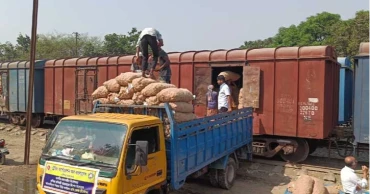
Bangladesh government has halted the import of onions from India through the country’s largest land port, Benapole, for the past two weeks, raising concern about a price hike.
Importers, however, can continue bringing in onions under previously issued permits until January 30.
Officials did not grant any new permits for onion imports from India on Saturday.
Since December 24, no onion shipments have entered through Benapole. The last consignment of 60 metric tons arrived on that date, while 390 metric tons were imported between December 15 and 24 through six consignments carried in 13 trucks.
Royal Islam, an onion importer, said the government usually allows onion imports when local prices rise sharply.
Imports of onion were resumed on December 7 after a three-month halt, initially in limited quantities, which did not meet demand. Later, when import permissions increased, prices began to stabilise, falling to Tk 35–40 per kilogram.
Since imports have now been suspended again, prices are rising to Tk 50–70 per kilogram, he said.
“If the halt continues, prices could climb to Tk 80–85. Even the news of the suspension has already pushed prices up by Tk 10 per kilogram at the port,” he added.
Shyamal Kumar Nath, Assistant Plant Quarantine Officer at Benapole, confirmed that onion imports from India have been halted for the past two weeks and no new permissions have been issued.
Onions can still be imported under previously issued permits until January 30, he added.
8 months ago

Fertiliser crunch threatens Kushtia’s onion boom despite high prices
Onion farmers in Kumarkhali Upazila are struggling with a fertiliser shortfall just as high market prices are driving record planting this season.
Last year, onions fetched prices ranging from Tk 35–40 per kilogram at the start of the season, climbing to Tk 120–135 per kilogram later in the year, locals said.
This fiscal year, they said, prices currently hover around Tk 85-90 per kilogram, while production costs stand at Tk 22–25 per kilogram, creating a lucrative margin that has prompted many farmers to expand cultivation.
Read more: Govt to procure 50,000 mt of non-basmati parboiled rice, 80,000 mt fertiliser
But farmers say a lack of essential fertilisers, including urea, TSP, MOP, and DAP, threatens the budding crop. Allegations of dealer collusion are rife, with sub-dealers and intermediaries reportedly charging Tk 5–10 more per kilogram than government-fixed rates.
Kumarkhali Upazila has a total cultivable area of 18,240 hectares. For the 2025–26 fiscal year, authorities set a target of 4,920 hectares for onion cultivation, with saplings already planted on 3,690 hectares.
Agriculture officials expect the area under cultivation to surpass the target, buoyed by the crop’s profitability.
Production costs, including land lease, seeds, fertilisers, and crop care, average around Tk 150,000 per hectare. Yet farmers on the ground say limited access to fertilisers could erode potential profits.
“Last year, onions sold for Tk 40 to Tk 135 per kilogram, which motivated many to switch to onion cultivation,” said Laltu Ali Sheikh of Panti Union. “But we cannot get sufficient fertilisers.”
Farmers claim dealers provide only 10–20 kilograms per bigha at official prices, forcing them to buy extra at higher rates. Sub-dealers are reportedly selling TSP at Tk 1,850–2,000 per sack, DAP at Tk 1,450–1,600, and MOP at Tk 1,150–1,200, significantly above official prices of Tk 1,350, Tk 1,050, and Tk 1,000, respectively.
Khondakar Abdul Gaffar, president of the Kushtia BCIC Fertiliser Dealers Association, acknowledged government supply shortfalls but denied deliberate overpricing by dealers. “Some sub-dealers and unscrupulous traders buy from various sources and sell at higher rates. Legal action is needed against them,” he said.
Local authorities maintain that fertiliser availability is stable.
Upazila Agriculture Officer Md Raisul Islam said, “Fertilisers are being sold at fair prices. Some unscrupulous traders sold at higher rates but were fined.”
Upazila Nirbahi Officer Farzana Akhter added that authorities are monitoring dealer syndicates and taking action to ensure fertilisers are sold at government-fixed rates.
Read more: Overuse of chemical fertilisers threatens soil health in northern Bangladesh
Meanwhile, fields in Yaduboyra, Panti, Bagulat, Nandalalpur, and Chapra unions are alive with activity. Groups of 20–30 people, including farmers, labourers, and students, are planting onion seedlings. Some students are earning Tk 500 per day to help cover labour shortages.
For Kushtia’s onion growers, the challenge is clear: lucrative returns are on offer, but without timely access to fertilisers, the season’s promise could be undercut, according to local market observers.
9 months ago

Onion prices jump to Tk 150 per kg in two days
Onion prices have surged by Tk 40–50 per kg within just two days, with the kitchen markets in Dhaka now selling it at Tk 140–150 per kg.
A visit to several city markets on Saturday (December 06, 2025) found wholesalers charging Tk 650–680 for a palla (5 kg), pushing retail prices up sharply.
Aminul Haque, an onion trader at Uttar Badda, said, “Just on Tuesday, onions were Tk 100 per kg at wholesale. A palla was selling for Tk 485–500, which is now Tk 680.”
Read more: After saving one year, onion and ginger imports to halt within three years
Another trader, Robiul, said, “Prices have increased by around Tk 50 per kg in two days. The price of each sack has gone up by Tk 850–1,000.”
Harunur Rashid, an onion trader from Rampura, said there is no logical reason for the sudden spike. “The early-season 'murikata' onions have started arriving. Prices should have gone down, not up.”
Market visits showed that 'murikata' onions are now available in small quantities, but their prices have also increased by Tk 10 per kg. Recently selling at Tk 70–80, they now cost around Tk 90 per kg.
Onion imports withheld to protect farmers: Agriculture Adviser
Karwan Bazar trader Mominul said the price of old onions has pushed buyers toward murikata, but limited supply has driven prices higher.
Consumers expressed frustration over the abrupt hike. “How can onion prices rise by Tk 50 in two days?” said Rabeya Akhter, a shopper at Rampura.
Another buyer, Ehsanul Haque, complained about the lack of market monitoring. “Traders are running the market however they want. Without monitoring, consumers will suffer.”
Buyers urged strict monitoring to stabilise the market, while experts warned that lack of oversight will make the situation more volatile.
Read more: Kitchen Market: Onion prices still high, hilsa out of reach
10 months ago
Kitchen Market: Onion prices still high, hilsa out of reach
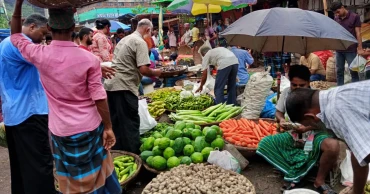
Onion prices in the capital’s retail markets have remained almost unchanged for a week, still selling at Tk 110–115 per kg, while hilsa has become increasingly unaffordable, with prices rising by up to Tk 500 per kg in just seven days.
A visit to several wholesale and retail markets in on Friday showed that although the price of a 5-kg sack of onions has fallen slightly—from Tk 520 to Tk 500–510—the decline has not yet reflected on retail sales.
Vendors said the price is unlikely to come down until new-season onions arrive in the market. The stocks of old onions are nearly exhausted and supplies at wholesale hubs are limited.
Shariful Haque, a wholesaler at Uttar Badda onion market, said a maund (40 kg) of onions costs between Tk 3,600 and Tk 4,000, keeping the wholesale per-kg rate close to Tk 100.
Meanwhile, hilsa prices have soared significantly over the past week. Retail prices have jumped by Tk 500–600 per kg, depending on size.
Govt may allow onion imports if prices remain high this week
In Rampura market, 600–800g hilsa is selling for Tk 1,200–1,600, up from Tk 800–1,000 last week. One-kg fish now cost Tk 3,000–3,200, compared to Tk 2,200–2,500 earlier.
Hilsa weighing over one kg has shot up to Tk 4,500–4,800 per piece, from Tk 3,500–3,800 last week.
Imon, a hilsa seller at Rampura market, said supply at the wholesale level has dropped sharply.
“We aren’t getting fish like before, which pushed up the prices,” he added.
Buyers expressed frustration over the surge. “If a single hilsa costs more than Tk 5,000, how can people afford to buy it?” said shopper Sanzid Hossain. “Not just hilsa—every fish price has gone up.”
Across markets, rui, katla, and kalibaush are selling for Tk 380–450 per kg; shol for Tk 800–1,500 depending on size; poa for Tk 600–1,000; shing and magur for Tk 600–800; and tilapia for Tk 300–350.
Vegetable prices have also increased, particularly for newly arrived winter produce.
Onion prices skyrocket in Dhaka; from Tk 70 to Tk 120 per kg
Tomatoes are selling for Tk 120–150 per kg, cucumbers for Tk 80–120, and carrots for Tk 120–160. Eggplant costs Tk 100–120 per kg, barbatti Tk 80–120, and pointed gourd Tk 60–80.
The prices of most vegetables have risen by Tk 20–50 per kg.
Lemon supply has declined, with a large-sized set of four selling for Tk 50. Green chili prices have also surged from Tk 120–140 per kg last week to Tk 160–190 this week.
Wholesalers said fewer trucks entered the markets on Thursday, disrupting supply chains and causing an immediate price spike in Friday’s market.
10 months ago

Bangladesh’s overheated onion market costs consumers Tk 3.5 crore more every day
In a shocking surge, onion prices have doubled in just 10 days, forcing consumers to shell out an extra Tk 3.5 crore every single day.
Amid this price turmoil, the government’s ‘hesitation’ over import approvals has left both shoppers and farmers stranded, caught in a tightening grip of uncertainty and financial strain.
Consumer rights groups and market experts say the crisis is driven by delayed imports, weak market management and syndicate activities.
The Consumers Association of Bangladesh (CAB) has calculated that the country’s daily consumer demand for onions stands at around 7,000 metric tonnes. With prices rising from Tk 60–70 per kg to Tk 110–120 per kg in a short span, the extra daily burden on consumers’ pockets reaches Tk 3.5 crore.
Read more: Govt may allow onion imports if prices remain high this week
Former director general of the Directorate of National Consumers’ Rights Protection and CAB president AHM Safiquzzaman criticised the government’s indecision. “The government is indecisive on onion imports. Meanwhile, consumers are losing crores of taka daily,” he said.
Commerce Adviser Sk Bashir Uddin said the government would allow imports if prices do not come down this week, but warned that local farmers could suffer losses as a result.
Safiquzzaman argued that import approval should have come in September–October. “By delaying imports until after the price surge, consumers are suffering. Limited imports earlier could have prevented the current shortage,” he said, adding that some unscrupulous traders are exploiting the situation while the Commerce Adviser searches for syndicates.
The CAB president also questioned the Agriculture Ministry’s claim of 3.5 million tonnes of onion production this year, saying it is unreliable. Currently, onions are scarce in farmers’ hands and largely held by wholesalers, leaving imports as the only viable solution.
On Thursday, the Bangladesh Trade and Tariff Commission (BTTC) recommended onion imports to the commerce and agriculture ministries, citing weak market management and manipulation by intermediaries as reasons behind runaway prices.
Read more: Onion prices skyrocket in Dhaka; from Tk 70 to Tk 120 per kg
Data shows that while onion prices remained relatively stable over the past two to three months, they surged 37–42 per cent in the last week.
BTTC said the abnormal price hike indicates market mismanagement and syndicate activity.
Abdul Bayes, former vice-chancellor of Jahangirnagar University and an agricultural economist, said, “Without breaking syndicates and corporate oligarchies in agriculture, such dilemmas will recur. Unscrupulous groups exploit these situations at the expense of farmers and consumers.”
Most onion imports come from India, where prices are around Tk 16 per kg (USD 195 per tonne).
BTTC noted that even with a 10 per cent import duty, prices could drop by Tk 50 per kg domestically.
The Agriculture Ministry, however, said 75,000 tonnes of domestic onions would arrive within a week, with early December seeing the harvest of small ‘murikata’ onions.
“We have informed the Commerce Ministry that new onions will reach the market within two weeks. Whether any import decision has been formally made is not yet known to us,” said Additional Secretary Mahmudur Rahman.
Read more: Onion import through Benapole Port resumes after 2.5 years
Historical analysis by the Trading Corporation of Bangladesh (TCB) shows onion prices typically spike by over 100 per cent in November compared to March, providing opportunistic traders with profit margins while farmers lack produce.
In districts like Pabna, Faridpur and Rajbari, farmers have planted ‘murikata’ onions, with production costs around Tk 1,500 per maund.
Rokonuzzaman, a farmer from Goalanda in Rajbari, said, “Last year’s 'murikata' crop incurred losses. With Indian onions entering the market, the price per maund drops to Tk 1,200–1,400, forcing farmers to sell at a loss. This year, prices below Tk 2,000 per maund would still cause losses.”
Market stakeholders blame the ministry’s lack of foresight for creating a situation where consumers bear the brunt while farmers face uncertainty.
Read more: Onion farmers in Shailkupa hit by fertiliser shortage during peak season
11 months ago

Relaxed market monitoring post-Ramadan sends onion prices soaring in Khulna
The price of onions has suddenly surged in Khulna after remaining stable throughout Ramadan, even though it is currently peak harvesting season.
Onions that were selling for Tk 30–35 per kg only days ago are now being sold at Tk 48–50 per kg in Khulna’s wholesale markets, depending on quality. In retail markets across the city, prices have reached as high as Tk 60 per kg.
India withdraws 20% duty on onion export effective from April 1
Consumers have attributed this abrupt hike to a lack of effective market monitoring.
According to traders, some buyers who usually purchase onions directly from farmers have allegedly begun hoarding supplies instead of releasing them into the market. They are reportedly using the excuse of a ban in Indian onion imports to make the market unstable.
By stockpiling locally produced onions during peak season, these traders are believed to be fueling an artificial crisis.
Consumers in Khulna have already started feeling the impact of the price spike and expressed concerns that the situation may worsen in the coming days. Many households have begun stockpiling onions in fear of further price increases, increasing the demand in local markets.
Faridpur farmers hope for bumper onion harvest this season
Frustrated consumers have urged the authorities to take immediate legal action against hoarders and strengthen regular monitoring of the market.
The Directorate of National Consumer Rights Protection (DNCRP), Khulna, stated that those responsible for the price manipulation will be identified and brought under legal recourse as soon as possible.
During a visit to several wholesale markets in Khulna on Saturday, the UNB correspondent found that traders collecting onions from areas such as Shailkupa and Langolbandh in Jhenaidah, Pangsha in Rajbari, Kumarakhali and Panthi in Kushtia, as well as Chourangi, Rashgram, Chakmohra, and Hazirhat, are reportedly hoarding supplies rather than releasing them into the market.
Currently, onions are being bought at Tk 1,800–1,900 per maund (around 40kg), or Tk 45–47 per kg in the wholesale market. Traders say if hoarding can be prevented, prices could quickly return to normal.
Retail traders, meanwhile, claimed they are not responsible for the price hikes, stating that they sell onions based on wholesale rates with a minimal profit margin.
Consumers, however, alleged that an organised syndicate manipulates onion prices every year, and this year is no different.
During Ramadan, local onions were selling at Tk 30–35 per kg, which increased to Tk 40 post-Eid, and has now reached Tk 60 per kg.
Onion farmers in Shailkupa hit by fertiliser shortage during peak season
During visits to retail markets in Moylapota, New Market and Daulatpur on Saturday, the UNB correspondent found onions selling at Tk 60 per kg in the first two markets and Tk 53 per kg in Daulatpur.
Zahid Hasan, a shopper in Daulatpur, said, "Market instability has returned. During Ramadan and Eid, prices were under control, but now dishonest traders are making things difficult. The onions I used to buy at Tk 30–35 now cost Tk 55–60. If this trend continues, prices will rise further. The government should resume the level of market monitoring seen during Ramadan and Eid."
Touhidul Islam, a wholesaler at Sonadanga market, noted that the price hike is largely demand-driven. He added that panic buying and stockpiling at home are further pushing up prices.
He also mentioned that some dishonest traders are hoarding onions fearing that LC (Letter of Credit) for imports may not resume, adding more pressure to the supply chain.
Abu Sufian, owner of M/s Jonaki Bhandar, said that onions are being purchased at elevated prices in the wholesale market for stockpiling, and this has impacted the entire supply chain.
Retailer Harun Moral said, “Retailers have no role in this price surge. We sell at the rates set by the wholesalers.” He also blamed illegal hoarding for the sudden price increase.
Kawser, a retailer at Moylapota market, said they are purchasing onions at Tk 54 per kg from the Sonadanga wholesale market and selling them at Tk 60. “The price hike is due to hoarders,” he said.
Advocate Qudrat-e-Khuda, Secretary of Sushashoner Jonno Nagorik (Shujan), Khulna City unit, said although the government had effectively controlled prices during Ramadan, the trader syndicate remains active.
“Prices have doubled in just a few days. If this syndicate isn’t broken and market monitoring isn’t reinforced, the situation will spiral out of control,” he warned.
He urged the government to take strong action against such syndicates and called on the Directorate of Consumer Rights to play a more proactive role.
Mohammad Selim, Deputy Director of DNCRP, Khulna Division, said the agency is conducting regular monitoring and market raids. “We’re already taking legal action, including imposing fines on those violating consumer rights. Since being informed about the hoarding issue, we will monitor the market closely and take necessary steps. Anyone found operating outside government policies will face strict action,” he added.
1 year ago

Onion farmers in Shailkupa hit by fertiliser shortage during peak season
Farmers in Shailkupa Upazila of Jhenaidah district are facing a severe shortage of chemical fertilisers during the peak onion cultivation season.
The fertiliser is not available from dealers as expected, and what is available in the open market is being sold at higher prices. This has left many farmers worried about their crops, fearing they could incur financial losses without access to the necessary fertilisers.
Farmers across the upazila are complaining that they cannot get the fertiliser they need from the local dealers.
Large influx of migratory birds enhances scenic charm of Ramrai Dighi in Thakurgaon
Shariful Islam, a farmer from Dhaora village, has planted onions on 5 bighas of land and is concerned that the shortage of fertiliser may ruin his harvest. "If I can't apply fertiliser on time, I could lose all my capital," he said.
Like many other farmers, Shariful has been forced to buy fertiliser from the open market at high price.
Farmer Rafiqul Islam said, "When we go to the dealer to get fertiliser at the government-set price, the dealer refuses, claiming they don't have any."
"But when we go to the open market, we can find fertiliser, but the price is Tk 300 to 400 higher per sack," he added.
Record Aman harvest, yet rice prices soar: Who's to blame?
Ayub Hossain, another farmer from Madandanga village, said "I have planted onions on 2 bighas of land this season, nurturing regularly in the hope of a good harvest. But I fear a crop failure if I can't apply fertiliser in time. If I lose my onions, I will lose all my investment."
Other farmers, like Abul Hossain, face similar challenges. "I need 6 bags of fertiliser, but I have to stand in line all day to get just one bag," he said.
Another farmer, Ismail, said, "If I can't give fertiliser on time, the onion yield won't be good. I'll lose my investment, and if that happens, I won't cultivate onions next year."
Farmers in the region have further alleged that the dealers appointed at the union level do not operate from their designated locations. Instead, they have set up shops in municipal areas, selling fertiliser at prices higher than the rates set by the government.
This has led to widespread frustration among farmers, especially during the peak onion planting season. They are now demanding a prompt solution to the ongoing fertiliser crisis.
Sunamganj villagers haunted by river erosion blamed on illegal soil cutting
Dealers, however, claimed that the supply is insufficient to meet the high demand.
Shailkupa Upazila Agriculture Officer Arifuzzaman said that the shortage was partly due to farmers storing fertiliser in their homes, which has further limited availability.
He assured that efforts are being made to distribute fertiliser to all farmers, and additional guidance is being given for better yields.
This season, the target area for onion cultivation in Shailkupa is 12,000 hectares, with a demand for 8,000 metric tons of fertiliser, including urea, TSP, and DOP.
However, the available supply has not been enough to meet these needs, leaving many farmers frustrated and worried about their crops.
1 year ago

Onion seed cultivation: Faridpur couple become role models, farmers aim Tk 300 crore worth of production
In the Gobindapur area of Ambikapur union, Sadar upazila, Faridpur district, Lovely Akter and Imtiaz Mollah have transformed their fortunes and become a beacon of success in onion seed farming, locally referred to as “black gold”.
Starting with just two bighas of land, the couple has expanded their cultivation to 40 bighas, witnessing substantial economic growth that allowed them to construct a multi-storey building and continually invest in new land.
The duo, parents to a tenth grader and a fourth grader, embarked on this venture after observing the lucrative outcome of onion seed cultivation within their family post-marriage. After her marriage, she found that some family members among her in-laws were involved in onion seed cultivation and decided to join along with her husband in this endeavor. They earned good money in the first year and haven't looked back since, Lovely shared.
Onion prices fall by Tk30 per kg as seasonal supply rises in market
2 years ago

India allows onion export to Bangladesh, 5 other countries
The Indian government has decided to give an exemption for Bangladesh, as well as five other countries, from its ban export of onions, up to a certain amount.
This permission has been given on the recommendation of the Ministry of External Affairs of the country.
Read more: Onion, sugar likely to be imported from India before Ramadan: State Minister
Along with Bangladesh, India has also allowed the export of onions to Sri Lanka, Nepal, Bhutan, Bahrain, and Mauritius. However, New Delhi has not yet taken any decision on the complete withdrawal of the ban imposed on onion exports.
On Monday (February 19), the Indian newspaper Economic Times reported that India officially allowed the export of onions to Bangladesh and some other countries.
An Indian official related to this issue said that the export of onions in limited quantities to these countries has been allowed for bilateral purposes. However, the official could not tell the exact amount of onion that has been allowed to be exported.
Read more: Onion price steeper by Tk50 per kg in 3 weeks
2 years ago

Bangladesh seeks to import more onion and sugar from India before Ramadan
Bangladesh has sought India's support in supplying essential commodities, specially onion from India ahead of the holy month of Ramadan in an effort to keep prices of the essentials stable.
"We discussed the import of perishable items from India. We have discussed in detail so that we get 50 thousand tons of onion and 1 lakh tons of sugar before Ramadan," Foreign Minister Hasan Mahmud told reporters after his meeting with India’s Commerce and Industry Minister Piyush Goyal on Friday.
Libyan PM greets PM Hasina on her re-election
The foreign minister mentioned that the new government under the leadership of Prime Minister Sheikh Hasina begins a fresh journey with new mandates, and one of the priorities of the government is to address the prices of essential commodities.
Hasan requested Goyal to take necessary measures in ensuring uninterrupted supply of the essential commodities to Bangladesh till Ramadan.
Goyal said India is committed to ensuring the economic and financial stability in Bangladesh.
Women should be proud of PM Hasina for her capability, leadership: India's President
He assured of accommodating the request of Bangladesh foreign minister for supplying essential commodities.
The Indian minister stressed on further improving the trade and commerce relation between the two countries.
Hasan requested Goyal to remove tariff and non-tariff barriers on export products of Bangladesh and to ensure uninterrupted supply of essential commodities to Bangladesh especially during the month of Ramadan to maintain price stability.
Ajit Doval's Dhaka visit part of high level exchange between 2 countries: MEA
He is expected to attend a civic reception in Kolkata at the Bangladesh Deputy High Commission to becparticipated by a large number of diplomats, said a senior official accompanying the minister.
Members of think-tank and media based in Kolkata will also attend.
The foreign minister will return to Dhaka Friday night.
2 years ago